
Commercial TPO Roofing in Costa Mesa, CA
A TPO seam can look closed at the surface and still need a probe at a corner, curb, or patch edge. We inspect welds, flashing, drains, and penetrations before setting a TPO scope in Costa Mesa, CA. Regional station normals show July and August average daily highs of 78.9°F and 80.4°F, which provides climate context without measuring a roof surface. The condition record focuses on the membrane and attachment that are actually present.
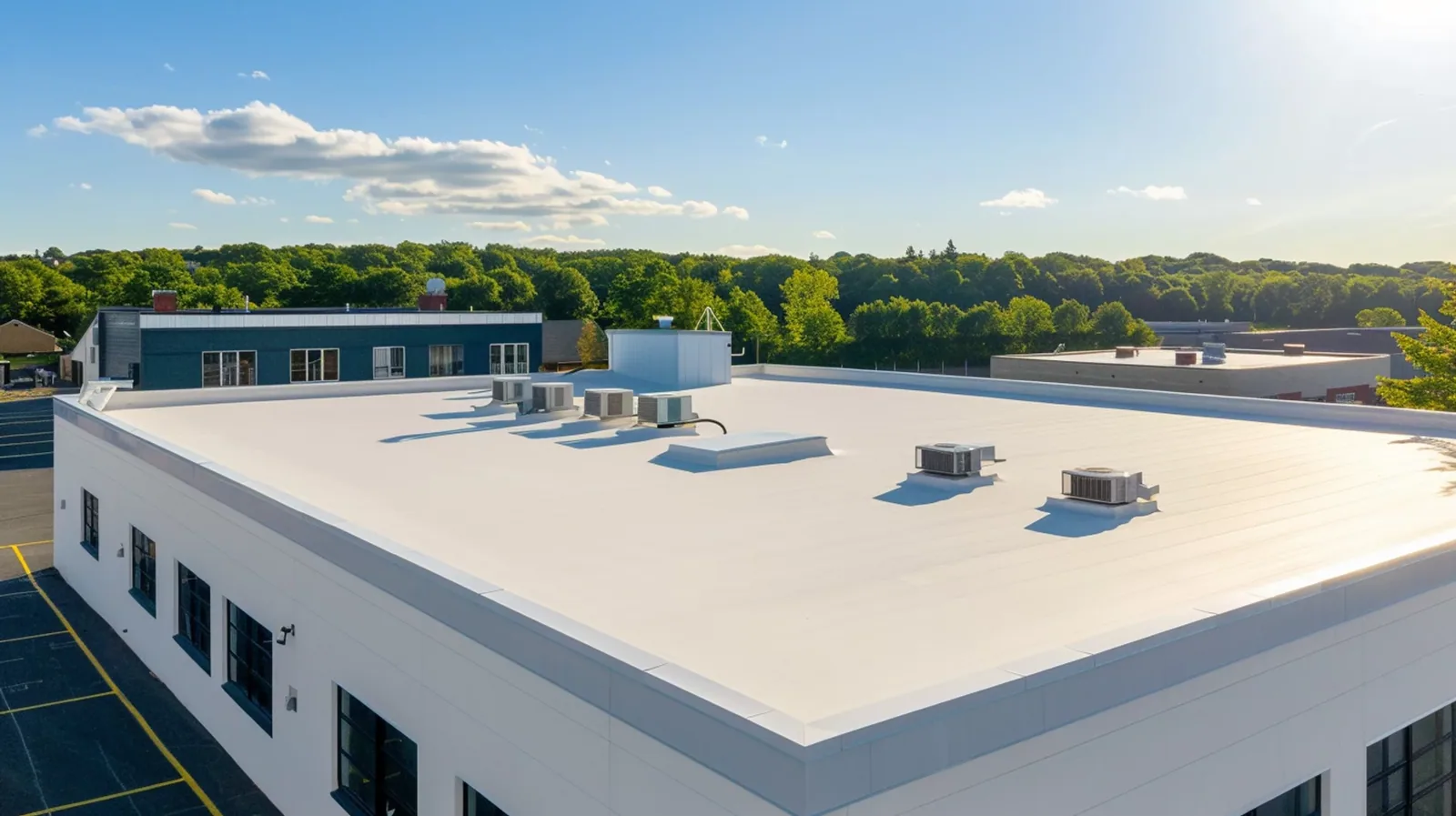
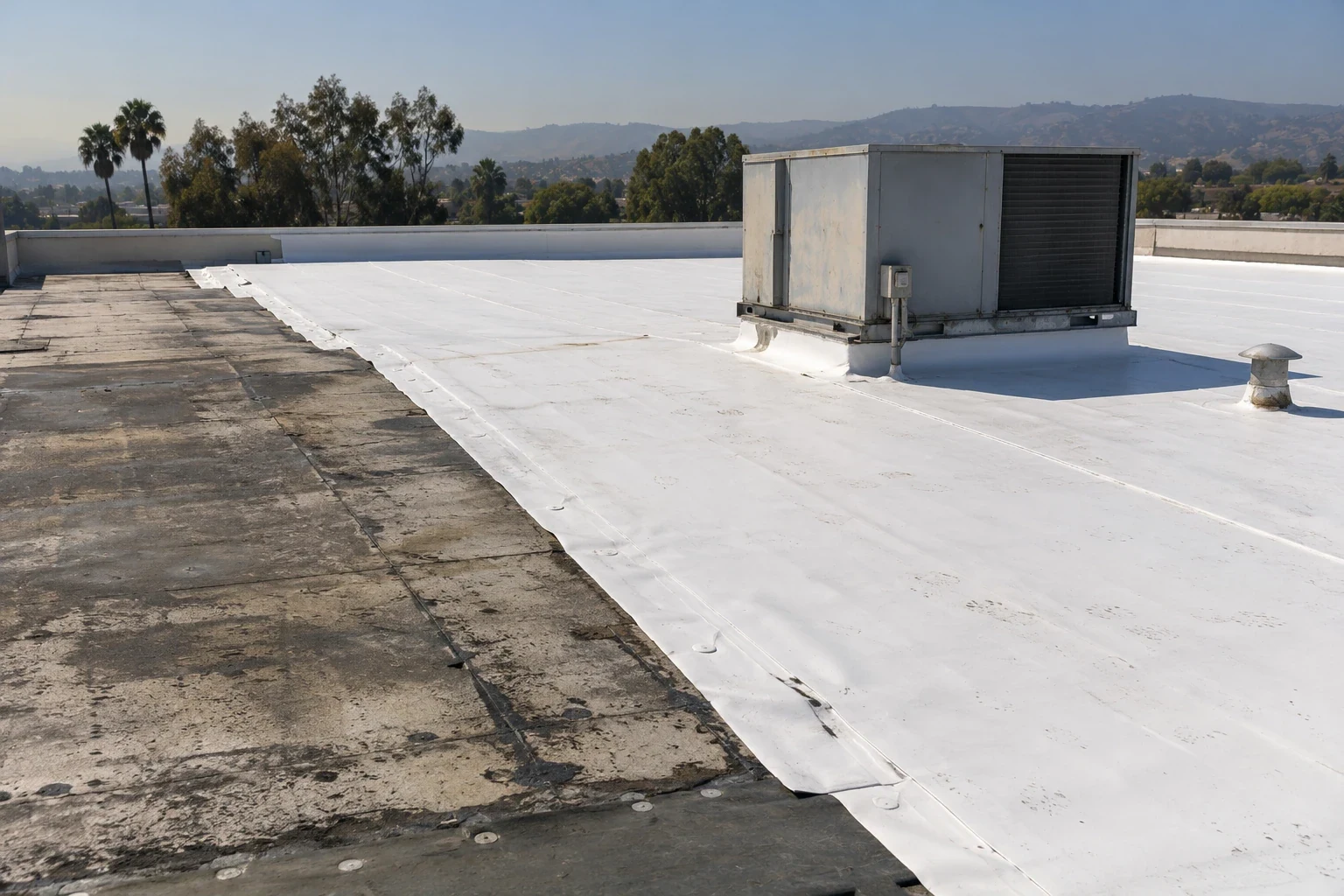
TPO is a thermoplastic single-ply membrane joined through heat-welded seams. Its performance depends on clean, consistent welds and sound transitions. We identify the installed assembly, surface condition, and prior repairs before deciding whether a local weld repair, recover, or replacement fits. The owner receives a map of observed conditions, suspected moisture, and details that need a closer inspection before the system choice is finalized.
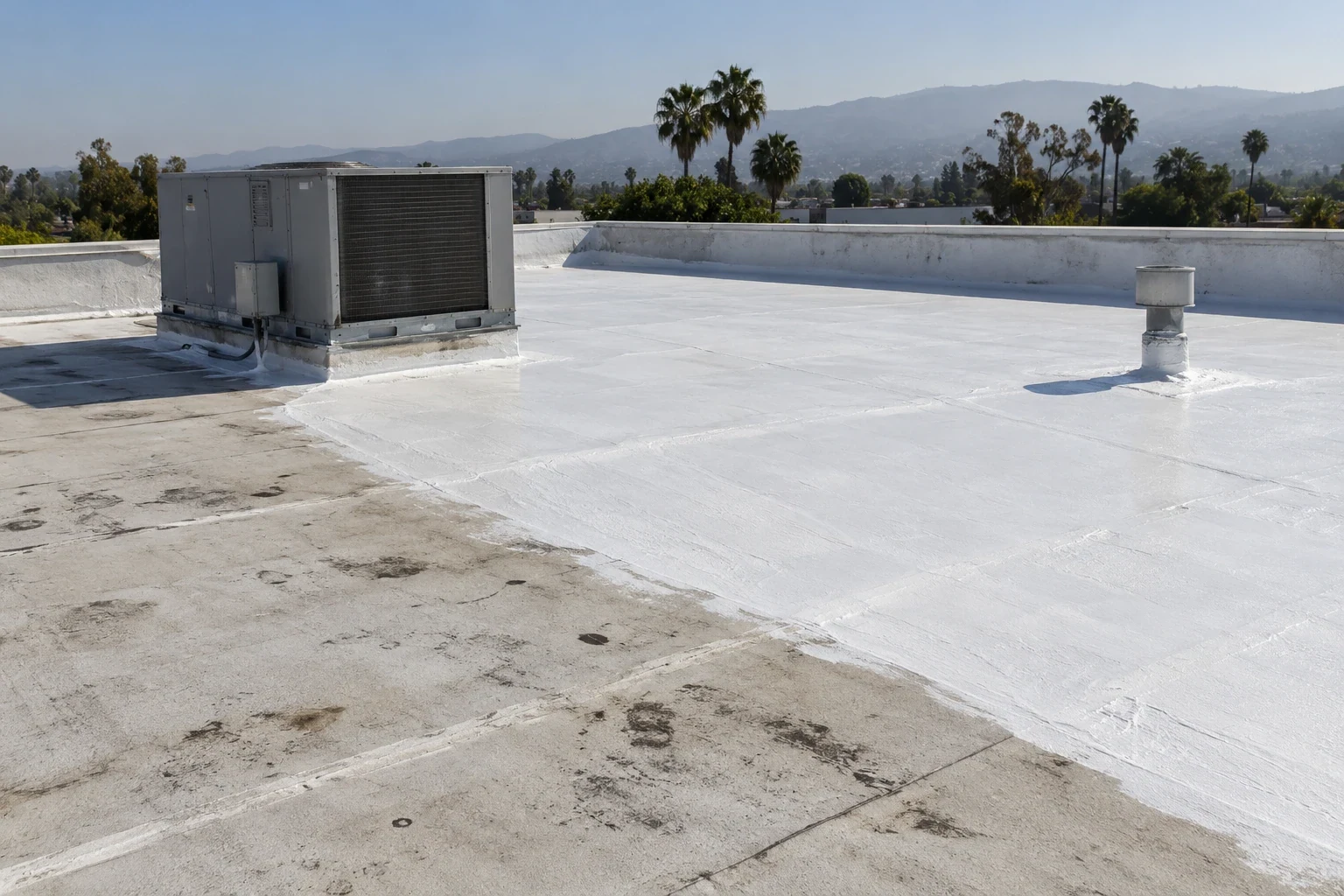
Seam and Flashing Checks
We look at field seams, end laps, patches, curb corners, drain bowls, and edge terminations. A seam probe can identify a weak weld, while surface dirt or a wrinkle may have another cause. We record the specific condition and its extent rather than label an entire roof defective from one detail. At penetrations, the flashing shape, membrane compatibility, and movement matter as much as the field weld.
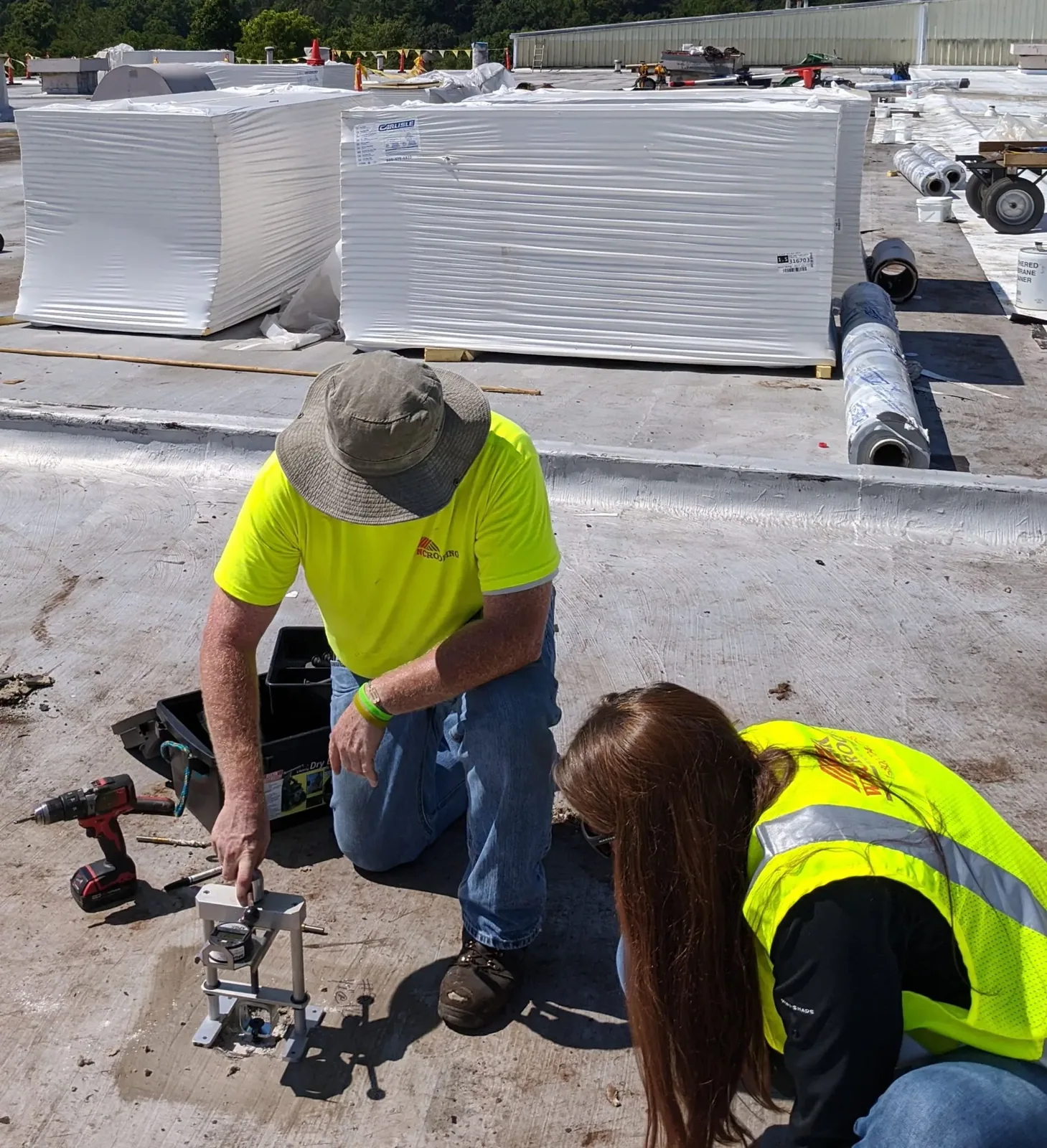
Where wet insulation is suspected, we map the area and choose a survey method or test opening. A condition inspection records the visible membrane and details; an infrared survey can help prioritize investigation under suitable conditions. We explain which result is an observation and which finding still needs confirmation through an opening or material sample.
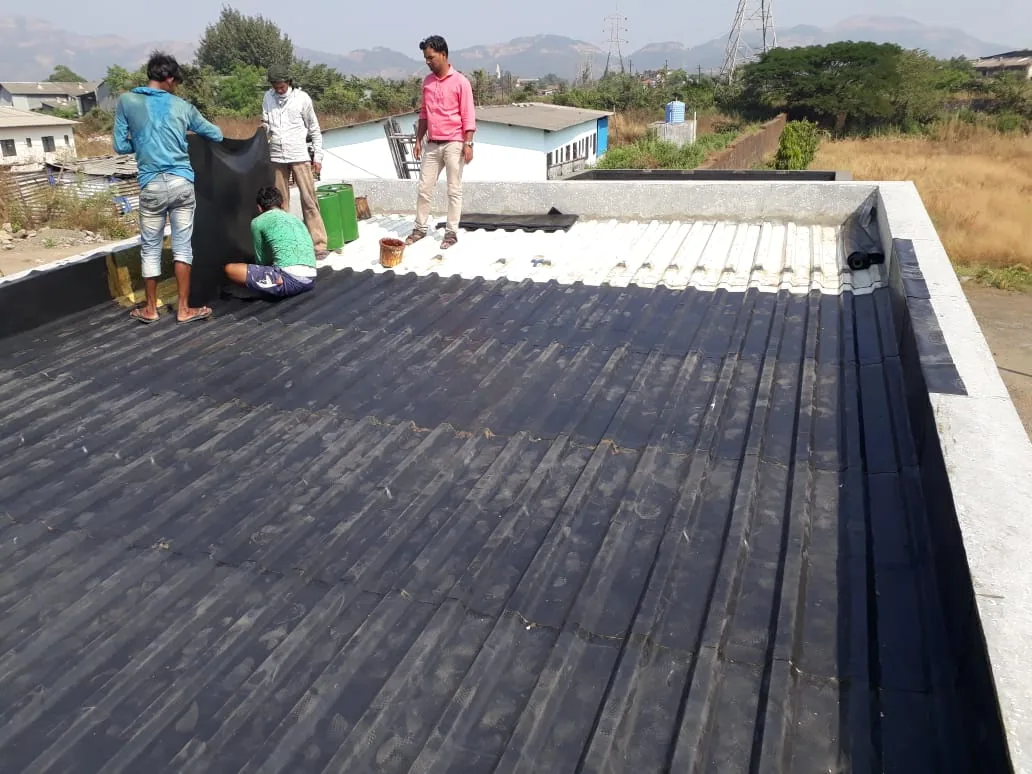
Welded Membrane Details
TPO seams are heat welded, creating a bond between clean membrane surfaces. Dust, moisture, inconsistent heat, or uneven pressure can weaken a weld. Repairs use compatible membrane and controlled equipment, with each patch extending far enough onto sound material to make a reliable transition. We inspect the repaired area and record its location so future maintenance can distinguish a new patch from an earlier condition.
At walls and curbs, the membrane turns into a flashing assembly with corners, terminations, and sealant details. Drains require a secure clamping interface and a clear flow path. A PVC system shares thermoplastic welding principles but is a different material with its own compatibility requirements. An EPDM alternative uses a different seam method. The seam method alone does not make the membranes interchangeable; we verify the installed sheet before selecting compatible repair material. We keep each product system separate when preparing details and any future replacement specification.
Costa Mesa Heat and Building Mix
Normal daily highs at the nearby Santa Ana John Wayne Airport station are 78.9°F in July and 80.4°F in August; annual precipitation is 11.18 inches across 1991 to 2020. We check the actual membrane exposure, rooftop shade, and flashing condition before setting repair timing. We check the installed membrane, rooftop exposure, and flashing condition instead of predicting a failure from local averages.
Westside industrial buildings include many smaller operations in multi-tenant structures. A TPO repair can sit above a shared suite, so we identify the affected interior area before staging a weld repair. Harbor Gateway is a separate industrial district in northern Costa Mesa. We verify access and building use on the property, then mark the membrane seam and tenant route that need protection. The Westside properties remain a geographic cue, not a statement about a particular roof's assembly.
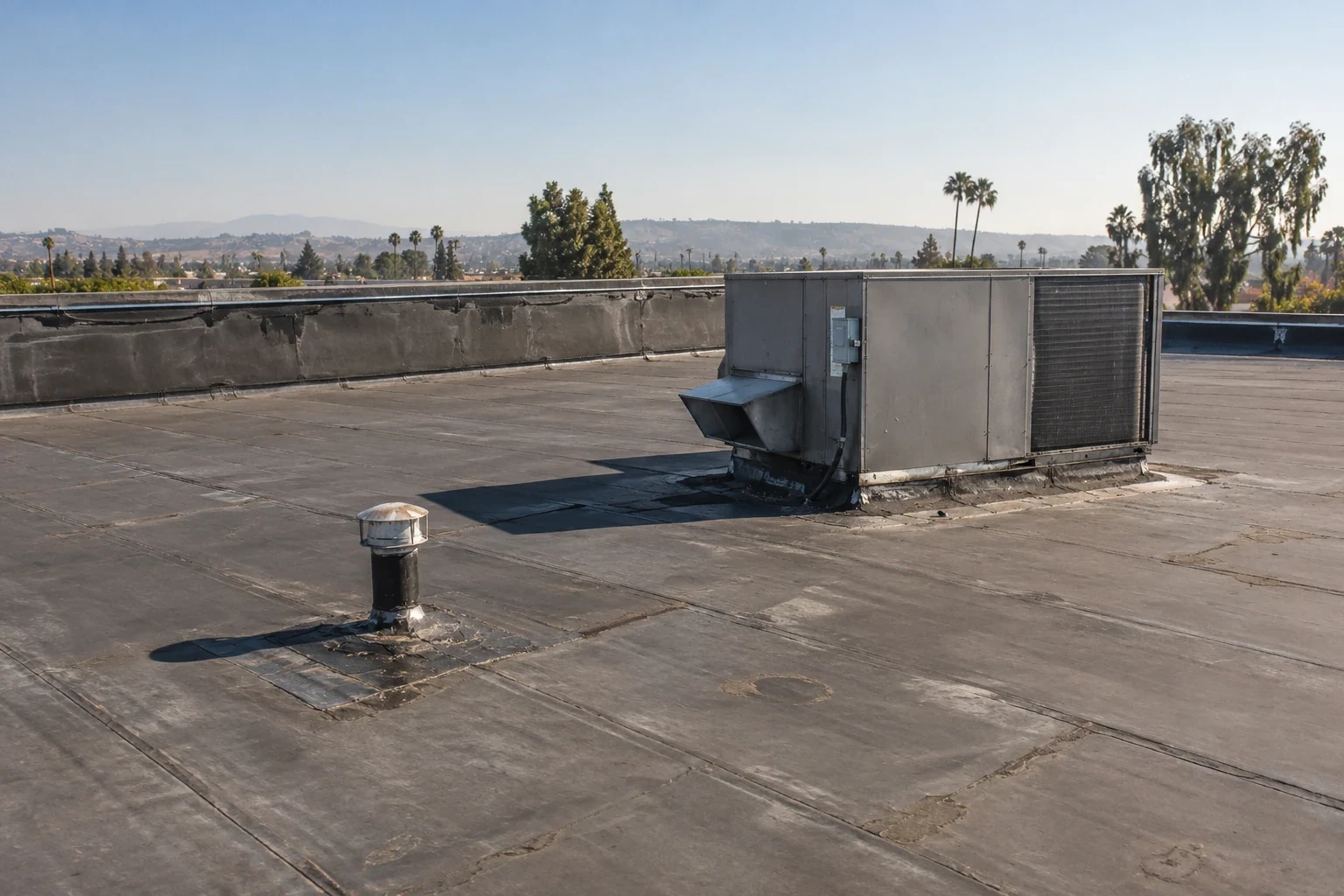
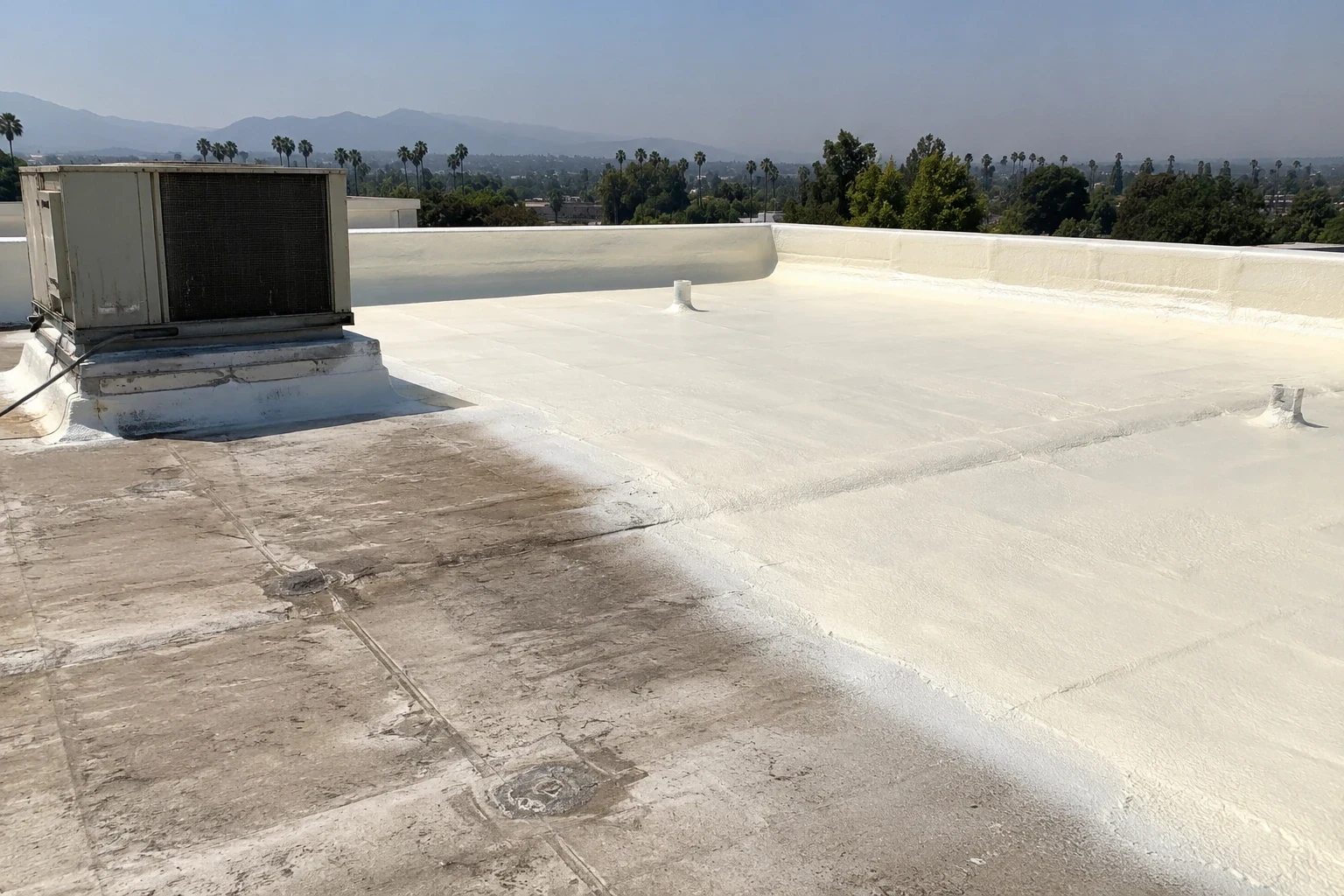
Repair, Recover, or Replacement Options
A localized repair can fit when seams and field membrane remain sound beyond the failed detail. A broader pattern of weak welds, wet insulation, deteriorated edges, or repeated patching may support a recover or replacement review. We map each finding and note where a test opening is needed. If the existing assembly is compatible with a recover, the proposal explains attachment and transition requirements instead of assuming another layer is acceptable.
A recover assessment checks deck capacity, existing layers, moisture, and edge height. A full replacement plan can reset insulation and details when the present system no longer offers a suitable base. The owner's decision should include access, equipment, drainage, and permit requirements. We separate confirmed scope from concealed conditions that can only be determined after work begins.
Installation and Quality Checks
Before welding, we verify substrate readiness, membrane layout, insulation attachment, and weather conditions required for the system. Crews keep seams clean and make test welds when the specification calls for them. We record transitions, fastener patterns, and repair areas as they are installed. If the roof remains occupied, we protect open edges and leave drains clear at each closeout.
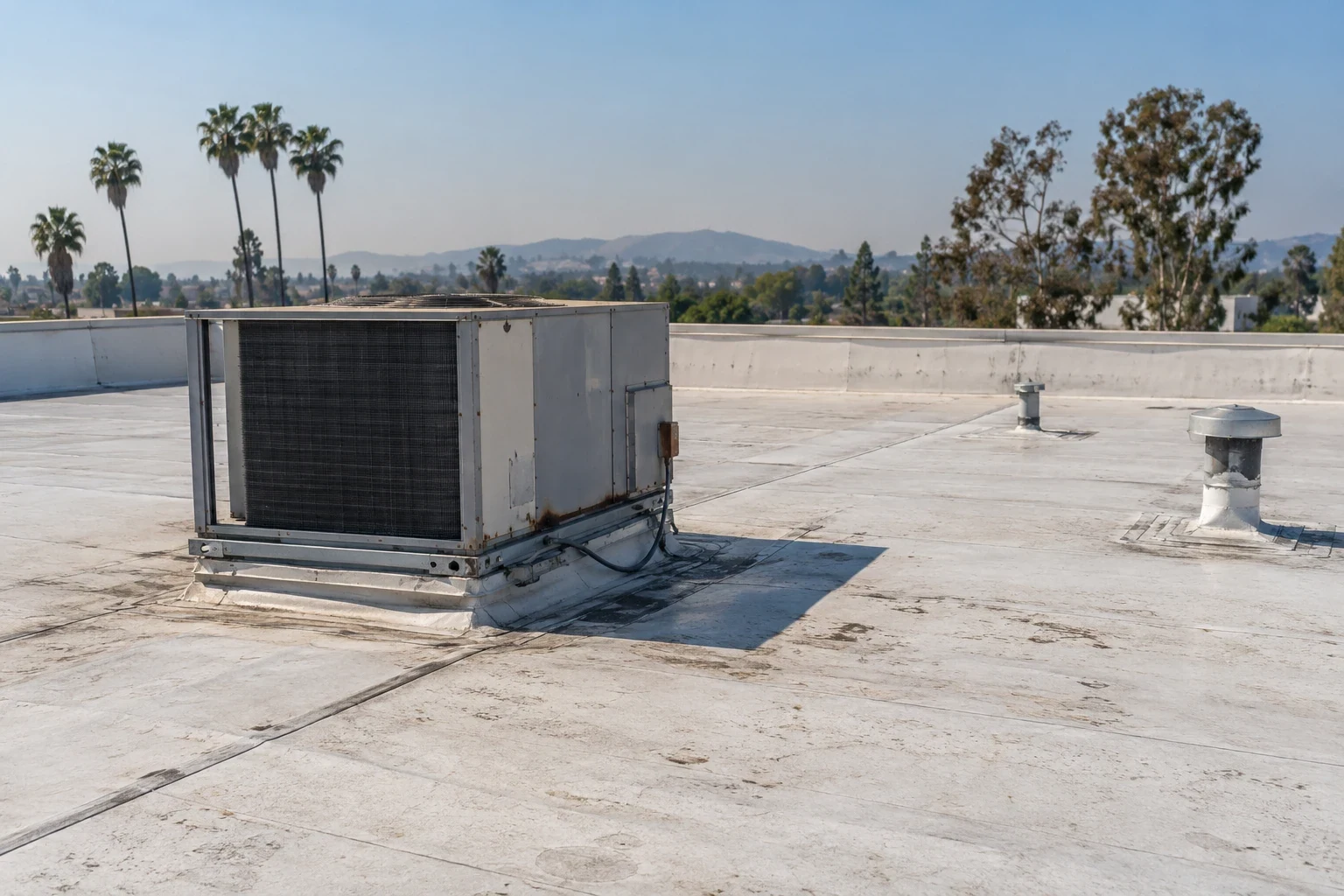
The scope also accounts for rooftop units, skylights, and support posts that can interrupt the field. Each transition needs a detail that does not trap water or block future service. The drainage review and curb inspection identify roof-side interfaces before membrane placement. The final walk compares installed details with the accepted scope and photographs points that will later be hidden.
Maintenance Record
After installation or repair, the owner should retain the membrane identification, repair map, seam photos, test results, and any maintenance requirements supplied for the system. Those records support a later comparison when a new leak appears. We note drain locations, edge conditions, and rooftop equipment so staff can inspect the correct area and avoid confusing a prior patch with a fresh separation.
Future repairs should use compatible membrane and welding methods. A maintenance visit can check seams, penetrations, rooftop traffic paths, and drainage without assuming every surface change is a leak. If a new area softens or shows interior staining, we trace it back through the field and details. The maintenance record should identify each observation, action taken, and next inspection item.
Existing TPO Assembly Inspection
Bring roof plans, system records, repair invoices, and photos of any interior staining to the roof walk. We will identify the membrane, probe selected seams, inspect transitions, and map drainage. If moisture is suspected, we will explain the test options before work begins. The written scope will show the repair boundary, system choice, and any field condition that still needs confirmation.
Commercial Roofers Costa Mesa responds around the clock to urgent water entry and schedules planned TPO work around property access. A visit in the Westside, Harbor Gateway, or a commercial corridor starts with the actual building and roof assembly. The next decision may be a seam repair, a targeted test, or a larger system review. A clear record keeps that choice tied to observed conditions rather than a generic membrane label.
Common Questions
We inspect and probe the seam, compare its bond with surrounding material, and record the detail. A wrinkle alone does not establish a failed weld. If the condition is concealed or inconsistent, we document the uncertainty and test an appropriate area.
Often, when compatible membrane is available and the surrounding field is sound. We inspect the affected seam or penetration, identify what the other trade changed, and rebuild the tie-in with a compatible detail. Equipment movement may require a separate mechanical handoff.
No. They are distinct thermoplastic roof membranes with different material formulations and system requirements. We identify what is installed before selecting a repair material or writing a replacement specification.
We map the suspected area and confirm it with appropriate testing or an opening. Confirmed wet material is removed and replaced within a defined boundary. The repair record should show where the roof was opened and how the new membrane ties into sound material.
Photos of seams, flashing, drain and curb details, the repair map, materials used, test results if required, and any future maintenance item. Those records help staff locate the work and compare a later roof observation.
Related Roofing Work
Schedule a Costa Mesa Roof Walk
Share current roof records, known leak locations, and access requirements. We will confirm a workable visit and document the conditions that affect your next decision.