
Commercial Roofing for Logistics and 3PL Operators in Costa Mesa, CA
A dock schedule can change the roof work window before the crew arrives. For logistics and third-party operators in Costa Mesa, CA, we confirm receiving hours, roof access, staging, and the area tied to a leak report. The roof walk follows the drain path and checks seams, curbs, flashing, and transitions around it. We mark the repair boundary and record what needs testing, so the operating team can coordinate a defined scope instead of clearing a broad roof area without a reason.
Costa Mesa's Airport Industrial Area forms part of a wider business and industrial complex extending into Irvine and Tustin. For a portfolio crossing city limits, keep each roof file tied to its address, operating contact, and inspected zones. The City's other industrial districts include Harbor Gateway and Westside, alongside Airport Industrial/Business Park. This broad geography does not identify current tenants or roof systems. We verify the building use, loading constraints, and roof assembly with the site contact. A written report with zone-labeled photographs then gives operations, property staff, and ownership a shared record for repair approval and follow-up.
Trace the Reported Water Path
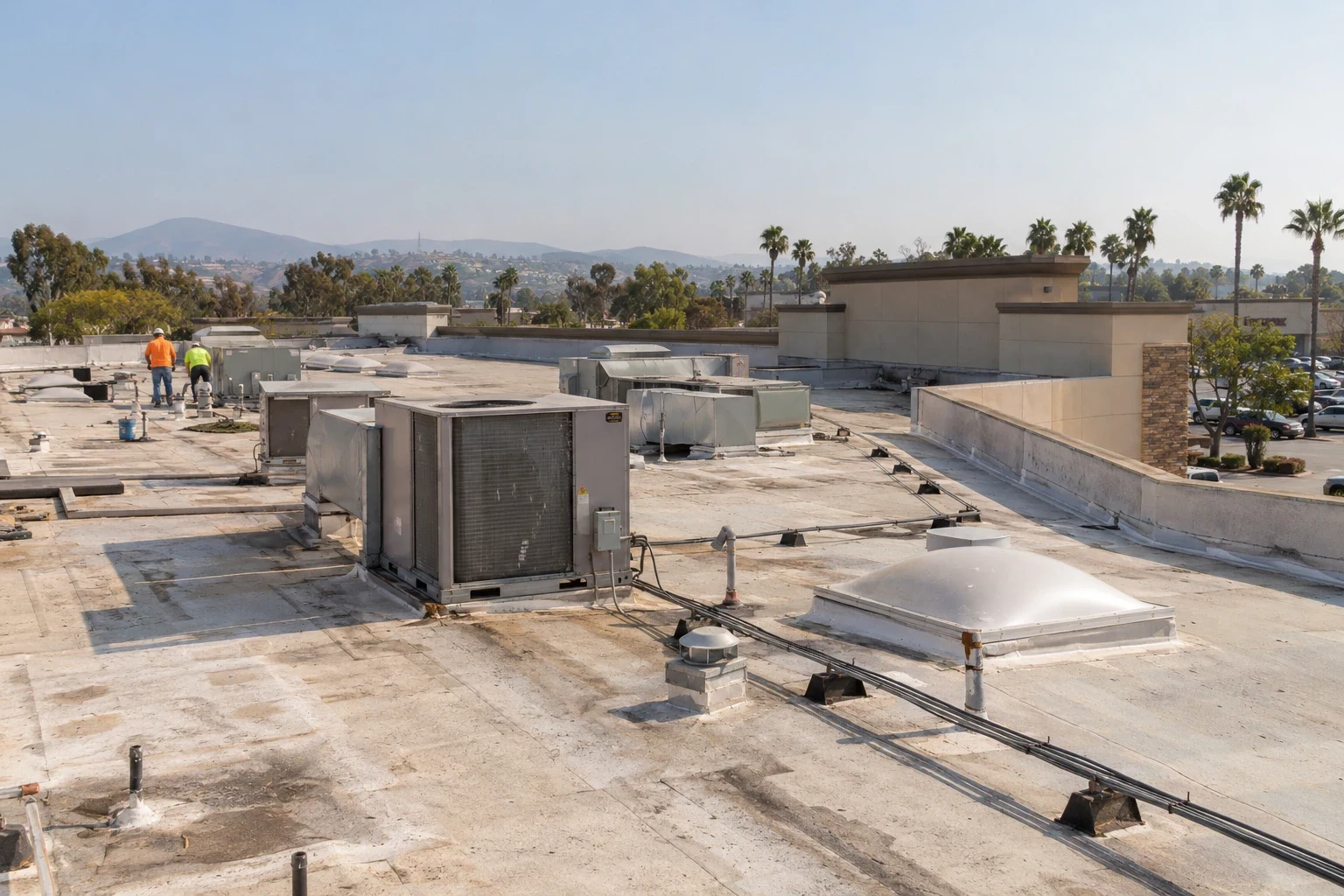
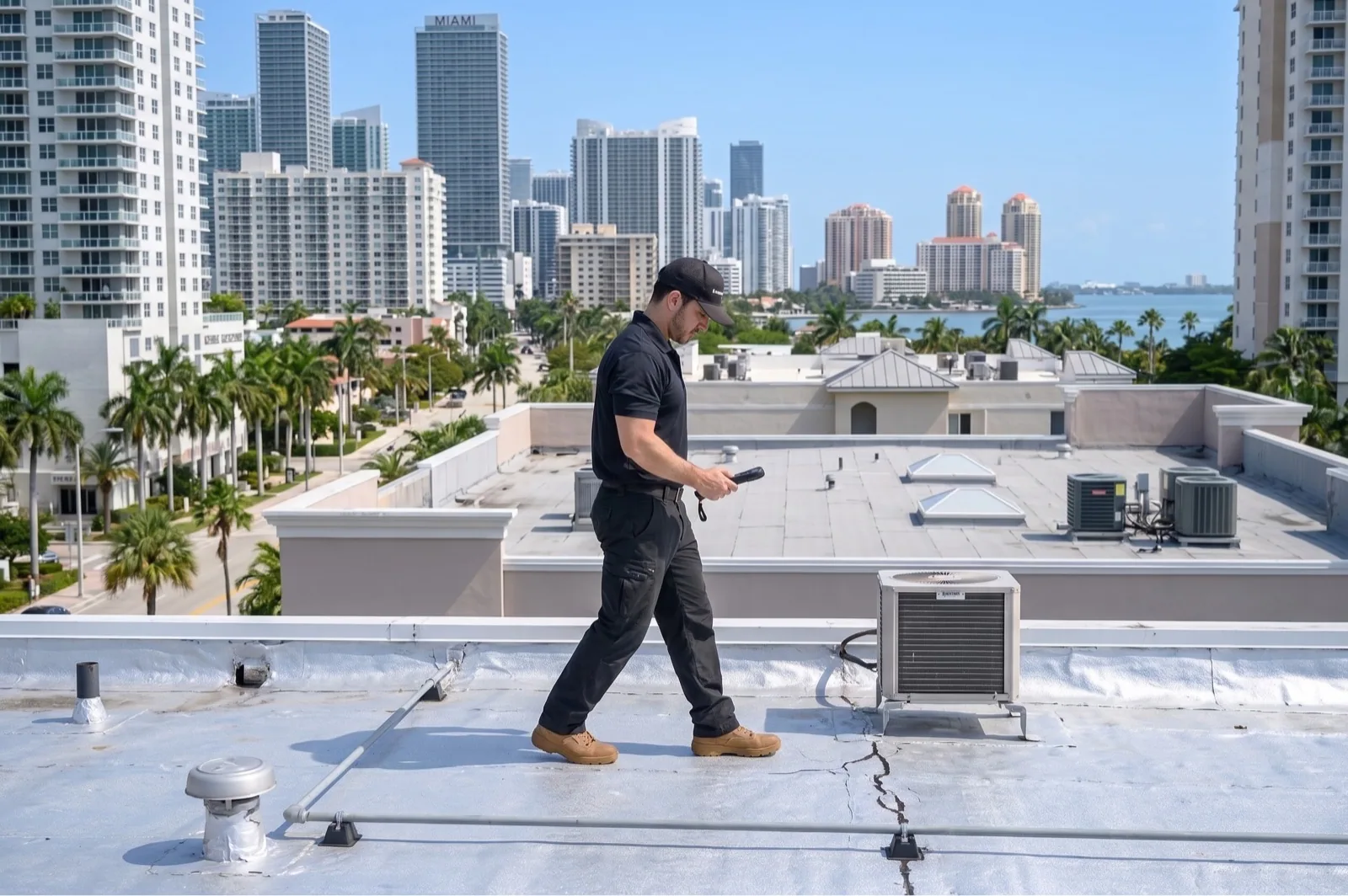
A ceiling mark near a packing, office, or service area may not line up with the roof entry point. Water can move under a membrane before it appears inside. We inspect the reported zone, then check nearby drains, seams, penetrations, equipment curbs, and prior patches. The notes identify what is visible and where access or a covered assembly limits the inspection. If moisture may extend below the surface, we recommend a test or survey before setting a larger repair scope.
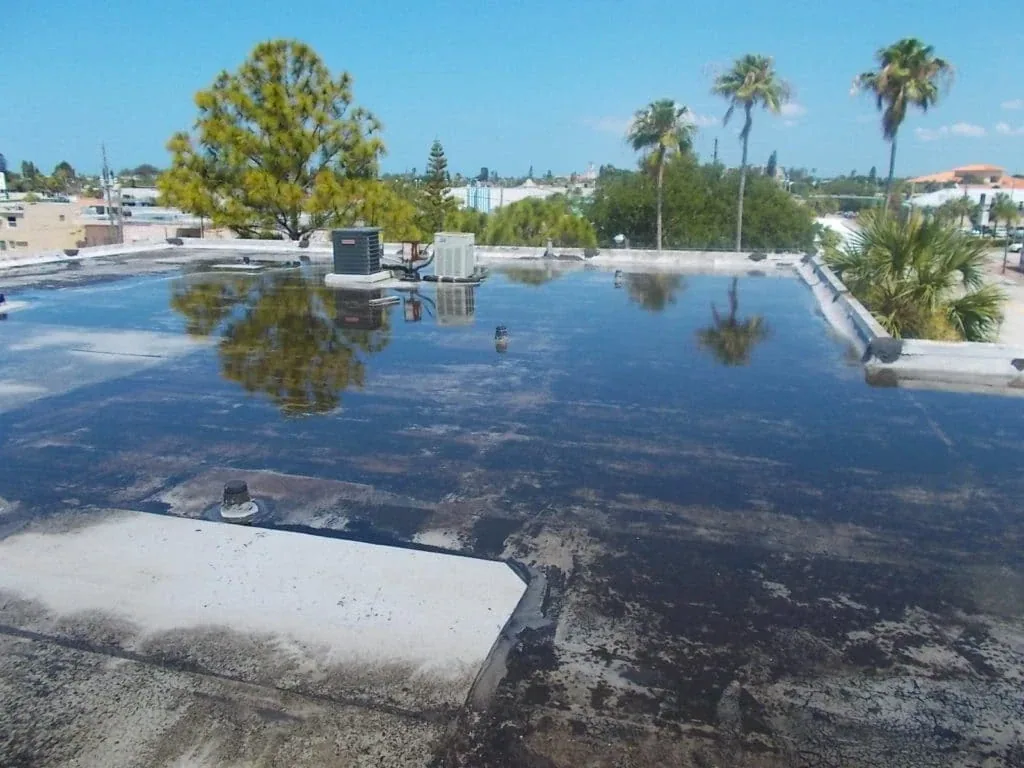
A commercial inspection records the observed condition, photographs, and next action. A drain that holds water can complicate leak tracing, so we check the outlet, scupper, and surrounding flashing. The drain and scupper work may be a separate repair from membrane damage. We keep the work line tied to each finding, allowing the facility contact to decide whether to authorize a patch, further testing, or a more complete roof review.
Work Zones and Dock Movement
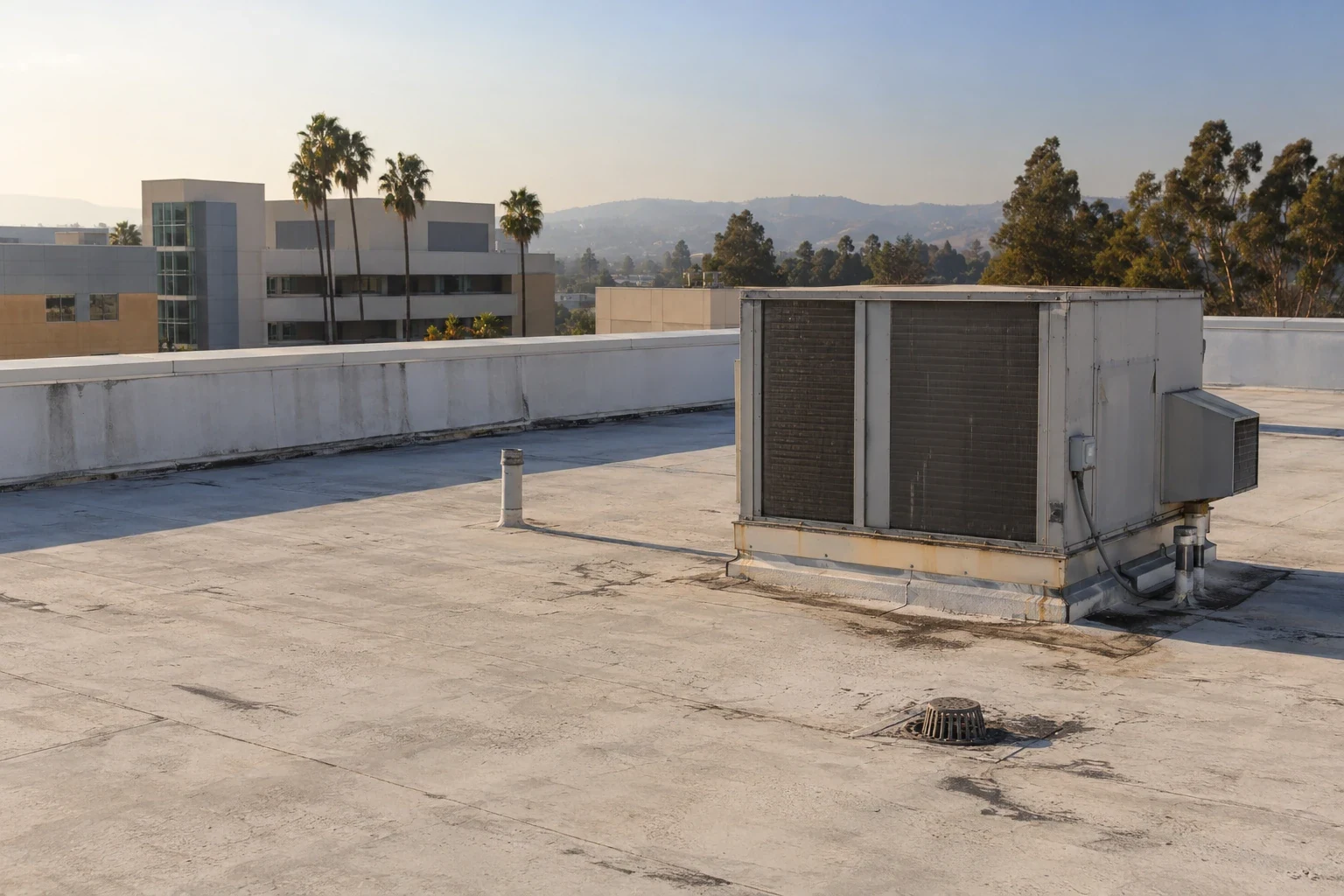
Materials need a safe path from delivery to the roof. We confirm where a lift can operate, whether trucks use the same apron, and when a section of the loading area can be set aside. A small repair may require one access window. A replacement needs work zones, temporary dry-in, and daily closeout that show which area is secure and when the dock can return to normal use.
A roof map that marks loading doors, curb clusters, and interior zones gives dispatch staff a usable work boundary. At each property, the site team identifies truck movement, loading windows and roof access before mobilization. If several buildings share a property manager, a roof record for property management can keep scopes and contacts separate. For an owner tracking a larger roster, investor roof planning can group decisions by building without merging work windows.
Define the Boundary Before Mobilizing
A puncture, open seam, or curb failure can support a local repair when adjacent material is sound and a compatible tie-in is available. If the insulation is wet, attachment is unstable, or the defect recurs across multiple zones, the repair may need a wider investigation. We photograph the condition, identify the boundary, and state whether a test opening is needed. A confirmed repair stays separate from any concealed condition held for later authorization.
The distribution center roof review checks the assembly, drainage, penetrations, and work access against the building's use. If multiple seam failures or wet areas appear, we compare localized repair with recover and replacement. A recover depends on the existing layers, attachment, substrate, and project requirements. Replacement may include tear-off, substrate repair, insulation, and new flashing. The proposal identifies those components and the sequence needed to keep the building dry while receiving continues in unaffected zones.
Equipment and Roof Traffic
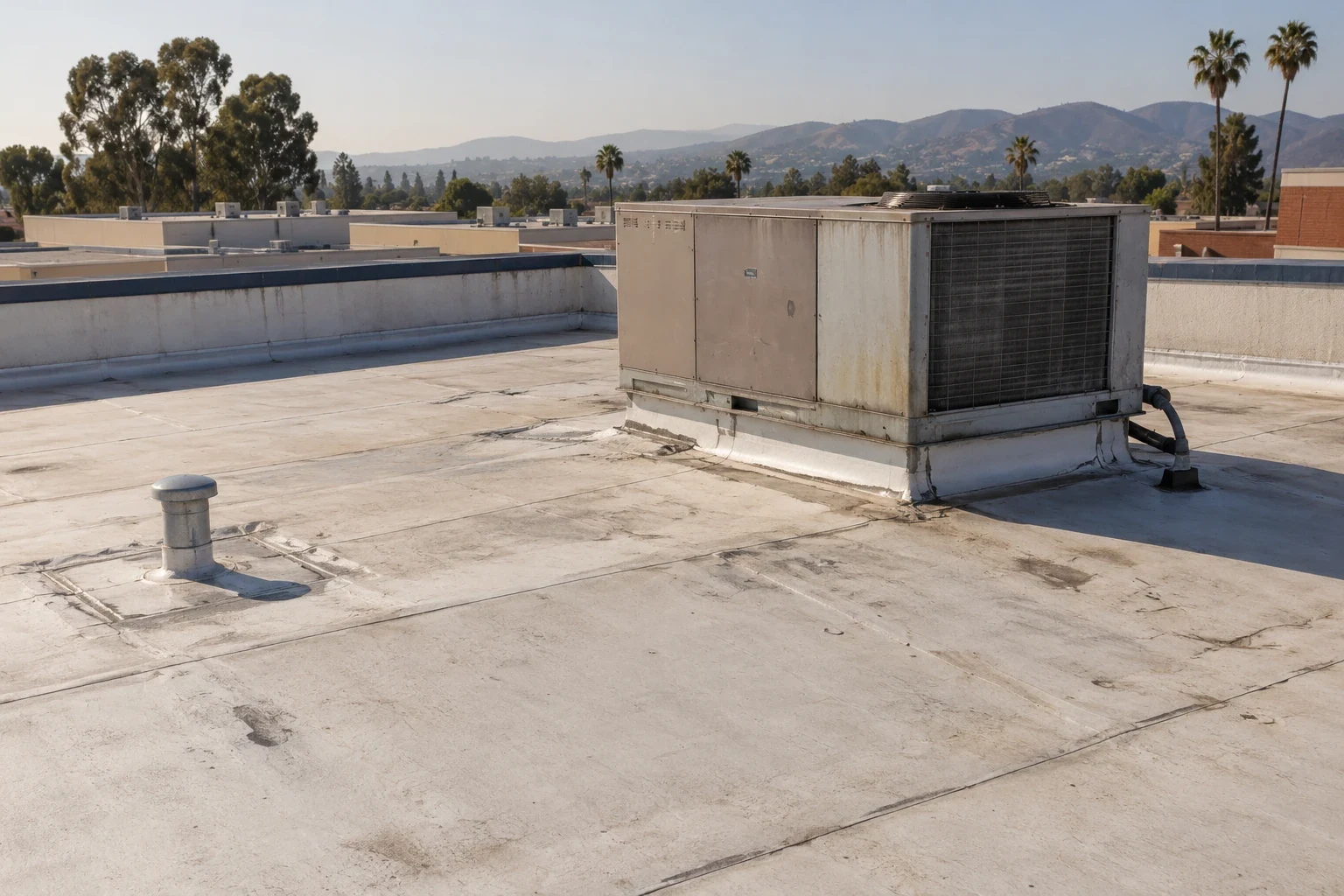
Repeated service visits can bring tools, equipment, and foot traffic across a membrane. We inspect the routes near rooftop units, pipe supports, access ladders, and drains for punctures or separated flashing. If a mechanical contractor plans work, we coordinate the roofing detail before equipment is moved or reset. A follow-up photograph can show whether a new curb tie-in or walk path repair was completed and what remains on the inspection list.
Westside combines smaller multi-tenant businesses with larger industrial operations. A logistics building may have a different roof configuration and traffic route, which we verify on site. If metal is present, its seams and fasteners need a different check than a single-ply membrane. A manufacturer roof scope can involve similar equipment coordination, but the actual access window and work line come from each facility. We record those details in the service report instead of relying on district labels.
Keep Drainage and Closeout Records
Closeout for a distribution roof should let a shift lead understand what changed without re-reading the full inspection. Record the drain or overflow addressed, the repaired seam or penetration, materials installed, and any zone held for testing. Note whether work required a loading pause or equipment clearance, plus the person who can reopen that area. If a roof section was inaccessible, label it for follow-up rather than implying coverage. This makes the next visit comparable even when a different operations contact is on duty.
Costa Mesa's coastal and Santa Ana River setting includes localized flooding and potential sea-level-rise planning hazards. These regional considerations do not describe parcel conditions or prove that a distribution roof has drainage trouble. Inspect that building's actual drain flow, overflow route, and evidence of water entry. Field observations must document actual drainage and water entry. A maintenance visit can track those observations over time. Work in the Airport Industrial/Business Park district remains subject to property-specific access and roof review.
Common Questions
We confirm truck activity, lift access, staging areas, and the time a dock can be restricted. The scope identifies the affected roof zone and work window. Larger work is sequenced so a section is left dry and secure before the crew moves on, with daily coordination through the site contact.
We first check the puncture, surrounding membrane, and path needed to reach it. The site contact can help set a safe work window and staging location. If the surrounding material is sound, we define a local patch; if moisture or a broader failure is found, we document that separately before expanding the scope.
It provides zone-labeled photographs, drainage observations, defects, completed repairs, access limits, and items that need testing or approval. The report connects each finding to a location so operations staff can coordinate work with dock schedules and return to the same point on the next visit.
Repeated failures, broad wet insulation, unstable attachment, or a substrate concern can support a wider evaluation. We inspect the assembly and drainage, then compare repair, recover, and replacement. The recommendation states which conditions are confirmed and which require an opening or other testing.
Yes, we check the drain, scupper, overflow path, and surrounding flashing when those areas relate to the report. A blocked outlet and a membrane failure need different work. We photograph both conditions and separate the drainage task from any repair to the roof field.
Related Roofing Work
Coordinate a Logistics Roof Walk
Share the reported roof zone, dock schedule, and delivery access rules. We can inspect the area, document the repair boundary, and plan the work window with the site contact.