
Commercial Roof Drain and Scupper Repair in Costa Mesa, CA
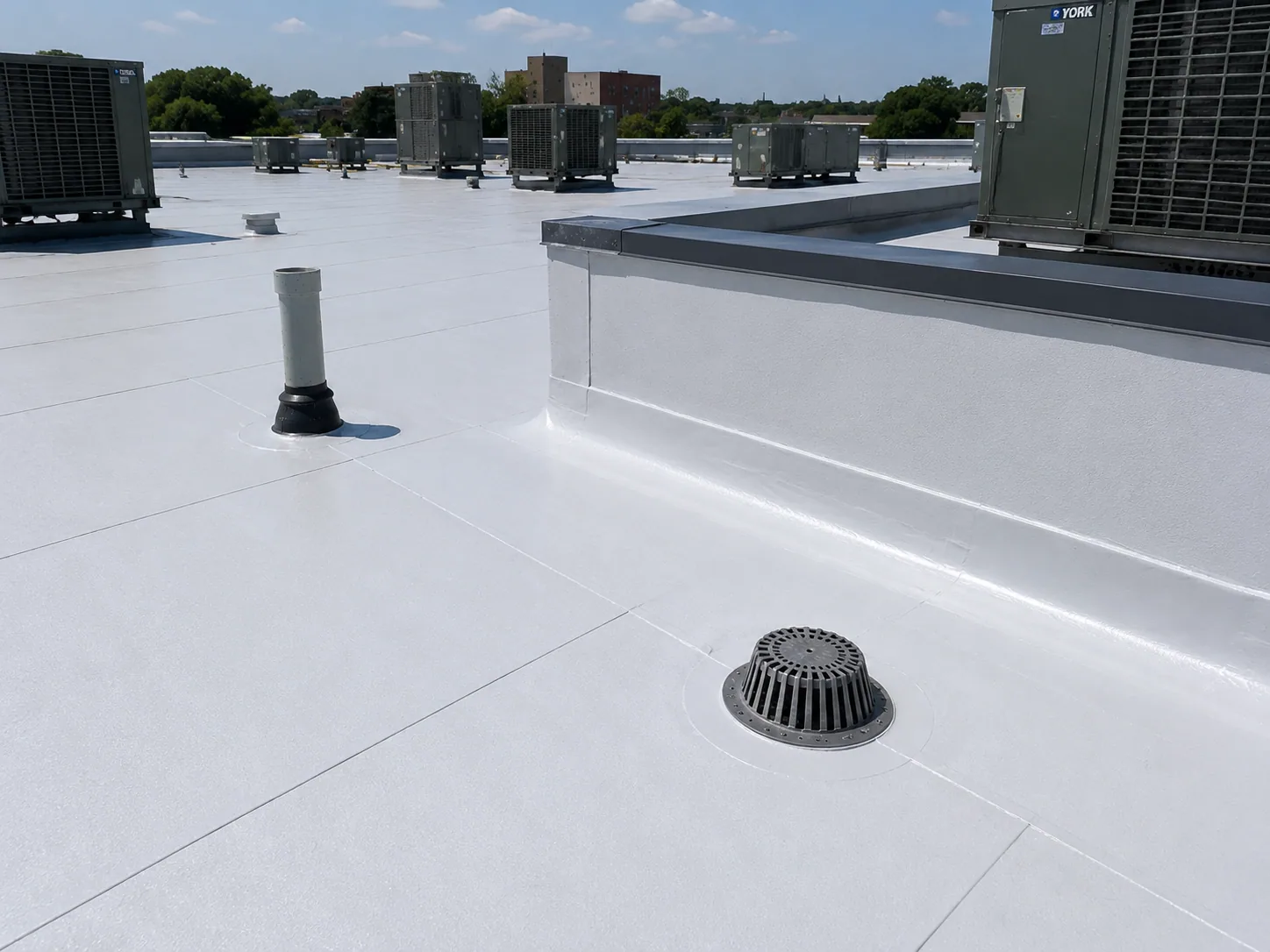
A drain bowl that holds water after the surrounding roof clears needs a closer look. We check the strainer, bowl, clamping area, and membrane transition, then follow the route toward the outlet. Costa Mesa lies near the coast and Santa Ana River, where localized flooding and potential sea-level-rise effects are recognized hazards. They do not predict what will happen on a particular roof. At the roof, the immediate question is whether water can reach and leave the drain without crossing a failed detail.
We document the bowl, scupper, and surrounding field separately. A blocked outlet, broken leader, open seam, and low area can produce similar interior symptoms but require different work. The owner receives a mapped observation and a repair boundary rather than a generic instruction to clear the roof.
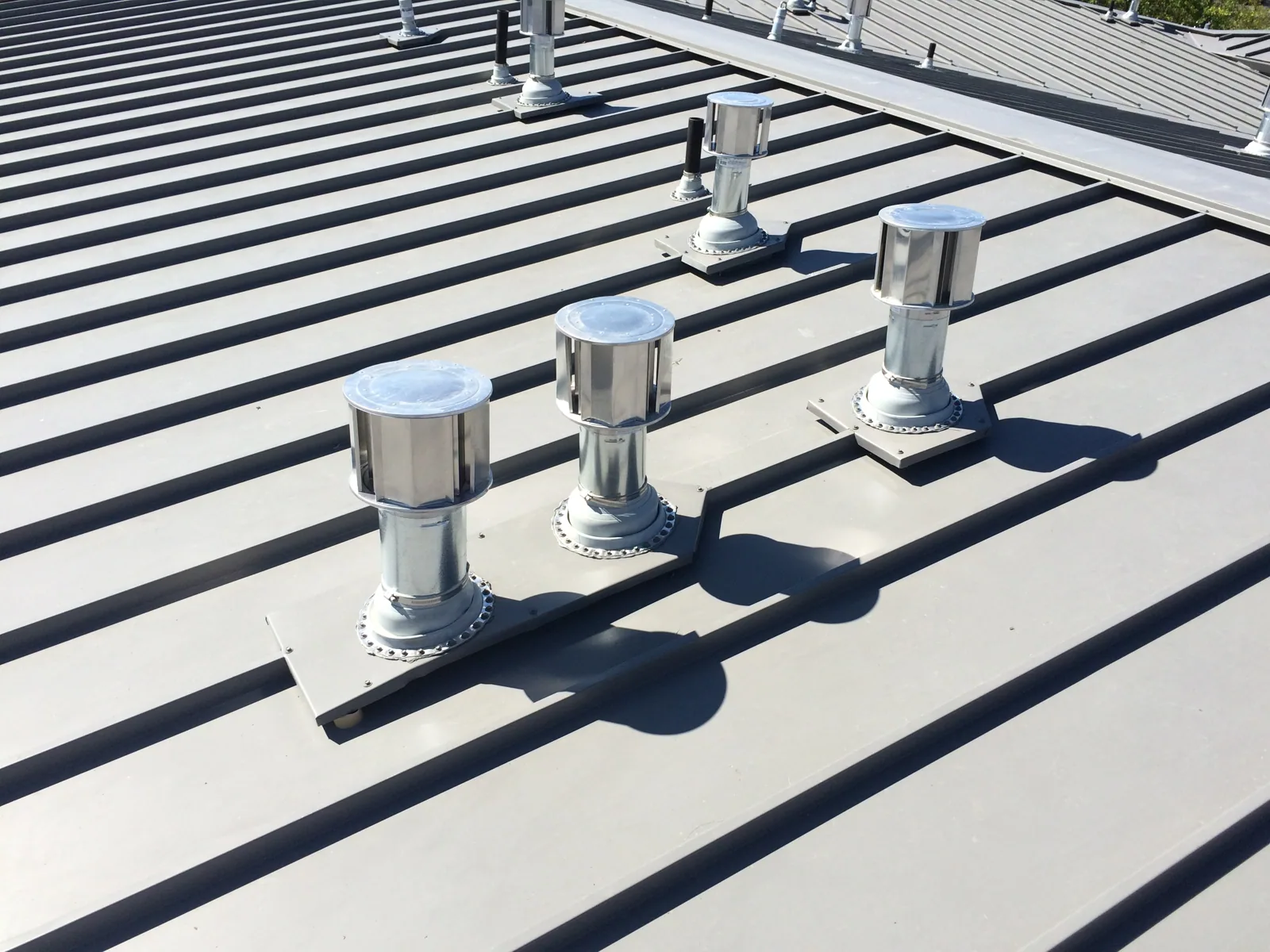
Follow the Water Path
We start at the low point and trace back across the roof. Debris can collect at a strainer, but water may also be slowed by a displaced cover, damaged drain bowl, or a slope that does not reach the outlet. We note standing water and its limits, check the surrounding membrane, and look at nearby seams and penetrations. A drain that is clear at the surface may still have an obstruction downstream, so the scope can include a test of the connection.
At a scupper, we inspect the opening, metal, membrane termination, and exterior discharge. Corrosion, movement, or an undersized path can keep water at the edge. The inspection record should show where the path starts and where it exits. When the membrane or flashing has failed, a leak repair should restore the connection, not simply seal the visible low spot.
Drainage Across Costa Mesa
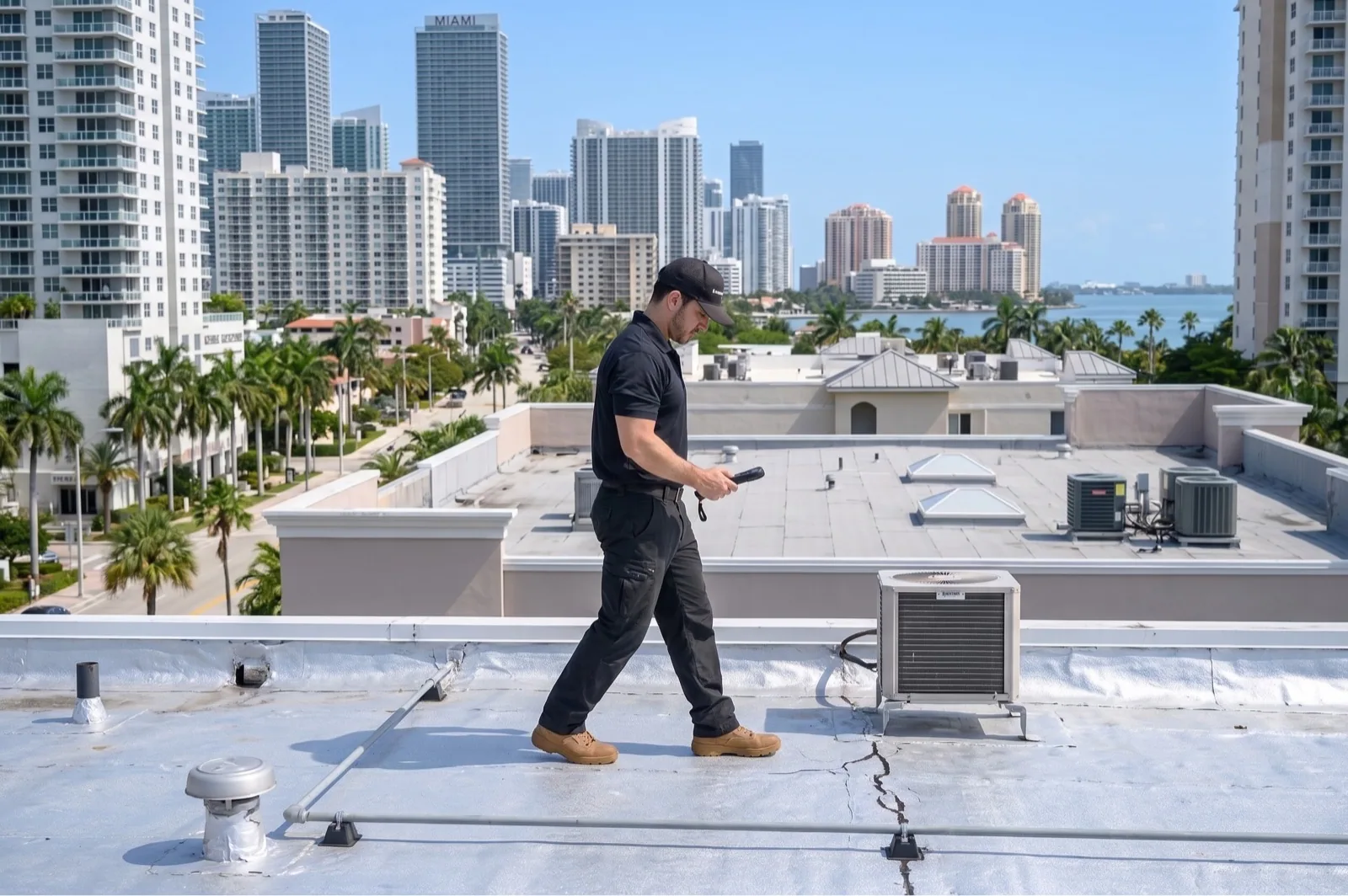
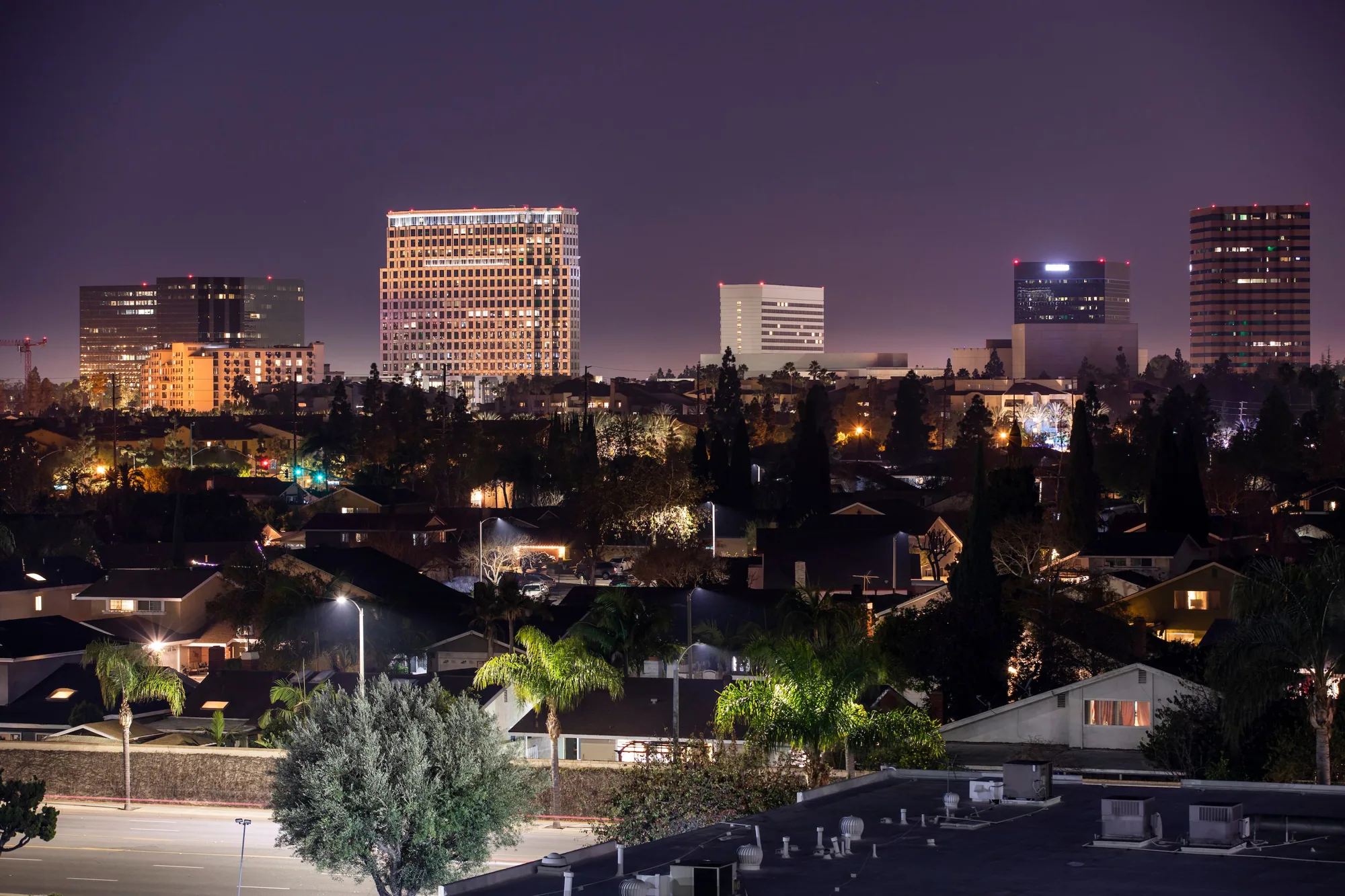
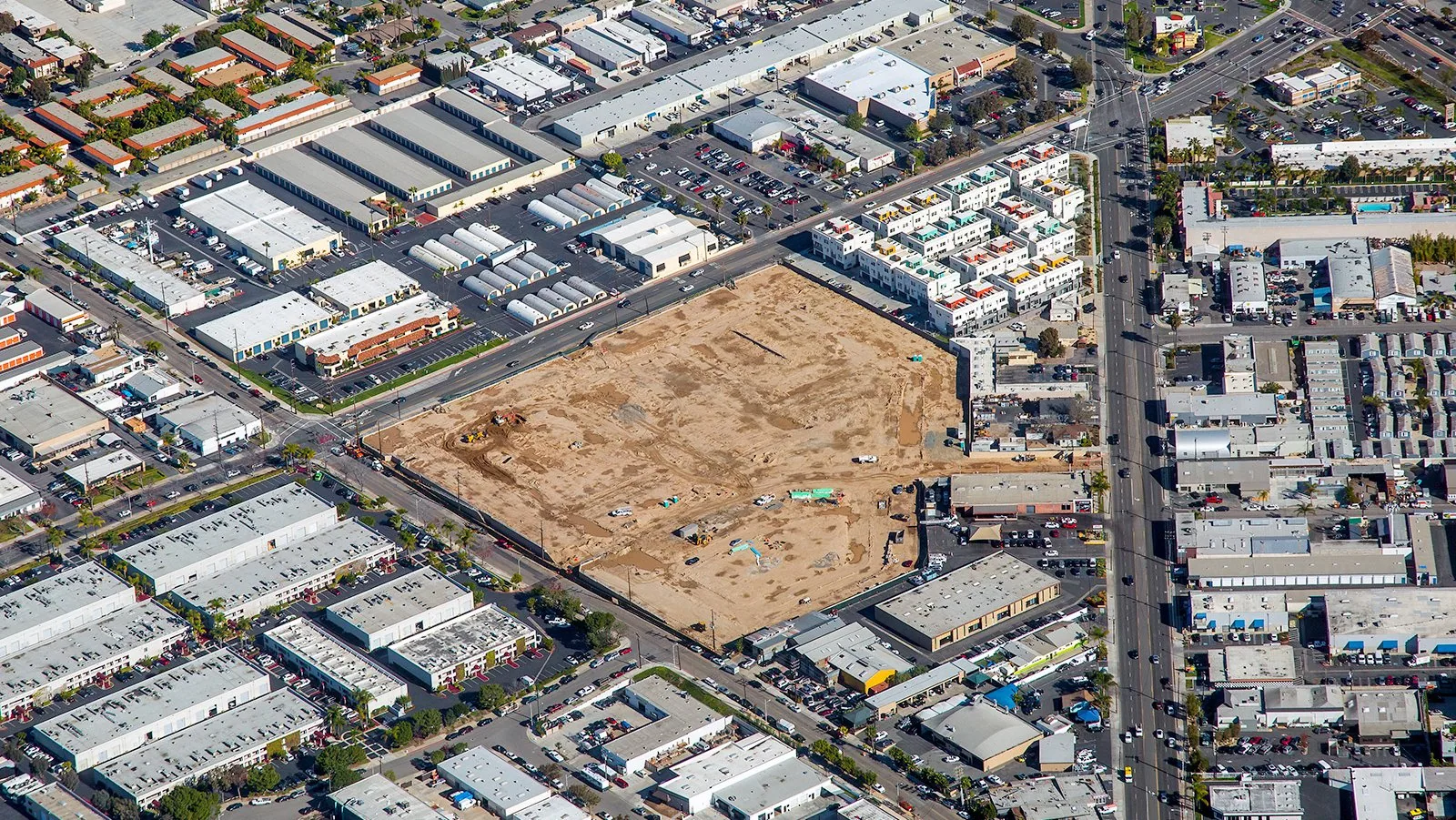
Westside, Harbor Gateway, and Airport Industrial/Business Park are Costa Mesa's three principal industrial districts. That is geographic context, not a drainage drawing. We trace each roof plane to the outlet, note which drain is primary or overflow, and label any shared area so the maintenance record can distinguish a tenant-served section from a common path. Equipment, access limits, or debris that hides the flow route go in the same roof-zone note.
Harbor Gateway covers 323 acres in northern Costa Mesa, northeast of I-405 and the Santa Ana River. For a drainage review, that reference helps locate the service area, not judge a roof's flood exposure. We check the Harbor Gateway district or Airport Industrial/Business Park building from the drain bowl outward, following the membrane transition and the observed path on that property.
Drain and Scupper Repairs
The repair depends on what has failed. A loose strainer may need clearing or replacement. A cracked bowl, open membrane tie-in, separated flashing, or damaged leader needs a different scope. We expose only what is needed to understand the connection, then restore the assembly with compatible materials. If the outlet is controlled by another trade or property system, we identify that boundary before work begins.
We also check whether the drain is set at the right elevation and whether the field membrane directs water toward it. A patch at the bowl will not correct a persistent low area away from the opening. For that condition, we evaluate the drainage plane and possible tapered insulation or a broader scope. A cover board and insulation review may help when slope or wet layers affect the decision; the report should separate confirmed work from testing still required.
Standing Water and Hidden Conditions
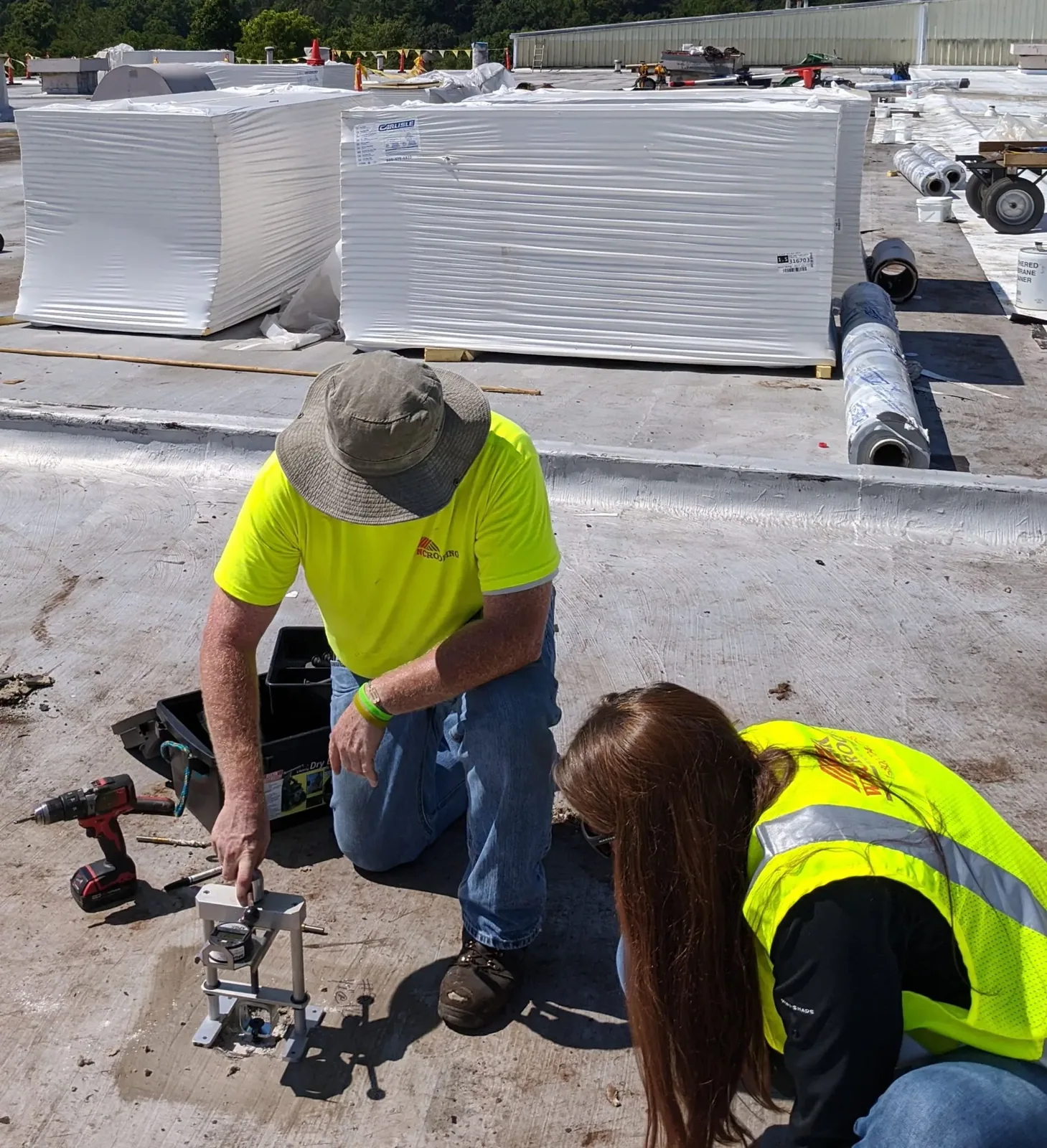
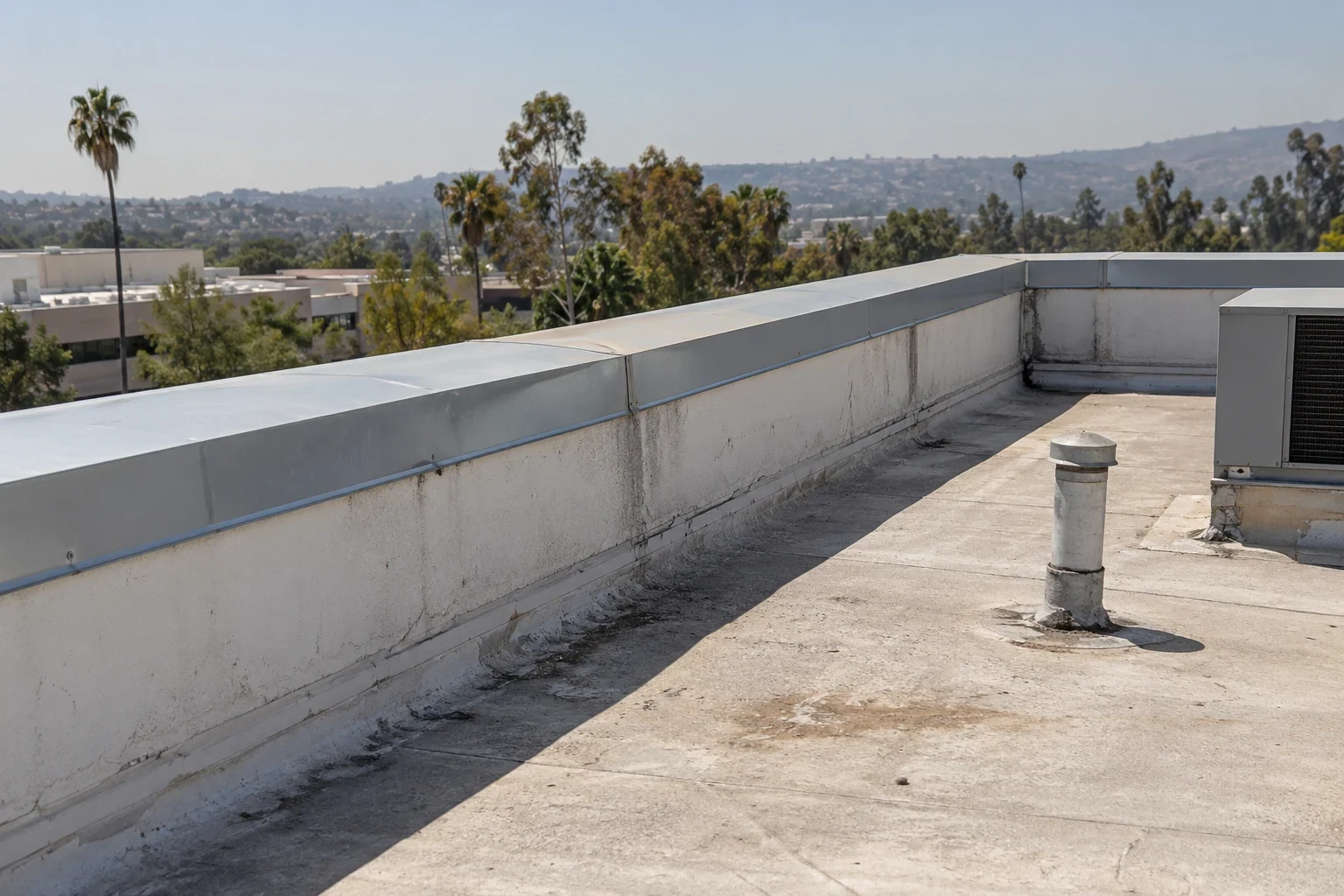
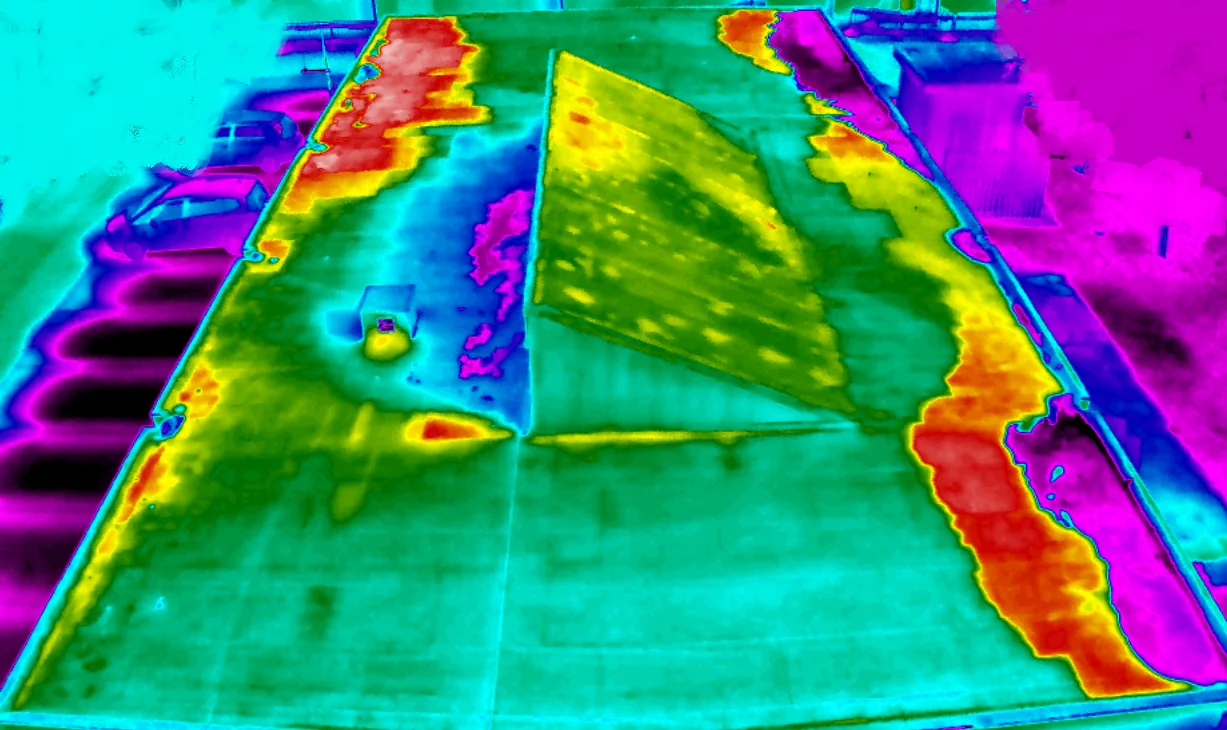
A photograph of water does not establish how long it has remained or what layers are affected. We note the inspection conditions and whether the area is actively draining. If moisture is suspected, we can map a survey area and use selected test openings to confirm the assembly. An infrared pattern can guide that investigation; it is not proof by itself. The owner should understand which observation supports repair and which question remains open.
Drainage can be part of a wider roof decision. Repeated seam failure around a bowl may justify opening the detail. Widespread deterioration, poor slope, or saturated insulation may change repair, recover, and replacement options. A moisture survey or recover assessment can be scoped after the drain condition is documented. We preserve a clear record so the next decision does not mistake a symptom for the underlying failure.
Keep the Outlet Available
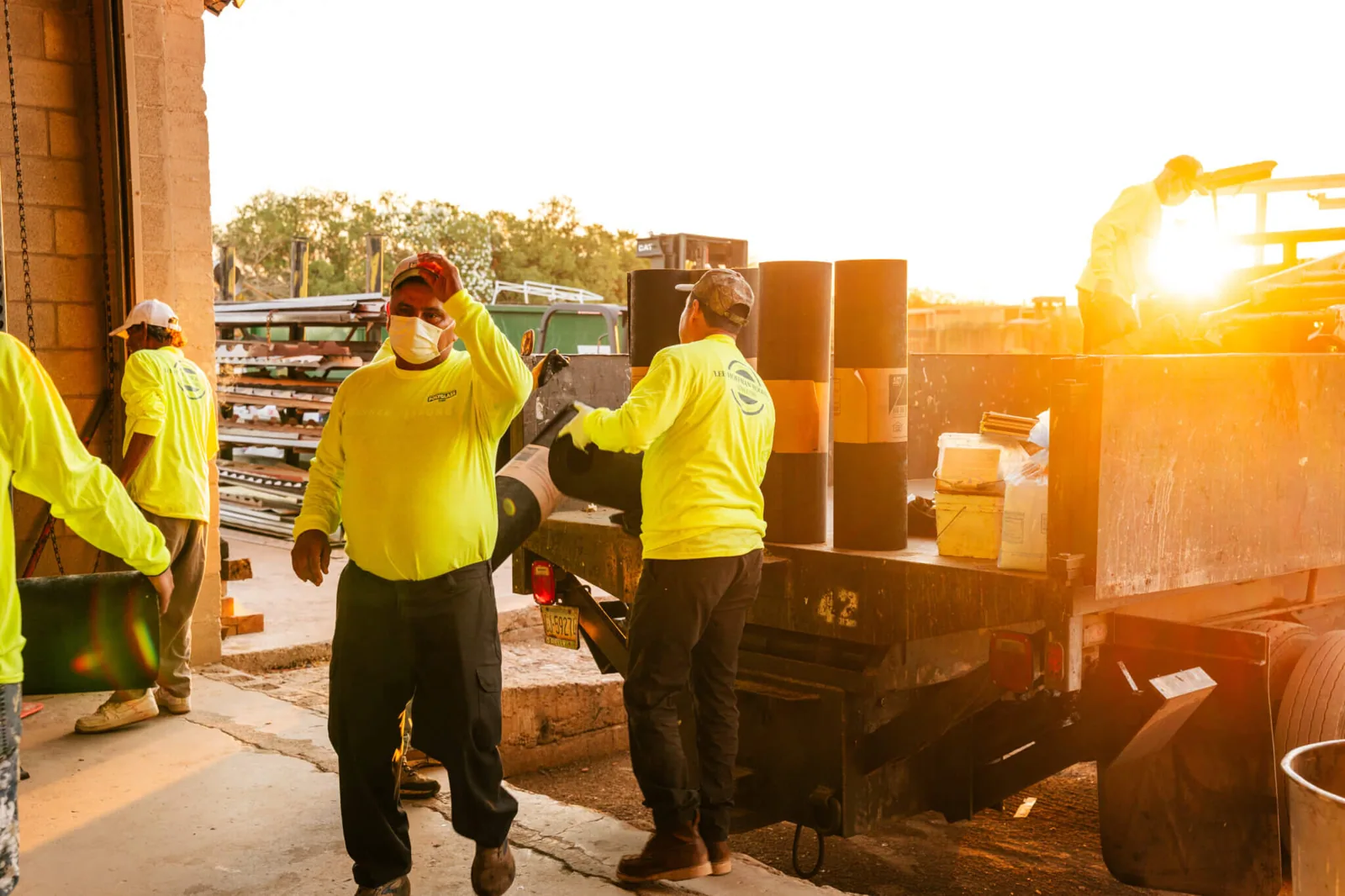
Drain work must leave a usable path while the roof remains in service. We coordinate temporary screens, debris control, and any shutdown needed to test a leader. Materials should not be staged where they block a scupper or cover an overflow. If a section is opened, we protect it at the end of each shift and record what remains incomplete. That matters when a property has deliveries, tenants, or rooftop service visits during the work window.
Before mobilization, we confirm roof access, safety controls, and who can authorize work on downstream plumbing. We may need a building engineer or plumbing trade to test a connection below the roof. Our scope identifies that handoff so the owner is not left with a repaired bowl and an untested outlet. A maintenance walk can revisit the same drain after repair and compare its flow path with the closeout photos.
A Clear Drainage Scope
A drain or scupper proposal should identify the component, membrane transition, outlet path, and condition to be corrected. We mark where water was observed, whether the path remained visible, and what testing may be needed. If the work depends on concealed connections or wet insulation, that condition is stated before authorization. The owner can then decide whether to approve the defined repair or investigate further.
Send the property address, leak locations, roof plans, and any plumbing notes to arrange a Costa Mesa roof walk. We will trace the water path, photograph the detail, and explain whether the issue is cleaning, repair, slope, or a downstream connection. A prompt inspection can prevent a small outlet defect from remaining unresolved through another work cycle. The result is a field record tied to a real roof location and a specific next step.
Common Questions
Debris, a damaged strainer, an obstructed outlet, a low area, or a failed membrane transition can all slow drainage. We inspect the bowl and trace the route to the outlet. If the downstream connection is not visible, a separate test may be needed before the repair boundary is set.
Often, when the membrane and surrounding field remain suitable for a localized tie-in. We inspect the opening, metal, flashing, and adjacent seams first. If deterioration extends beyond the detail or the slope is part of the problem, the scope may need to address a larger area.
Standing water is an observation, not proof of a leak. We document its location and inspect nearby seams, penetrations, and drain details. If water entered the building, we trace possible paths and identify what can be confirmed. A test opening may be needed where concealed layers control the repair.
We can inspect the roof-side bowl and connection. A building engineer or plumbing trade may need to test piping below the roof, depending on access and ownership. We identify that handoff in the scope so the owner can confirm both the roof opening and the downstream flow.
Photos of the drain or scupper before and after repair, a note on the outlet path, materials used, and any condition left for later testing. We also record whether water could be observed moving through the repaired route. That gives maintenance staff a useful comparison for the next walk.
Related Roofing Work
Schedule a Costa Mesa Roof Walk
Share the property address, roof records, known leak locations, and access requirements. We will confirm a workable visit and document the conditions that affect your next decision.