
Commercial Roof Leak Repair in Costa Mesa, CA
A new ceiling mark after a storm starts the walk, but the roof opening may sit several feet away. We trace water toward drains, seams, walls, and rooftop penetrations before selecting a repair. The first scope protects exposed contents and captures the active condition. The permanent scope follows after the surface dries enough to inspect and prepare. Costa Mesa has commercial corridors alongside industrial districts with different access and operating needs.
On the Westside, a multi-tenant property may need separate notice for the roof area above a suite. East 17th Street's retail, service, and office uses can make customer access part of the repair window. We confirm the actual route, people below, and roof restrictions with the property contact. The Westside district reflects local context, while each repair is set by the roof we inspect.
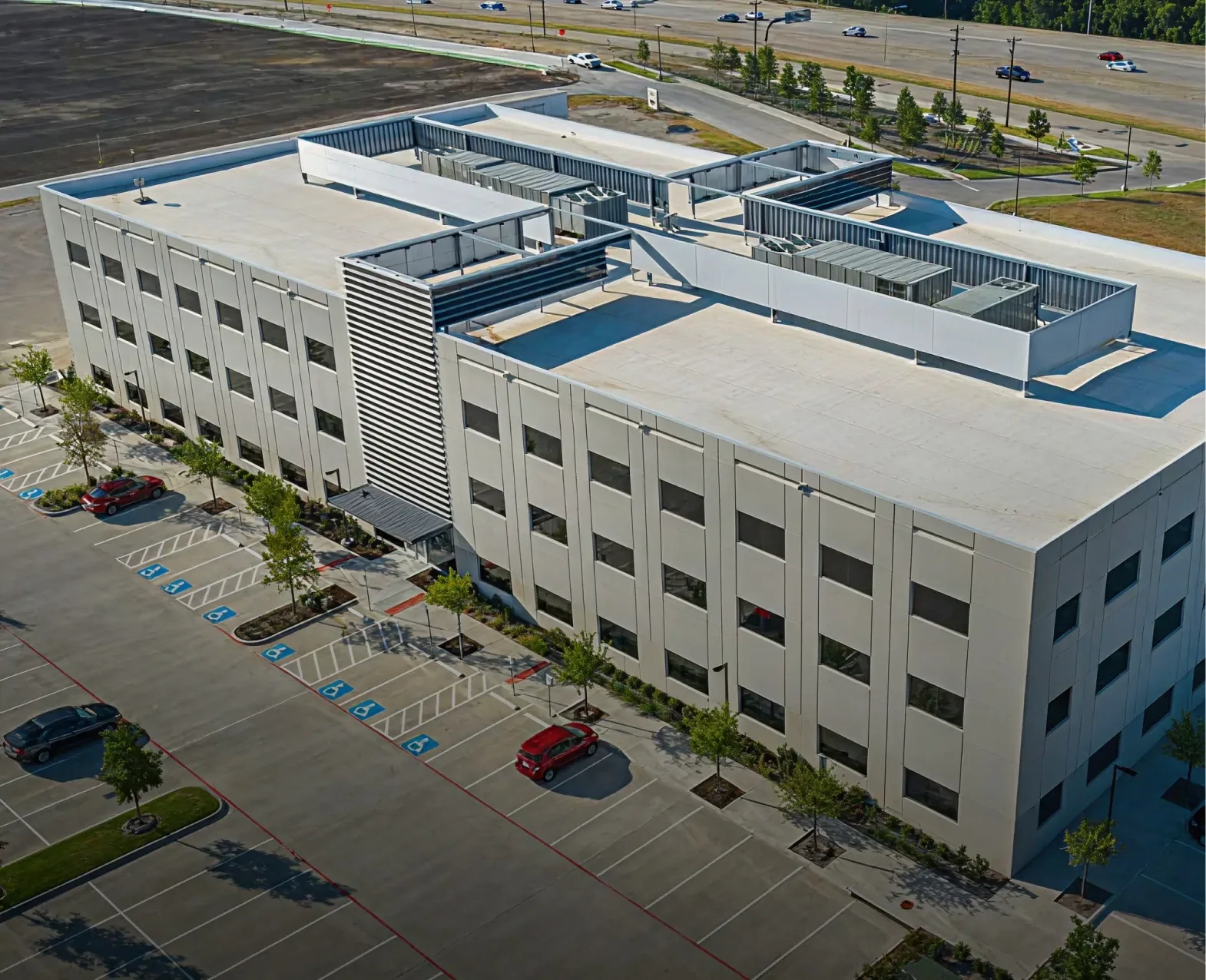
Stop Exposure, Then Trace the Path
Active water needs a safe route away from people, equipment, and stored goods. We identify where it enters, protect the interior, and mark the affected zone. Temporary collection or dry-in can limit damage until the roof can be repaired correctly. We do not cover a wet area before understanding where water is traveling. Photos, timestamps, and a simple floor location help connect the inside report to the roof inspection.
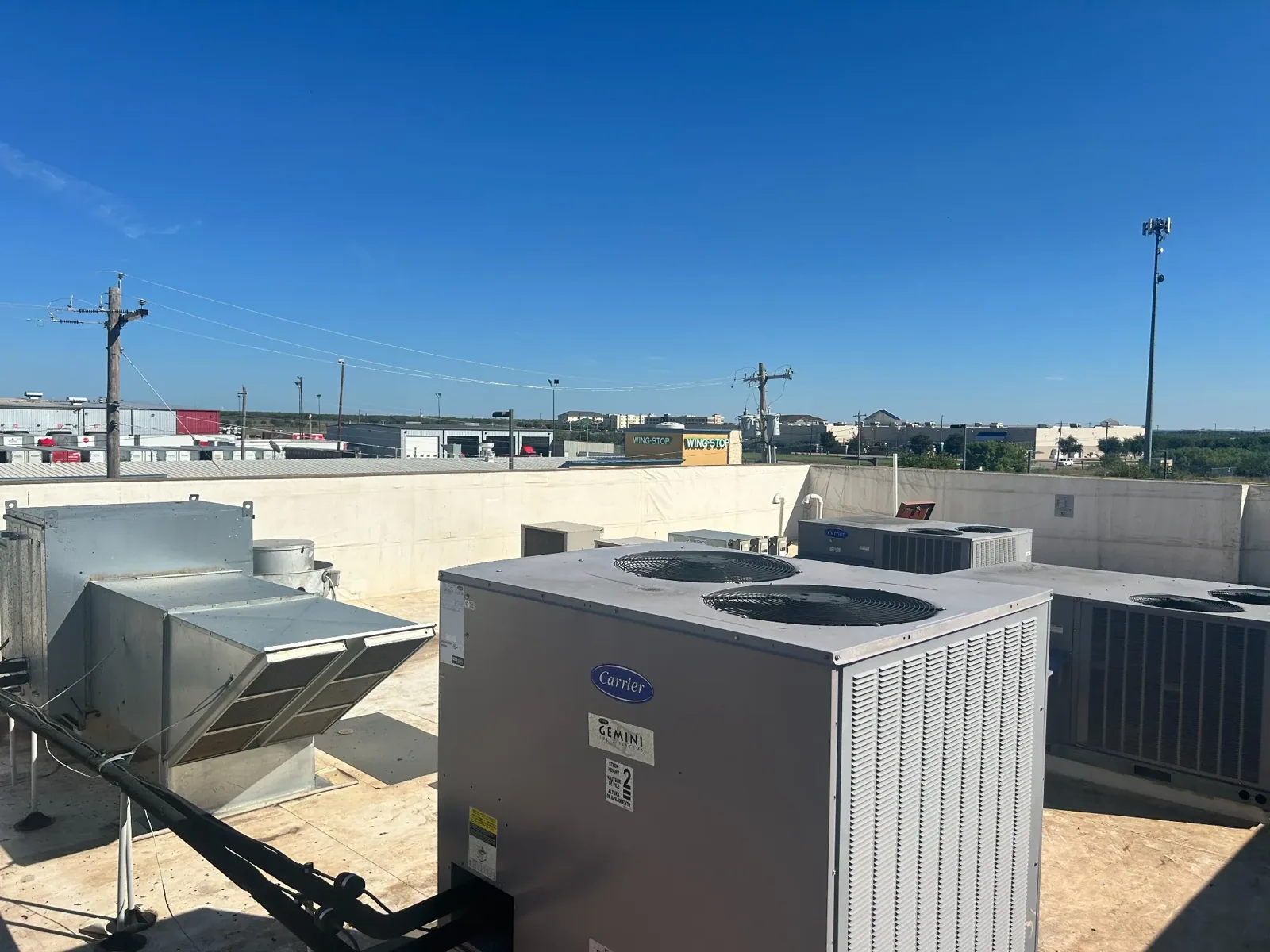
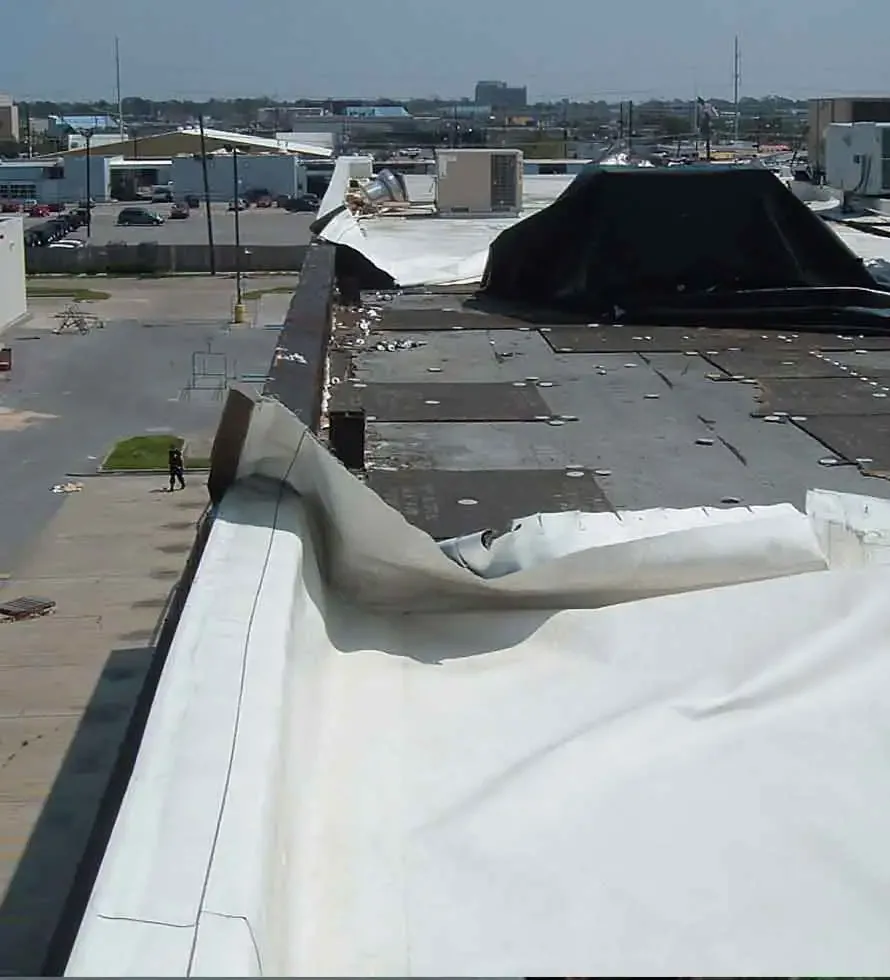
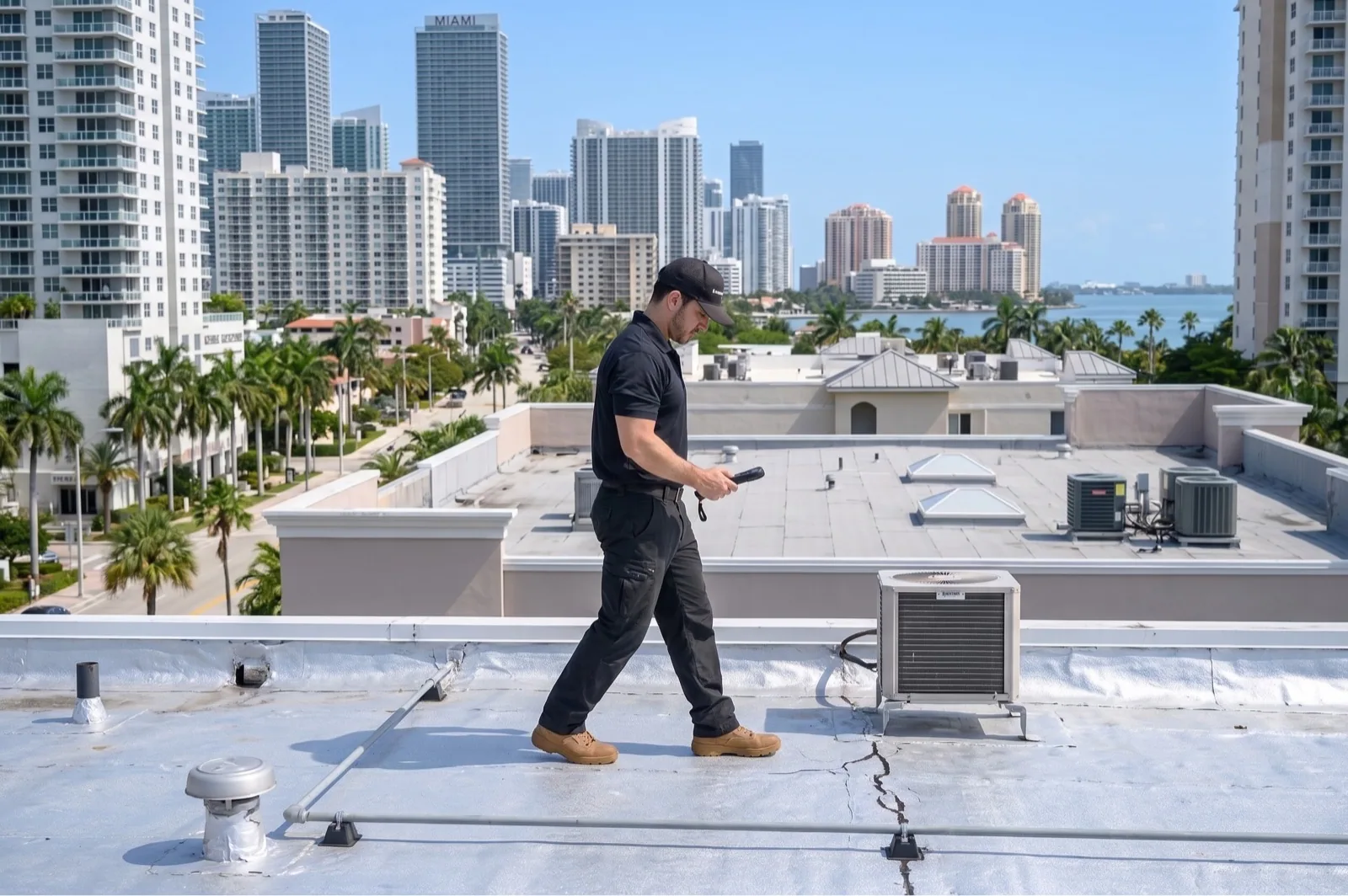
Once conditions allow a walk, we check seams, penetrations, wall transitions, drains, and earlier patches around the likely path. Water may move along insulation or deck before appearing below. We look for loose membrane, displaced metal, open flashing, punctures, and backed-up drainage. The inspection record marks accessible and inaccessible areas. If the path remains concealed, targeted testing can keep the repair from extending by guesswork.
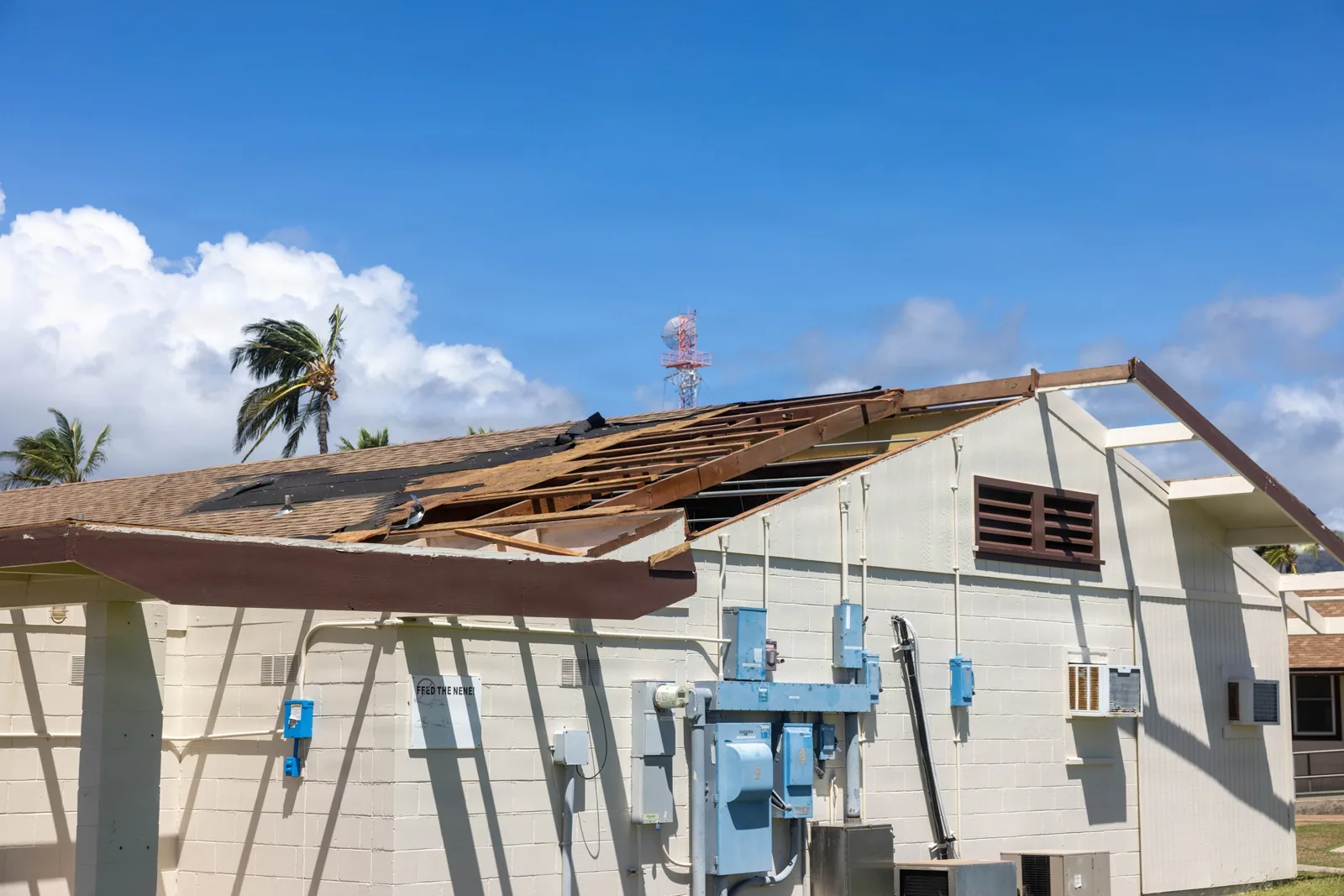
Find the Entry Detail
A curb corner can split while the surrounding membrane stays sound. A drain clamp can loosen where ponding keeps a detail wet. A fastener line or edge termination can also carry water under a visible patch. We separate these possibilities with close inspection and, when necessary, a test opening. The repair note records what was observed and where the team needs access. It avoids pricing a broad area before the entry detail is located.
For a thermoplastic roof, the weld can be probed and tested after preparation. EPDM calls for compatible splice materials and secured edges. Metal roofs need attention to laps, fasteners, closures, and penetrations. Our TPO seam repair and EPDM detail repair follow the installed system. A drain and scupper check can reveal whether the outlet or overflow contributes to the leak. We mark the repair edge so later inspections can compare the same detail.
Costa Mesa Conditions and Access
The nearby Santa Ana John Wayne Airport station averages daily highs of 78.9 degrees in July and 80.4 in August, with 11.18 inches of annual precipitation for 1991-2020. Those are regional averages, not a measurement for a particular roof. They give a planning backdrop for roof walks and drying, while the current forecast and actual surface condition decide when material can be installed. A wet substrate must be dry and prepared to the repair system's requirements.
The Airport Industrial/Business Park district sits in a larger regional business and industrial area extending toward Irvine and Tustin. We verify the property's gate, roof access, delivery path, and equipment schedule before dispatch. A leak above a production or service area may need interior coordination in addition to roof repair.
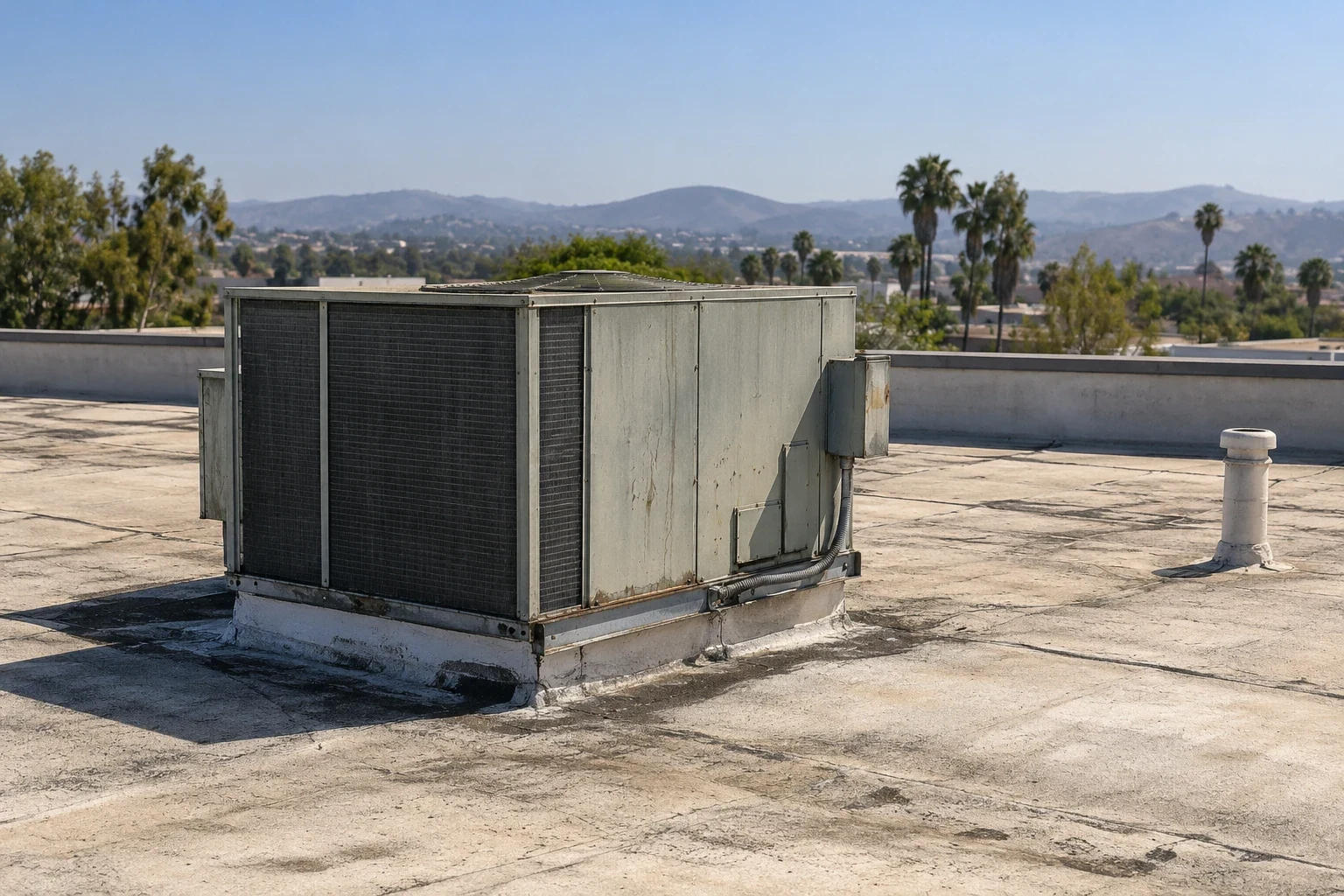
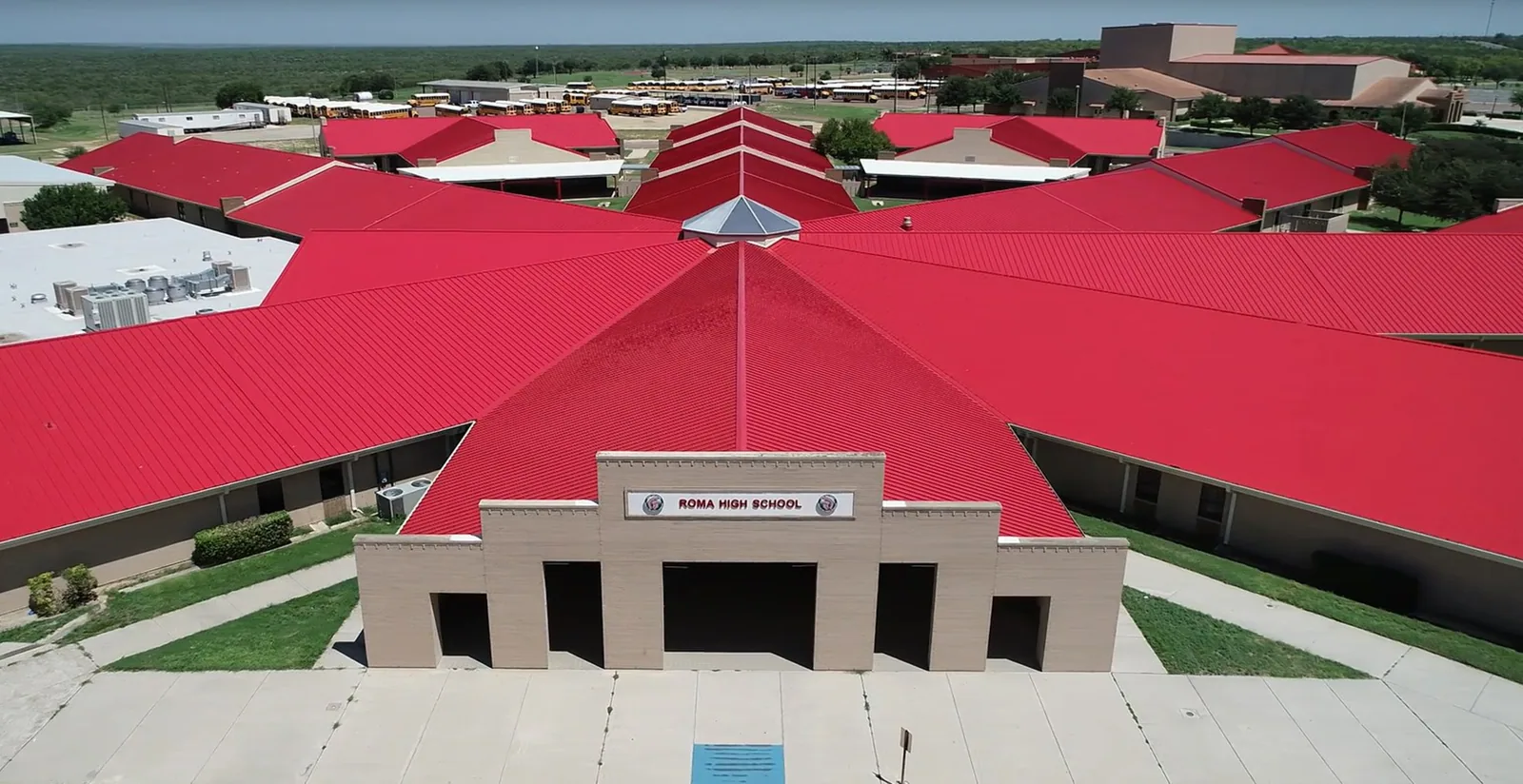
A Repair Boundary That Holds
We remove loose material to a sound edge, dry the substrate, and install a compatible patch or flashing repair. If insulation is wet, the opening must reach dry, stable material before closure. We document each removed layer, replace what the scope includes, and restore the tie-in. At a wall or curb, the patch extends far enough to secure the flashing and terminate it correctly. The work record names any nearby defect that remains outside the approved repair.
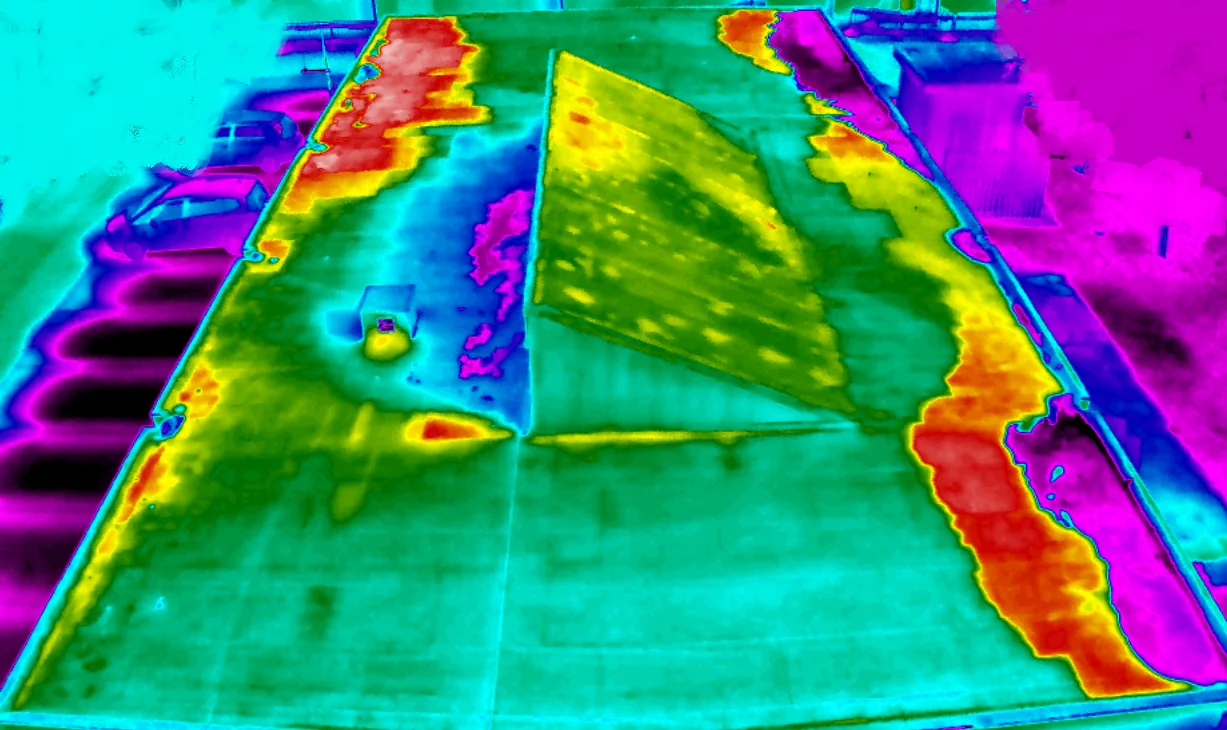
A recurring leak can signal a detail that needs rebuilding rather than another surface seal. We check whether movement, attachment, drainage, or a concealed wet area explains repeat failure. If moisture likely extends beyond visible damage, an infrared moisture survey can help select openings. A flashing failure repair may address a failed wall or curb transition. The owner sees the evidence and can approve a larger boundary only when findings support it.
Interior Protection and Work Timing
Repair timing depends on access, moisture, weather, and the material used. We set a temporary protection plan if the opening cannot close immediately. On the interior, the building contact can move contents, isolate equipment, or restrict an area below the work. We agree who receives an update if the opening reveals damage beyond the first scope. That decision path avoids leaving an exposed area while waiting for a new approval.
East 17th Street is a 92-acre corridor with retail, service and office uses. When a property sits along a customer-facing corridor, the owner may ask for staging and work hours that keep entrances clear. We verify the actual condition instead of using the corridor fact as an access assumption. Property staff can revisit the repaired detail after the next weather cycle.
What to Send With the Leak Call
Send the building address, room or suite location, time the leak appeared, and any change after rain or equipment use. Photos from inside are useful when they show the affected ceiling and nearby walls without exposing private records. Share roof plans, past patches, and access restrictions if they are available. We confirm a safe roof route and identify which areas need interior protection before the walk.
The first visit may resolve an exposed defect or set up temporary dry-in while the roof dries. We then provide a permanent repair boundary, material approach, and any test needed to confirm concealed layers. Where broad deterioration appears, a planned repair review or replacement comparison can address the wider condition. Call with the active location and access contact. We will separate the immediate protection from the work that closes the roof.
Common Questions
Insulation, deck flutes, and framing can carry water away from a seam or penetration before it reaches a ceiling. We follow the likely route above and below, then test where the entry remains concealed. The repair record connects the interior location to the roof detail that supports the finding.
We first choose a safe way to protect the interior and limit exposure. A permanent membrane repair needs a dry, prepared substrate and conditions allowed by the material instructions. If that cannot happen during the first visit, we document the temporary protection and schedule the closure after the area is ready.
We compare the repair location with the water path and test the nearby transition, drain, or seam. A repeat leak may involve a second entry point or wet material beyond the first boundary. We document the new finding and set the added work separately so the owner can approve the next opening or detail repair.
No. The nearby airport station's long-term normals describe regional climate, not a specific storm or roof. We use the reported event, current weather, roof condition, and drainage path to guide inspection. A site-level leak determination comes from the observed details and testing, not an annual average.
The property address, affected room, time noticed, access contact, and available roof records help us choose a route and protection plan. A photo can show the interior mark and nearby conditions. Tell us about active equipment or tenant restrictions so the first visit can focus on a safe inspection and temporary protection if needed.
Related Roofing Work
Trace the Water Path
Call with the building address, affected suite, and access contact. Send any roof plan or earlier repair record, and we will separate interior protection from the permanent repair scope.