
Roof Damage Repair in Costa Mesa, CA
A water report, impact mark or lifted edge is evidence to investigate, not a complete repair scope. Costa Mesa’s NOAA station normals describe regional temperatures and precipitation, while City planning documents identify localized hazards; neither determines a building’s roof condition. We document the actual surface, assembly and timing before setting a repair boundary.
Roof Damage Repair
More About Roof Damage Repair
Leak and ponding observations
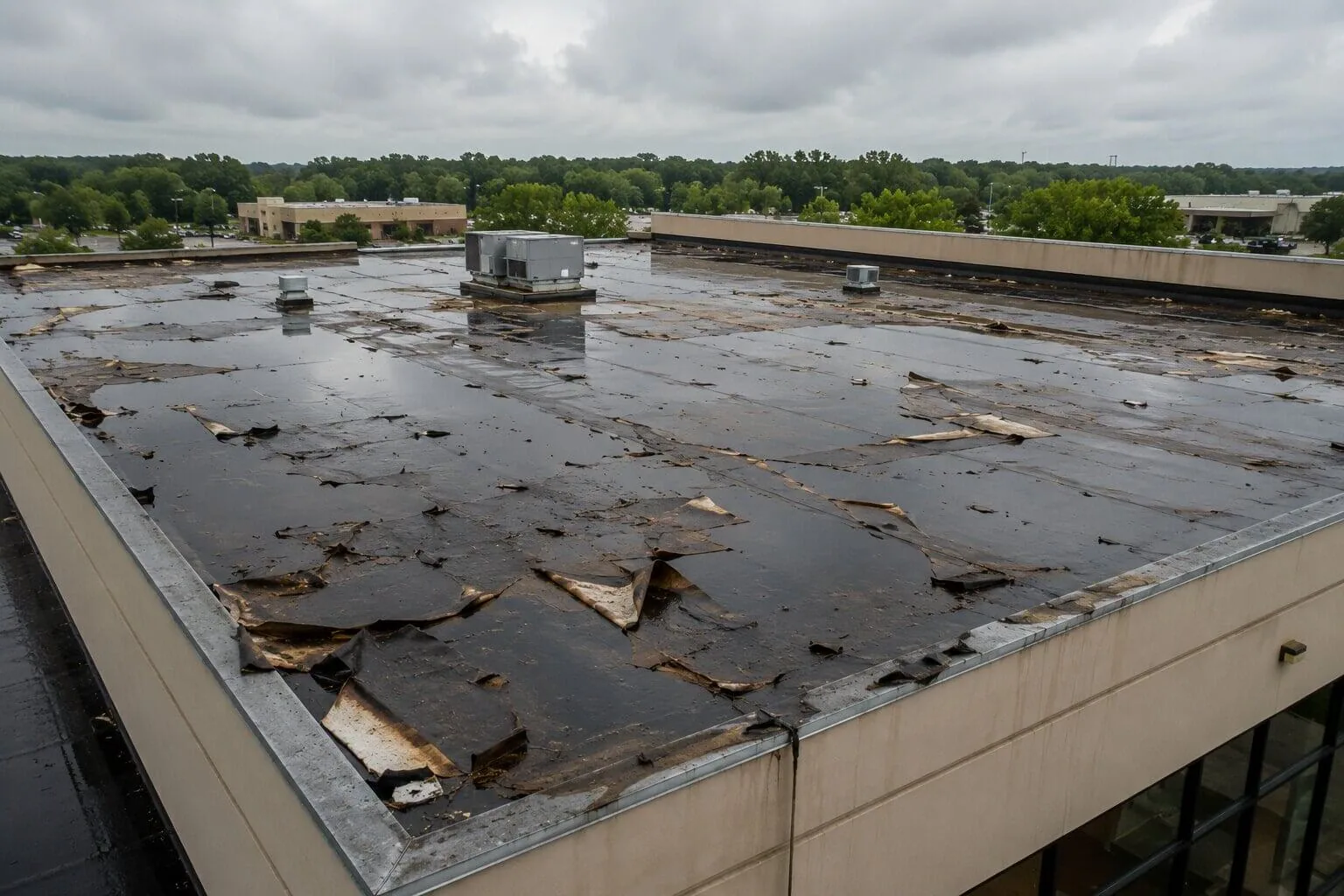
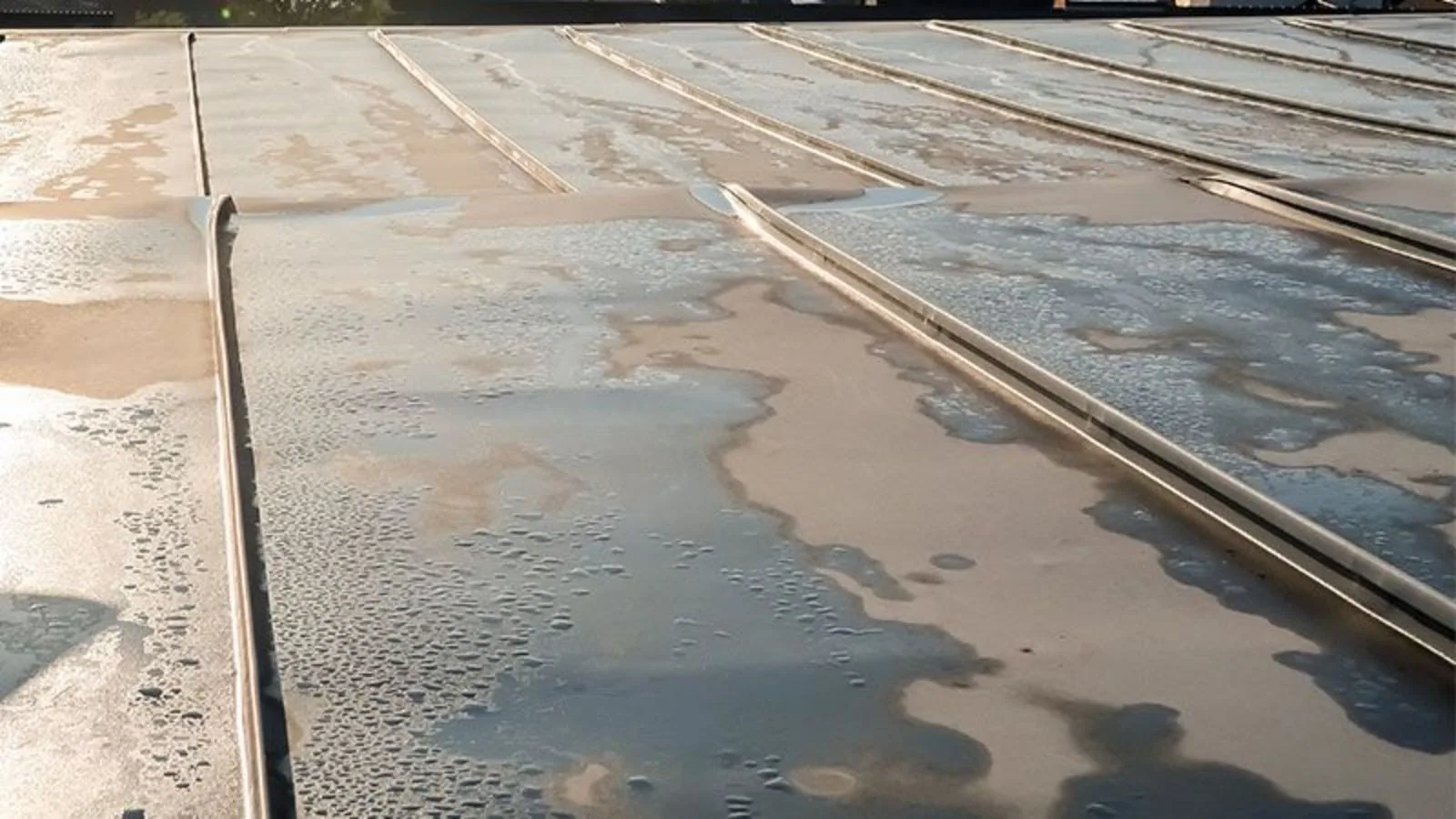
Water may travel before reaching a ceiling. Leak repair starts with the room, time and roof zone, then checks seams, penetrations and drainage. Ponding-water evaluation distinguishes a blocked outlet from a low area or a structural question.
A fire damage inspection should separate event-related observations from unrelated maintenance items.
Wind and storm conditions
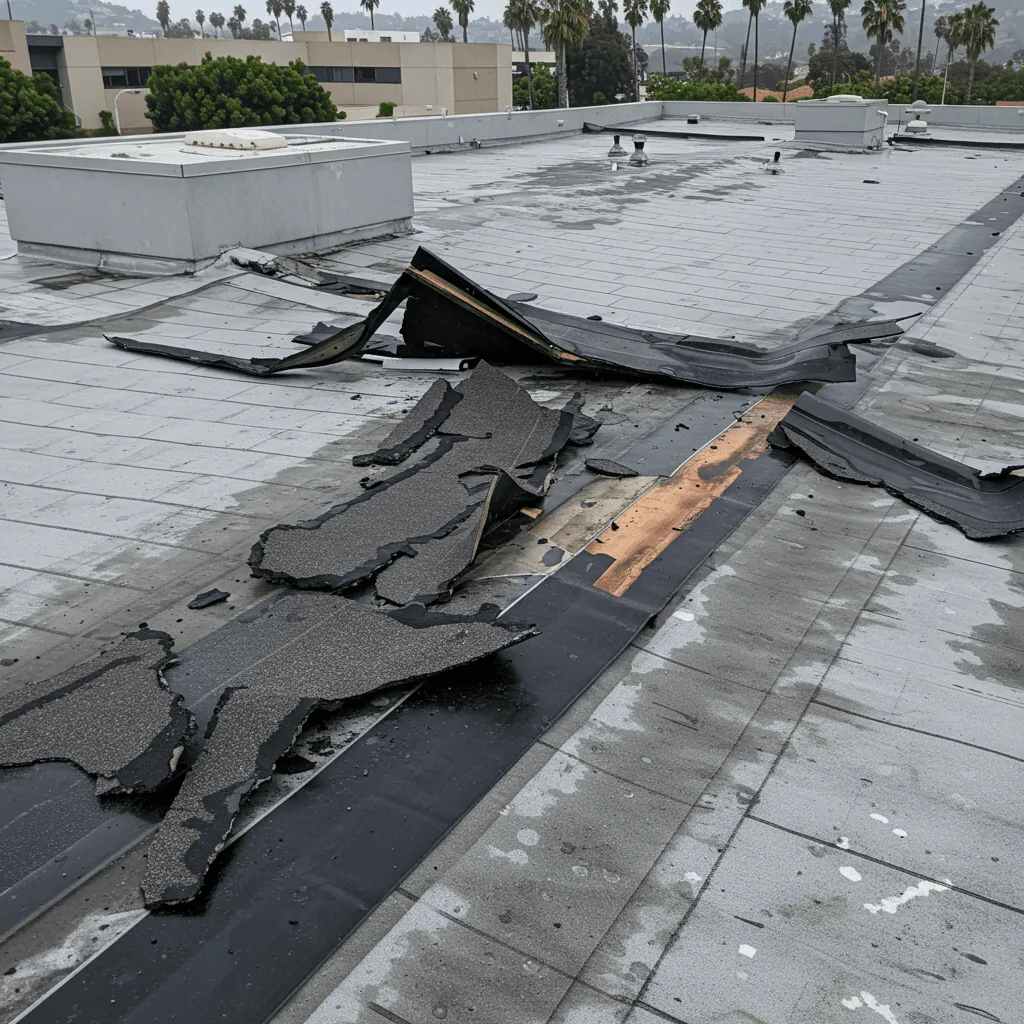
After high winds or heavy rain, the inspection checks edge metal, perimeter details, laps, drains and temporary protection. Wind-related repair documents observed displacement without assuming the cause. Storm damage service records new conditions and separates emergency dry-in from permanent work.
Flashing, seams and penetrations
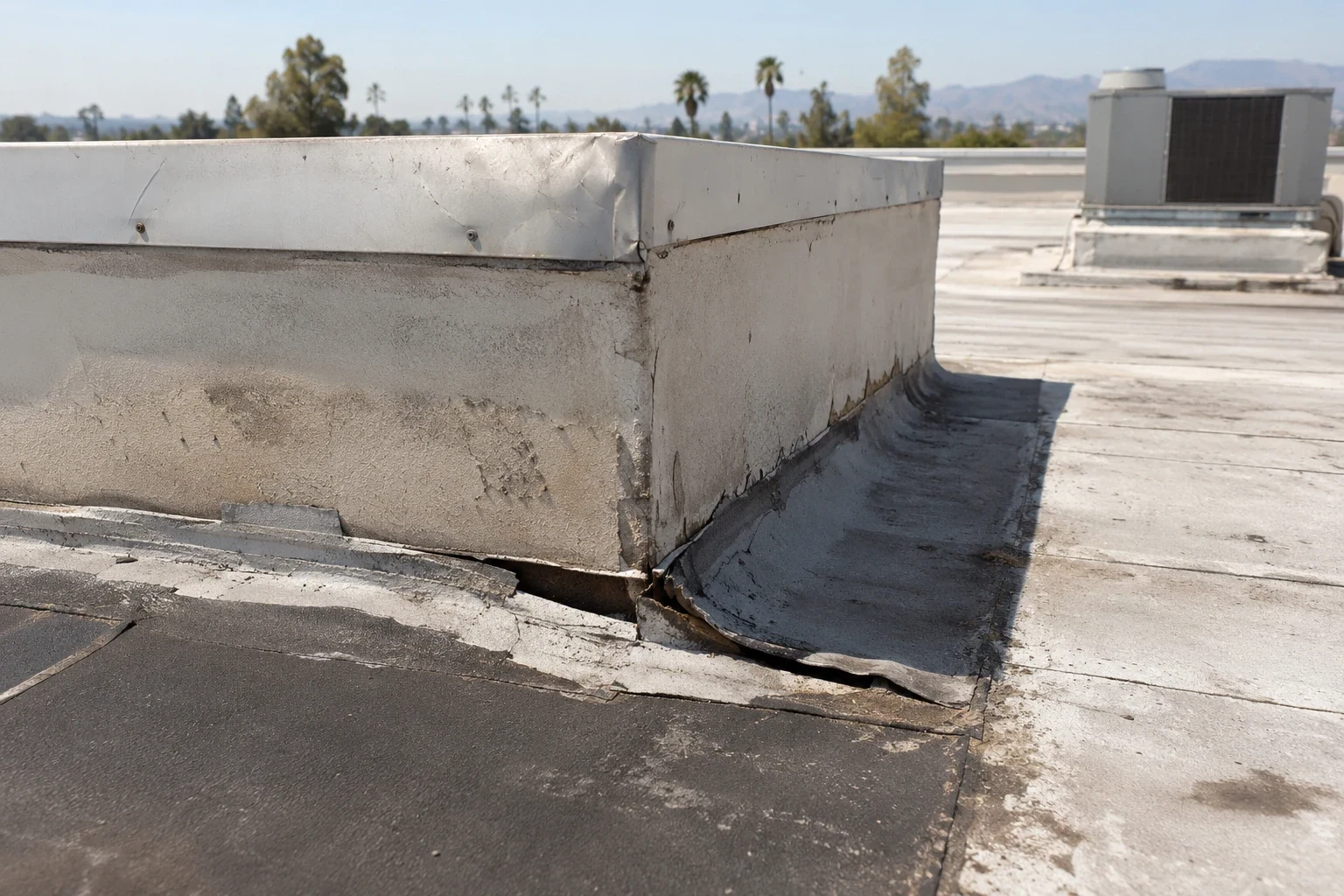
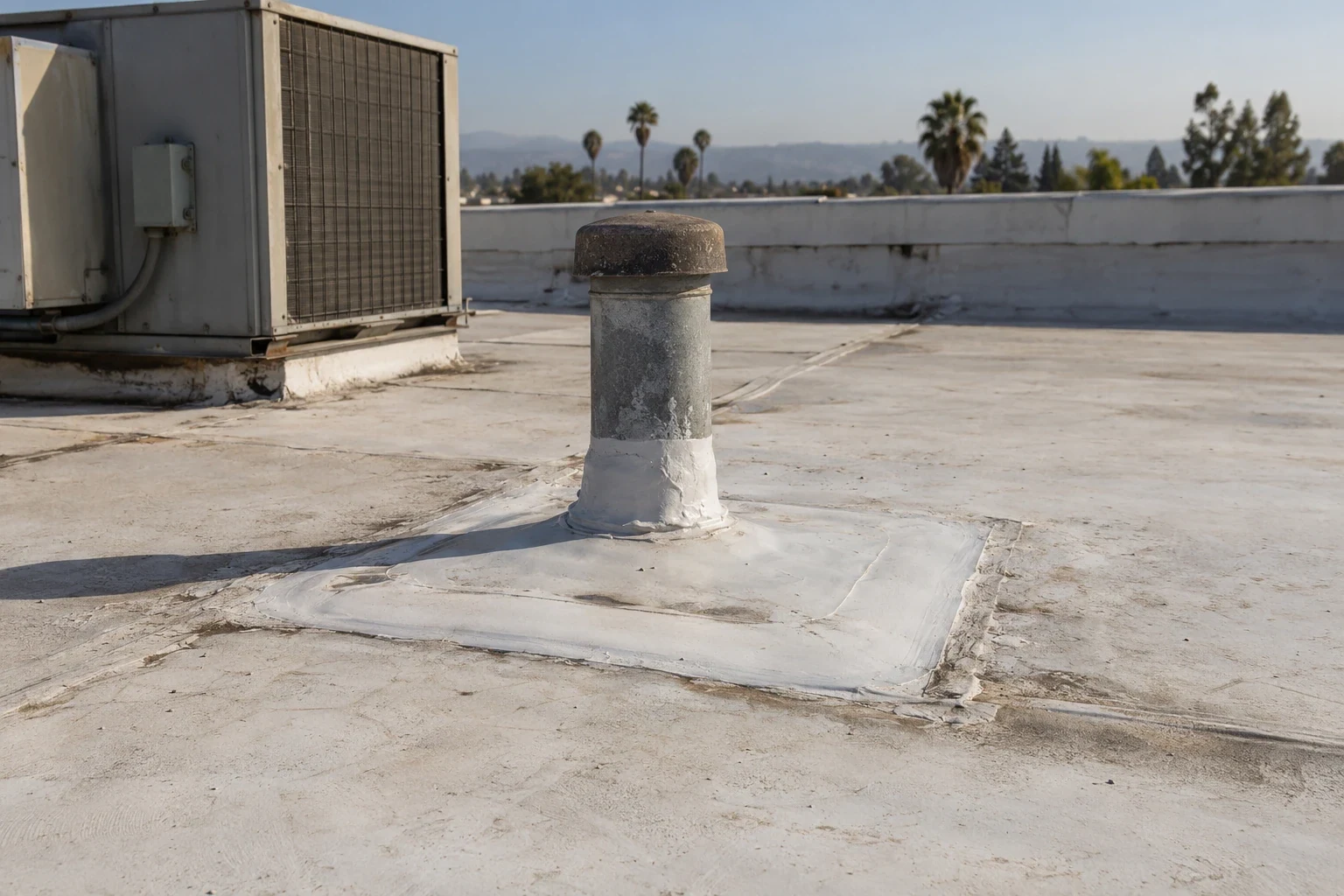
Leaks often involve a transition rather than an open field of membrane. Flashing repairs examine curbs, pipes and parapets; seam scopes identify the weld, adhesive or cover detail compatible with the assembly.
Use testing only when it changes the scope
Moisture may extend below a visible defect. Infrared screening can identify candidate areas for confirmation. A puncture repair is bounded after the material and substrate are checked; additional removal requires approval.
Close the loop with a field record
Photos, location, materials, work limits and any unresolved condition belong together. Emergency protection should have a permanent follow-up plan where appropriate. A later inspection can compare the repaired zone with the original notes.
The first response and the permanent repair are separate decisions. Temporary dry-in can protect an interior while testing or access is arranged, but the owner should understand where protection ends and what remains exposed. A permanent repair needs a compatible tie-in and an agreed closeout method. When a broader condition is visible, the crew documents it and asks for direction before expanding the approved removal area. This prevents an urgent visit from silently becoming a full replacement scope.
Each record should show the date, roof zone, surface condition, temporary measures and the contact who approved permanent work. That history helps separate a new defect from a return near a prior tie-in.
Before the crew leaves, the owner receives a short account of what was secured, what was repaired and what still needs review. If a test was deferred or another trade must respond, the closeout names that handoff and the relevant roof detail.
Commercial Roofing Questions
Should water be contained before diagnosis?
If active, temporary protection can limit exposure while the cause is investigated.
Does a stain locate the roof opening?
It is a clue. Water can move through the assembly before reaching an interior surface.
Will an infrared scan prove wet insulation?
No. It flags areas for interpretation and confirmation where needed.
What if damage is wider than expected?
The crew documents the changed condition and requests approval before expanding the work area.
Can repairs follow a storm?
Yes. The inspection separates immediate protection from verified permanent work.
Discuss a roof decision
Share the property address, current roof records and the issue or planning question. We can arrange a site-specific review with the authorized contact and define the next useful step.
Request a Roof Assessment
Tell us about the building, the roof and what you are seeing. Call us at 555-555-5555 or send a request and we will set up a time to walk the roof.