
Commercial Roofing for Santa Ana, CA Properties
For a Santa Ana roof call, the first useful detail is where the building contact can meet the crew and how the reported water reached the occupied space. We document the room, timing, recent roof work and access route, then compare that account with the membrane, drains, wall transitions and rooftop equipment. Santa Ana has 2,152.8 acres of designated industrial land, grouped in southwestern, south-central and southeastern city areas. That is land-use context, not a current count of roofs or a promise about any property. We confirm the address and actual roof conditions before defining a commercial roof inspection.
Available drawings, prior invoices and warranty paperwork can narrow the questions, but the field review remains important. We note which details are visible, which layers are hidden and which records appear incomplete. When moisture or deck condition could change the repair area, the proposal describes the test, location, expected result and approval needed before removal. The owner receives separate lines for temporary protection, confirmed repair, diagnostic work and any broader renewal option. This avoids presenting an unknown layer as a measured quantity and gives the facilities contact a clear authorization point.
Confirm a site contact and shared access
Before mobilization, we confirm the roof hatch, escort rules, loading position, tenant hours, restricted equipment and a contact who can approve a change in scope. A property with several occupants may need notice to a shared manager before a lift or debris container is brought near a common route. We ask which door remains available and where workers may safely set tools.
Santa Ana's industrial districts occupy several parts of the city instead of one continuous industrial area. At each address we verify the daily route, deck access and any neighboring operation that affects staging. A Westside district visit in Costa Mesa is separately confirmed and scheduled; city-wide geography does not grant access to a building. Our crew logs arrival, the area opened and the condition left at the end of each work period.
Connect interior reports to roof-side evidence
A stain can reveal when water appeared without showing how it entered. We ask whether it followed rain, cleaning, equipment service or another event, then inspect likely roof-side transitions above and around the room. Seams, pipe penetrations, curbs, edge metal and drains receive separate notes. Where an earlier patch exists, we check its bond and tie-in instead of assuming it solved the original path. The photograph set identifies the roof zone so a later visit can compare the same location.
If insulation or cover board may be wet, we mark the suspected boundary and explain how a moisture survey or small opening could refine it. A flashing failure assessment addresses curb and wall transitions, while a ponding-water review follows a drainage question. Those are different scopes. We state which finding supports each recommendation and stop at the authorized limit if concealed damage changes the quantity.
Identify the surface before choosing a patch
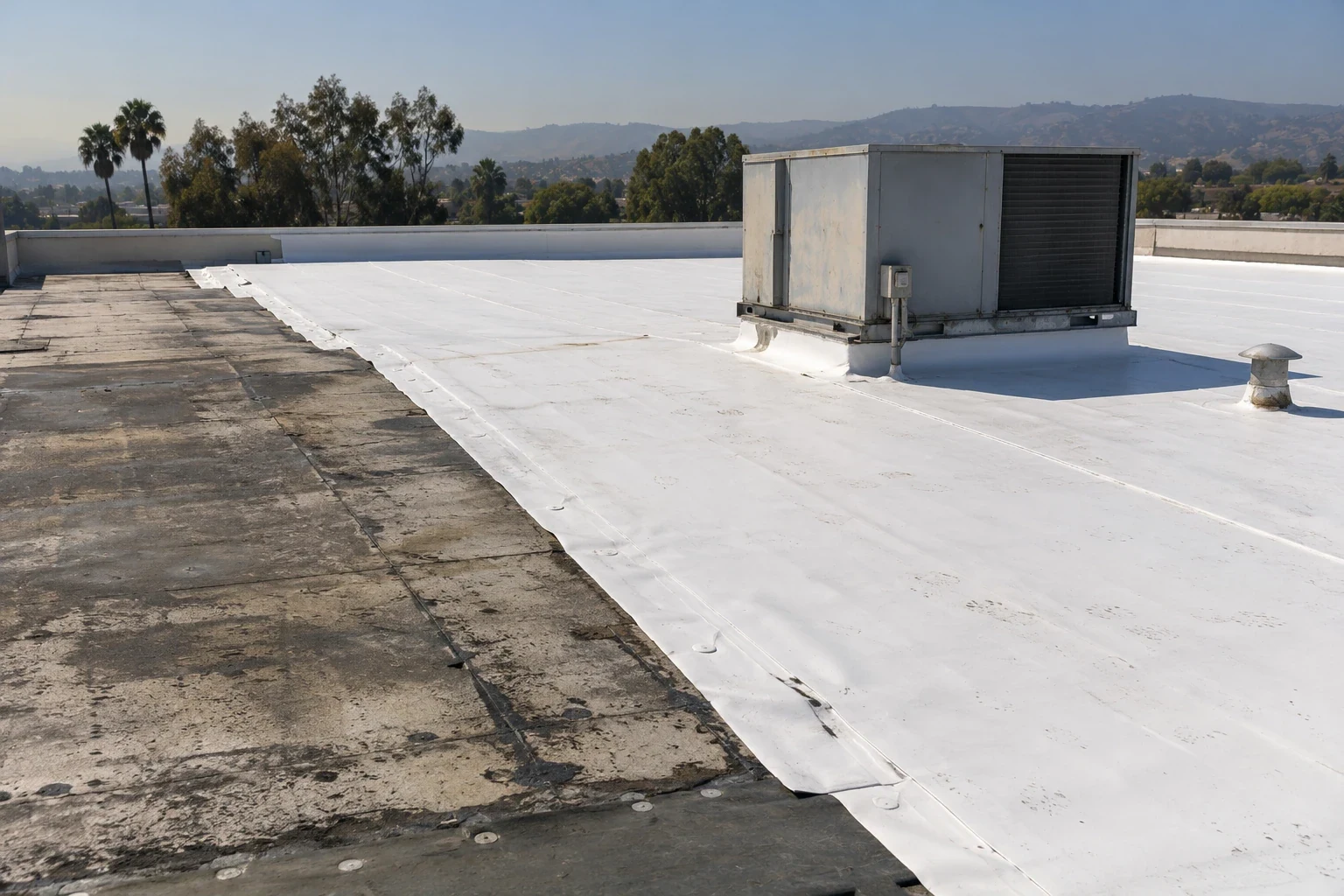
Repair materials must match what is installed and what can accept a new tie-in. We use labels, records and accessible construction details to evaluate TPO, PVC, EPDM, modified bitumen, coating or metal. Appearance alone may not distinguish a coated surface from an underlying membrane. If prior work obscures the substrate, the estimate calls for confirmation rather than promising a particular weld or adhesive will bond.
A EPDM system review and a modified-bitumen review address different joint and flashing methods. When the confirmed material permits it, we define preparation, repair size, compatible components, seam or lap treatment and cure time. If the existing field is brittle, loose or broadly patched, we compare a bounded repair with a recover assessment that checks attachment, moisture, drainage and added layers. The final scope says what is excluded as clearly as what will be repaired.


Keep outlets and overflow routes in view
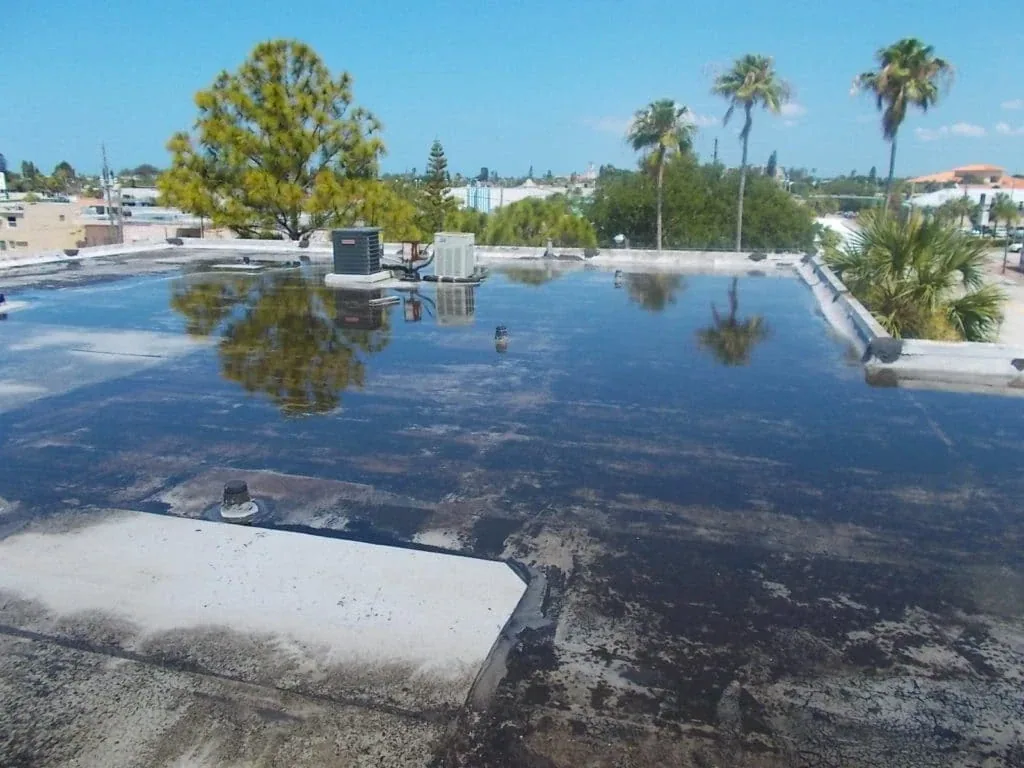
We review drain bowls, strainers, clamping rings, scuppers, low areas and overflow paths while tracing a roof concern. A blocked strainer may require service; a separated flashing or damaged sump needs a membrane correction. If water remains after rain, we record the location and extent rather than infer a slope defect from one visit. The report distinguishes routine debris, damaged components and any condition that warrants design review.
Before a crew works around an outlet, the manager confirms which drainage route must remain operational and whether temporary protection is acceptable. We note nearby penetrations that share the same low area and photograph the outlet after the approved work. A drain and scupper repair can include the adjoining membrane if inspection supports it. The crew records any temporary measure and the follow-up item so the owner knows what remains open.
Protect operating areas during roof work
The work sequence should identify the size of each opening and the condition needed before the crew leaves. We divide work into roof zones, set daily closure points and protect occupied rooms below the work. If weather shifts or another trade prevents closure, the manager receives an update before the team changes the sequence.
For a targeted repair, we isolate the repair boundary and make the tie-in inspectable before removing temporary controls. Where several suites share a deck, we coordinate access and notice through the authorized property manager without implying that every tenant has approved the work. A phased occupied-building plan can be considered for broader replacement, while an organized condition report records separate building zones and unresolved items for capital planning.

Read city land-use facts at the right scale
The 2,152.8-acre figure describes designated industrial land, not a count of buildings or roofs. We use the planning context to ask whether an address is an industrial operation, office or shared commercial property and to prepare for the likely coordination questions. We do not infer roof design, material, ownership, loading rights or current tenant activity from a map. The owner or site representative confirms those details.
A Newport Beach service visit is also evaluated separately by address and access. A Santa Ana scope remains property-specific. If the job needs permits or structural review, the owner confirms the applicable authority and submittal path; a roofer does not treat a general-plan designation as a permit determination. We include only project requirements confirmed for the actual work.
Leave a usable repair record
A closeout file helps facilities teams compare future conditions with the work authorized today. It can include the roof-zone sketch, photographs, confirmed membrane type, products used, repair boundary, test results and any deviation approved in the field. If the work uncovered another condition, the record identifies it as a separate item rather than folding it into a broad completion note. The property manager can retain the file with roof plans and service history.
Where observations point beyond a localized correction, a replacement scope can compare removal, insulation, cover board, drainage and phasing. Nearby-city service-area context does not extend this authorization to another address. For each Santa Ana building, we record who approved entry and what still requires a decision, test or follow-up visit.
Common Questions
We confirm the street address, travel feasibility, requested scope and authorized access contact before scheduling. General Plan districts do not identify properties whose owners have approved a roof visit.
Tell us which interior area is affected, when water appeared, recent roof or equipment work, and any previous repair. Photos or plans are useful, but we verify the likely path on the roof before setting a boundary.
An inspection can describe visible conditions and recommend additional testing. Replacement pricing depends on confirmed assembly, deck, insulation, drainage, access and approved scope; concealed layers may require an authorized opening.
Yes, when the property contact approves routes, loading times, roof zones and notices. We document daily closure points and coordinate any changed area through the person authorized to manage access.
No. A planning designation describes land use at a city scale. The membrane and underlying assembly must be verified from records and accessible roof details at the actual building.
Related Roofing Work
Arrange a measured roof inspection
Share the Santa Ana address, observed issue and site contact. We can confirm service eligibility and identify the records or inspection needed to prepare a property-specific scope.