
Commercial Roof Condition Reports in Costa Mesa, CA
A roof report should answer where the condition was found, what was inspected, and what decision follows. In Costa Mesa, CA, we map observations by roof zone and pair each finding with a photograph, Diligence Notes, and recommended next action. The report distinguishes a visible opening from concealed moisture that still needs a test. It also lists areas that could not be reached, so a manager does not mistake an incomplete walk for a full roof assessment.
We connect the roof-side condition to the owner’s operating question: repair now, authorize further testing, coordinate another trade, or carry a defined project into planning. When prior records are available, we compare them with the current walk and identify changes. The result is a working document for facilities and property teams, not a blanket statement about every roof at the site.
Show the Finding in Its Roof Zone
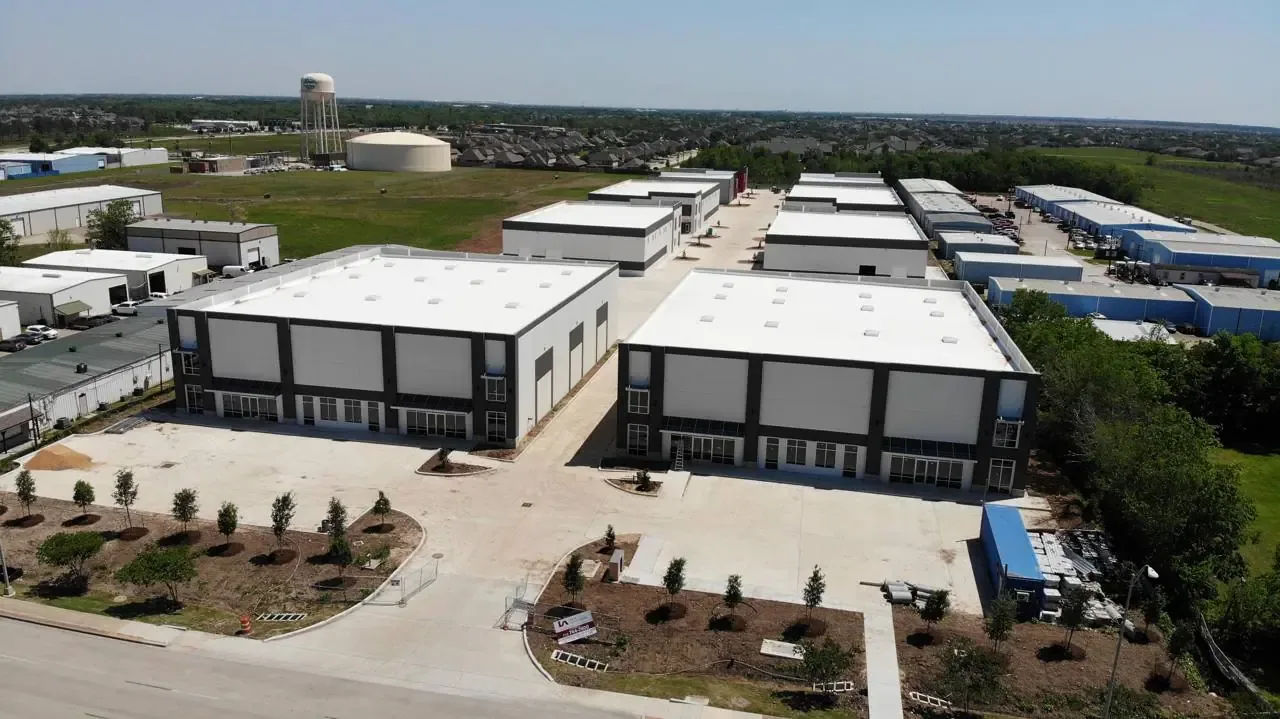
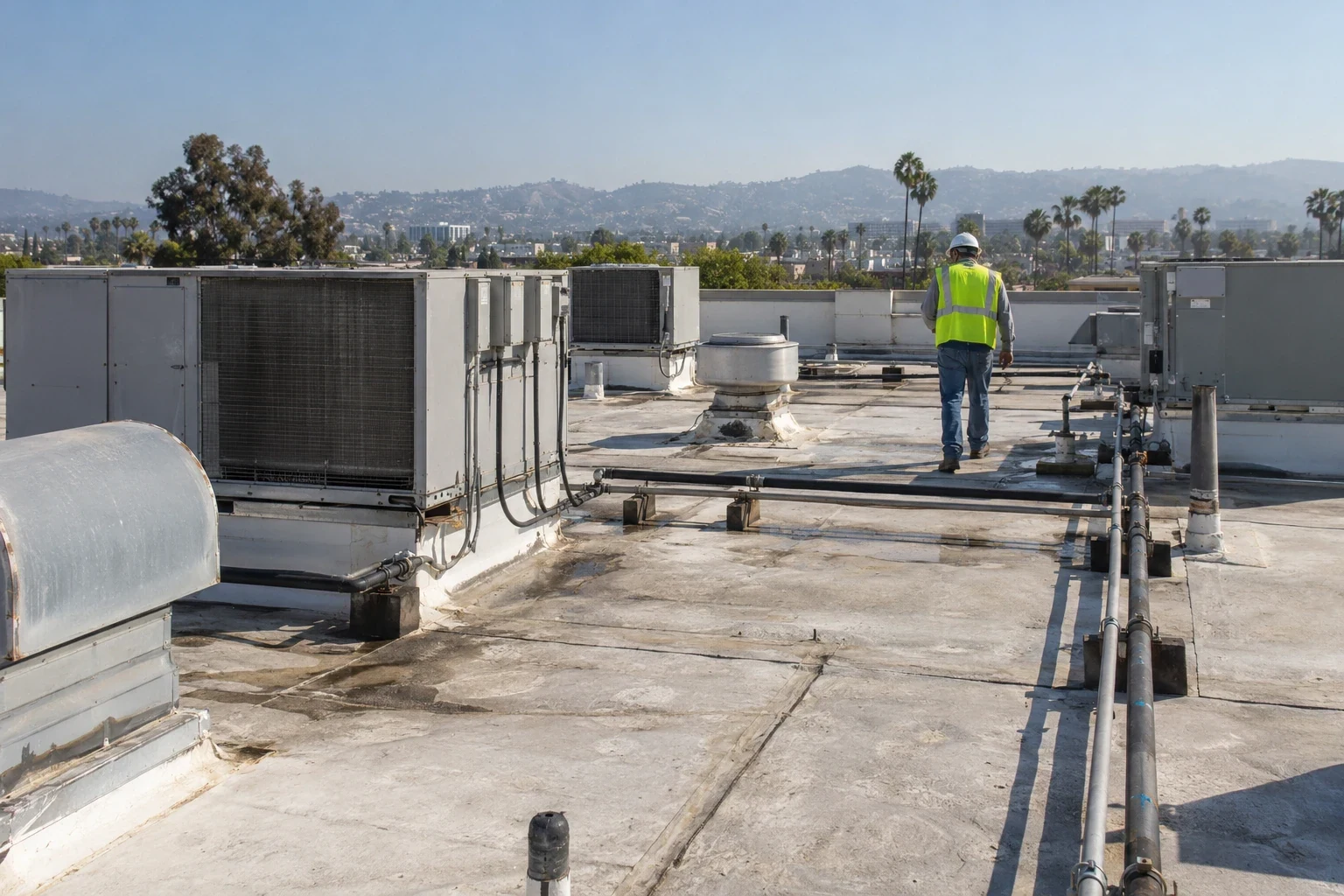
Each finding needs a location reference that a later inspector can use. We note the access point, roof area, visible system, nearby drains or penetrations, and any boundary that could not be confirmed. Photographs are labeled to match that location. If the roof plan is outdated or a prior report uses different zone names, the report explains the difference rather than quietly merging two locations.
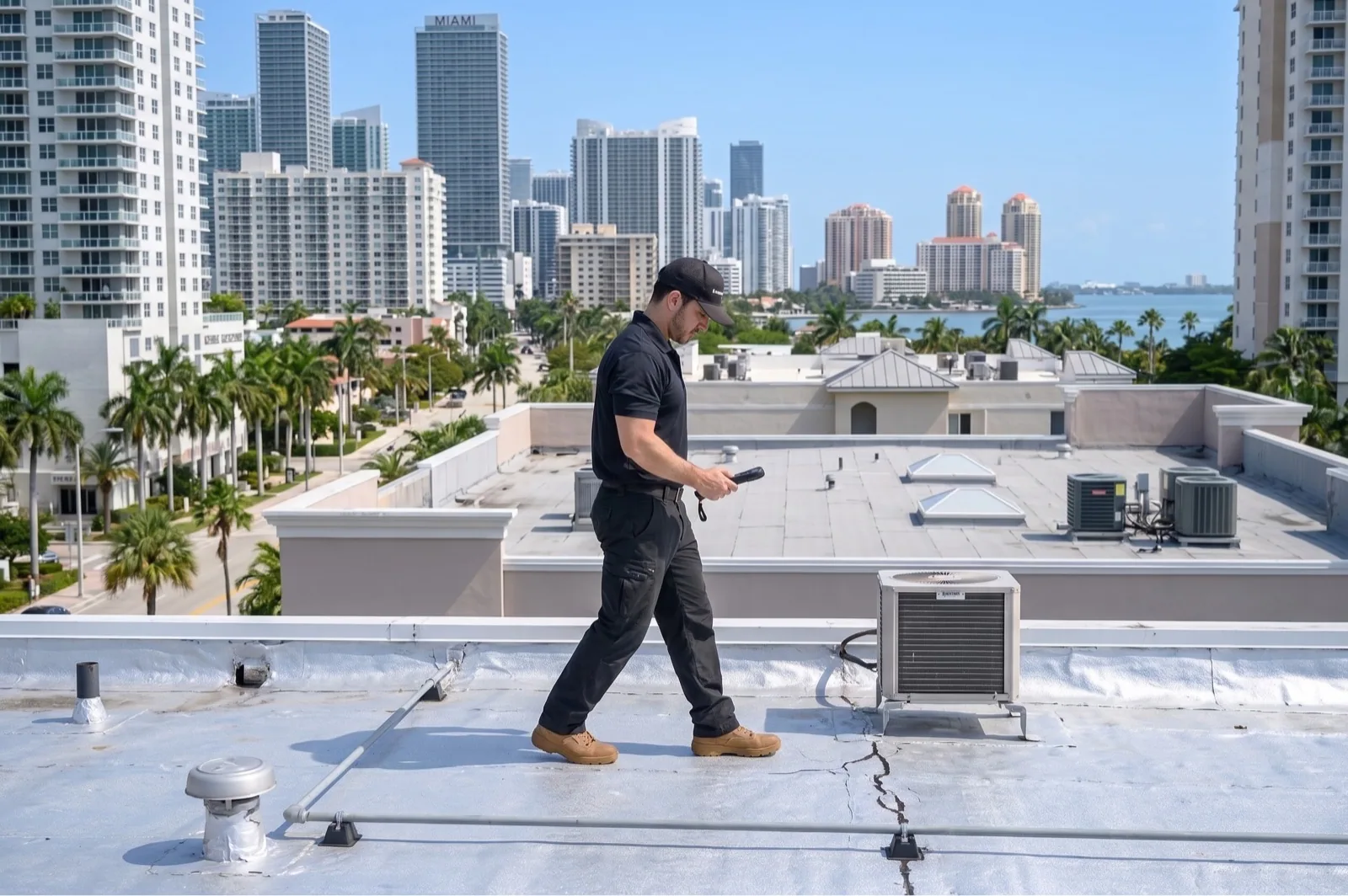
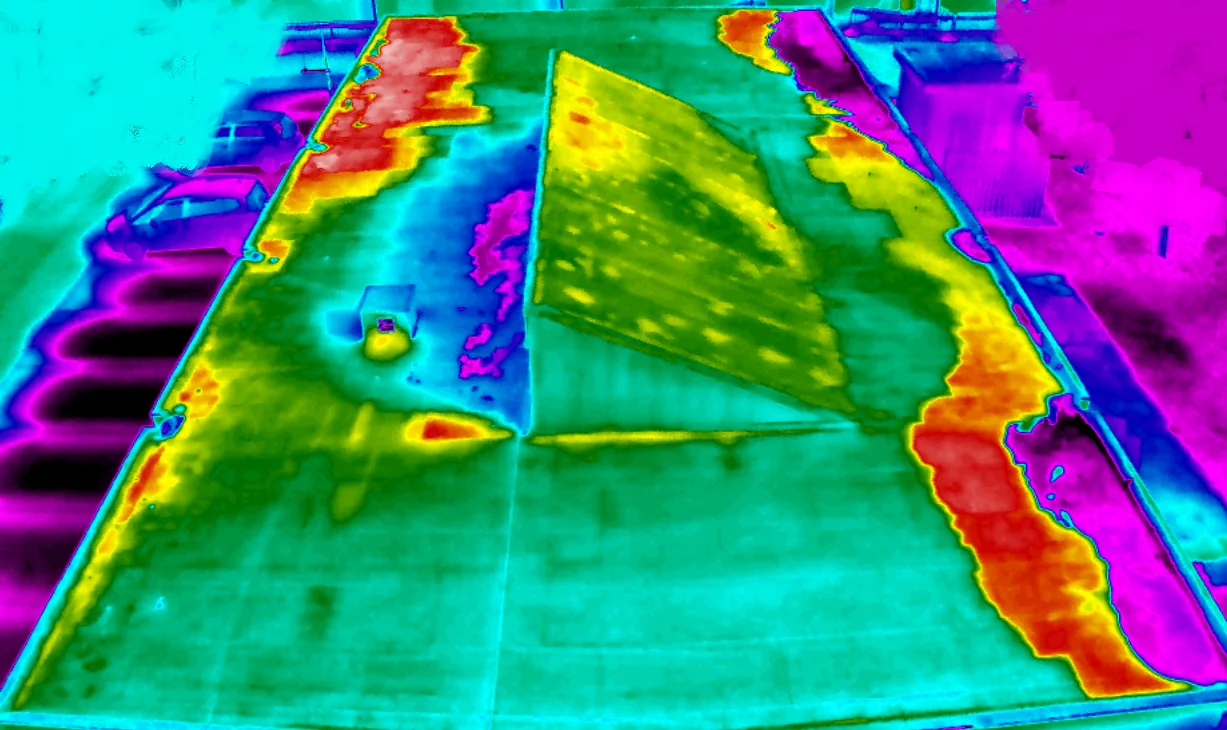
A commercial roof walk is the source for field observations. Aerial imagery can provide broad context for a roof surface but does not replace a close check of seams, flashings, or drains. We state which method produced each image and what it could show. Where possible wet insulation is suspected, a moisture survey can identify follow-up test areas, with the result confirmed before a repair limit is set.
Separate Observation from Recommendation
The report labels conditions in plain terms: observed, owner-reported, tested, or still unconfirmed. A stain reported by a tenant is recorded as an interior observation until the roof-side path is inspected. If a test opening is authorized, its location and result are shown separately from surrounding areas that were not opened. That distinction lets the owner evaluate a repair proposal without treating an estimate as proof of hidden conditions.
A roof asset file can carry findings and photographs forward to later visits. When the owner needs a repair price, a repair scope names the work boundary and material assumptions. A broader replacement or recover decision should use its own review, because the condition report is not a design or code determination. We keep each recommendation connected to the observation that supports it.
Place Findings Against Costa Mesa Conditions
Costa Mesa's Westside combines manufacturing and service uses with larger operations, including smaller businesses in multi-tenant structures. A condition report for a shared building benefits from a roof-zone key that can be followed by the property contact without exposing one suite's issue as a finding for the whole site. We label the observed area, the route inspected, and any access limit. Harbor Gateway is a separate industrial and business-park district in the City's plan; its name belongs in location context, not in another property's findings.
The City's Safety Element describes localized flooding and potential sea-level-rise effects as planning hazards near the coast and Santa Ana River. That is planning context, not a property flood determination. If water is observed at a roof drain, low point, or wall, we document the actual roof-side evidence and identify any investigation that remains. The owner can keep the planning reference separate from a measured condition or claim finding.
Make the Repair Boundary Reviewable
A recommendation should name the area included and the work left outside it. We use roof-zone references, dimensions when taken, and images to show how far a repair reaches. If an edge, curb, or membrane transition is part of the scope, the report states that separately. Where a patch may need an adjacent detail, we identify the dependency before the owner approves the work. This reduces ambiguity when crews return for closeout.
At a seam, a seam repair review records the lap and nearby field. At a wall or curb, flashing findings are mapped as a separate detail. A drainage check records debris, outlet condition, and visible flow path. Those pieces can appear in the same report, while each stays a distinct repair boundary for pricing and approval.
Write for the People Who Use the File
Facilities managers need locations and actions. Asset managers need a clear condition summary and the documents that support budget decisions. A tenant contact may need an access note and the day a repair is scheduled. We structure the report so each reader can find the relevant information without removing the technical context. A summary should point to the supporting roof-zone detail, not replace it. We also note the date and conditions that affect a comparison, such as recent repair work, a changed equipment route, or standing water observed after rain. If these details were not available during the walk, the report lists them as follow-up questions. A later visit can compare like roof zones and separate a new condition from an old photograph.
Harbor Boulevard includes auto dealerships and neighborhood centers along a major commercial corridor. Uses differ from one address to another, so the report should identify the roof area rather than infer conditions from the corridor. If the owner gives us service hours, loading limits, or a restricted zone, we add those operational facts beside the access notes. The photograph and field observation remain tied to the inspected location, while an unvisited roof section stays marked as open for follow-up.
Carry Open Items into the Next Visit
Before the report closes, we list actions that remain open: approval for a test, records the owner needs to provide, a repair estimate, a specialist review, or a return visit after access is available. The report can state who owns the next decision and what evidence will answer it. A condition is not marked resolved simply because the first walk ended or a work order was issued.
A maintenance visit can compare repaired zones with earlier photographs. If the finding affects a larger budget decision, a capital planning review can retain the report's boundaries and assumptions. For a broad Westside district service visit, the property and roof access still need to be confirmed. The report remains specific to the building and inspection date.
Common Questions
It includes mapped roof-zone observations, labeled photographs, system identification when confirmed, access limits, open conditions, and next actions. We distinguish direct inspection from owner reports and unconfirmed areas. A repair scope can then be priced against a clear boundary.
No. Photos capture visible surface conditions. Suspected concealed moisture may need a survey, test opening, or another approved method. We label the evidence collected and do not extend a finding into areas that were not tested.
The report documents present condition and factors that affect the next decision. It can identify monitoring or further testing, but a walk cannot predict every concealed layer or future event. We tie each recommendation to the observations and records available.
We identify the roof zone, the reason access was unavailable, and the step needed to revisit it. The report does not treat that area as inspected. A later visit can close the gap once the owner arranges access or another trade completes its work.
Yes. It connects findings to a repair boundary, test need, or capital action and keeps photographs with the location reference. Pricing and project design may require additional information, which we state as an open item.
Related Roofing Work
Request a Roof Condition Report
Share roof plans, prior inspection notes, access requirements, and the areas of concern. We can document the roof zones, photographs, open questions, and next decisions.