
Modified Bitumen Roofing in Costa Mesa, CA
A raised lap can hold water even when the surrounding cap sheet looks intact. We trace the seam, inspect the surfacing, and check the layer below before deciding what modified bitumen work fits a Costa Mesa, CA roof. The Westside District includes smaller industrial operations in multi-tenant structures, so a repair plan also needs a clear access window and protection for the suite below. The roof record starts with the condition we can see.
Modified bitumen is an asphalt-based membrane reinforced with fabric, commonly specified in SBS or APP formulations. The assembly may use multiple plies, a base sheet, cap sheet, surfacing, and insulation. Each layer changes the repair detail. We identify the existing construction before proposing a patch, recover, or tear-off. A property near East 17th Street may need delivery and customer access coordinated differently than a larger Airport Industrial/Business Park parcel.
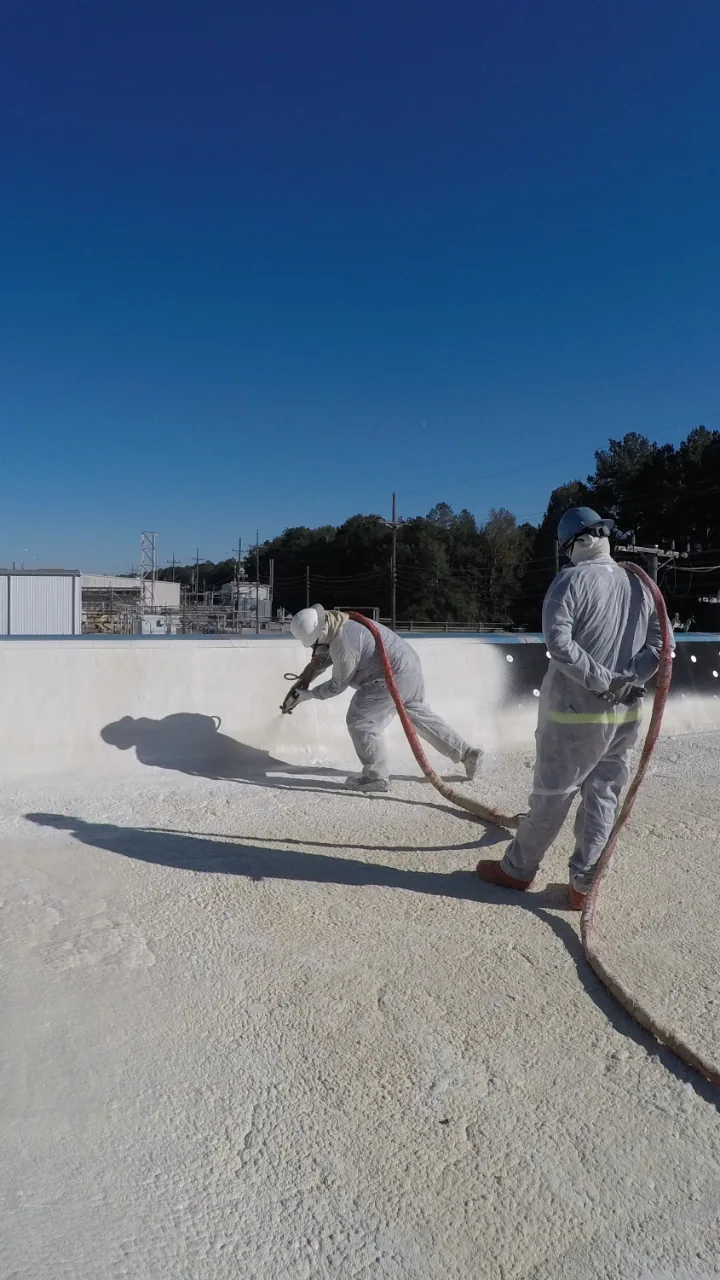
Lap Edges and Surfacing
We inspect end laps, side laps, corners, base flashing, and changes in roof height. A blister or wrinkle can point to trapped air, moisture, or movement between layers, but its cause needs confirmation before cutting into the sheet. We mark each suspect area, probe only where suitable, and document the repair edge. Broad mastic spread over a seam may hide the opening instead of restoring the membrane.
Granule loss, exposed asphalt, cracks, and loose surfacing each call for a different next step. We check the cap sheet around drains and penetrations, then compare visible damage with the roof's repair history. Where water appears along a wall or ceiling, a leak assessment that traces the roof path can separate an upstream lap problem from a failed flashing. The interior stain alone does not define the repair boundary.
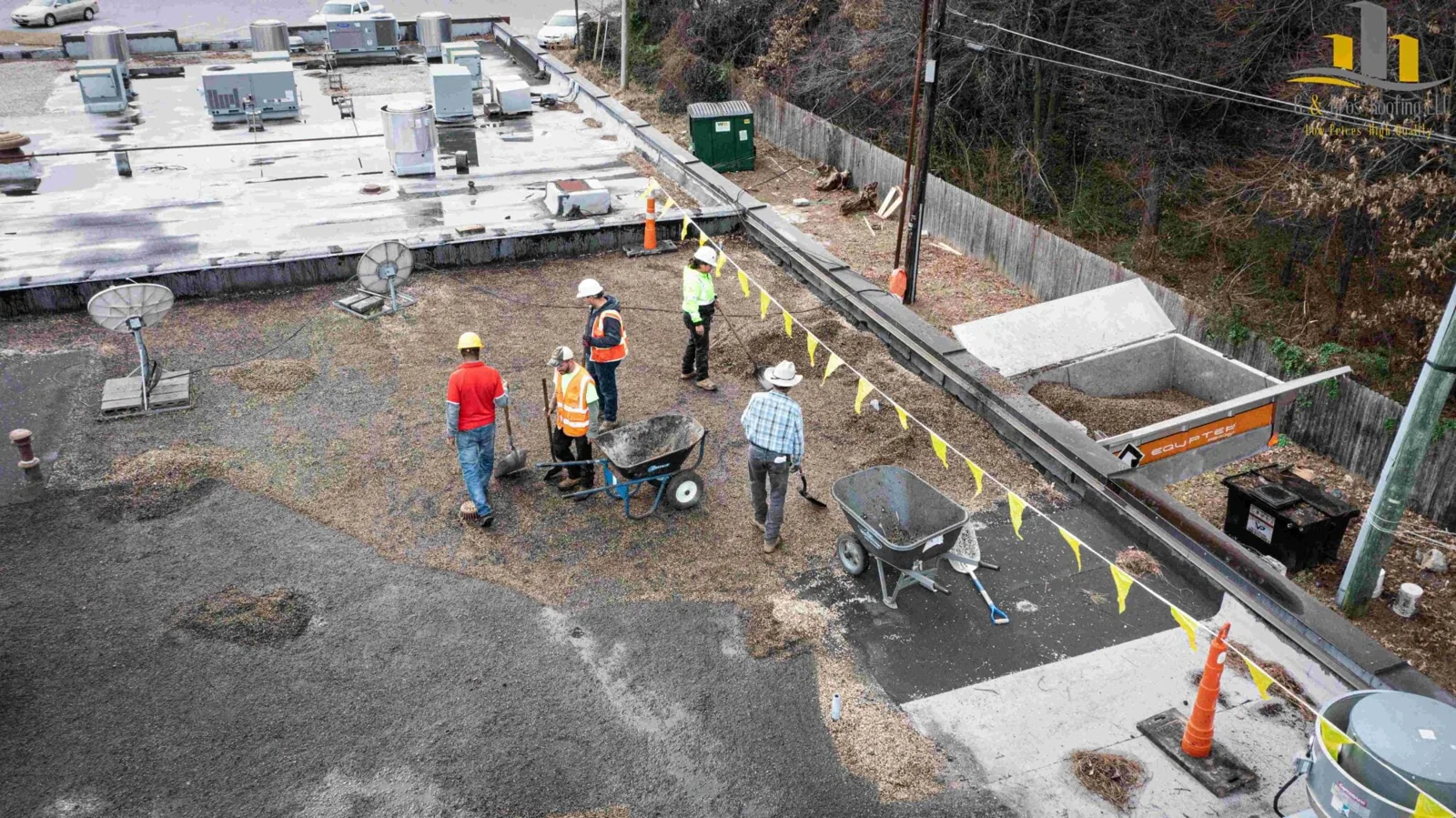
SBS, APP, and Application Method
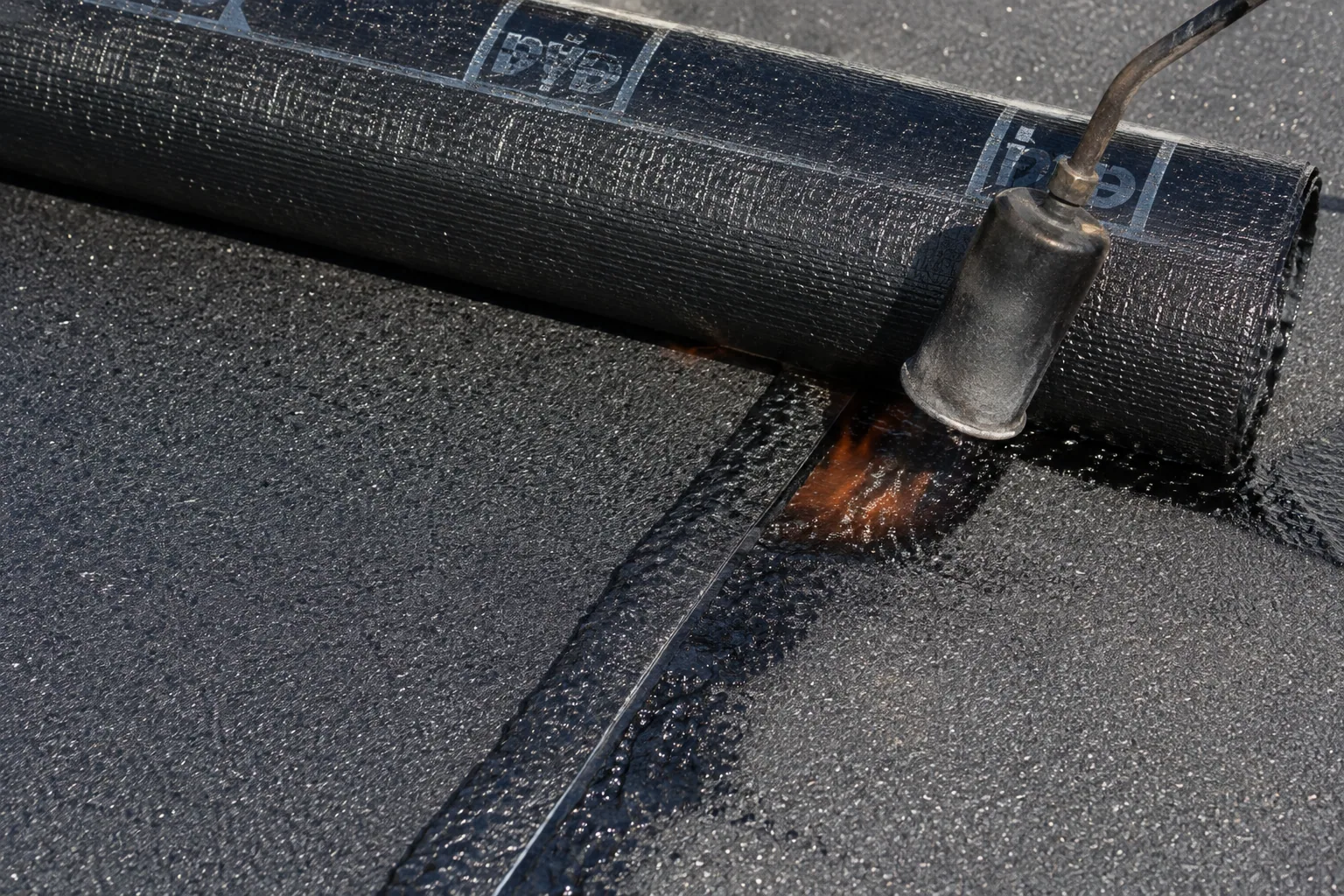
SBS-modified asphalt gains flexibility from a rubber modifier, while APP formulations use a plastic modifier. Those differences affect handling and installation details, but they do not identify which system belongs on an existing building. We review the specified product, reinforcement, surfacing, and attachment method. A torch-applied detail brings a fire-control plan; cold-applied or self-adhered products have their own substrate, temperature, and primer requirements.
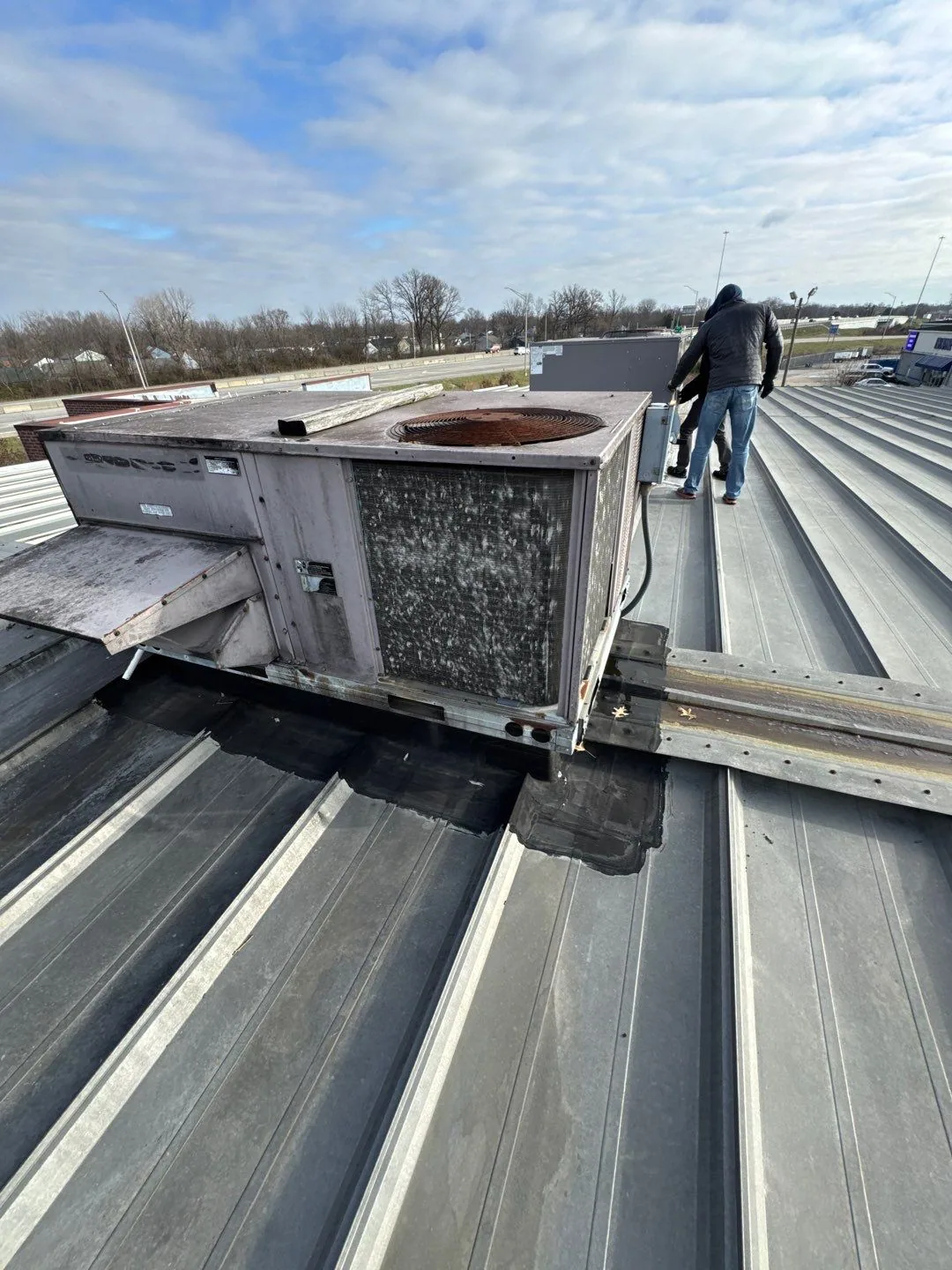
Application method matters at parapets, curbs, drains, and crowded equipment areas. The scope should state where a hot-work permit is needed, how combustible material will be protected, and who controls the work window. An owner comparing assemblies can review built-up multi-ply construction and EPDM membrane options against the observed roof, not against a generic product ranking. The existing deck and insulation remain part of that decision.
Moisture Beneath the Plies
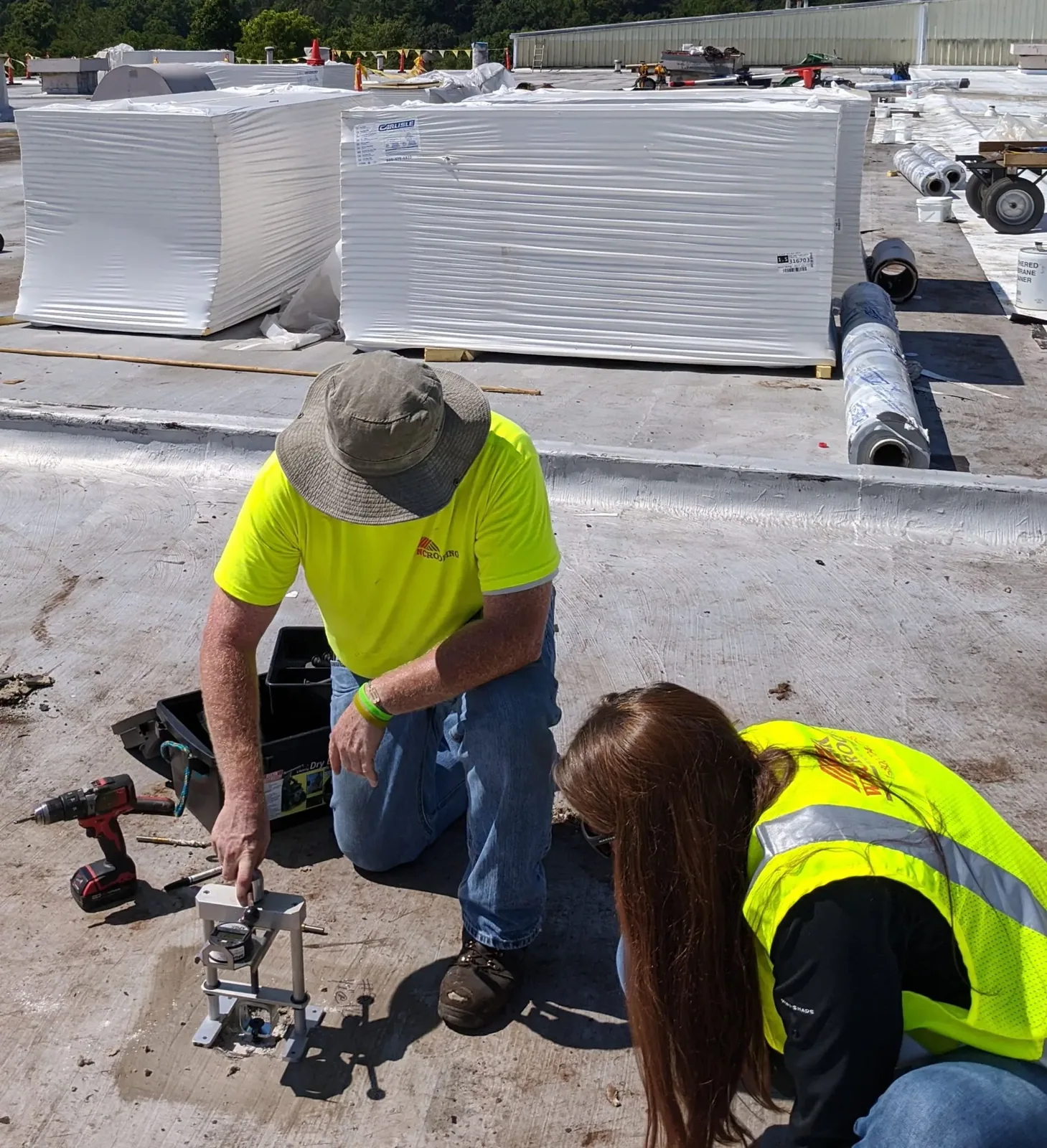
Modified bitumen can retain water between layers after a leak. A surface patch does not dry wet insulation or restore a weak deck. We look for soft areas, surface distortion, failed seams, and drainage patterns, then recommend a closer check where the assembly hides the cause. Infrared or other moisture surveys can help direct openings, but any reading needs confirmation with the roof construction and weather conditions in mind.
The Westside combines smaller manufacturing and service operations with larger industrial uses, including multi-tenant buildings. For a shared roof, we mark the affected area and coordinate ceiling protection and tenant notices before an opening is made. Harbor Gateway has manufacturing firms and corporate offices. Those uses can affect the repair window, but the property inspection still determines which roof layers are installed.
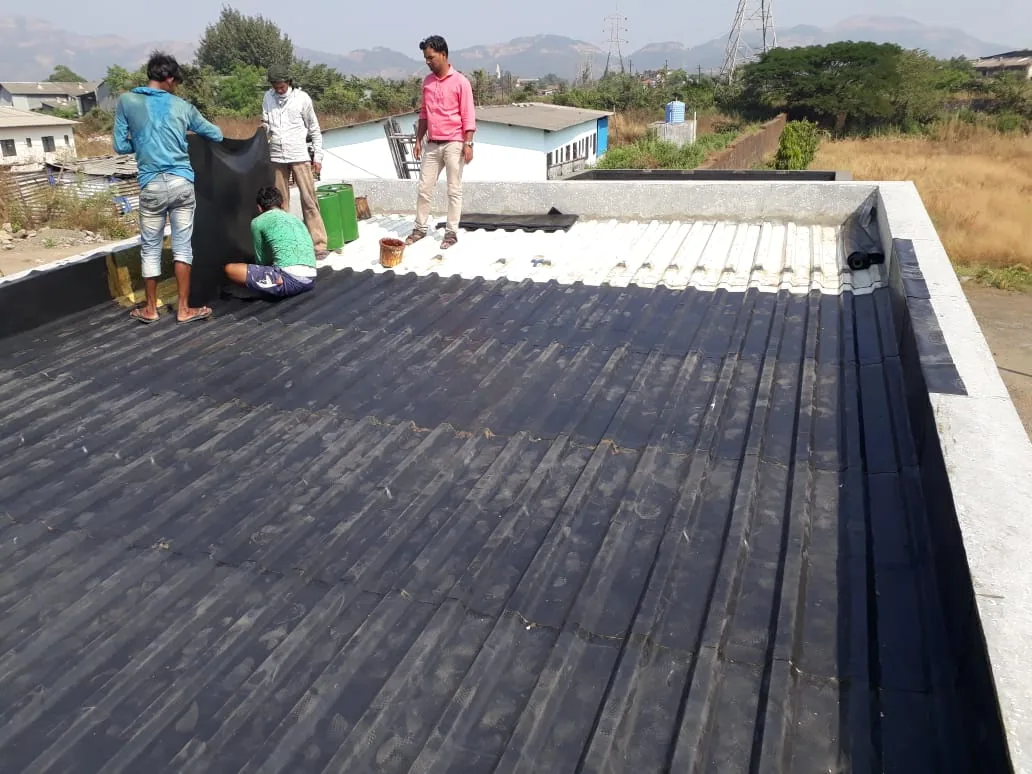
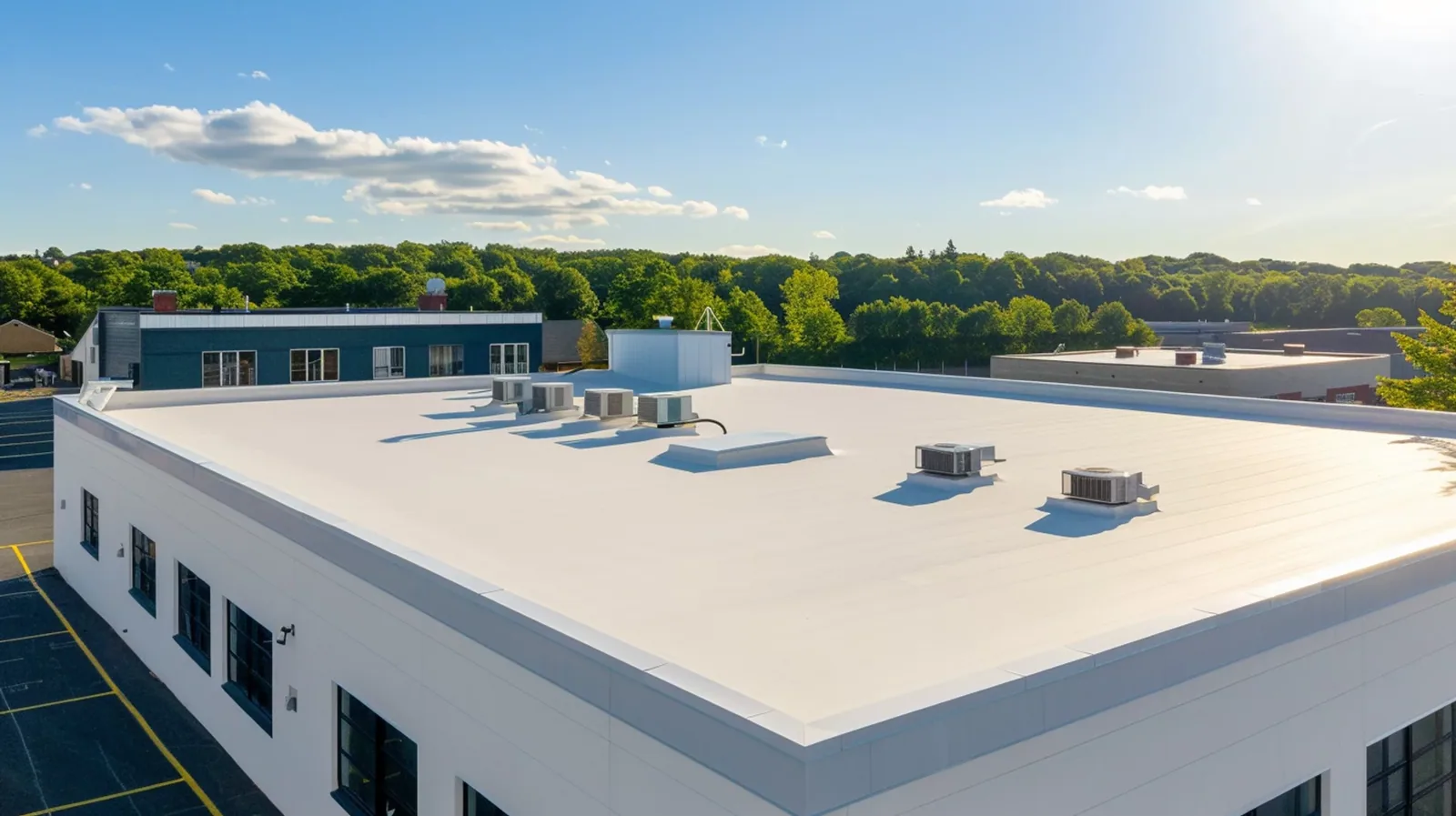
Repair Limits and Tie-Ins
A local repair begins with a sound perimeter. We remove loose material, prepare the surface for the selected product, and reinforce the patch with compatible plies. At a wall or curb, the flashing height, termination, and counterflashing determine how the work closes. A patch should not leave an exposed edge facing drainage flow. We photograph the completed detail and identify any adjacent area that needs follow-up.
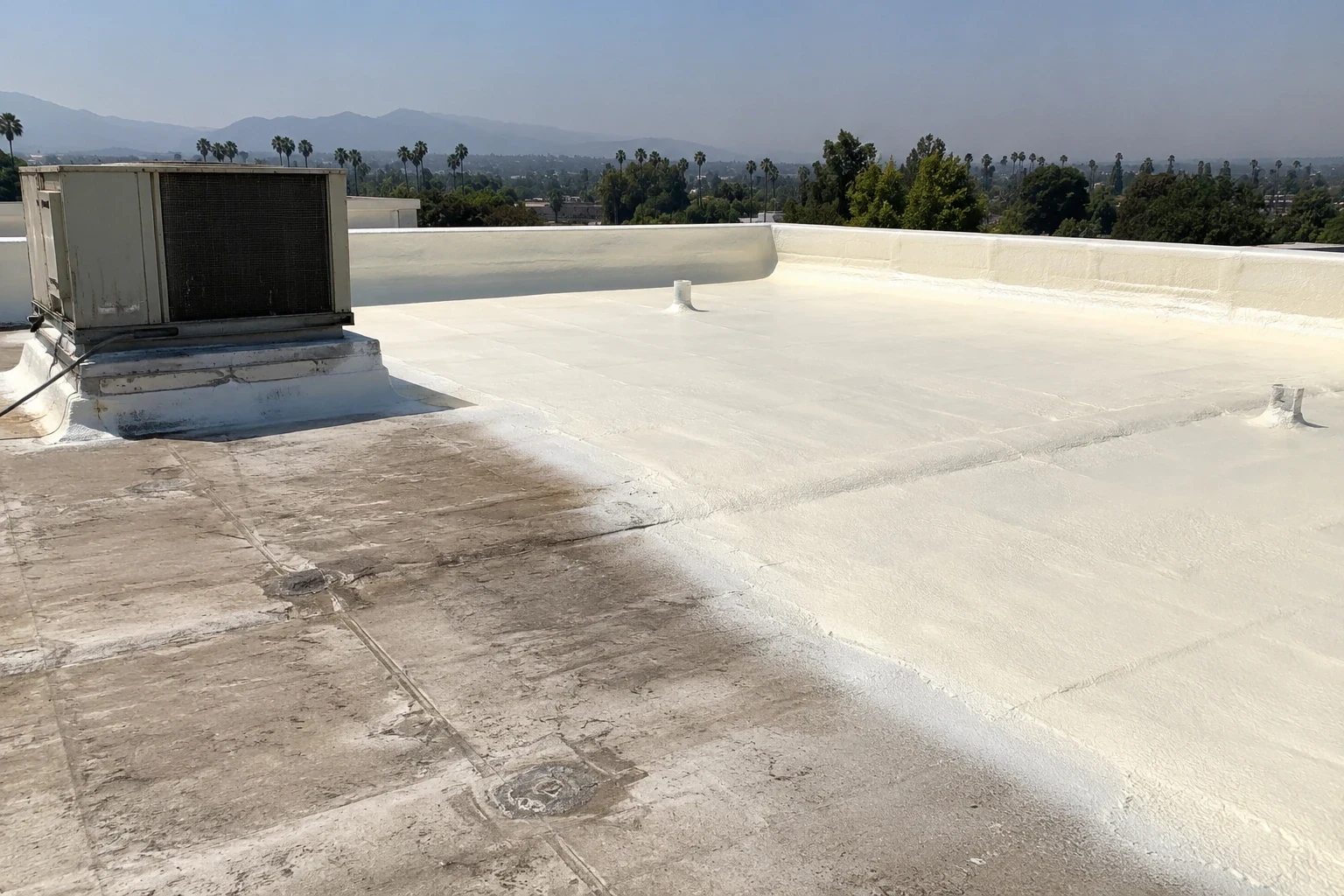
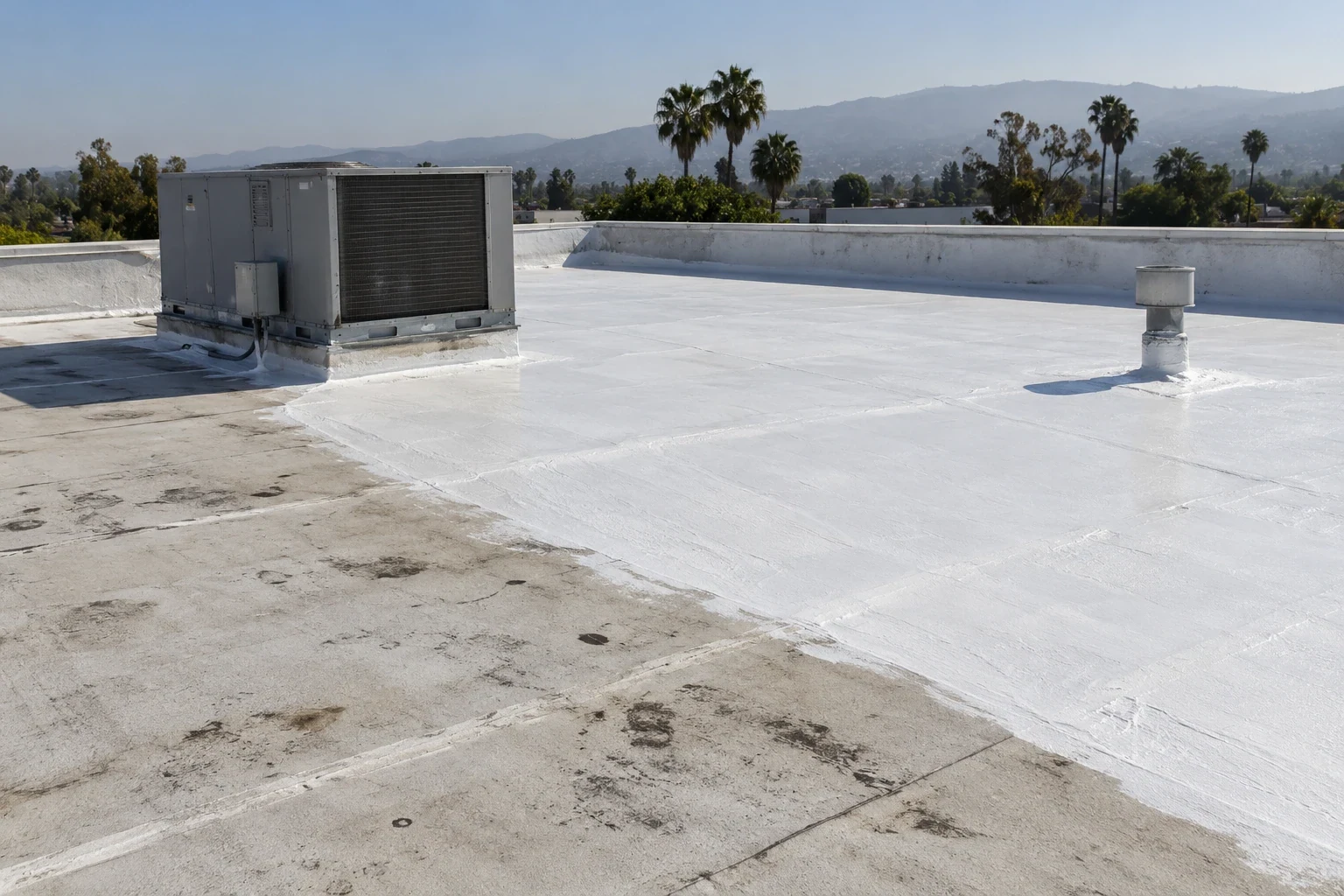
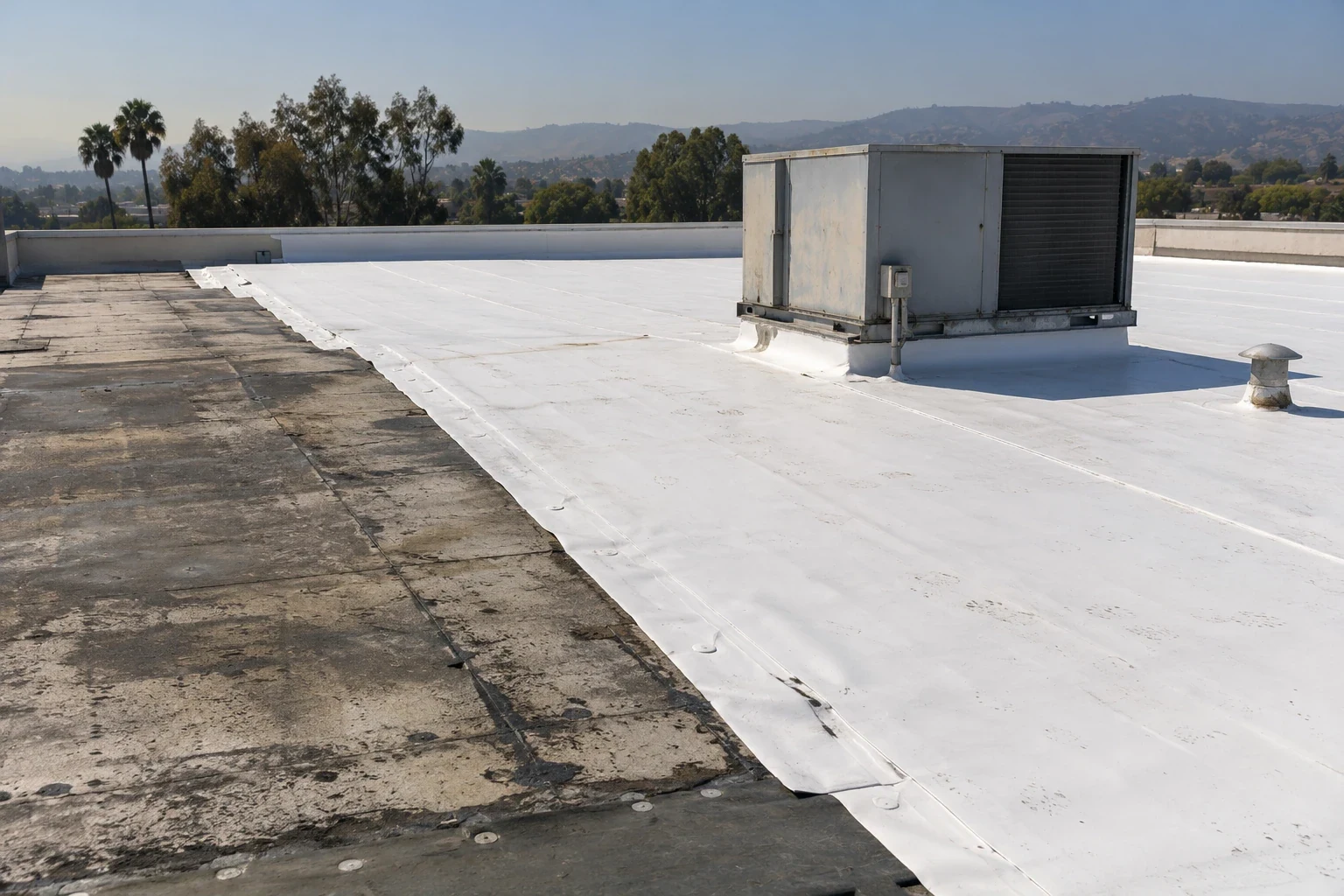
Recover work can avoid a full tear-off when the existing roof is dry enough, well attached, and suitable for the added assembly. New cover board, attachment, and flashing transitions still need to suit the deck and perimeter. Tear-off exposes concealed layers but creates more noise, debris, and open-roof risk. We compare the scope with a roof recover review and a replacement assessment when the findings support both choices.
Drainage and Warm-Weather Planning
NOAA normals from Santa Ana's John Wayne Airport station show warm summer daily highs. They offer regional context for material handling, while roof-surface conditions at the property guide application. During installation, we follow the material's temperature and application requirements and protect open areas if conditions shift. Drainage also needs a clear path. We check low spots, drains, scuppers, and overflow points so a new layer does not mask a standing-water issue or obstruct the route off the roof.
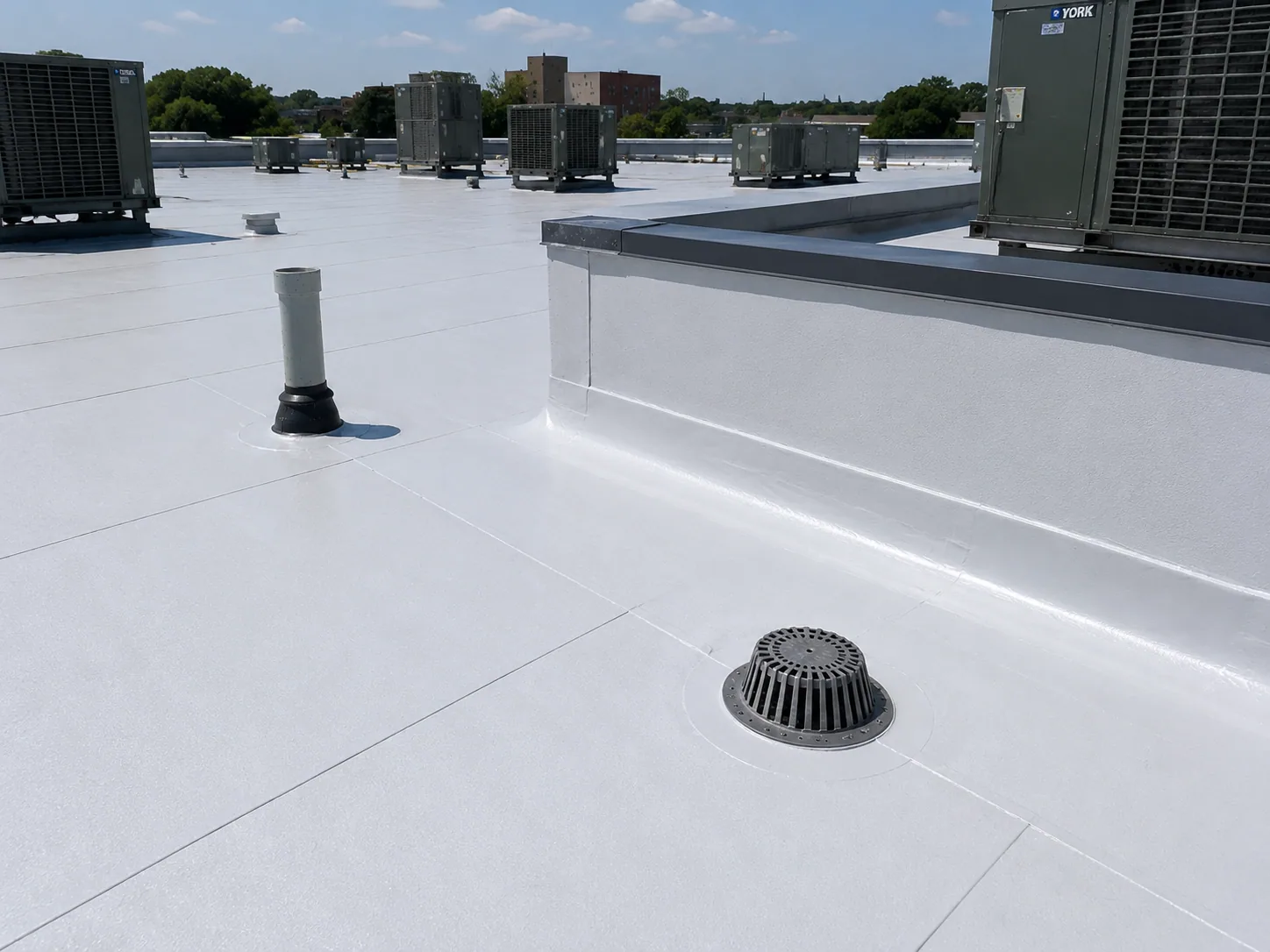
At a drain, the cap sheet needs a sound connection to the flange without narrowing the bowl. We check the lap, strainer, scupper, and overflow path before pricing membrane work. A marked roof condition report can show the affected ply and repair edge, while drain and scupper work addresses the outlet if it needs correction. The repair record should identify the material and access window for follow-up.
Maintenance Inspection Points
After the repair or installation, keep drains open and note rooftop work that may disturb a flashing. We check laps, perimeter edges, patches, and penetrations during follow-up visits. Debris piles, stored material, or equipment screens can hide the condition that needs attention. A dated photo and roof-area label help the next walk compare the same seam rather than relying on a general description.
Near the South Coast commercial corridor, traffic and occupied uses can affect when roof access is practical. A Westside District roof inspection can begin with the tenant schedule and staging limits. We agree on the access route, staging area, and tenant notice before material is moved. Send the existing roof schedule, prior repair notes, or a close photograph of the lifted lap. We will walk the assembly, mark the defect, and explain whether a repair, recover, or broader replacement should be priced next.
Common Questions
SBS uses a rubber modifier and APP uses a plastic modifier, which influence flexibility and application characteristics. The assembly specification and existing roof determine the suitable detail. We verify the installed product instead of inferring it from color or a surface label.
A blister needs inspection when it is growing, cracked, wet, or near a seam or penetration. We check the surrounding surfacing and determine whether the layer below is bonded and dry. Cutting a blister without confirming the condition can turn a contained issue into a larger opening.
A recover may fit when the existing layers are dry, attached, and compatible with the proposed assembly. We also check roof height, edge metal, drains, and flashing transitions. If moisture or weak attachment is widespread, exposing the deck may be the more useful scope.
Hot work requires a defined fire-control plan, protected combustibles, and a safe work window. We identify the details that need a torch and coordinate required permits and site controls. A cold-applied or self-adhered system may avoid that method, subject to product and substrate requirements.
We combine visual observations, moisture survey indications where useful, and targeted confirmation openings when approved. Soft insulation or a surface wrinkle can guide the investigation but does not prove the full extent. The scope marks confirmed conditions separately from areas that need monitoring.
Related Roofing Work
Inspect the Existing Modified Bitumen
Schedule a roof walk or send the assembly record and photos of the lap, drain, or flashing. We will mark the repair boundary and the next decision.