
Built-Up Roofing in Costa Mesa, CA
Loose gravel at a drain can hide a split in the cap sheet. We clear only what is needed to inspect, trace the drainage path, and check the layers before pricing built-up roof work in Costa Mesa, CA. Along the Harbor Gateway District, offices and manufacturing uses share a broader industrial area. The building's actual deck, plies, and use matter more than the district label.
A built-up roof, often called BUR, combines alternating asphalt and reinforcing plies, usually with a surfacing layer. The roof may include several generations of repairs or cover material. We identify what is present at the edge, drain, and existing patch before selecting a repair. On a Westside multi-tenant property, access and dust control can shape the work window as much as the repair itself.
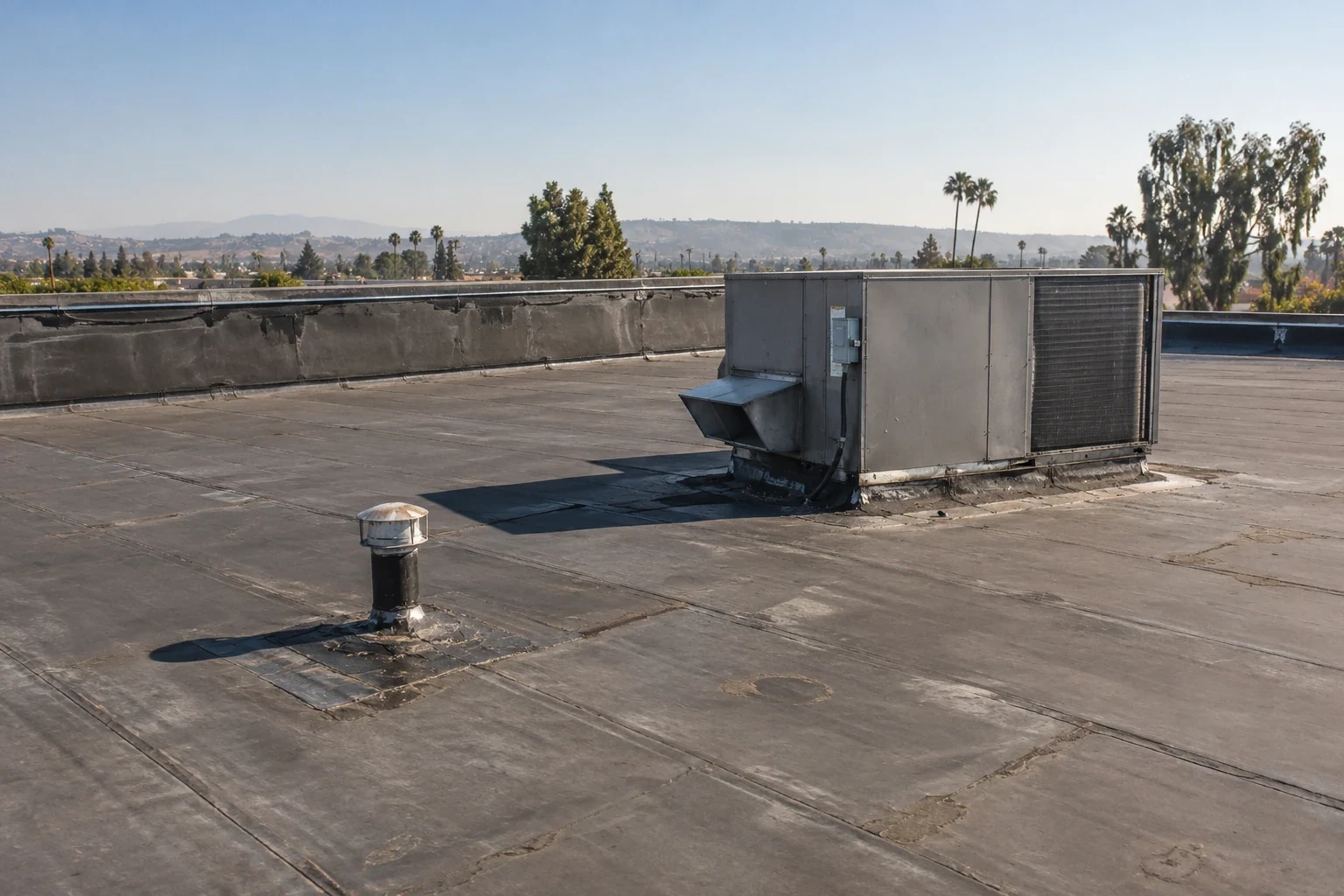
Read the Plies at a Roof Detail
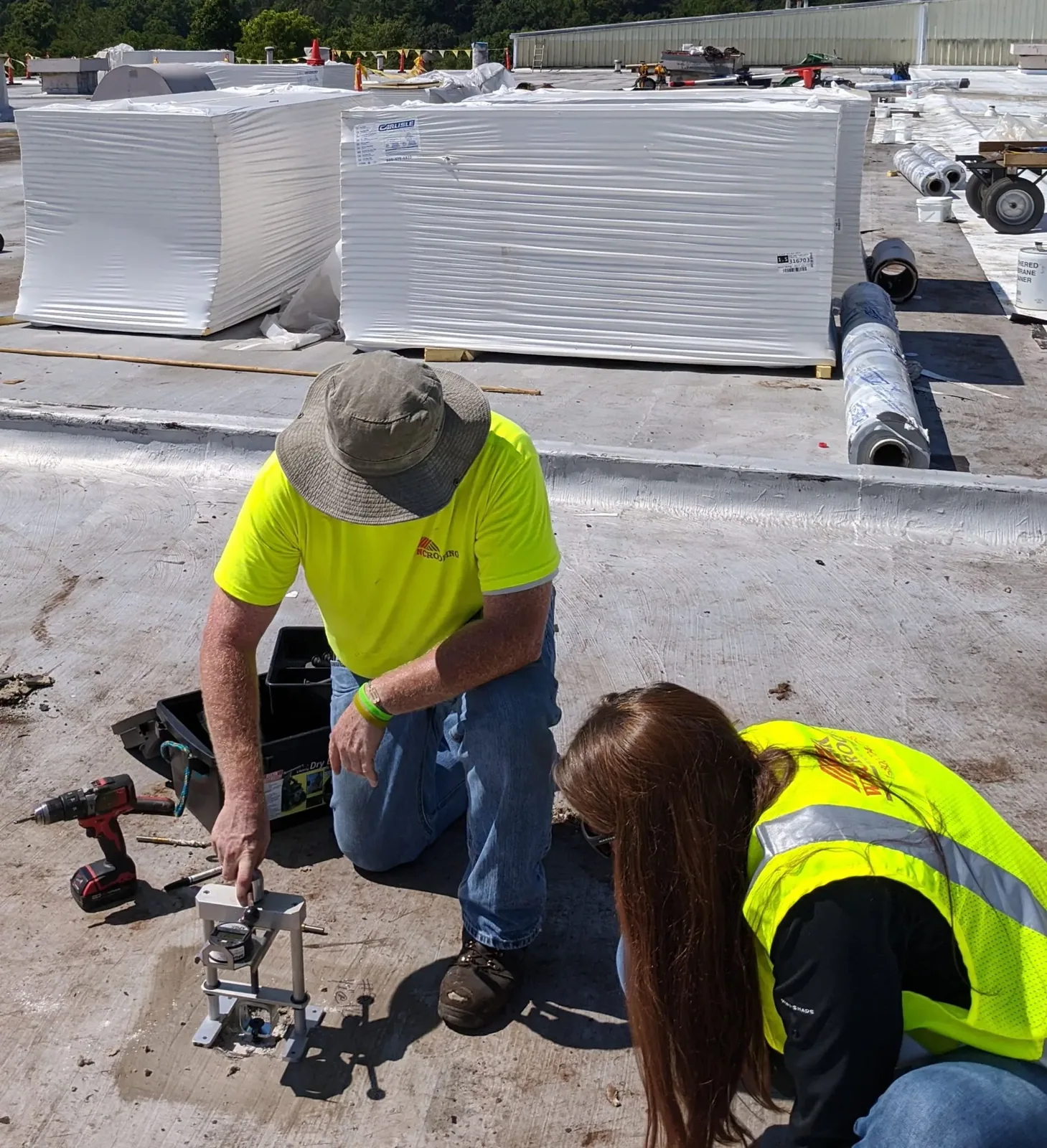
At a parapet, drain, or roof edge, the assembly shows how the plies turn and terminate. We inspect for splits, exposed asphalt, loose surfacing, blisters, and open laps. A gravel-surfaced field can make surface damage difficult to read, so we check vulnerable transitions and compare the condition with the repair history. A small cut or sample requires owner approval and a plan to close the opening the same day.
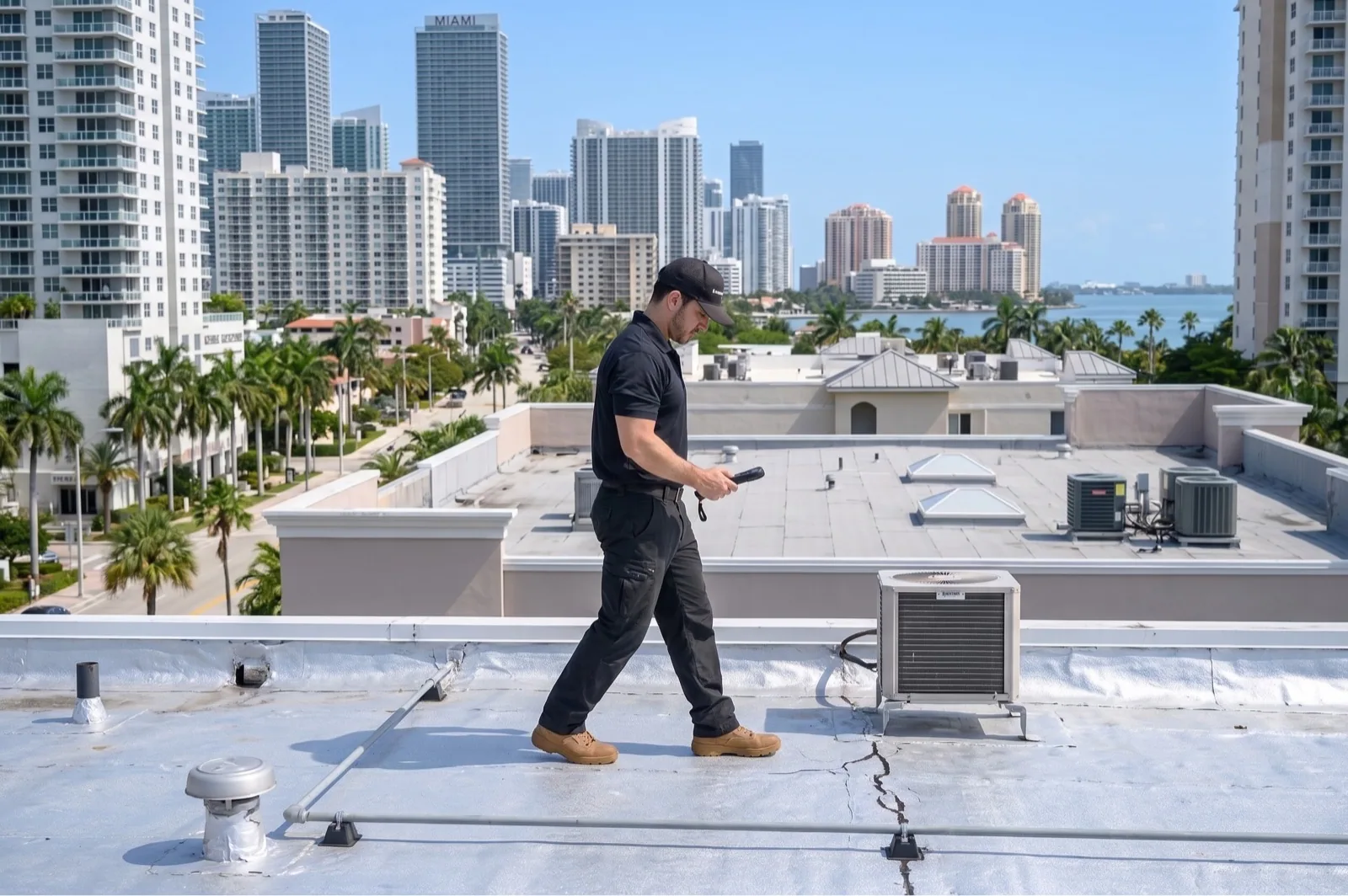
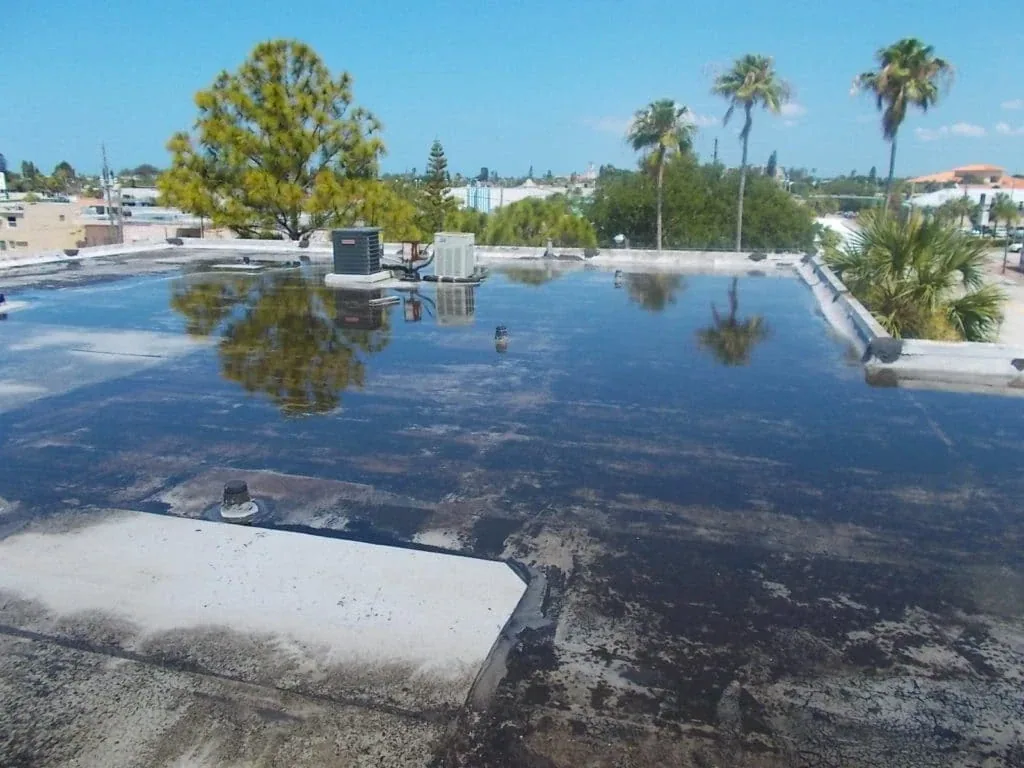
An interior ceiling mark does not locate the exact break in a multi-ply roof. We map low areas, drains, scuppers, and overflow routes, then note any softness or distortion that needs confirmation. A commercial roof inspection can set a repeatable record of each observation. The Westside includes smaller operations in multi-tenant structures, which makes suite location and interior protection useful details in that record.
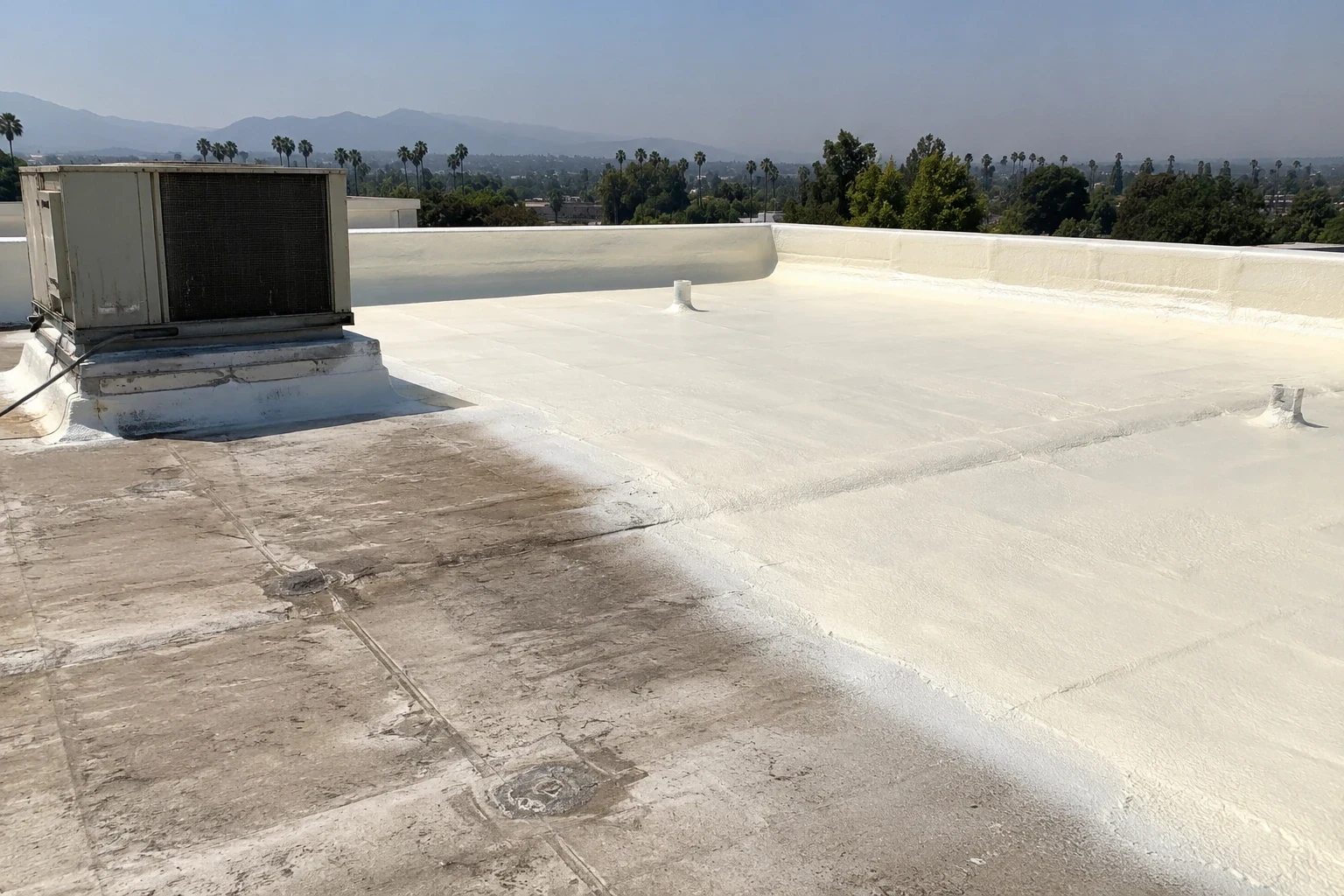
Repair the Defect or Rebuild the Assembly
A repair can work when the defect has a sound perimeter and the surrounding plies remain bonded and dry. We remove loose surfacing, prepare the area, and install compatible reinforcing plies and asphalt or approved repair material. The finished edge must shed water. Smearing mastic over an open seam may temporarily cover it, but it does not rebuild a failed lap or correct water trapped below the surface.
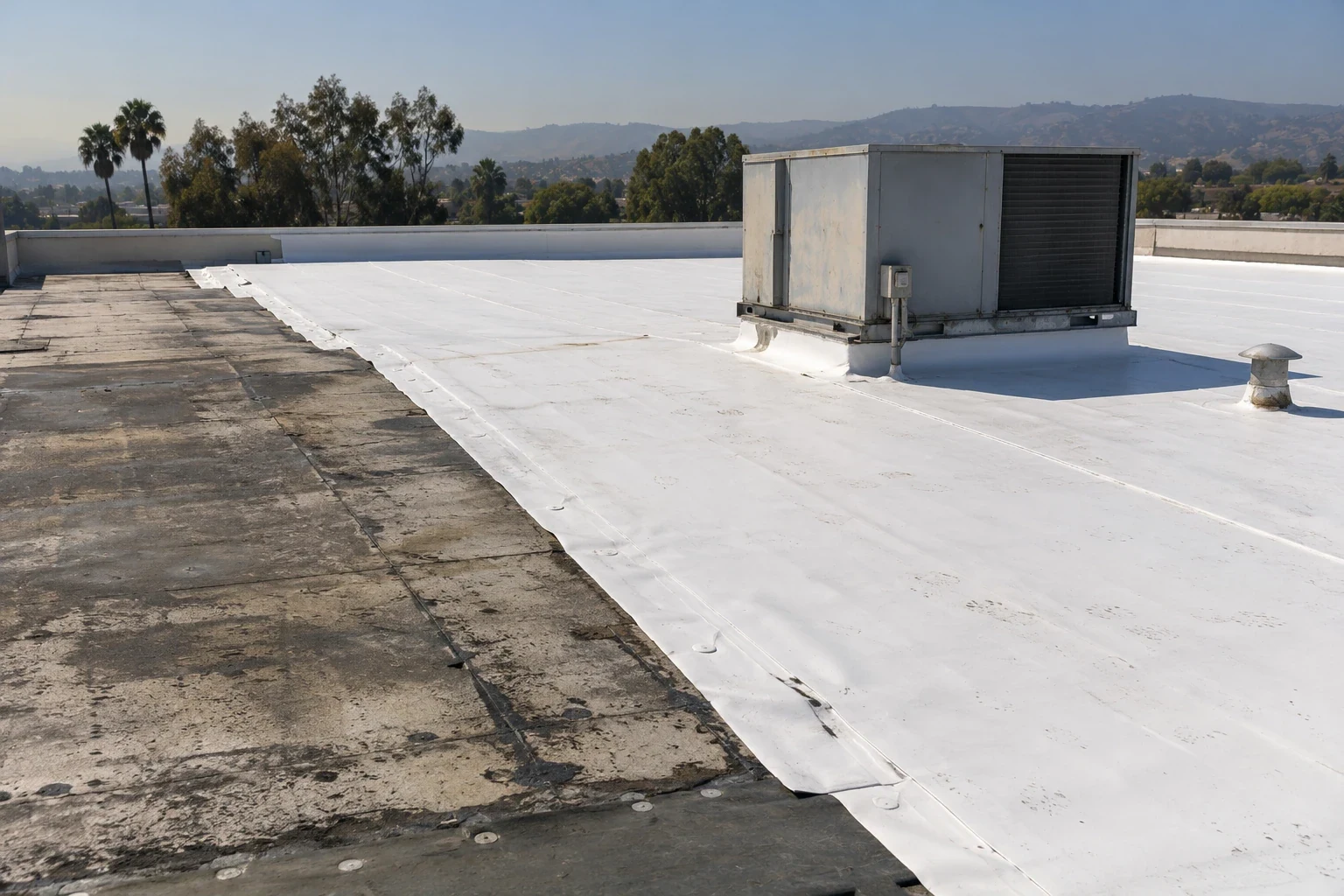
When damage extends across multiple areas or the assembly has lost attachment, the owner may compare recover and tear-off options. A recover adds layers and changes edge height, drain connections, and flashing terminations. Tear-off exposes more of the deck and insulation but increases debris handling and time with the roof open. The inspection record can support a recover evaluation or a replacement scope after moisture and deck conditions are understood.
Surfacing, Drainage, and Flashing
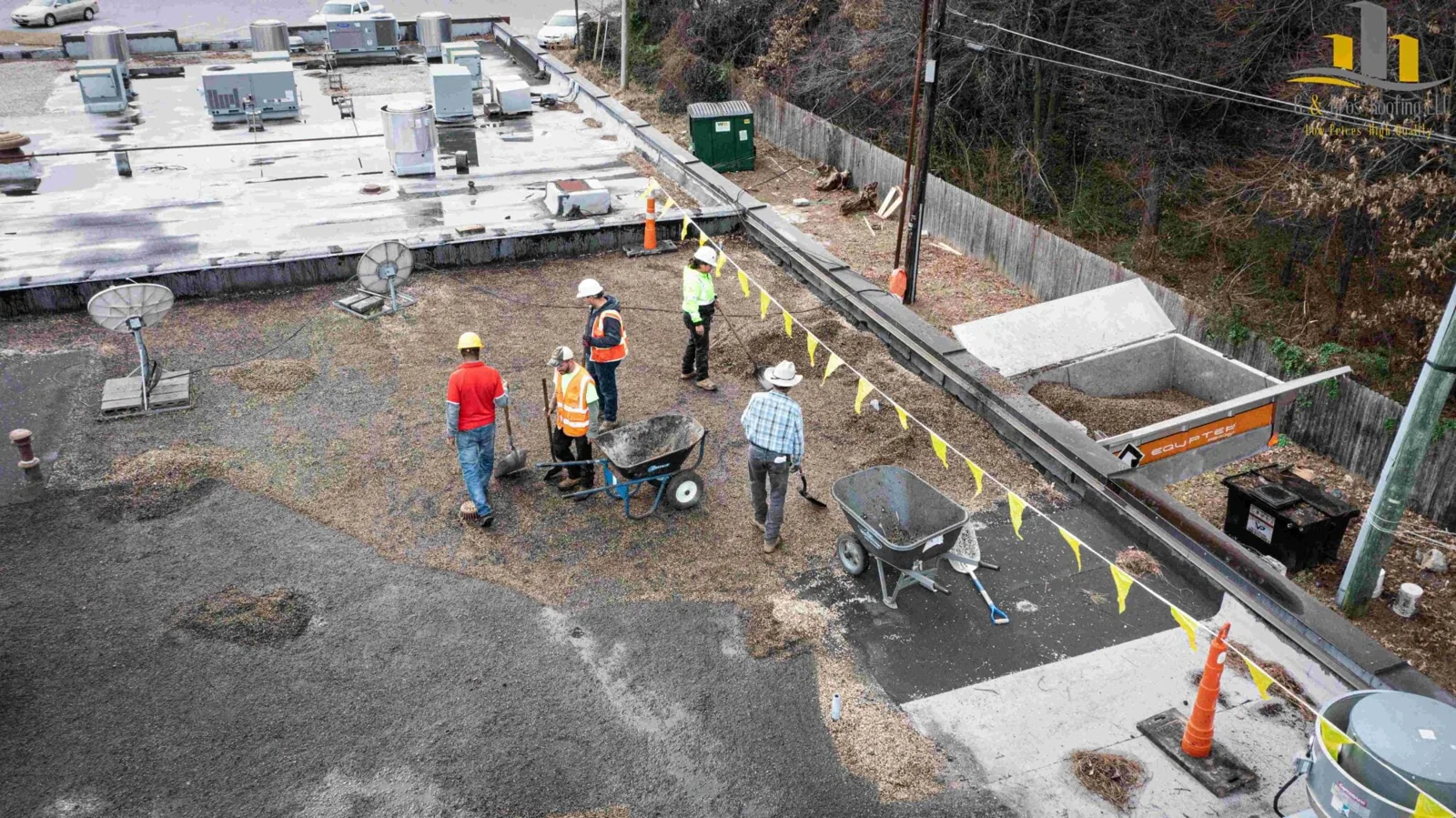
Gravel surfacing protects asphalt from exposure, but displaced stone can block a drain or collect around equipment. We note where the surfacing has shifted and check the membrane beneath it at drains and penetrations. Smooth-surfaced roofs call for attention to cracks and exposed asphalt. In either case, coating over an unprepared surface can lock in debris or moisture and make later inspection harder.
Parapet corners, pipe boots, curbs, and edge metal are common points where separate materials meet. We trace the flashing into the field plies and check whether the termination remains secure. A drain repair needs to preserve the bowl and flange connection, not just the visible roof surface. Where the flow path is restricted, drain and scupper repairs can be scoped alongside the membrane detail. Every opening gets a defined closeout plan.
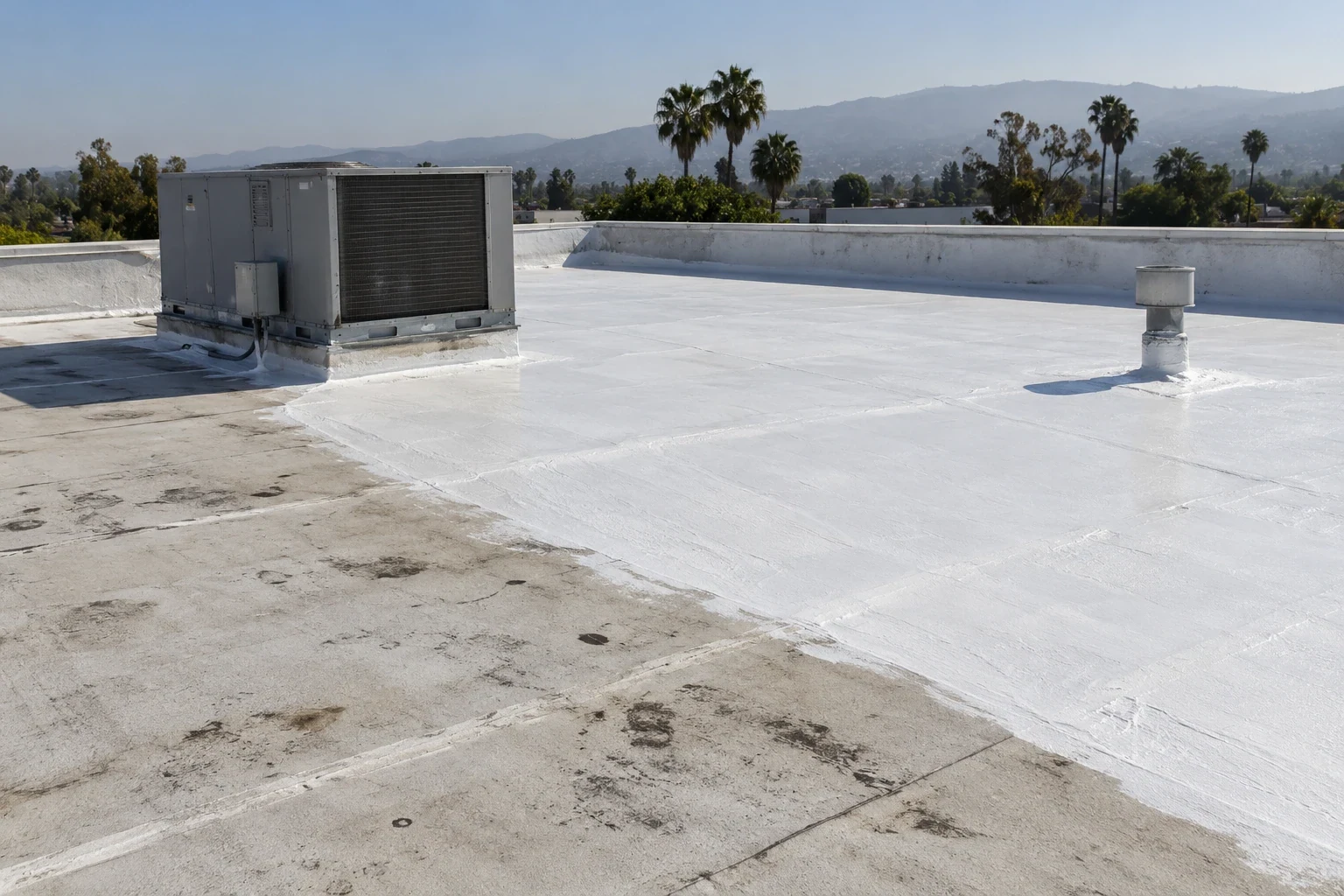
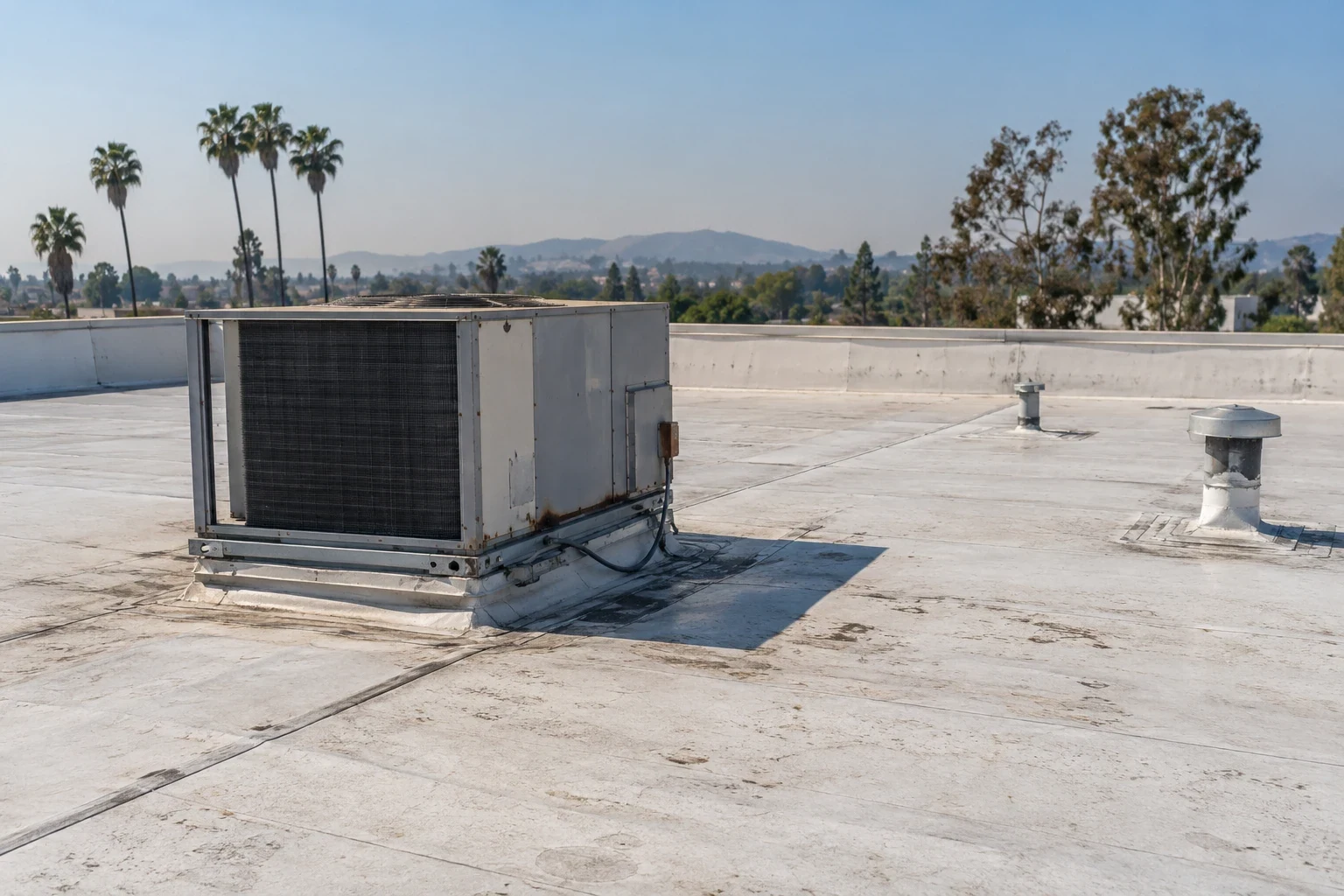
Comparing Asphalt and Single-Ply Roofs
BUR and modified bitumen use asphalt with reinforcement, while thermoplastic and rubber membranes use different sheet materials and seam methods. One assembly is not a universal upgrade over another. We compare deck condition, roof height, mechanical equipment, expected maintenance, and the building's operating constraints. A manager weighing a rebuilt asphalt assembly can also review modified bitumen roof construction, TPO membrane choices, and EPDM system details against site findings.
Costa Mesa's commercial land use spans corridors and industrial districts. East 17th Street has retail, service, and office uses along a commercial corridor. A roof near that corridor may need pedestrian protection and delivery coordination, while an industrial site can require a different staging route. Those are work-planning questions, not a basis for assuming one roof design. We can begin with a Harbor Gateway roof walk that records the assembly and access limits at the property.
Warm Weather and Permit Scope
Regional climate normals near Costa Mesa show warm summer highs. The actual surface and product requirements guide asphalt application and material handling. Asphalt application and material handling still follow the selected product's requirements. We monitor conditions for the work method and keep the day's open area small enough to protect before the crew leaves.
The work record starts at an exposed edge or drain where the plies can be identified. We mark surfacing that was displaced, the reinforcement added, and the patch limit. This matters when gravel has shifted around an outlet or old mastic covers an earlier repair. A condition report with roof-area photographs can preserve the observed build-up beside the proposed patch and point to any area that needs another inspection.
A Roof Record That Survives the Next Repair
After work, keep the roof map, repair limits, material notes, and dated photographs together. The next inspection can check the same drain, lap, or parapet corner and record whether the condition changed. We remove debris from the water path, identify areas where surfacing has shifted, and note rooftop work that may have disturbed a flashing. A record with specific locations is more useful than a line that only says BUR repair.
For an occupied building, arrange roof access so tenants know when noise or interior protection may be needed. In Harbor Gateway, office and manufacturing uses can sit within the same broad district, but the operating details belong to each property contact. Send the assembly notes or invite us for a roof walk. We will mark the plies and drainage conditions we can verify, explain the repair boundary, and identify what needs a closer opening before the owner selects the next scope.
Common Questions
The count varies by assembly and repair history. We inspect an accessible edge, drain, or approved sample and record the layers we can confirm. An old schedule may not reflect later recover work, so we note what is visible rather than assuming the original design remains.
Loose surfacing usually needs to be moved back far enough to expose a clean, sound repair perimeter. We protect the drain and collect displaced material so it does not block the water path. The repair method depends on the cap sheet and the layers beneath it.
Heat, trapped air or moisture, weak bonding, and movement between layers can contribute. A blister's shape alone does not identify the cause. We inspect nearby seams and the surface, then recommend a confirmed repair or a closer check before opening the assembly.
A tear-off becomes more useful when moisture, poor attachment, or damaged deck conditions cannot be corrected by adding a compatible layer. We compare those findings with roof height, edge details, drains, and the building schedule. The written scope separates confirmed conditions from items that still need verification.
Use the same roof-area map and photographs to revisit repaired laps, drains, parapet corners, and low points. We record whether the surface or water path changed and note any new rooftop work. That gives the owner a practical basis for maintenance or another repair.
Related Roofing Work
Walk the Built-Up Assembly
Send the roof record or schedule an inspection. We will identify the visible plies, trace drainage, and mark the repair boundary before pricing work.