
Flashing Failure Roof Repair in Costa Mesa, CA
A sealant bead can hide a gap without restoring the flashing beneath it. In Costa Mesa, CA, we inspect the transition at a curb, parapet, wall, skylight, or pipe before choosing a repair. The walk checks how the flashing meets the field membrane, whether movement has opened the tie-in, and whether water has reached the insulation or deck. We photograph the detail and mark what can be repaired now versus what needs opening or testing.
Costa Mesa's 390-acre Airport Industrial Area sits within a wider business and industrial complex and has large parcels with landscaped setbacks. That area context can inform how a property contact thinks about a roof visit, but it does not tell us which curb, pipe boot, or parapet has failed. At the building, we trace the transition from field membrane to vertical surface and check the termination, substrate, and fasteners. The repair note identifies the detail and tie-in that need work, not a district-wide assumption.
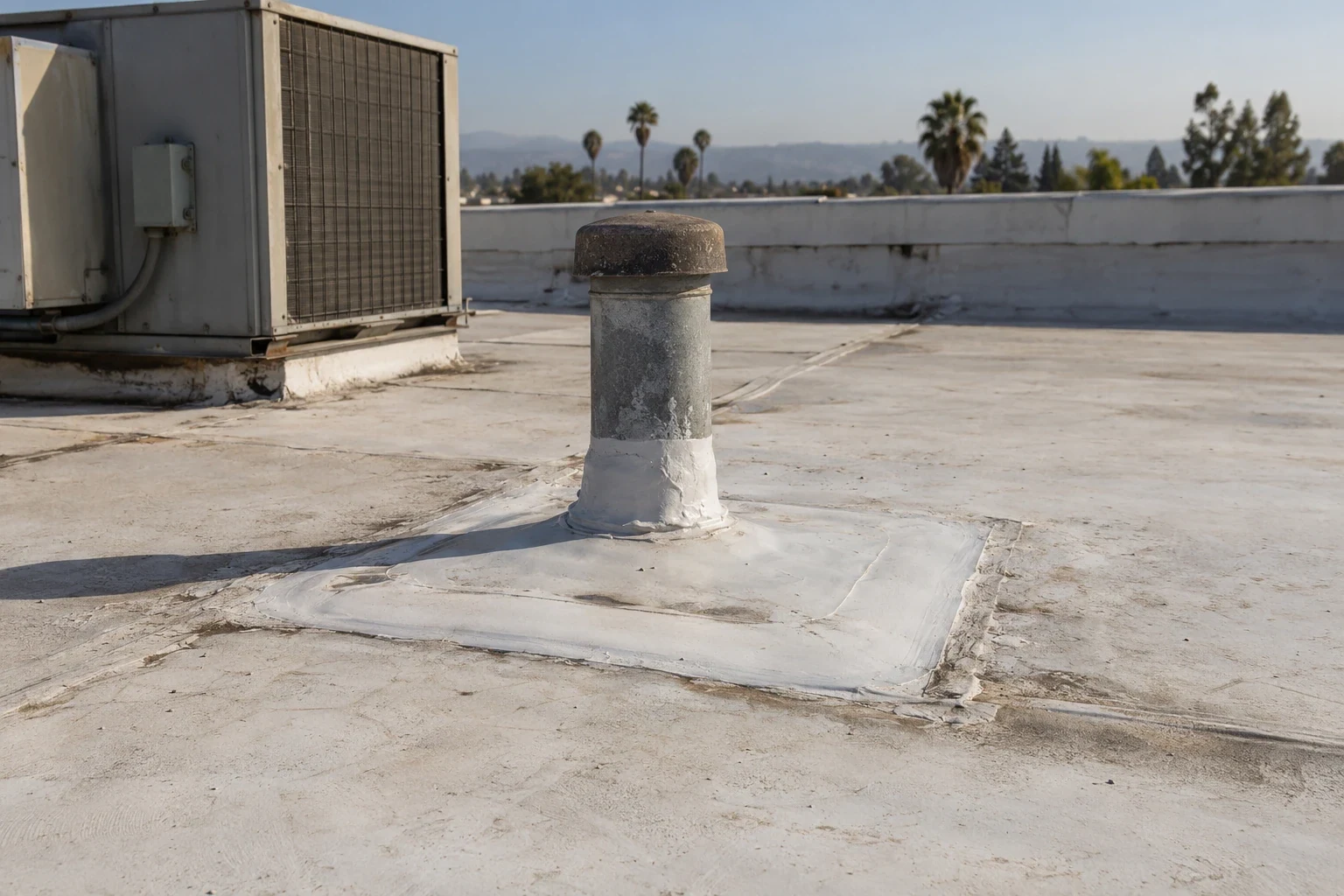
Flashing Transition Inspection
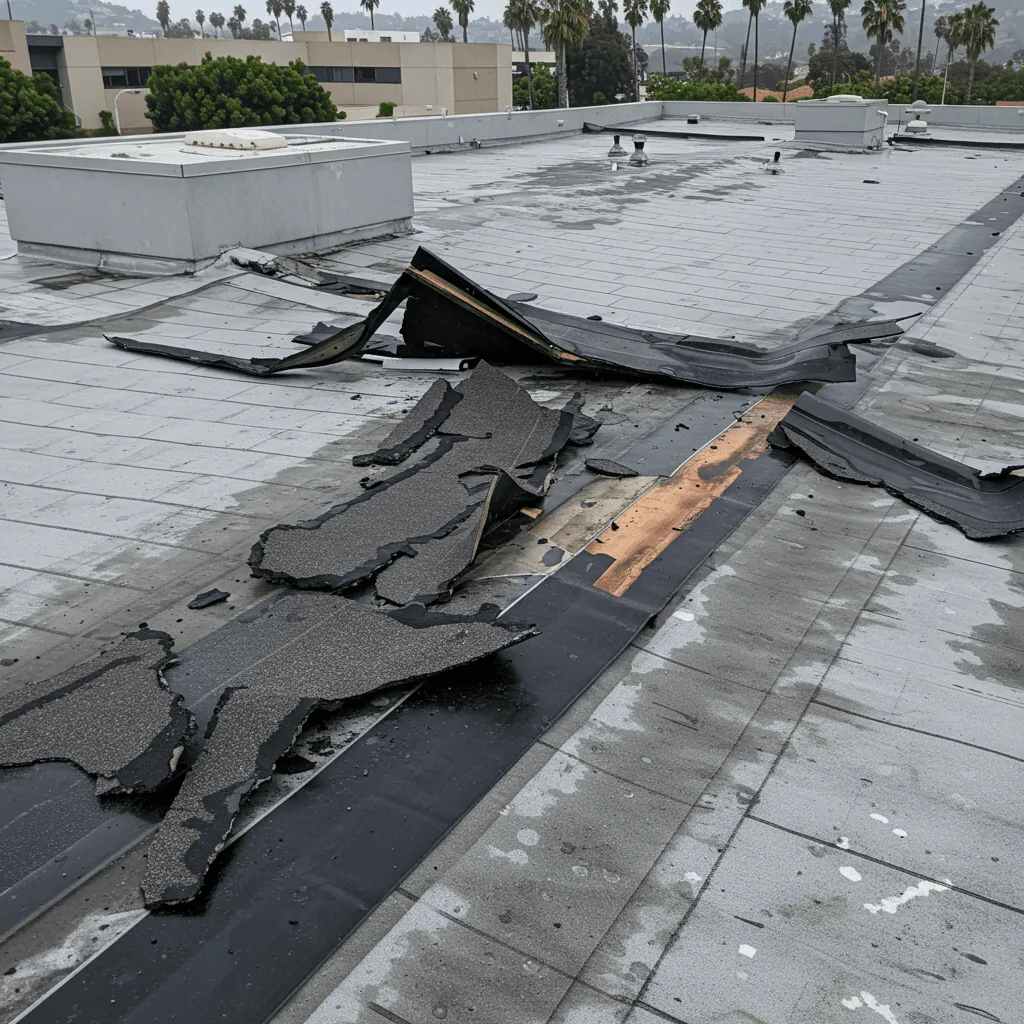
Flashing directs water across a change in plane or around an opening. We check the vertical leg, counterflashing, termination, membrane edge, and nearby seams for separation, corrosion, loose fasteners, or patch layers. At a curb, we inspect each side and corner rather than rely on the side facing the leak report. A small opening can let water travel beneath the roof surface, so the interior stain does not define the repair limit.
A commercial roof inspection can record the detail and adjacent field conditions. If a skylight or penetration is involved, the skylight and penetration flashing repair can address its curb or boot. We distinguish a failed sealant surface from a failed membrane tie-in and note where the substrate is concealed. The report then gives the owner a repair recommendation tied to the transition that was inspected.
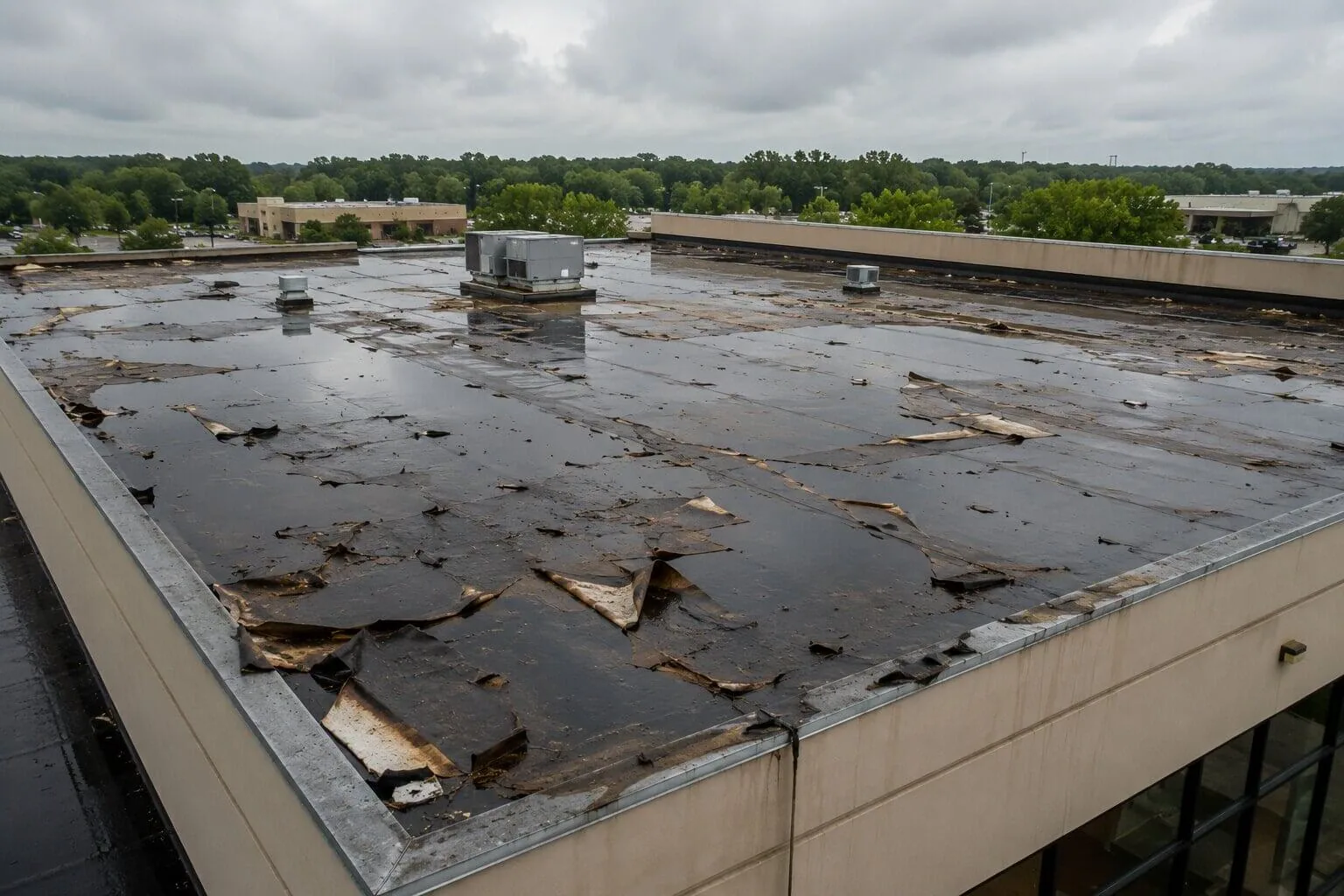
Compatible Tie-In Details
A flashing repair must connect to material that can accept a sound tie-in. We identify the existing roof system when it can be verified, prepare the surface, and repair or replace the flashing detail to match the assembly. An incompatible patch can separate at the edge or create a new opening. If the membrane has aged or the substrate is wet, the proposal identifies those limits instead of covering them with a surface bead.
A roof curb may need a new flashing boot, reinforced corner, or metal transition; a wall detail may require a termination and counterflashing repair. At a wall, we check whether the vertical leg meets the counterflashing and whether the termination sheds water without relying on a surface bead. Curb corners can fail differently on each face, so we inspect every side we can reach and record the transition from field membrane to top edge. The scope specifies which layers are removed and replaced and what adjacent material remains. If a seam also appears open, a seam failure review checks that lap separately. For movement at a perimeter, compare the detail with a wind-damage roof inspection only when edge displacement is observed.
Curbs, Piping, and Service Traffic
Rooftop equipment creates a group of details that can move independently of the field membrane. We inspect the curb flange, support points, pipe boots, conduit, and nearby service path. A contractor may have lifted a unit or added a line after the last roofing visit, so we compare the current detail with records provided by the owner. If equipment needs to be moved, we coordinate the roofing tie-in with the mechanical contact and photograph the finished flashing after reset.
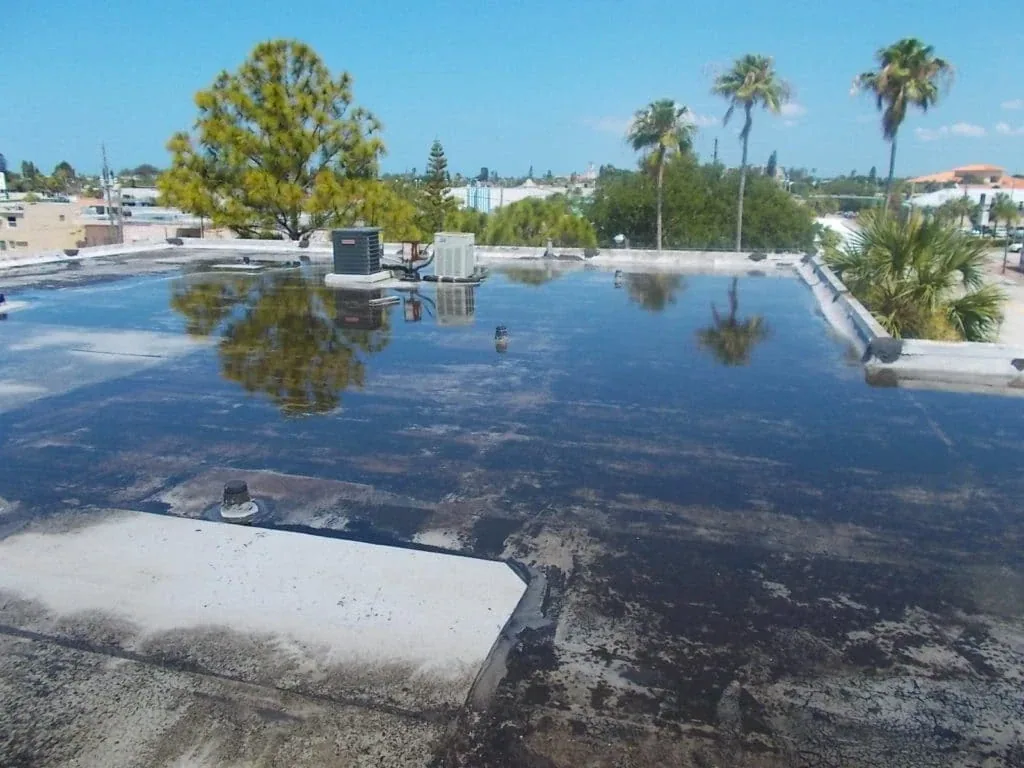
Harbor Gateway and the Westside are separate Costa Mesa industrial districts listed in the General Plan. The land-use context does not establish whether a particular property has rooftop equipment or which trade has access. We verify those conditions at the building. If water flows toward a curb, we check the drain path as well as the flashing. A drain and scupper service can correct outlet issues that would remain after a curb repair, keeping the scope tied to each source of water entry.
Conditions for a Broader Repair
Repeated separation at several curbs, water below the membrane, or a deteriorated substrate may call for more than replacing one boot. We map each affected detail and note whether the condition is isolated or part of a broader repair pattern. If access cannot confirm the layers, we outline a test opening. A recover or replacement review follows only when the assembly, attachment, and project requirements support that option.
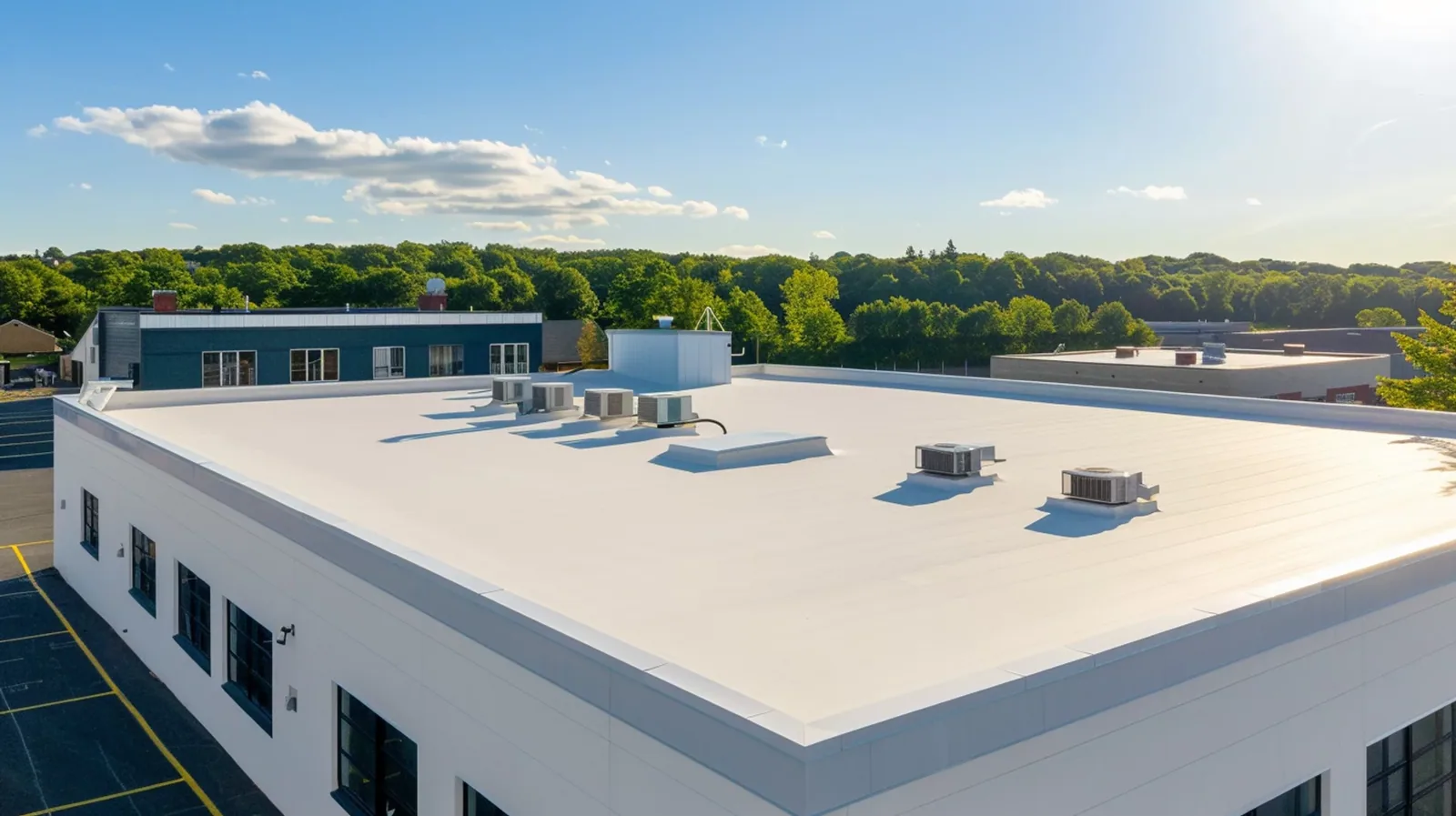
Costa Mesa's regional climate planning identifies extreme heat among local impacts, but that planning language does not measure the temperature or condition of a particular flashing. We inspect the membrane and exposed metal in place, then evaluate the tie-in, movement, and maintenance history. A PVC roof system review can discuss compatible repair methods when the existing system is confirmed. The proposal records what is included, what needs testing, and which access window allows the repair to be completed safely.
Photographs for the Next Inspection
A closeout record should show the repaired transition from the field membrane through the vertical flashing and termination. We label the roof zone, add photographs, and note adjacent items that were outside the approved repair. That gives facilities staff a clear comparison point for a later walk. If sealant needs routine review, the record identifies its location and what condition should be checked rather than leaving a general roof note. Where several flashing types share one roof, separate labels keep each detail's repair history clear. We also note if another trade's later work could cross that termination.
The preventive maintenance visit can revisit marked curbs, penetrations, and wall lines. For work in the Westside district, the district name gives a broad service-area reference; access and roof assembly are still confirmed at the property. We record the actual condition and recommend a next inspection based on the detail's material, movement, and repair history.
Common Questions
Not in every case. We inspect the underlying flashing, membrane tie-in, and substrate before selecting a repair. If the transition is open or the material has separated, the scope may require new flashing or a compatible membrane detail rather than another surface bead.
We inspect curb corners, vertical legs, pipe boots, supports, nearby seams, and the path used for service access. If equipment must move, we coordinate the tie-in with the mechanical contact. The closeout record shows the repaired flashing and any item that still needs review.
Water can travel beneath a membrane or along the deck before it reaches the interior. We inspect the reported room and trace outward across nearby transitions and drains. Photographs and roof-zone notes show which locations were checked and where testing is still needed.
Multiple failed transitions, repeated water entry, wet insulation, or a deteriorated substrate can support a wider review. We map each detail and compare the observed pattern with the roof assembly. The report identifies any opening or testing needed before a larger scope is priced.
Include the roof zone, photographs before and after work, the material or system identified, and the repaired termination. We also list nearby details that remain outside the scope and the next inspection item. That lets facilities staff return to the same curb or wall line later.
Related Roofing Work
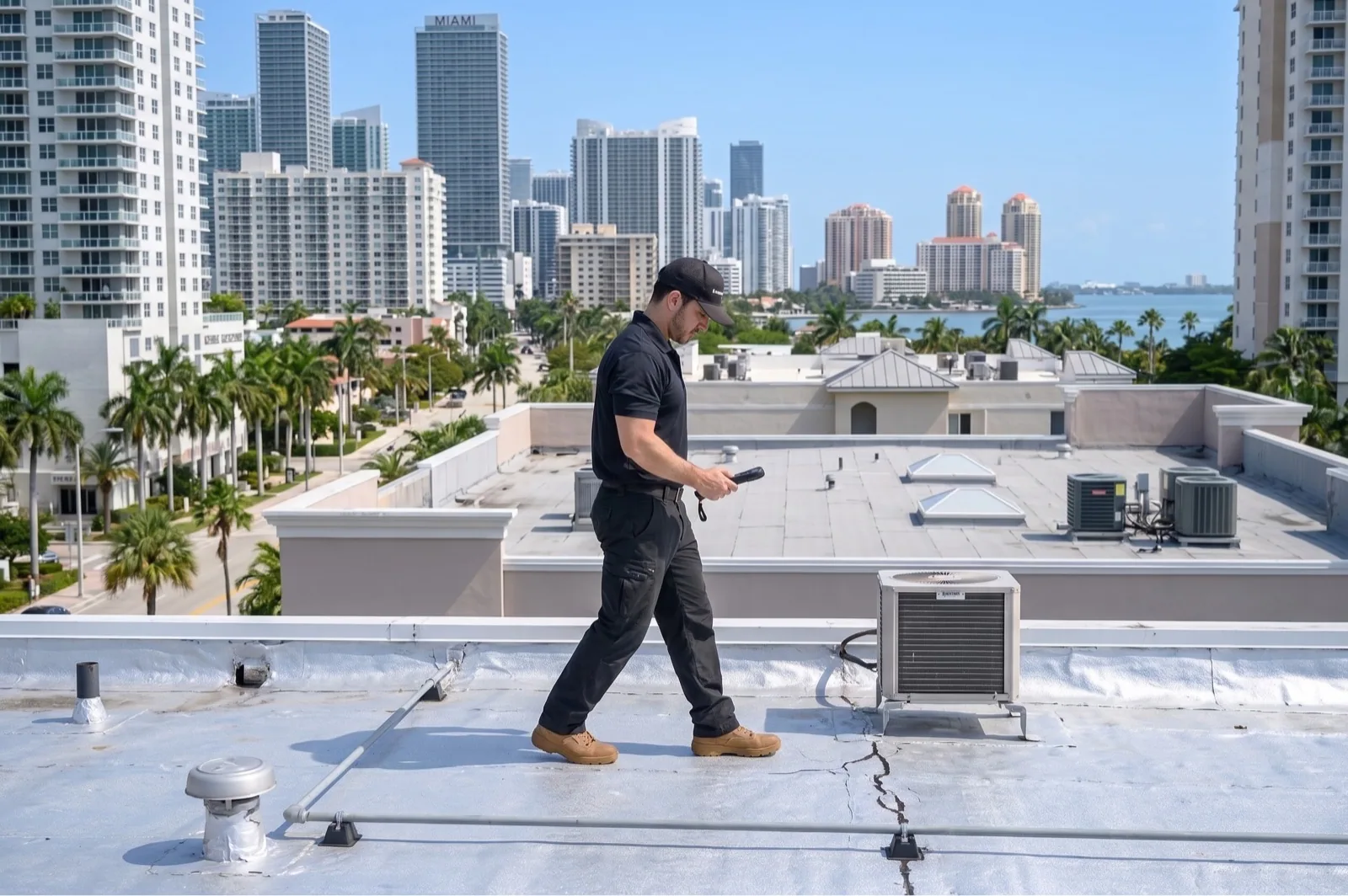
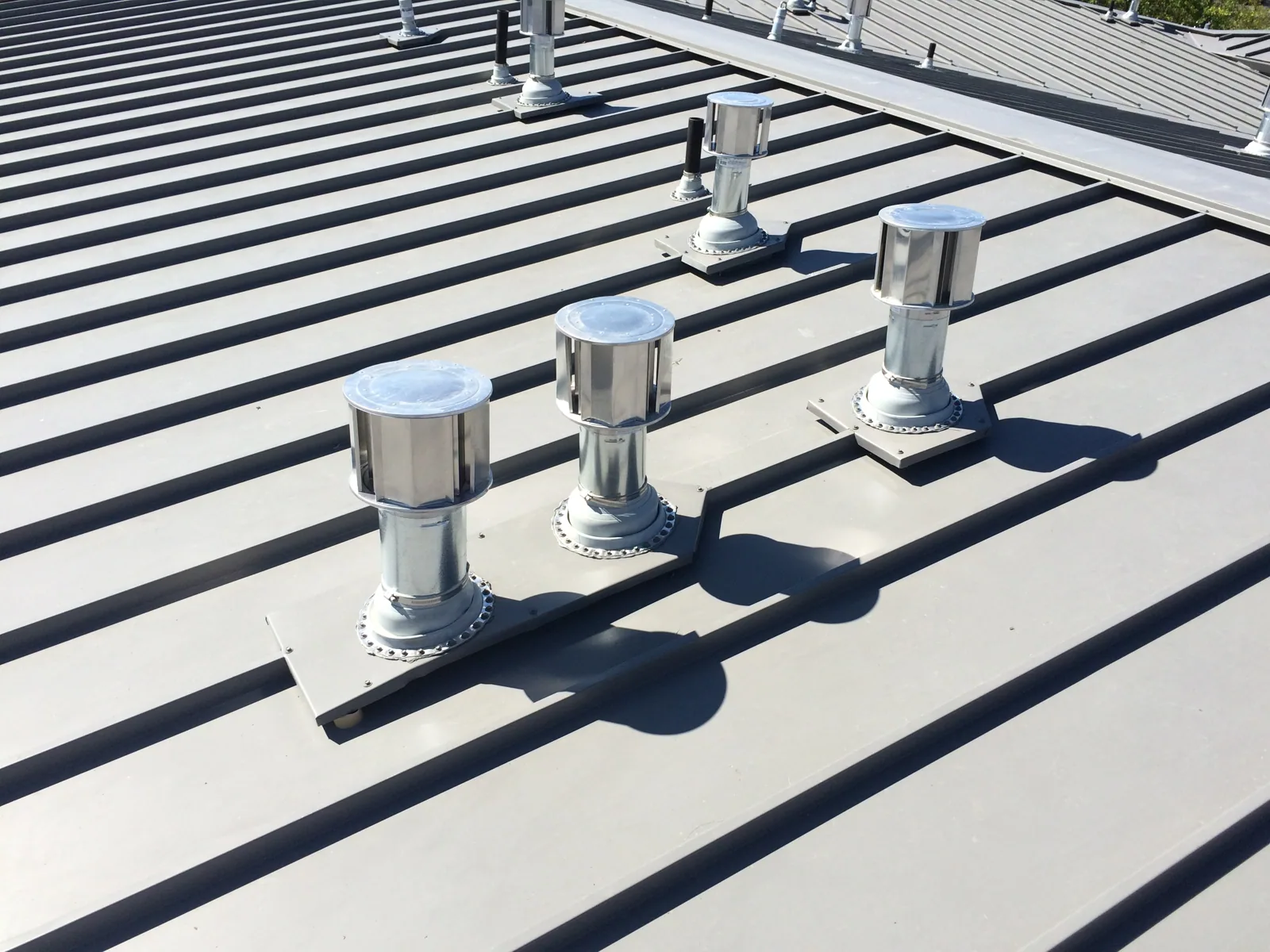
Inspect the Roof Transition
Share the leak location, roof access window, and any recent equipment work. We can inspect the flashing detail, photograph the tie-in, and define a compatible repair scope.