
Roof Seam Failure Repair in Costa Mesa, CA
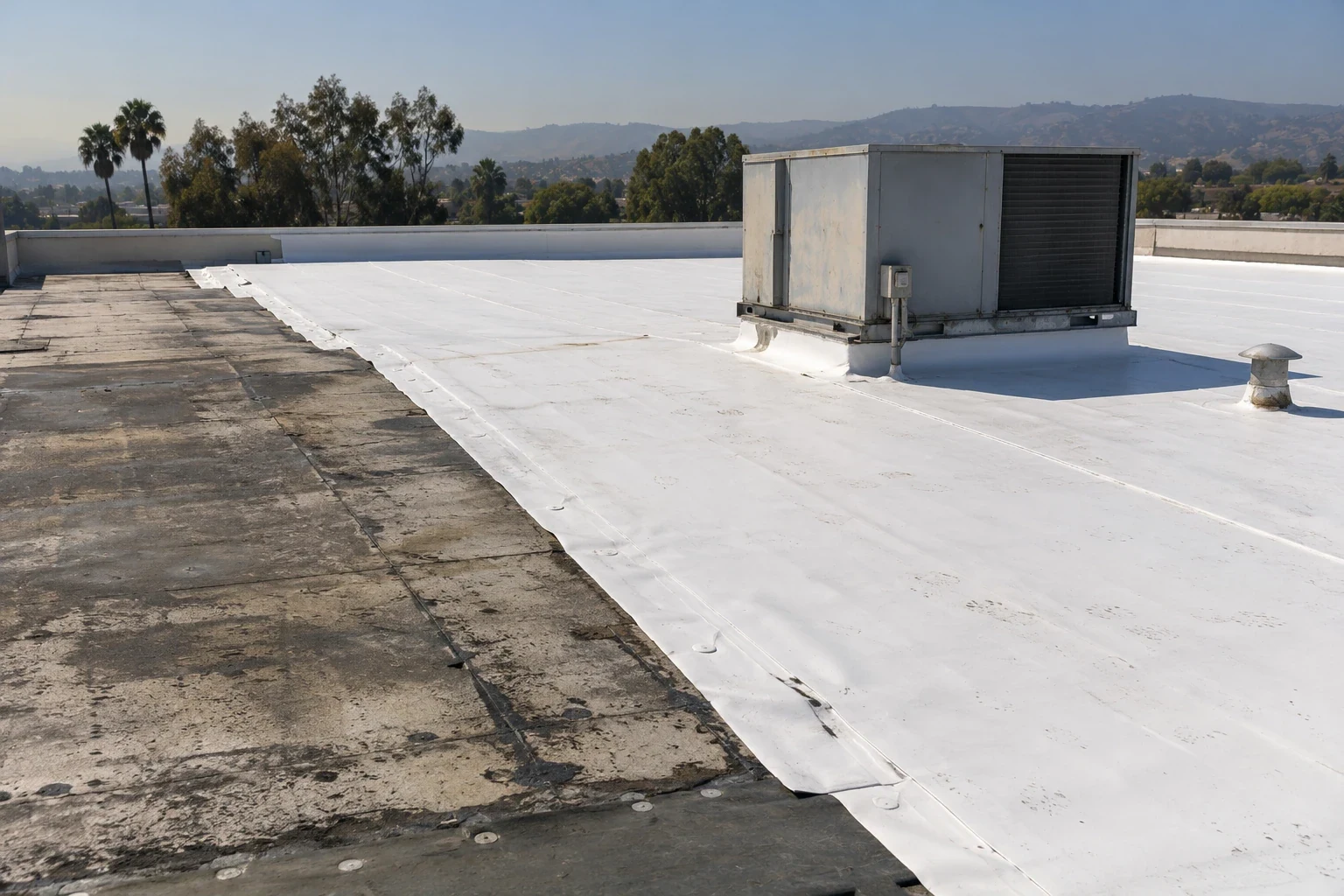
An open lap gives water a direct route beneath a membrane. In Costa Mesa, CA, we inspect the seam, adjoining field, nearby penetrations, and drainage before setting a repair boundary. The walk checks whether the separation is isolated, whether the material can accept a repair, and whether moisture has reached the layer below. Photographs show the failed length and the surrounding roof, giving the owner a scope based on the seam that is actually open.
The General Plan describes Costa Mesa's Westside as a mix of smaller operations and larger industrial uses, and identifies Harbor Gateway as another major industrial district. Those varied building uses do not establish the roofing system at a particular property. We verify the membrane and seam type on site, then match the repair method to the assembly and substrate. If the split continues beneath a prior patch or around a curb, we document that extension before pricing a larger area.
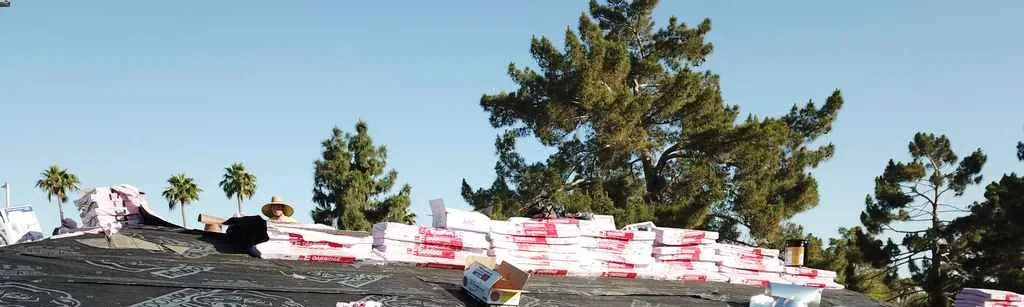
Check the Lap and Its Edges
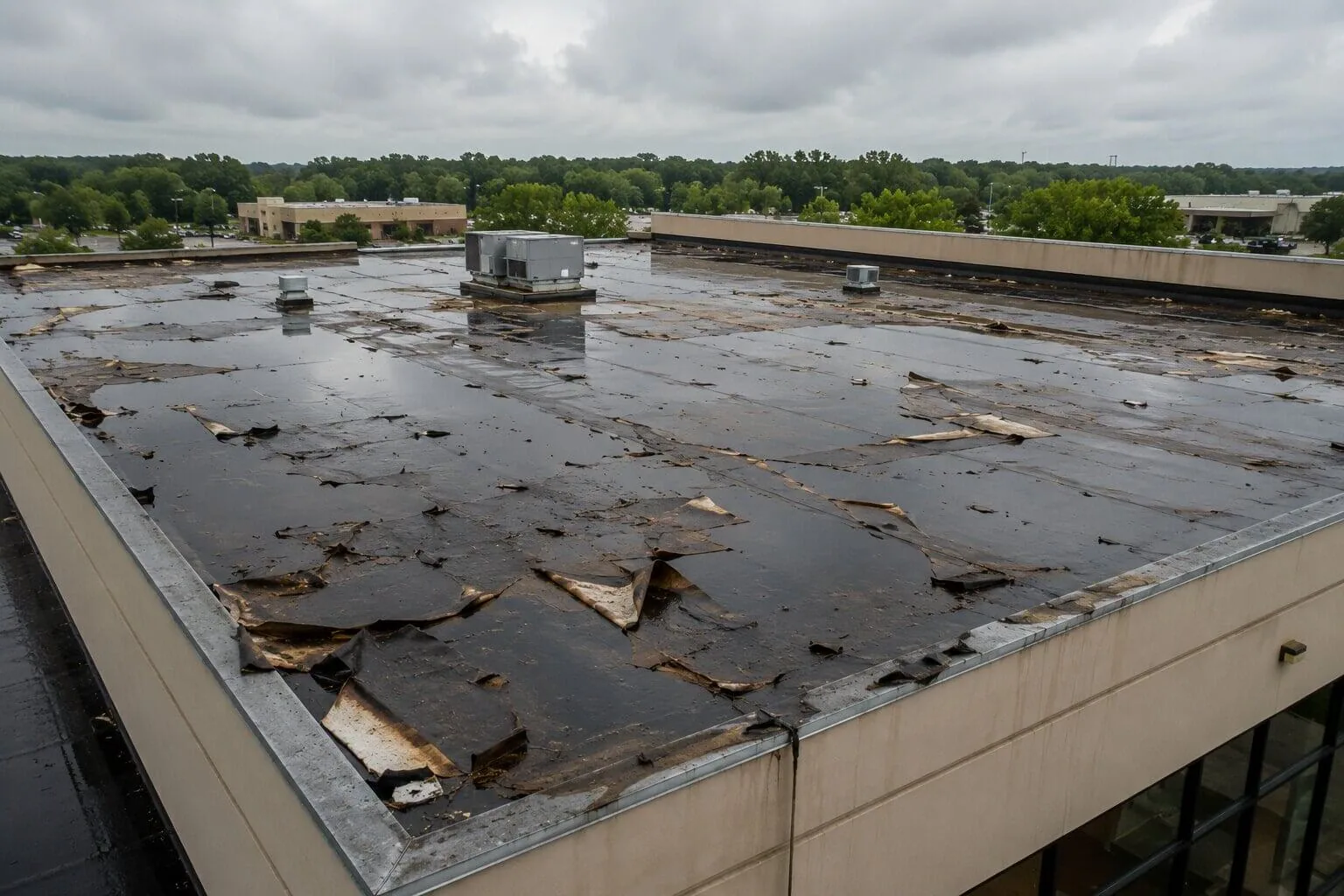
We inspect the seam from both sides, check for open or fishmouthed areas, and look for wrinkles, contamination, fastener movement, or a weak tie-in at the edge. On a heat-welded membrane, the bond must be evaluated along the lap rather than judged by a single point. Other systems use different seam details. The inspection identifies what material is present and whether the open area has affected nearby flashing or insulation.
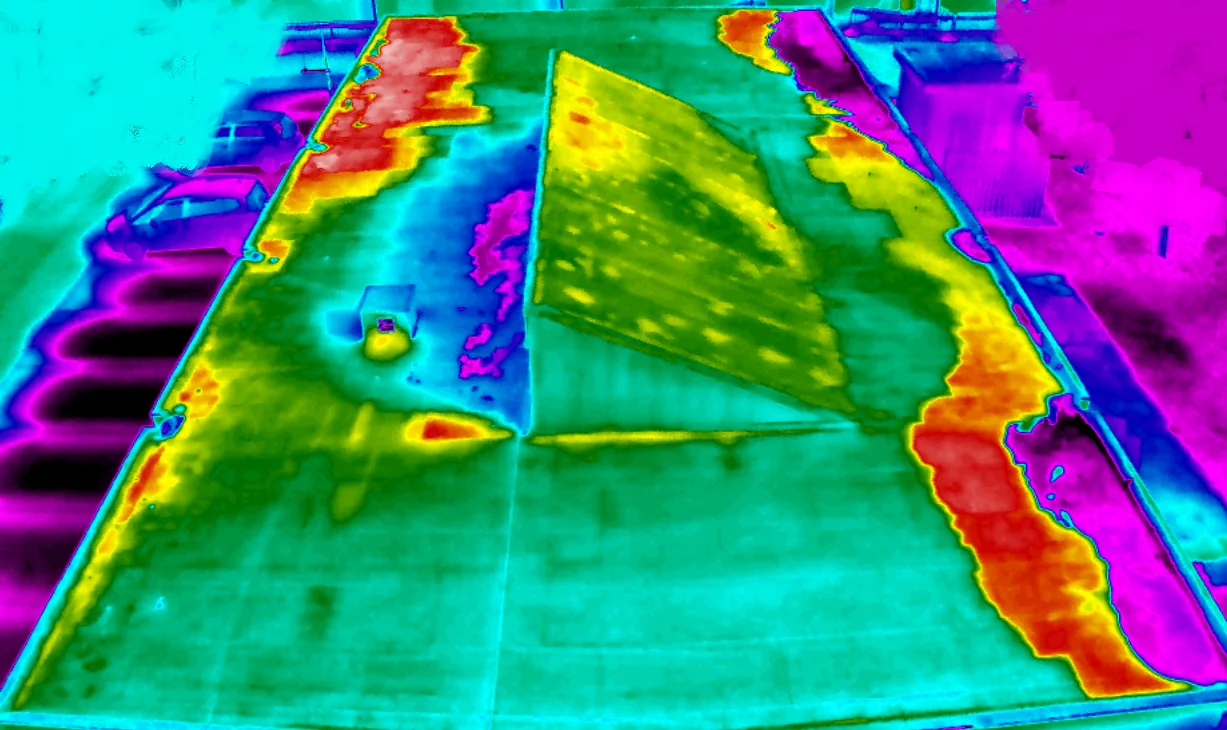
A commercial roof inspection can map the failed seam and photograph adjacent details. If water appears inside far from the lap, we compare the reported area with drains and penetrations along the route. An infrared survey may help identify follow-up test locations when moisture could be concealed. The result is interpreted with the roof walk and confirmed as needed before wet materials are included in a repair or replacement scope.
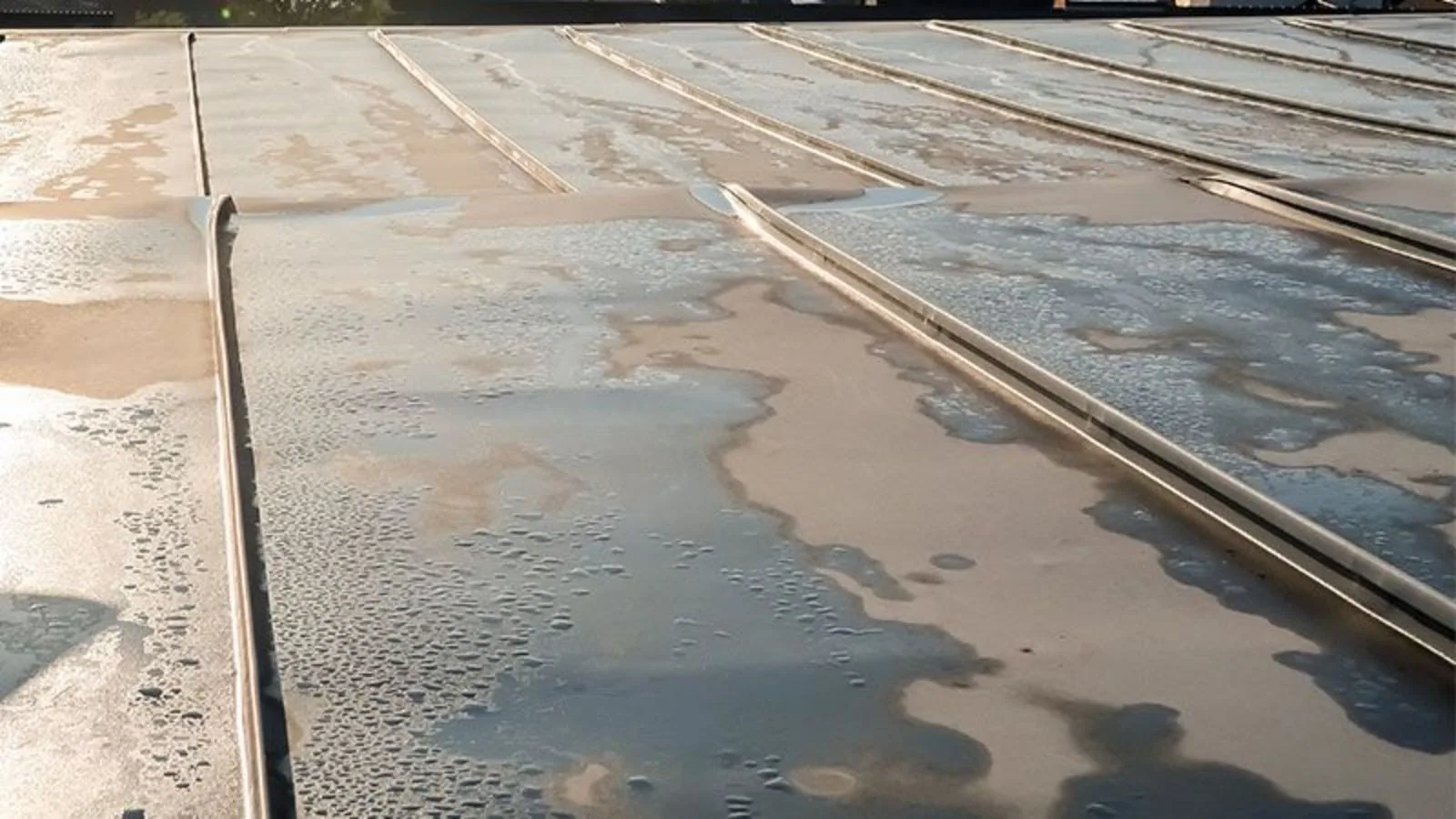
Rebuild a Compatible Seam
A seam repair begins with preparation of the surfaces and removal of material that prevents a reliable tie-in. On a thermoplastic membrane, the crew checks that the surfaces can be welded and verifies the completed bond along the repair. Taped or adhered systems require their own preparation and seam method. We do not apply one repair detail across different membranes. The estimate identifies the system confirmed, the seam length addressed, and any adjoining detail that remains open. We note whether the repaired lap meets an older patch, curb flashing, or a change in membrane direction. Those junctions can shift the limits of a repair even when the visible split is short. The proposal names each transition included, so approval covers a defined roof area rather than an open-ended seam allowance.
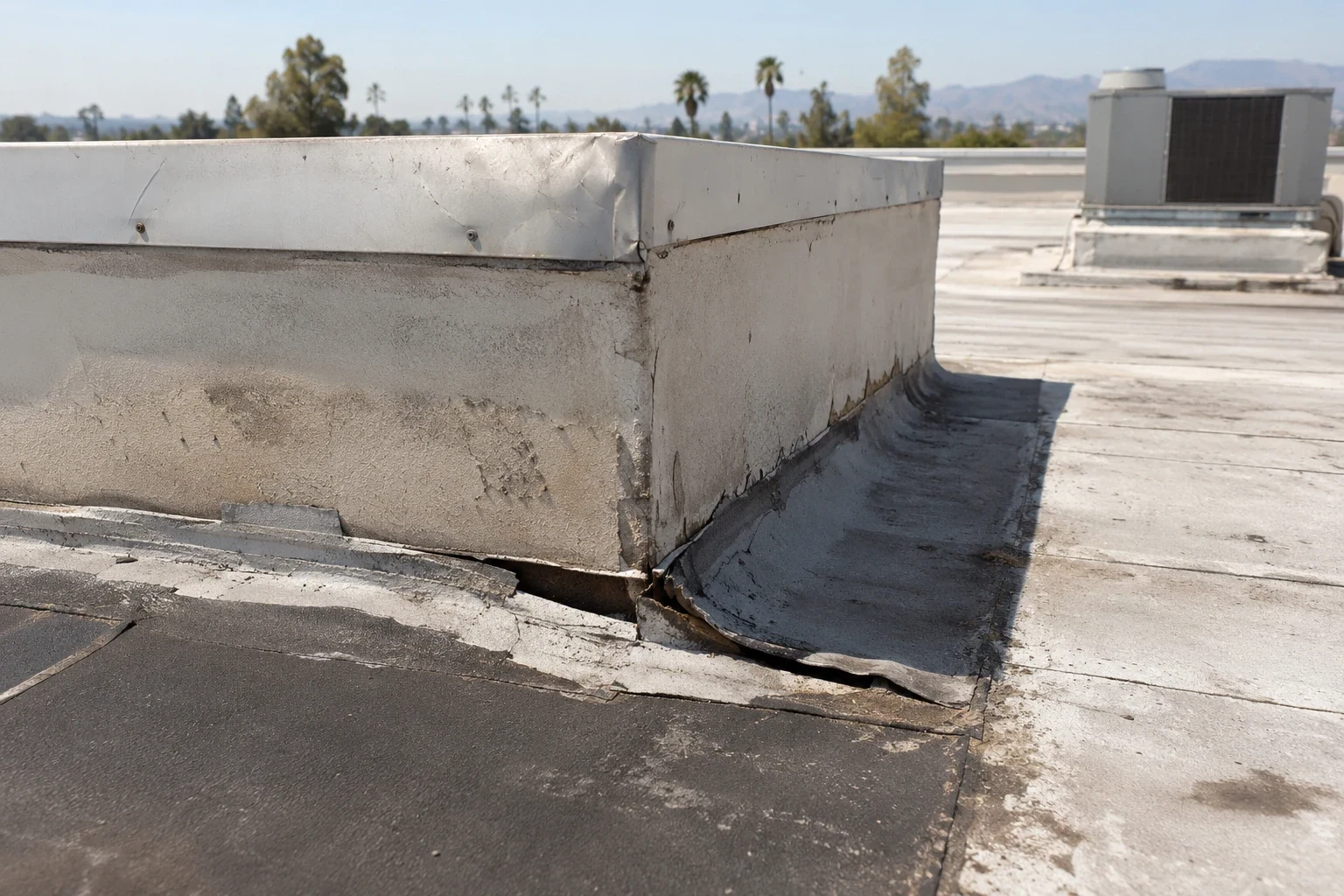
If the seam is near a curb or wall, the flashing transition may need its own repair. A flashing failure review checks the vertical detail separately from the field lap. When the split follows movement at the roof edge, compare conditions with a wind damage inspection if edge displacement is observed. That keeps a seam repair from absorbing a perimeter or flashing scope that needs its own photographs and approval.
Localized Split or Broader Pattern
A short opening with sound material beside it may support a localized repair. Repeated separation across several roof zones, wet insulation, or widespread attachment concerns can call for a broader review. We compare seam locations, prior repair history, and nearby details before recommending repair, recover, or replacement. If a test opening is needed, we show its location and purpose. The owner can approve the confirmed seam work while deciding whether to investigate concealed layers.
A TPO system review can describe membrane and seam details when that material is verified at the property. A recover option depends on existing layers, attachment, substrate condition, drainage, and project requirements. The recover assessment documents those conditions before another membrane is considered. The proposal distinguishes the immediate repair from any larger scope that depends on testing, design review, or roof records not yet available.
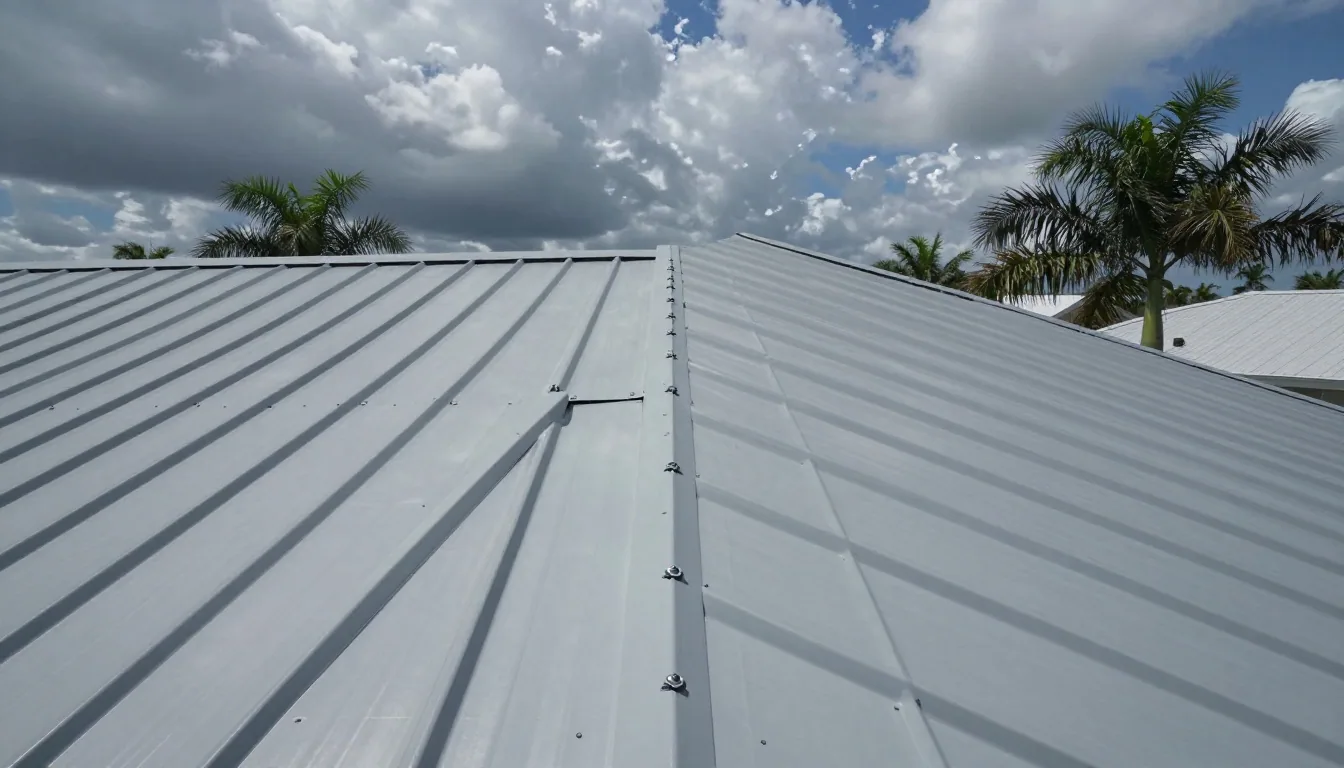
Seams Near Equipment and Traffic
Roof traffic can stress laps around service routes, ladders, rooftop equipment, and staged materials. We inspect the seam where a contractor may have crossed it, then check nearby pipe supports, curb corners, and prior patches. If a maintenance crew needs regular access, a protection path may be part of a separate scope. We photograph the affected area before and after repair so a later visit can tell whether a new opening formed near the same route.
Harbor Gateway and the Westside appear in the City's plan as industrial districts, but neither name proves a specific building has equipment traffic or a particular membrane. We confirm those conditions at the roof. For facilities in the Westside district, roof access plans often need to account for active service work and shared loading areas. We confirm the membrane, affected seam, and safe route across the roof before scheduling the repair. The building contact can identify operating windows and restricted zones so the crew can stage materials without blocking roof drains or service equipment. We record any access limits that prevent a full inspection and return to those areas before closing the scope.
Compare the Repair on the Next Walk
Closeout notes should state where the seam began and ended, what method was used, and which nearby section was not included. We add photographs of the finished lap and record any moisture test or access limitation. Facilities staff can then return to the same roof zone and check whether the repair remains intact. If water later appears, the prior record gives the next inspection a point of comparison rather than a broad area to recheck.
A routine commercial roof repair visit can include marked seam follow-up alongside drainage and flashing checks. Costa Mesa's planning documents identify multiple industrial districts and commercial corridors, but the roof record stays tied to the individual property. We note the building contact, access window, observed system, and action still needed. That record supports maintenance planning without assuming that adjacent roofs share one repair history.
Common Questions
A localized repair may work when the membrane is compatible, the surrounding field is sound, and the seam can be prepared for a reliable tie-in. We inspect the full split and adjacent areas first. If moisture or broader separation is present, the scope may need testing or a wider repair.
The surface may not have been prepared for the system, nearby attachment may be moving, or the split may extend beyond the visible point. We inspect the original repair and surrounding lap, then identify what needs to change. The repair record should show the material and completed tie-in.
We identify the roof system and inspect the lap before choosing a weld, tape, or adhered detail. Each material has its own preparation and tie-in requirements. If the system cannot be confirmed, we note what record or opening would verify it before work begins.
Yes. Water can travel below the membrane before reaching a ceiling or wall. We compare the interior report with seams, drains, curbs, and transitions along the likely path. The report records what is visible and whether a test is needed to confirm concealed moisture.
It should identify the roof zone, seam length addressed, material and repair method where confirmed, photographs, and any nearby item left open. We also note the access window and next check. Those details let the next inspector revisit the same lap.
Related Roofing Work
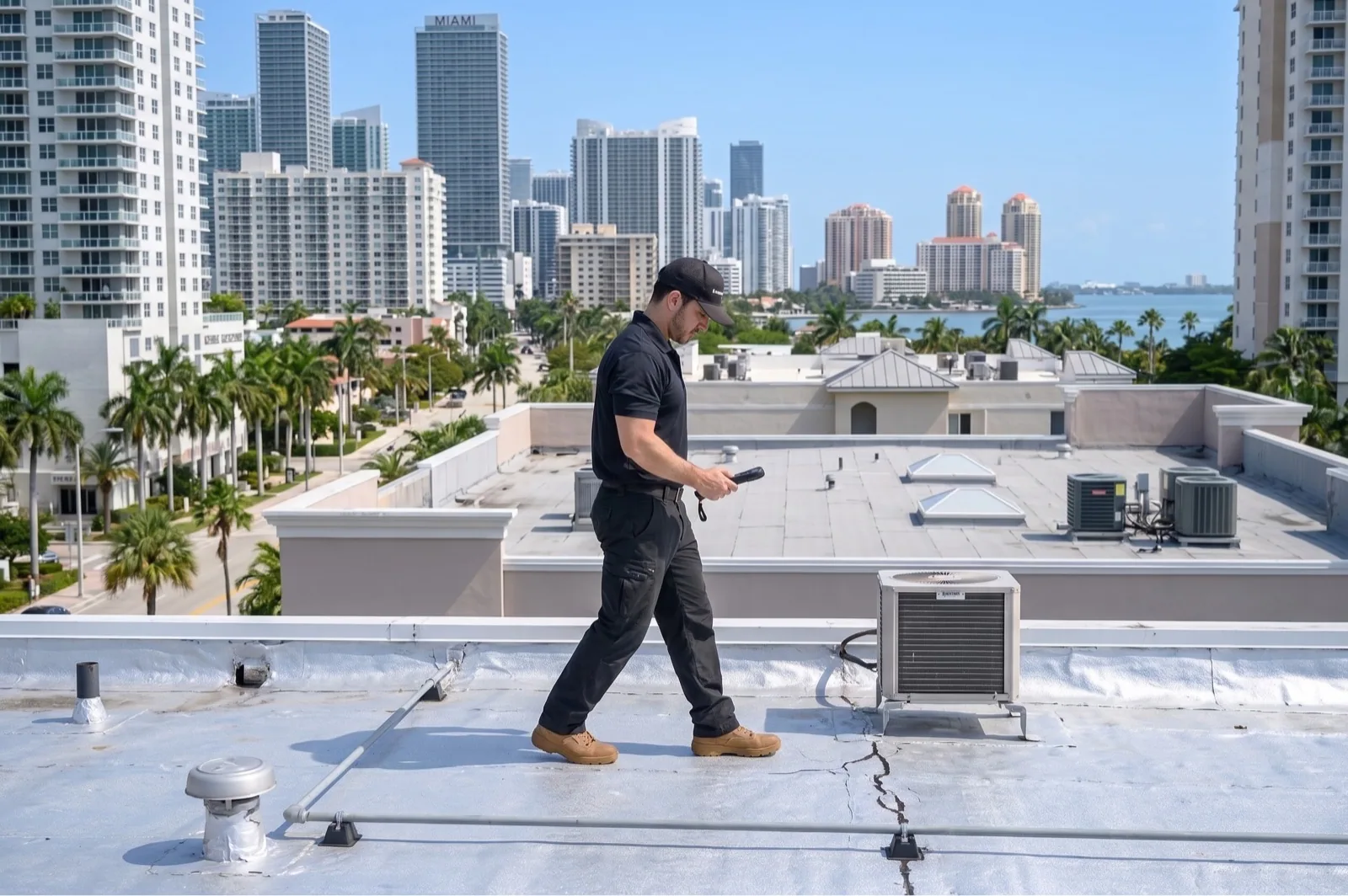
Inspect the Open Seam
Send the reported roof zone, leak location, and any repair history. We can inspect the seam, identify the membrane, photograph the tie-in, and set a repair or testing boundary.