
Ponding Water Roof Repair in Costa Mesa, CA
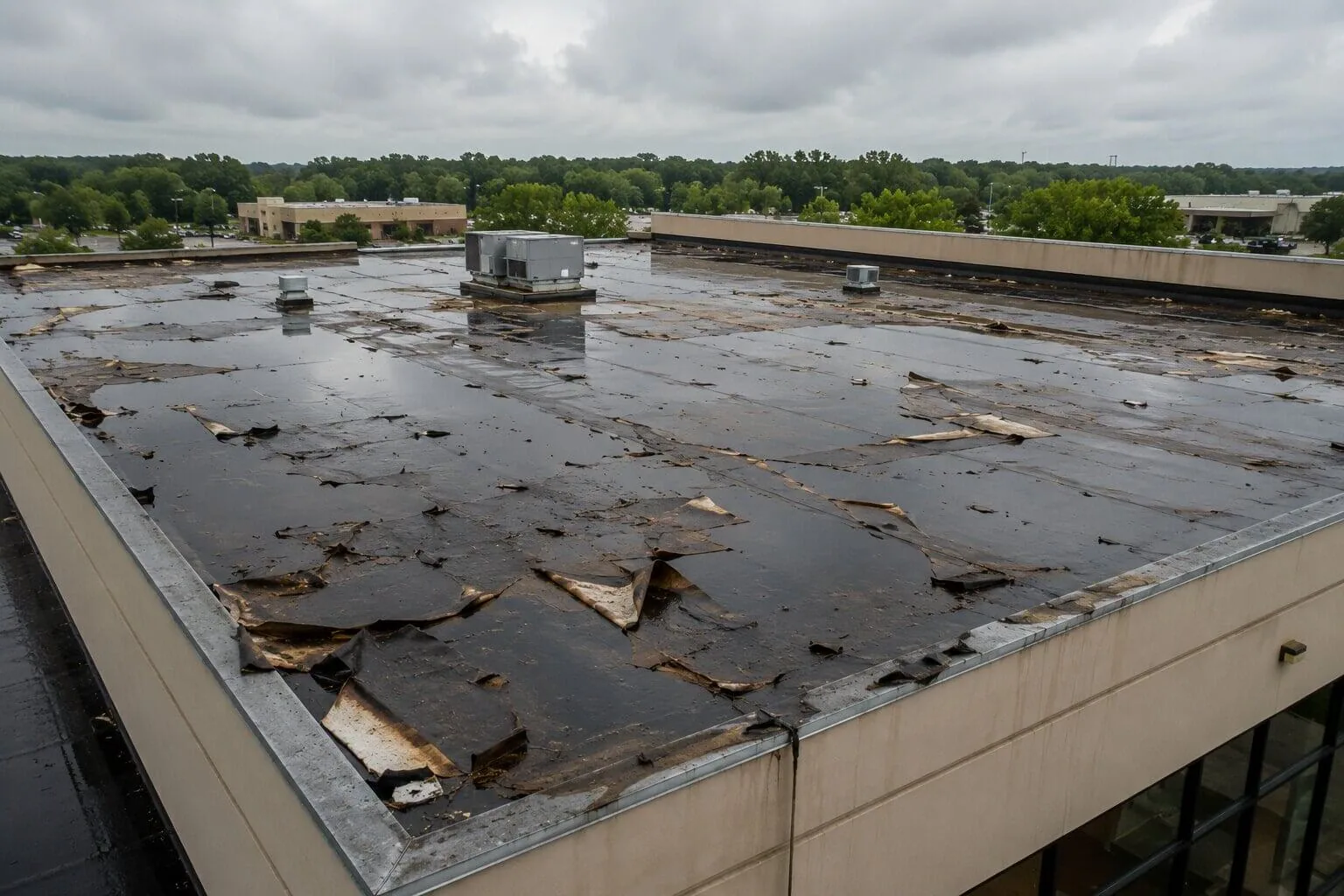
A shallow pool that returns after roof work needs a drainage check before another patch is placed. In Costa Mesa, CA, we look at the low area, drain opening, overflow path, nearby seams, and the roof layers visible at the surface. The walk records where water remains and whether the outlet is obstructed, damaged, or set above the low point. That distinction matters: a drain repair, a slope correction, and a membrane repair are different scopes.
The City plans for localized flooding and possible sea-level-rise effects tied to its coastal position and proximity to the Santa Ana River. That is broad planning context, not a finding about a specific roof. Westside and Harbor Gateway are two of Costa Mesa's major industrial districts, with a range of building uses. We verify the roof assembly and drainage at the actual property, then document the water path and the next inspection or repair step.
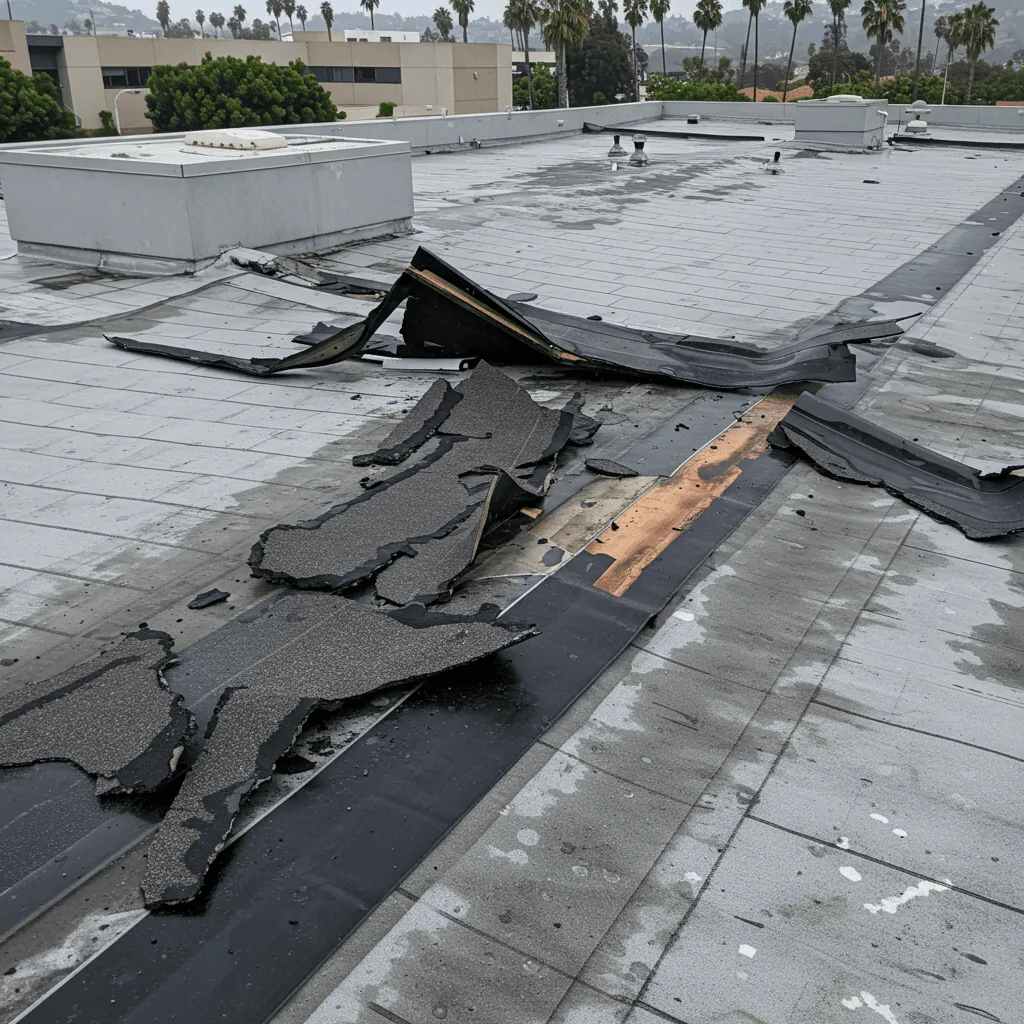
Find the Low Point and Outlet
We begin by following the water toward the drain or scupper. The inspection checks the outlet, strainer, overflow, membrane around the drain bowl, and any nearby flashing or seam. A blocked opening can hold water, while a low area without a clear path may point to slope or deck conditions that need further review. We photograph the standing water and surrounding details so the scope addresses the cause that can be observed.
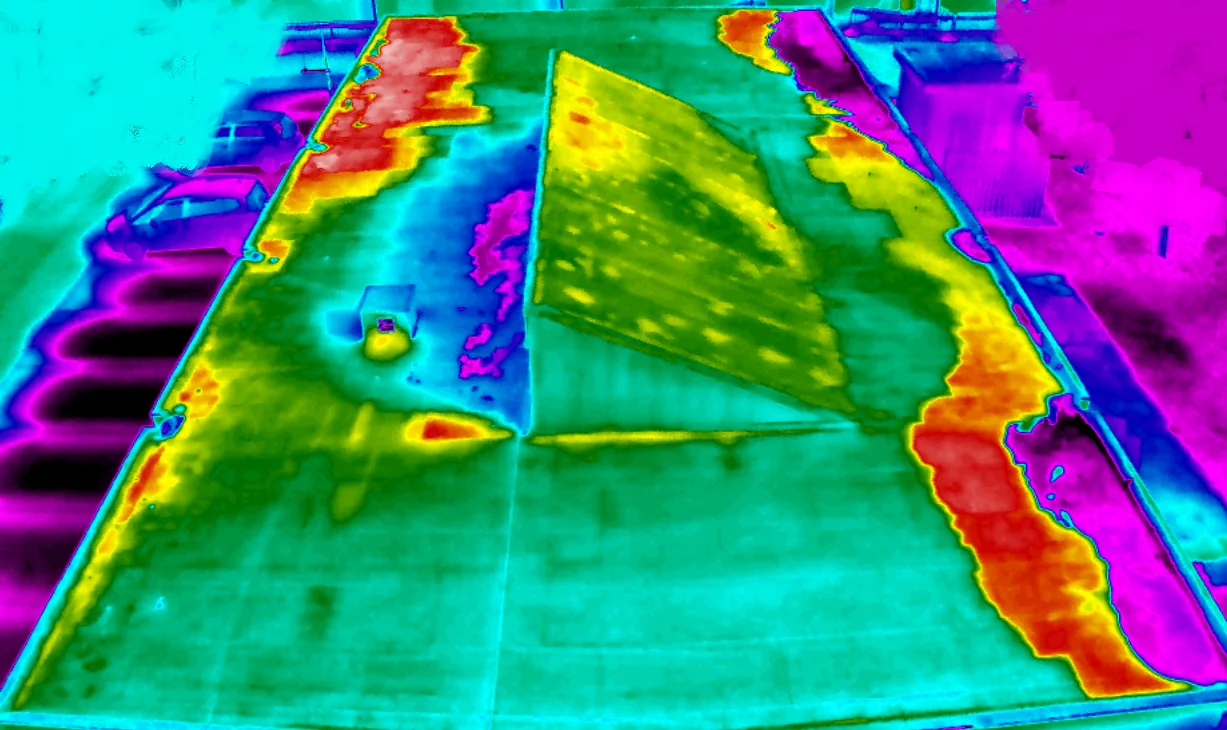
A drain and scupper inspection can identify an outlet that needs cleaning, repair, or a larger drainage review. We also check whether a roof penetration or prior patch interrupts the water path. If moisture may have reached insulation, an infrared survey can help select areas for testing. The survey guides follow-up; a test opening or other confirmation may still be needed before wet material is included in a repair estimate.
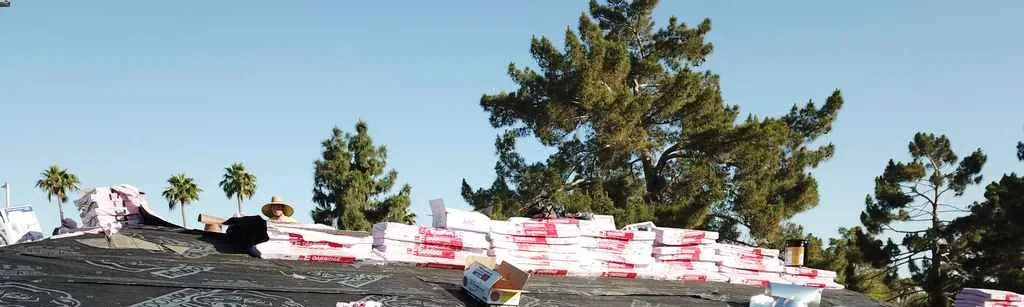
Keep Drain Work Separate from Membrane Work
A clear drain does not repair a split seam, and a membrane patch does not correct a low outlet. We list those conditions separately. The proposal can include outlet service, flashing repair, or membrane work at the confirmed boundary, while any slope or structural concern is identified for additional review. If water has remained around a detail, we inspect its edges and tie-ins for separation or deterioration before deciding how far a repair should extend.
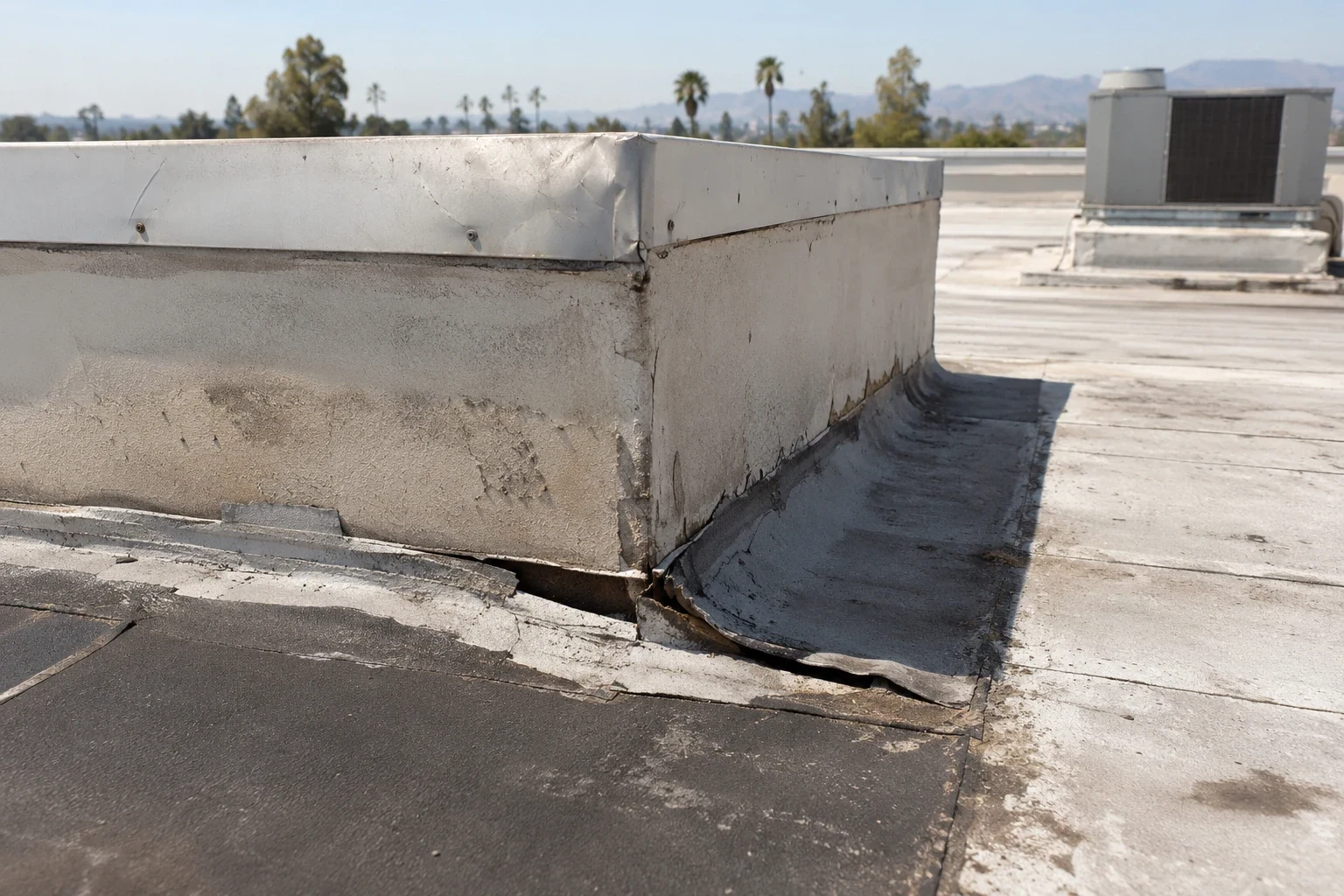
Where water collects near a curb, drain bowl, or wall transition, a flashing failure review can check the detail that connects the membrane to the vertical surface. If the roof also has a puncture after an equipment visit, compare that repair with a separate wind-damage roof review only when movement is observed. We do not combine unrelated findings into one repair boundary. Each item has its own photographs, work description, and next step.
When Water Calls for a Wider Review
Recurring water at the same low point can justify a closer look at slope, drain height, overflow capacity, and the layers beneath the membrane. We note visible deflection or soft areas, but concealed deck conditions may require testing or design review. If the insulation is wet, the repair area can extend beyond the pool itself. If the substrate is sound and drainage works as intended, a localized membrane repair may be enough.
Before proposing slope correction, we compare drain elevation with surrounding roof planes, note transitions or penetrations that impede runoff, and identify whether drawings or a level survey are needed. That keeps a framing or deck question separate from membrane work. The owner can see what may be adjusted in the roofing scope and what needs separate review.
A recover or replacement is not selected from a puddle alone. We inspect existing layers, attachment, drains, and transitions, then compare the options against the building's use and applicable project requirements. A TPO system evaluation can review seams and drainage details when a new membrane is considered. The work scope identifies any drain bowl change, overflow, insulation, and tie-in separately. The owner can see which condition supports the recommendation and which still needs confirmation.
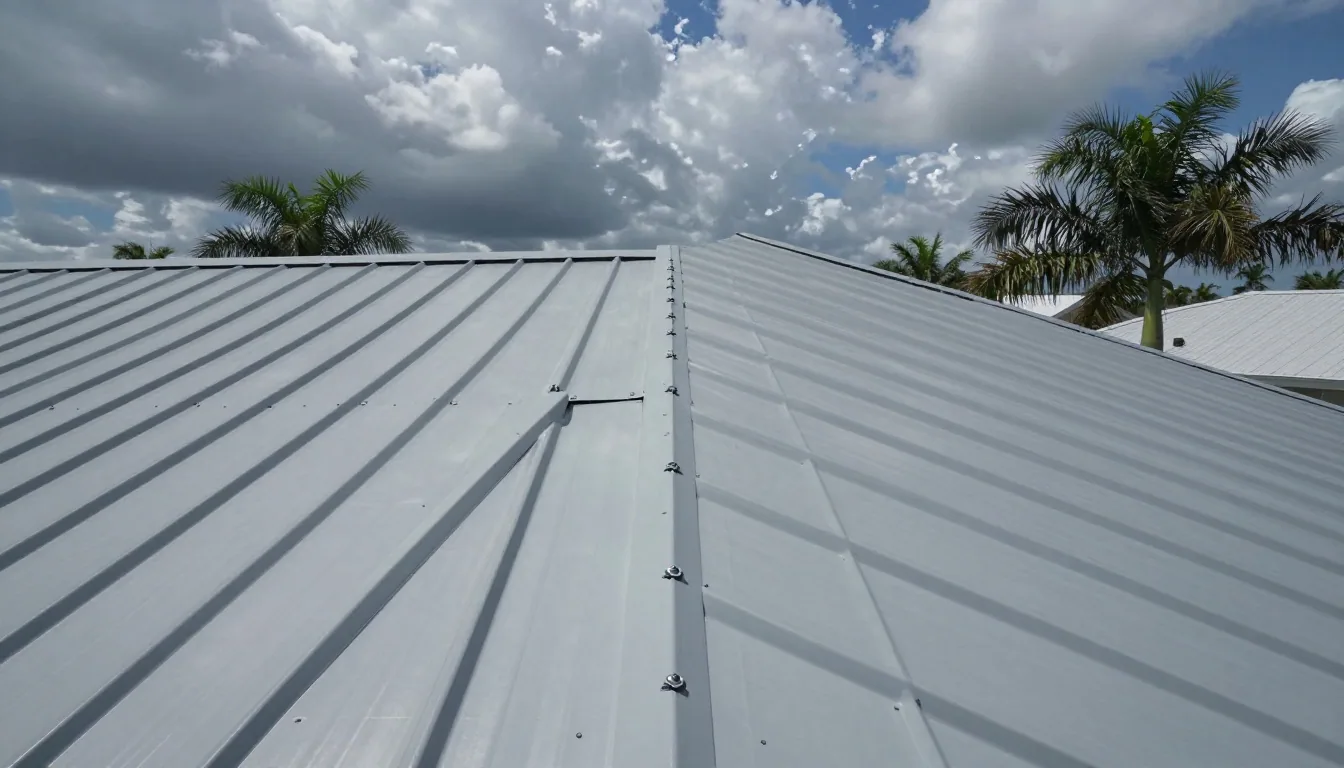
A Record That Tracks Drainage
Standing water can return after debris moves or a repair changes the surrounding surface. We label the low points, photograph the drain and overflow, note recent roof work, and record where water remains. A follow-up visit can compare the same areas after maintenance or a weather event. At the next roof walk, compare that low point after an approved drain correction is complete. The report also lists access limits and areas that were not inspected, helping the next person distinguish a verified observation from a question held for another visit.
Westside and Harbor Gateway provide place context, not drainage measurements. We use the site walk to check actual outlets and water paths. A commercial roof inspection can update the condition record, and a roof condition report can retain the findings for a property team. The Harbor Gateway service area covers a broad district; the inspection remains specific to the building under review.
Site Context and Water Movement
Costa Mesa planning documents identify localized flooding as a community hazard, but that fact does not establish that an individual parcel or roof has flooded. At the roof, we inspect the actual drainage path, overflow, drains, low points, and edge conditions. If water appears at an interior ceiling, we trace the route rather than assume the pool is directly above the report. A stain, roof pool, and membrane opening are separate observations until the path connects them.
Westside includes smaller operations in multi-tenant structures alongside larger industrial uses; Harbor Gateway is also a major industrial district. Those places can help locate a service request, but they do not indicate roof condition. We confirm building access, assembly, and drainage before scheduling repair. If a drain is blocked or displaced, the proposal states that work separately from any membrane defect, so the owner can approve the specific correction and review the roof again afterward.
Common Questions
Not by itself. We inspect the low point, outlet, overflow, membrane, and roof layers before comparing options. A blocked drain, wrong outlet height, slope concern, wet insulation, and membrane failure can require different work. The report identifies what is visible and what needs testing.
We can note whether debris is restricting the opening and identify the service needed. If cleaning is within the approved scope, we record the work and check how water leaves the area. A damaged drain bowl or flashing detail may need a separate repair estimate.
A surface walk cannot always show concealed moisture. We note soft areas, membrane changes, and the conditions around the low point. An infrared survey may guide test locations, and an opening or other confirmation can establish whether wet material needs removal.
A patch addresses a membrane opening when the surrounding surface supports a tie-in. It does not change slope or correct a drain set above the low point. We document each condition and identify whether drainage work, testing, or a separate design review is needed.
Keep photographs of the outlet, overflow path, adjacent membrane, and completed detail with the roof-zone label. We note whether water leaves the area and what condition remains for follow-up. A later inspection can compare the same point with the earlier record.
Related Roofing Work
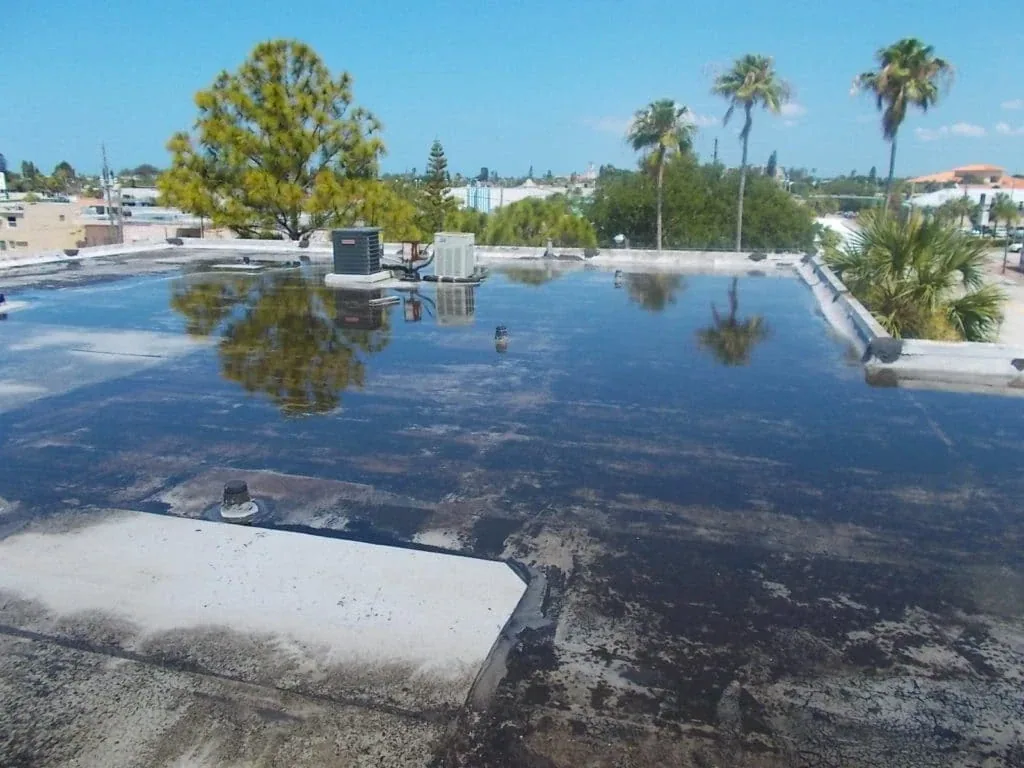
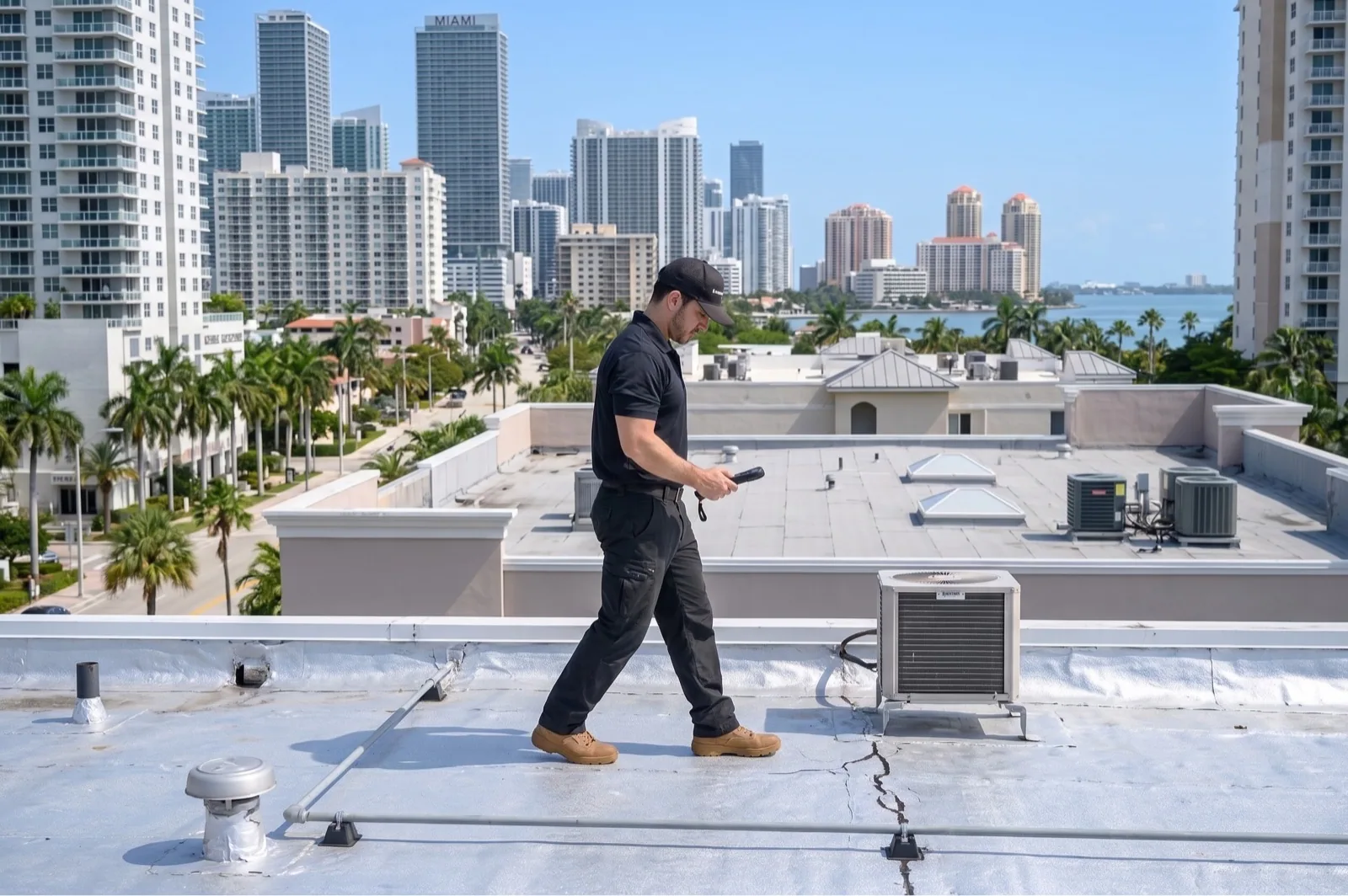
Inspect the Water Path
Share where water remains, any reported interior leak, and recent roof work. We can inspect drains and surrounding details, photograph the low area, and define drainage or membrane repairs.