
Heat and UV Roof Damage Repair in Costa Mesa, CA
Chalk on a membrane, brittle flashing, or coating that has lost adhesion can point to weathering, but the surface alone does not set the repair. In Costa Mesa, CA, we compare the affected roof zone with seams, penetrations, drainage, and any prior coating or patch. The roof walk records where the material has changed and whether the condition follows a small detail or a broader field. That boundary helps the owner decide whether to repair, test, restore, or replace.
Heat and sunlight act together with roof age, material, surface color, drainage, and maintenance history. A cracked corner beside a curb may need a localized detail, while widespread loss of flexibility can require a larger assembly review. We verify what membrane is present and document the condition before describing a coating as an option. A roof product is not selected by color or by a generalized climate label.
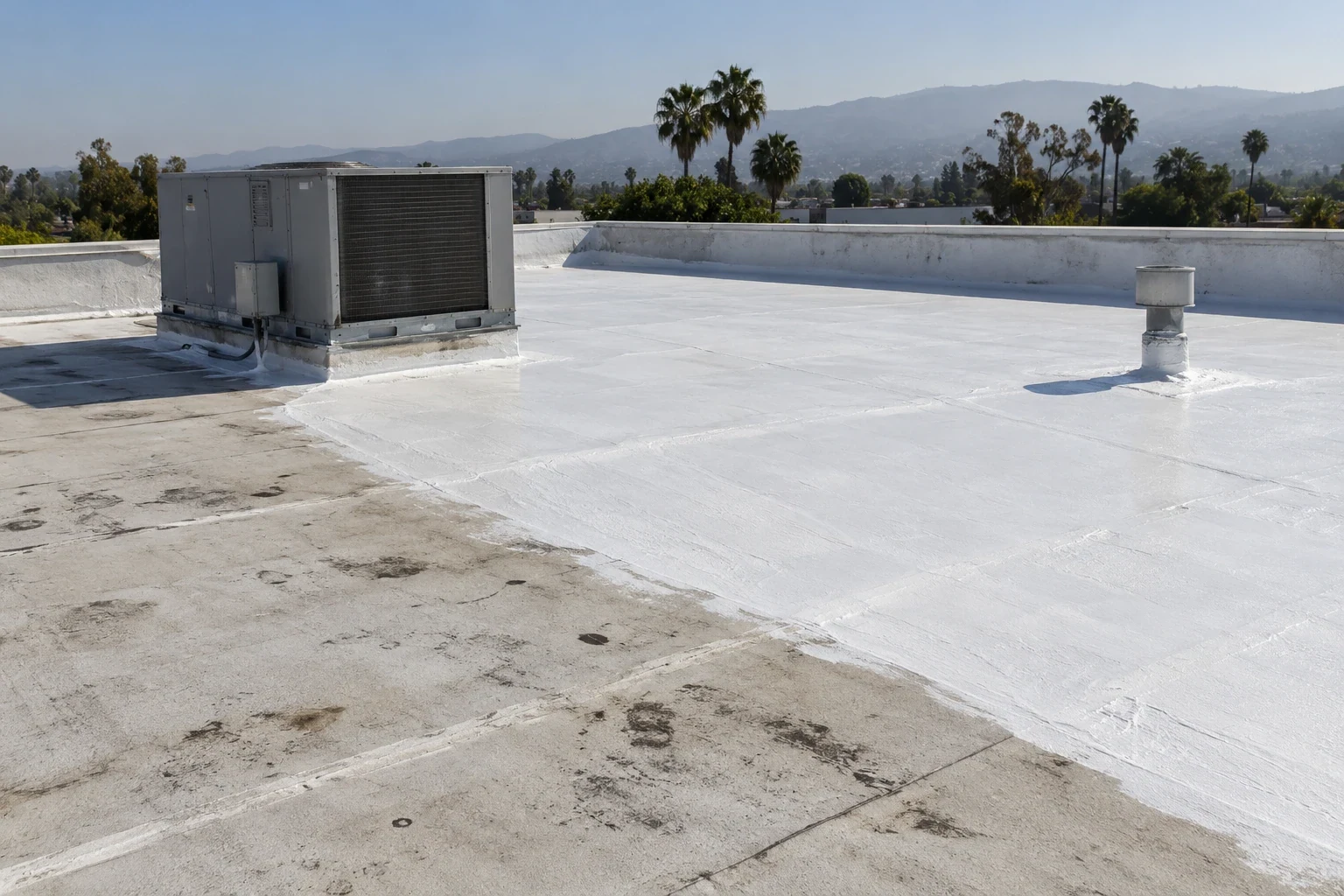
Read the Surface Beyond the Chalk
We check whether chalking wipes away from the surface, whether a coating remains bonded, and whether exposed reinforcement, splits, or brittle edges appear at laps. The inspection also looks at penetrations, curb corners, edge metal, and fastener lines. A surface issue can coexist with wet insulation or an open seam, so we compare the visible wear with interior reports and roof records. Photographs show both the distressed area and the material that remains intact beside it.
Regional NOAA normals for the nearby Santa Ana John Wayne Airport station report normal daily maximum temperatures of 78.9°F in July and 80.4°F in August. Those monthly figures describe station conditions, not the surface temperature or wear at a specific roof. A commercial roof inspection connects that climate context to the actual material, exposure, and roof-zone observations rather than treating the station reading as a condition diagnosis.
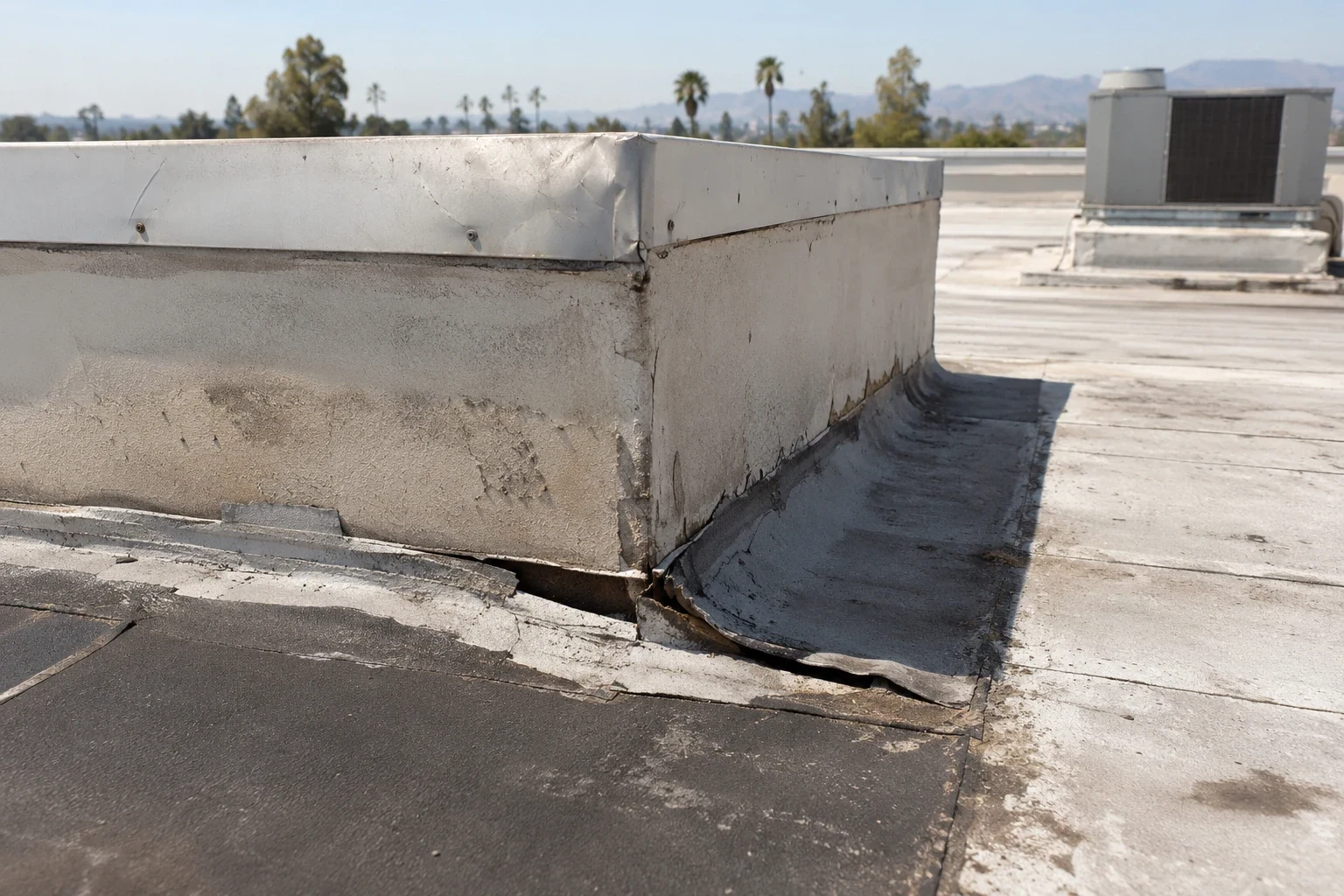
Match the Recommendation to the Layer
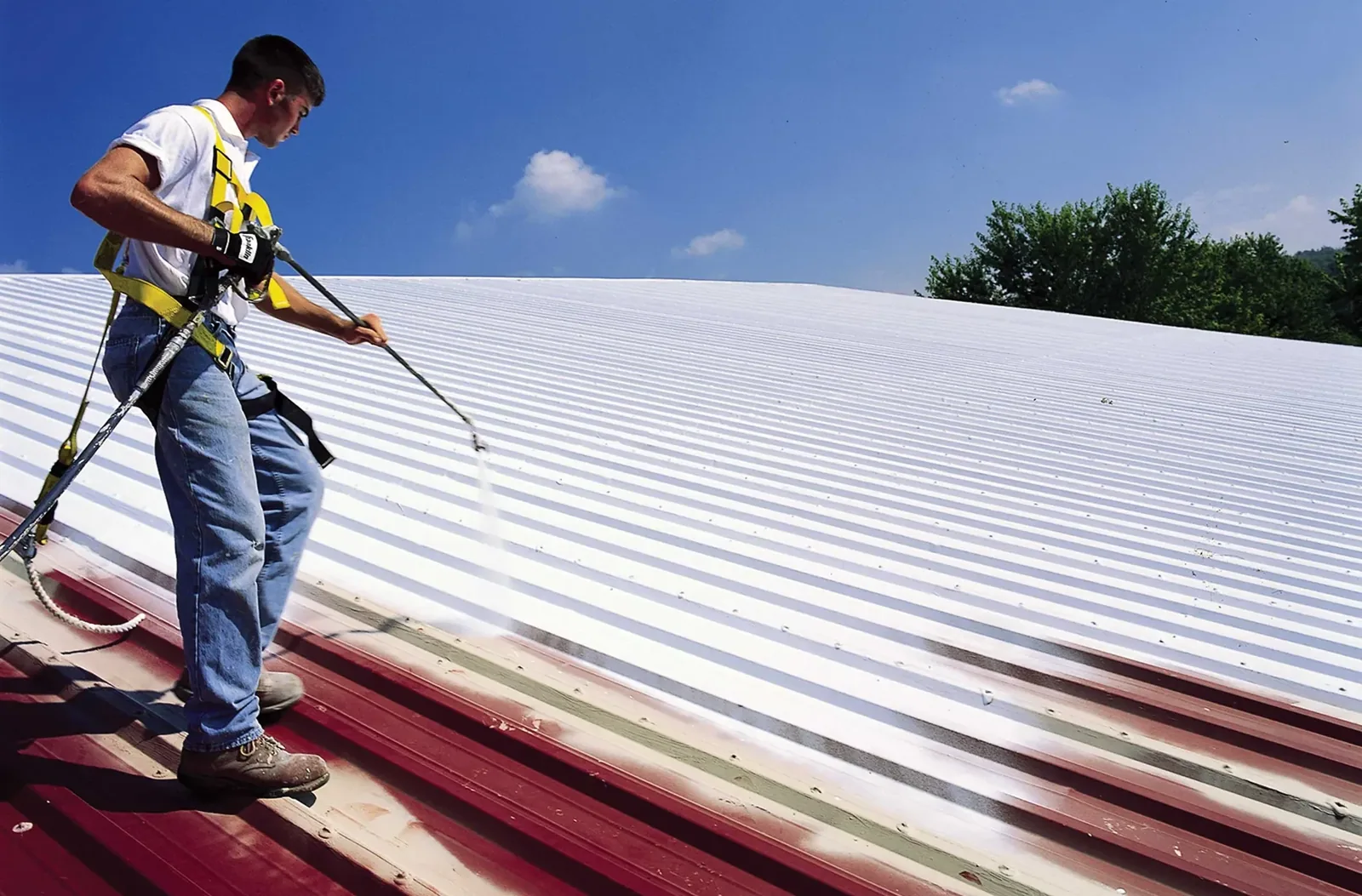
A coating can renew a compatible surface only when the existing assembly and adhesion support it. We check for trapped moisture, loose areas, failed seams, and incompatible prior products before considering a restoration scope. If the substrate is wet or the membrane is failing through the field, coating over it can conceal rather than resolve the condition. The estimate separates surface preparation, repairs, reinforcement, and application so the owner can compare the work with a recover or replacement option.
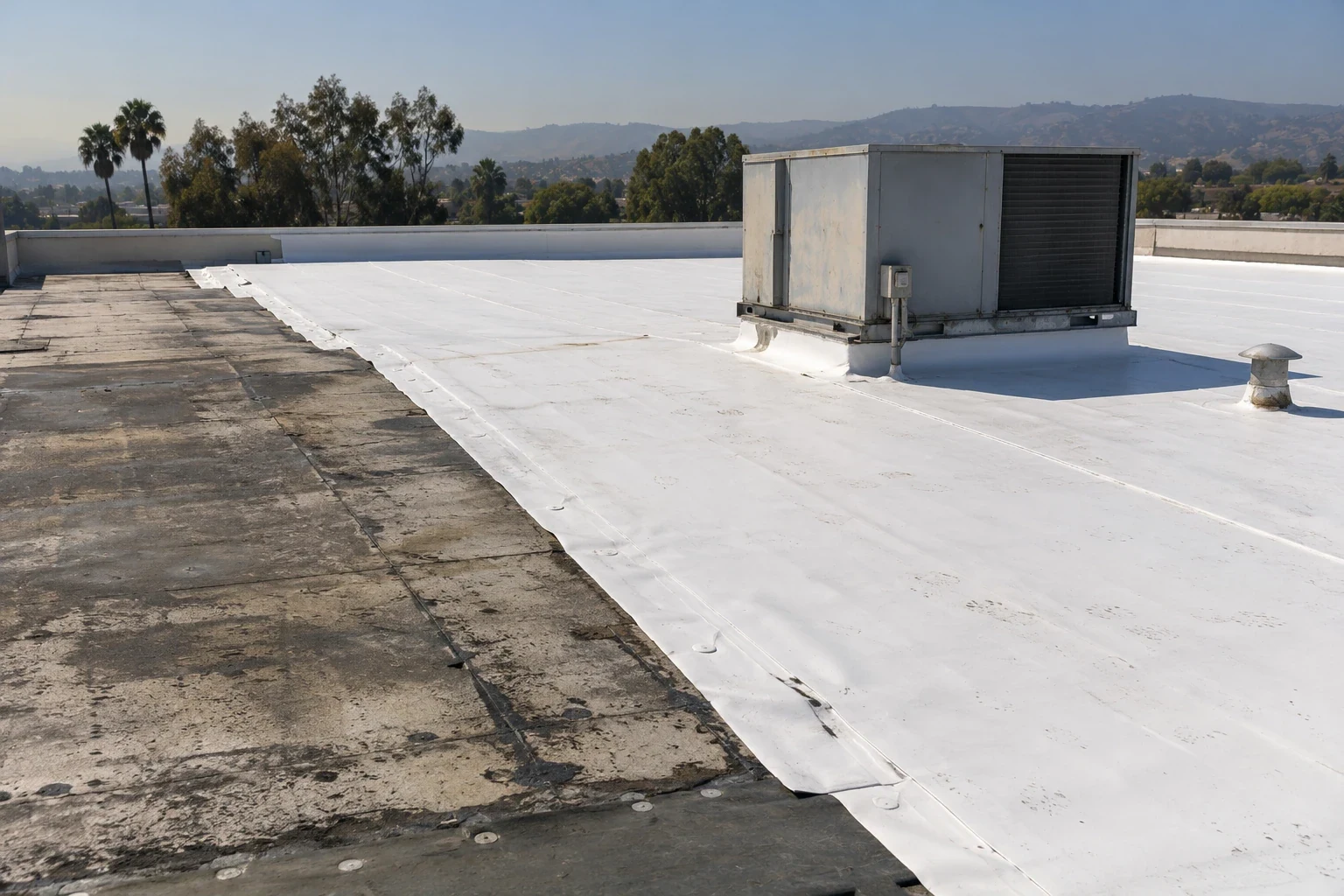
A coating restoration review identifies the system, preparation, and test areas needed before product selection. We may recommend a moisture survey when the roof walk suggests concealed wet insulation, with confirmation before the repair boundary is final. If the system needs a different membrane, the recover assessment checks existing layers and project requirements instead of treating coating as the default.
Follow Cracks Through the Details
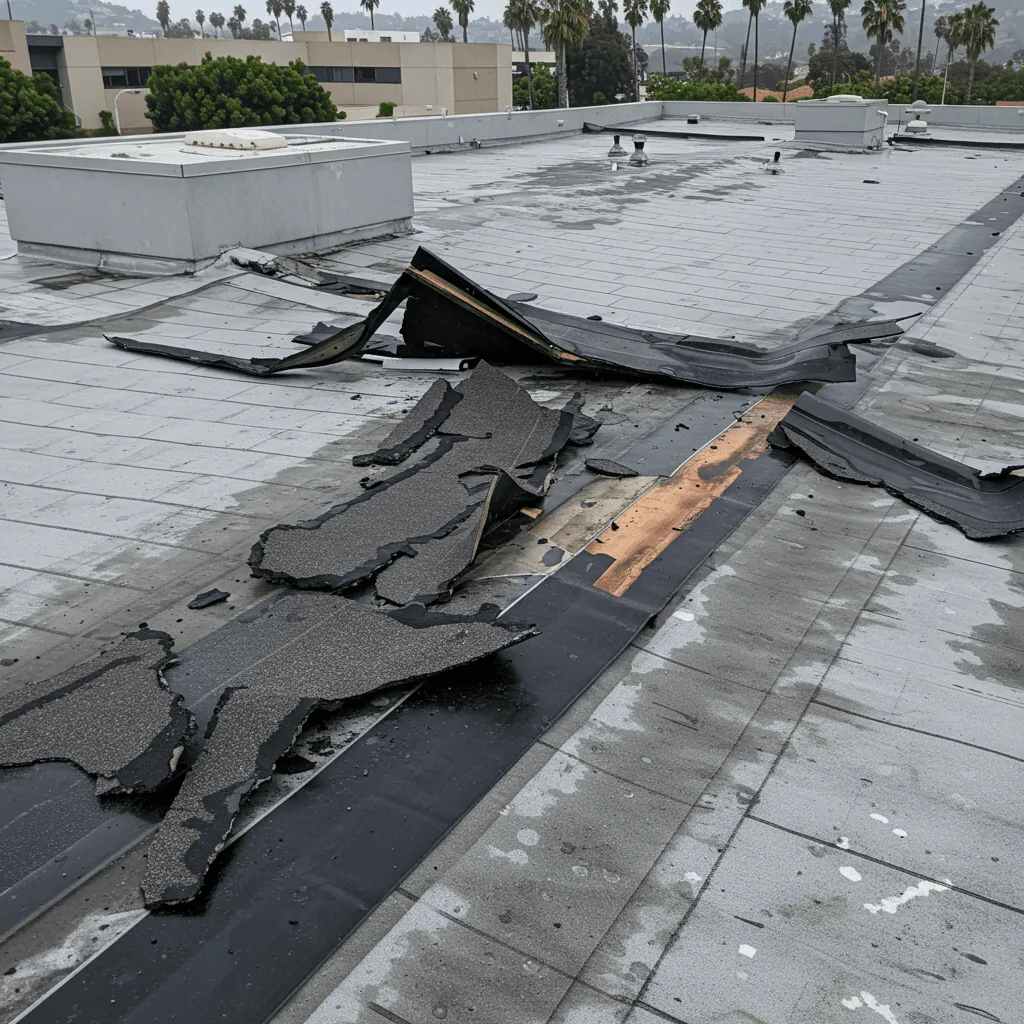
Cracks at a roof edge, curb, or pipe boot deserve a separate look from surface wear in the field. We inspect the transition for movement, loss of bond, exposed fasteners, and any opening that could admit water. A repair that stops at the visible crack may miss the transition that is pulling or holding water. We document each detail and show whether the repair can tie into sound material without changing the rest of the roof.
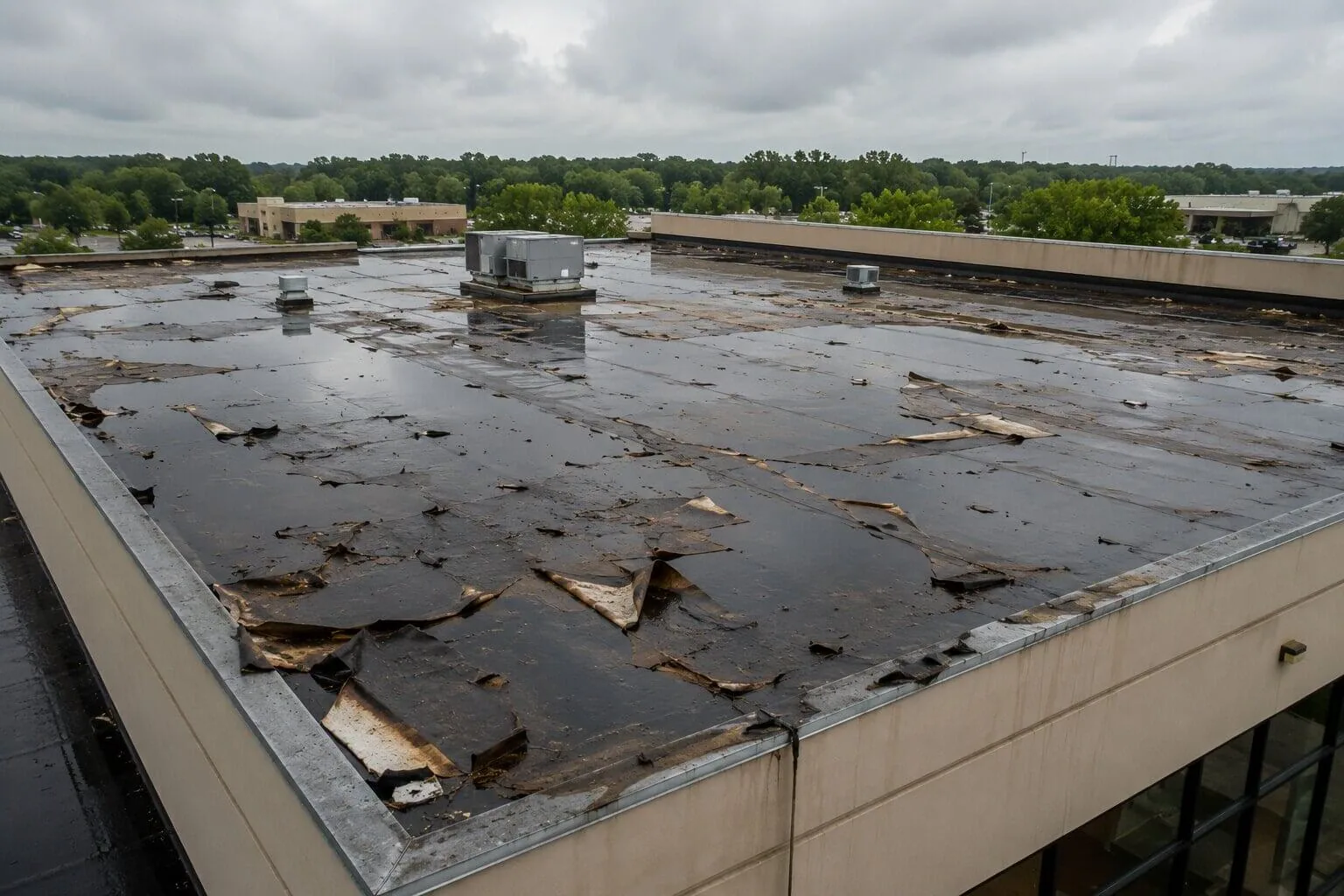
Where an open lap appears alongside surface degradation, compare the condition with seam failure repair. A curb or edge flashing review keeps the vertical detail separate from the field coating. When brittle material has split after a storm or foot traffic, we also inspect for wind-related edge damage and other openings before pricing a single repair boundary.
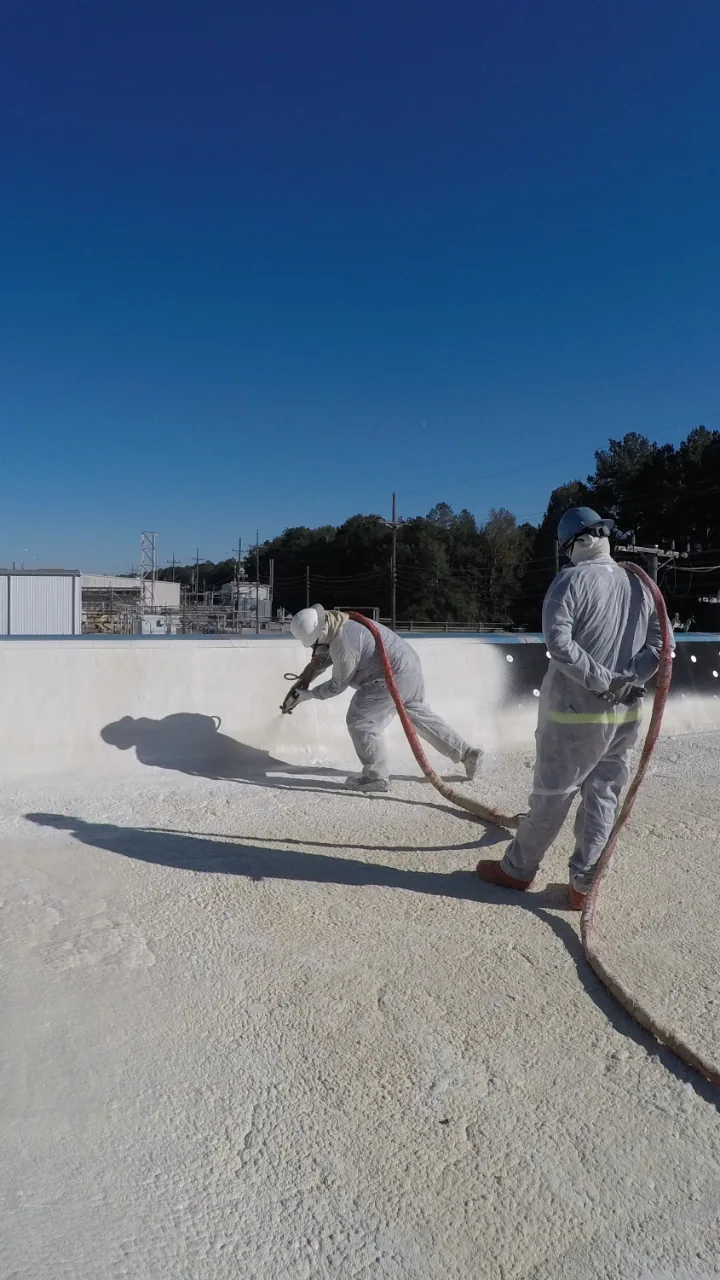
Use Local Climate as Context, Not Diagnosis
Costa Mesa's climate-planning materials list extreme heat among the impacts the City is addressing. That is useful context for maintenance planning, but it does not measure a roof's temperature or prove that heat caused a specific failure. We tie the recommendation to observed material change, roof orientation, shade, drainage, and any maintenance record the owner provides. That keeps local context from replacing an inspection finding.
Roof coatings and membrane repairs still have to fit the approved project scope. Costa Mesa adopted the 2025 California Building Standards Code, including specified appendices and local amendments, effective January 1, 2026. For a heat-weathered roof, we identify whether work stops at a localized detail or changes the assembly, then confirm applicable permit and submittal requirements before scheduling material removal. Westside includes small manufacturing and service operations as well as larger industrial uses. When roof access serves more than one tenant, we mark air intakes and staging paths before surface preparation, then set a work zone that stays clear of active building routes. The code date does not diagnose a crack or determine coating compatibility. Those decisions come from roof condition, moisture checks, and the selected system instructions.
Protect Operations During Surface Work
Surface preparation can create noise, dust, odor, or temporary restrictions depending on the repair materials and equipment. We review the product instructions and building operations, then identify loading areas, air intakes, pedestrian routes, and scheduled rooftop service. The building contact can set an access window and coordinate mechanical or electrical work that must happen before the roof is closed. If tenant activity changes the sequence, we revise the work area and note the delay.
For occupied commercial buildings, phased work can isolate one section while other roof zones remain available for approved access. The scope states which areas are included on each visit, where materials will be staged, and what conditions must be ready before the crew returns. A phased roof work plan can help coordinate those limits. We do not promise that every preparation method is suitable near every intake or operation; those details are checked with the product requirements and site contacts.

Track Change Across the Next Roof Walk
Maintenance notes should identify the same roof zones, surface condition, seam behavior, and prior repairs each time. We photograph representative areas and compare them with earlier records where available. A new crack, lifted coating edge, or recurring pond can then be evaluated against the earlier observation. The record also notes areas not reached because of access, weather, or operating restrictions, so a later inspection can close those gaps.
A preventive maintenance visit can check drainage, seams, and coating condition on a planned cycle. When water collects, a separate ponding-water review records the drain path and observed low areas. A broad Airport Industrial/Business Park district service visit can begin with the property and roof records; the field review still determines whether heat, UV exposure, or another condition is driving the repair decision.
Common Questions
It depends on the membrane condition, adhesion, moisture below the surface, and compatibility with the proposed system. We inspect and test representative areas before recommending coating. If the membrane has failed through the field or wet layers are present, repair, recover, or replacement may be the more suitable scope.
Chalking is a surface observation, not a full diagnosis. We check whether the coating is bonded, whether the membrane has cracks or exposed reinforcement, and how seams and flashing are holding. Those findings determine whether to monitor, repair, or evaluate restoration.
No. The cited station normals are regional weather context, not a roof-surface record or lifespan estimate. Material, assembly, exposure, drainage, installation details, and maintenance all matter. We use the actual roof condition to set the repair boundary.
We identify the assembly, map surface wear, check seams and transitions, look for moisture indicators, and test adhesion where appropriate. The report states what was inspected and what still requires confirmation. Product selection follows those findings.
Often, with access, staging, air-intake, and work-hour constraints agreed in advance. We define the active roof zone and coordinate other trades before preparation starts. The plan records each phase and any area that must remain clear.
Related Roofing Work
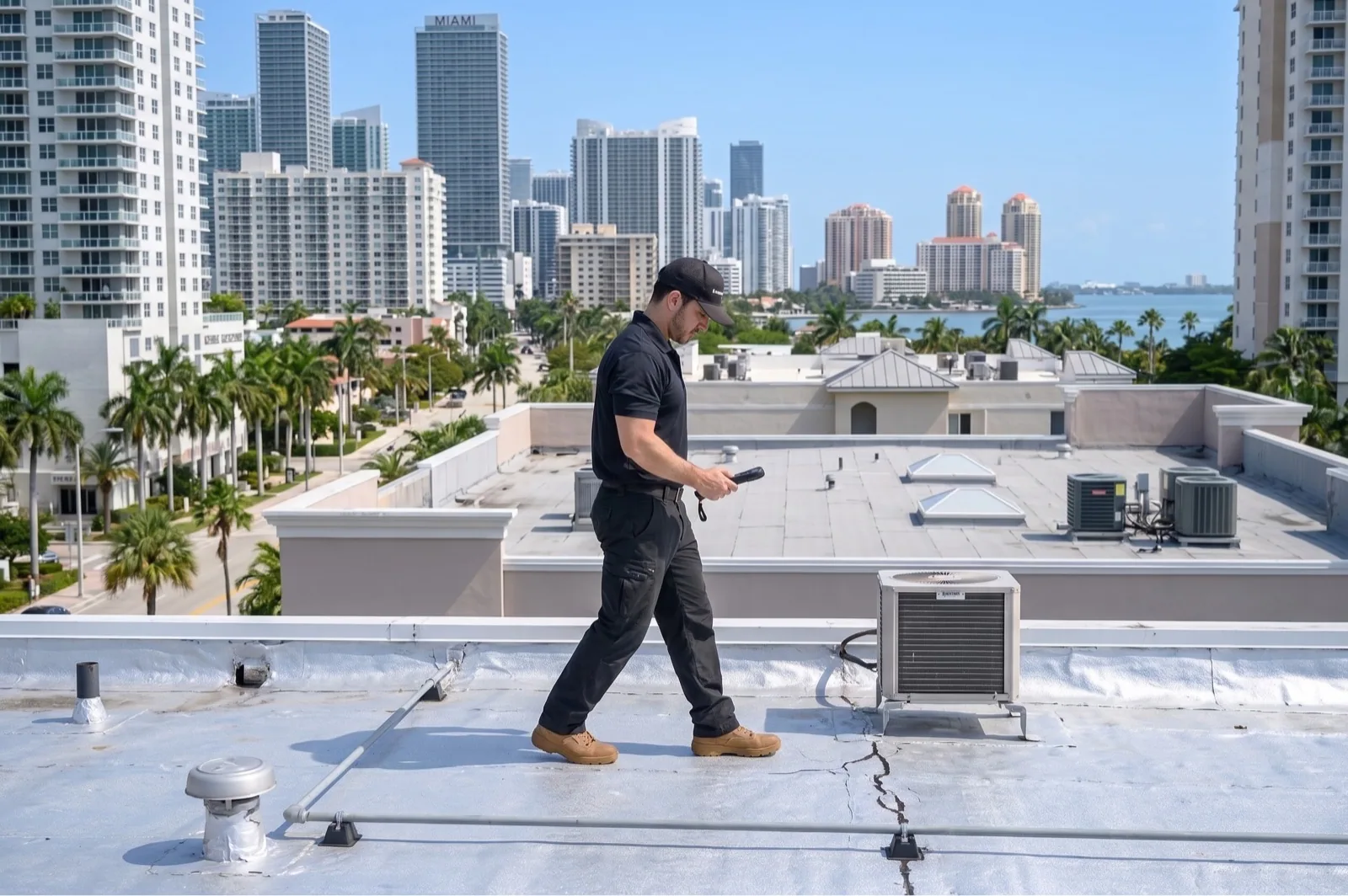
Inspect the Weathered Roof Surface
Share roof records, prior coating information, reported leaks, and operating limits. We can inspect the membrane and transitions, then separate confirmed repairs from testing or restoration decisions.