
Aircraft Hangar Roof Repair in Costa Mesa, CA
A leak at a hangar-side office may sit below a seam several bays away. A hangar leak review starts with the reported bay and its nearest roof transitions; photographs map the observation to the aircraft-clearance zone before any opening is proposed. The span changes how access and temporary protection are arranged. We do not infer roof condition from the aircraft or activity below. The report keeps roofing observations separate from operational or equipment checks.
Costa Mesa's Airport Industrial/Business Park is a broad planning district bounded in part by John Wayne Airport and regional highways. That boundary describes a city district, not permission to enter an aviation property or information about a particular hangar. We confirm owner authorization, escorts, roof entry, operating windows, and any equipment or movement restriction before the walk. Newport Beach and Tustin are named in the same regional business context, but each property's access and roof record remains separate.
Inspect the Span and Perimeter Together
We map the reported area to the roof bay, then inspect seams, skylights, wall transitions, drains, edge metal, and prior repairs around it. A wide span can carry water away from an entry point before it becomes visible. We photograph accessible details and identify where a lift, escort, or exclusion zone limits the view. If the assembly is concealed, we state whether a test opening would resolve a material or moisture question.
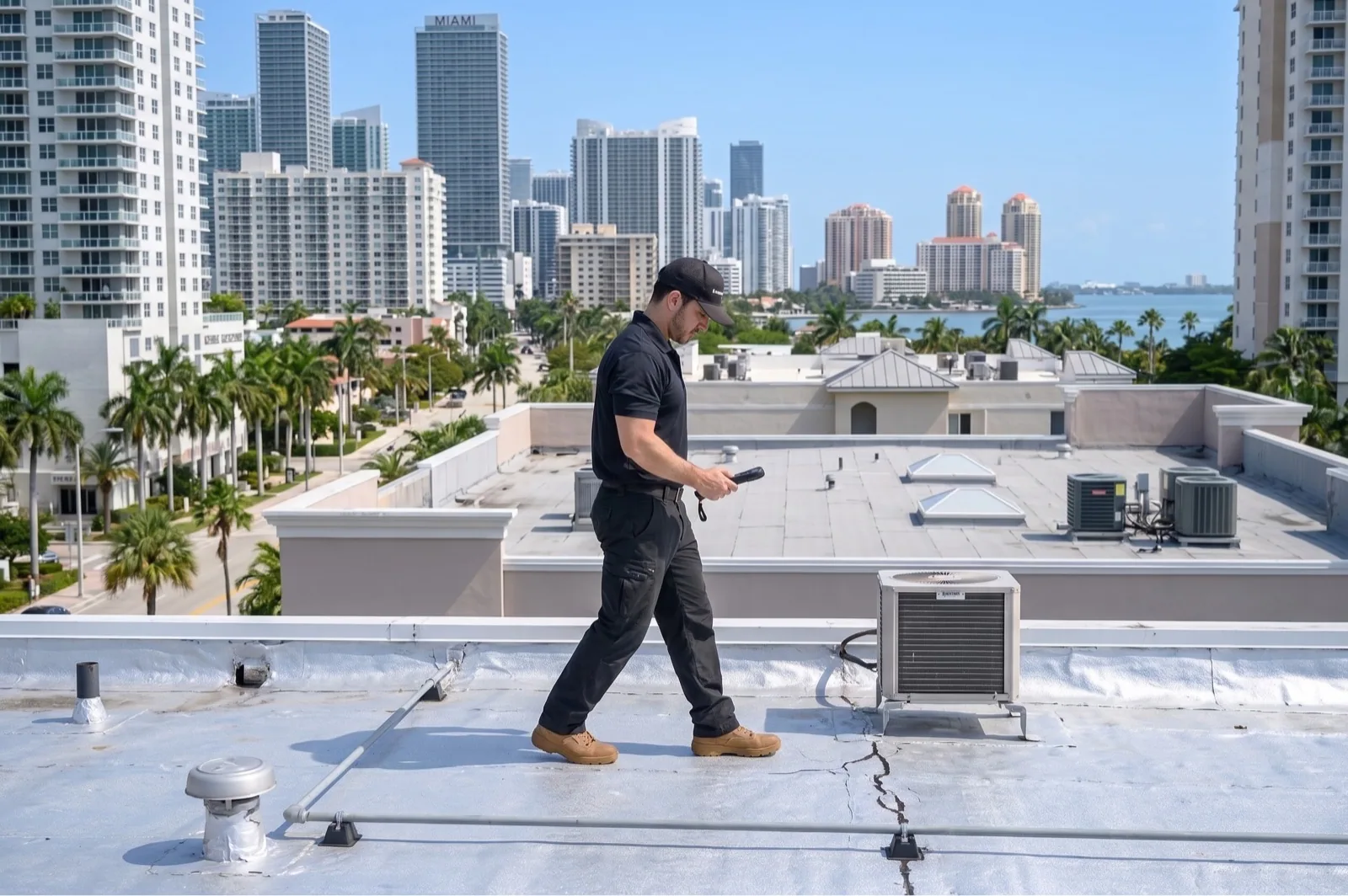
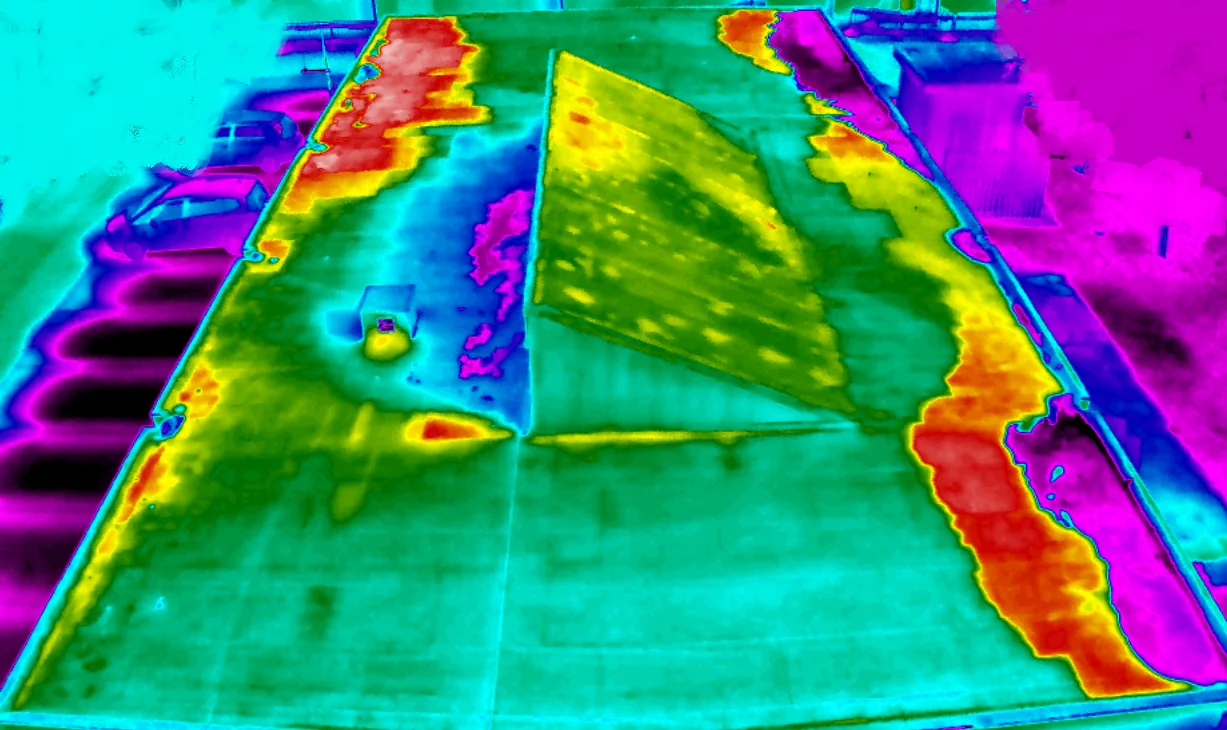
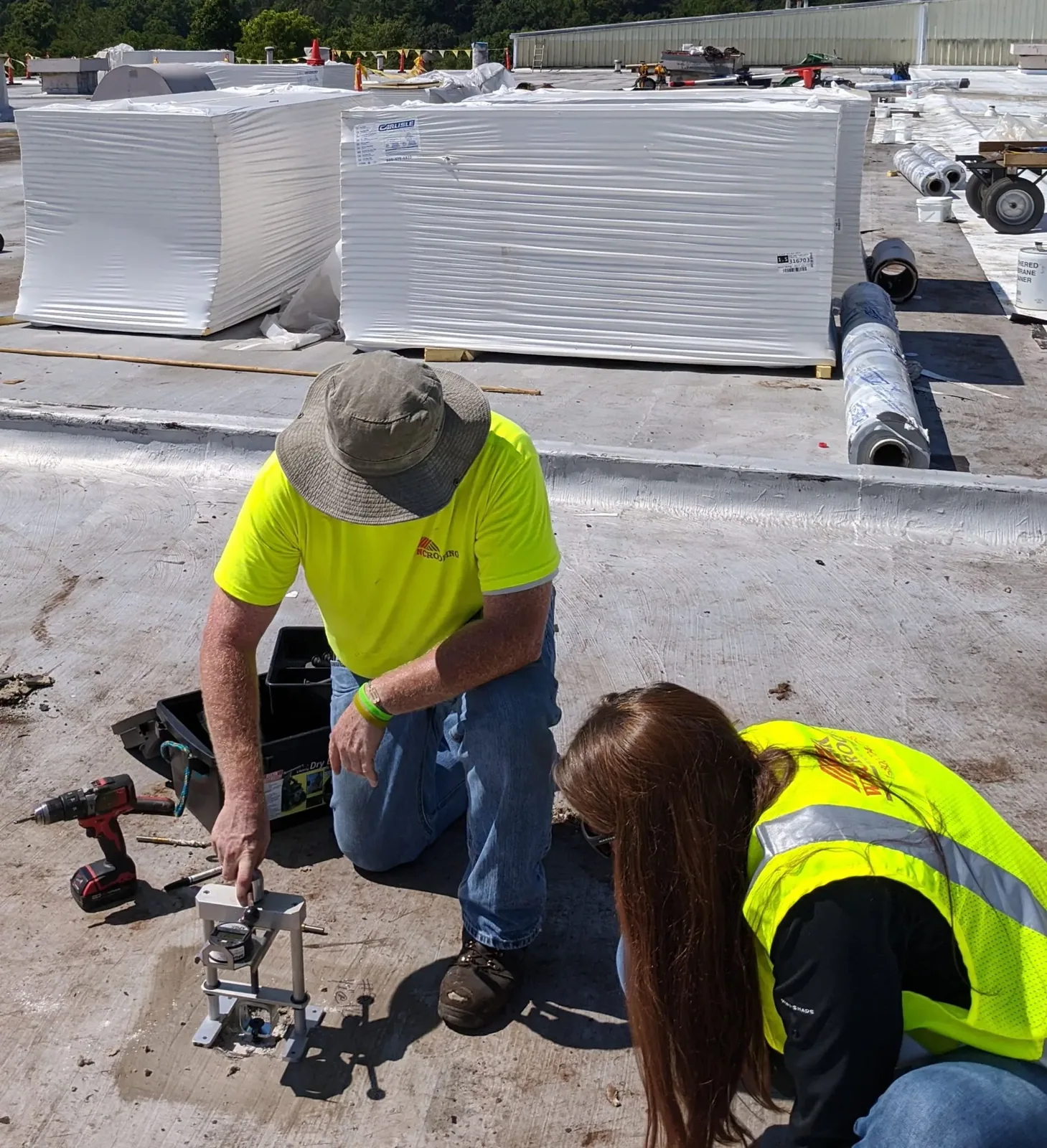
A commercial roof inspection records visible conditions and access limits. An infrared moisture survey can help map suspect areas when used with field observations. A temperature pattern alone does not prove wet insulation. We explain where confirmation is needed and tie any proposed test to the scope decision. The owner receives a map of inspected sections rather than a conclusion about an entire hangar based on one visible detail.
Roof Penetrations and Clear Operating Zones
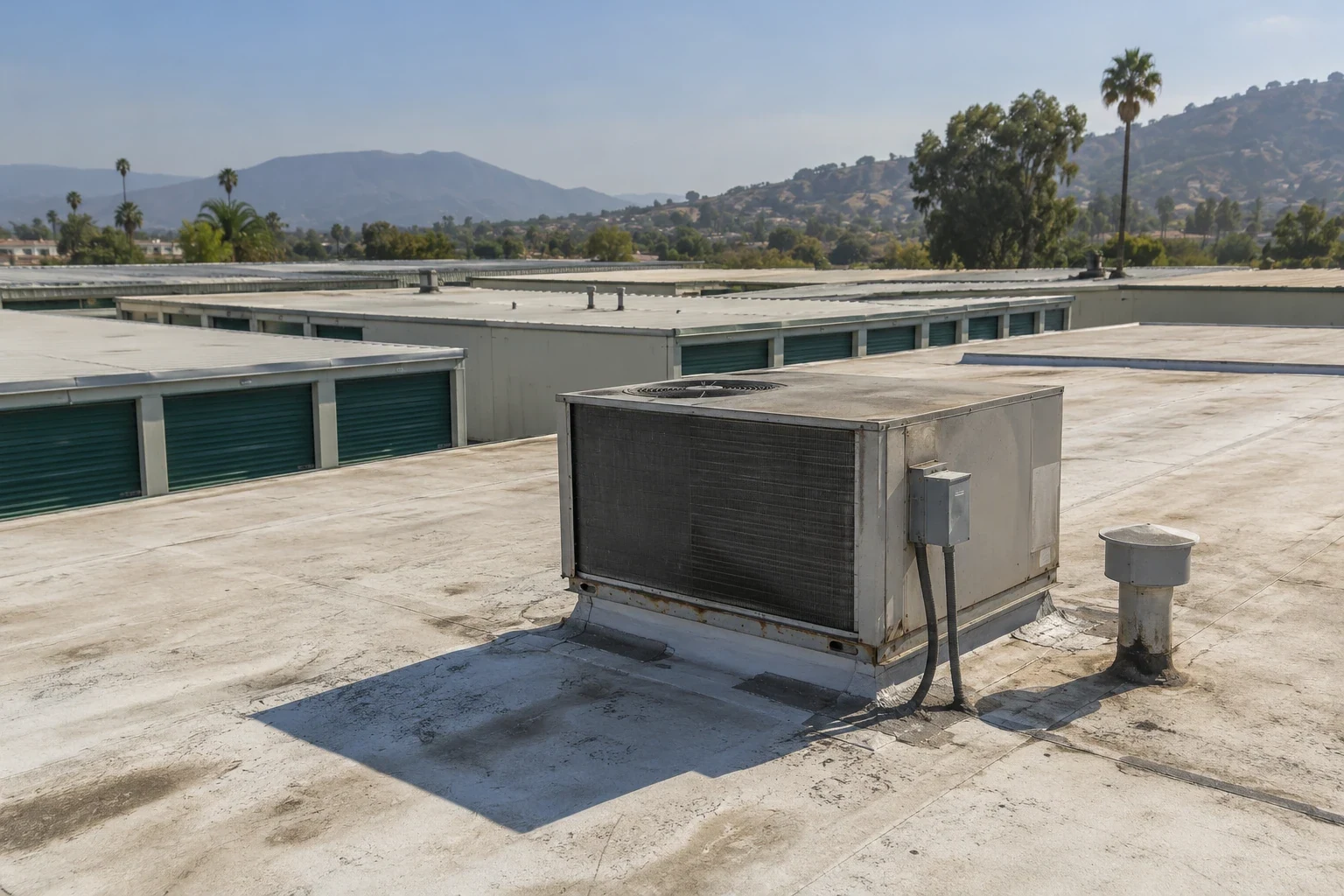
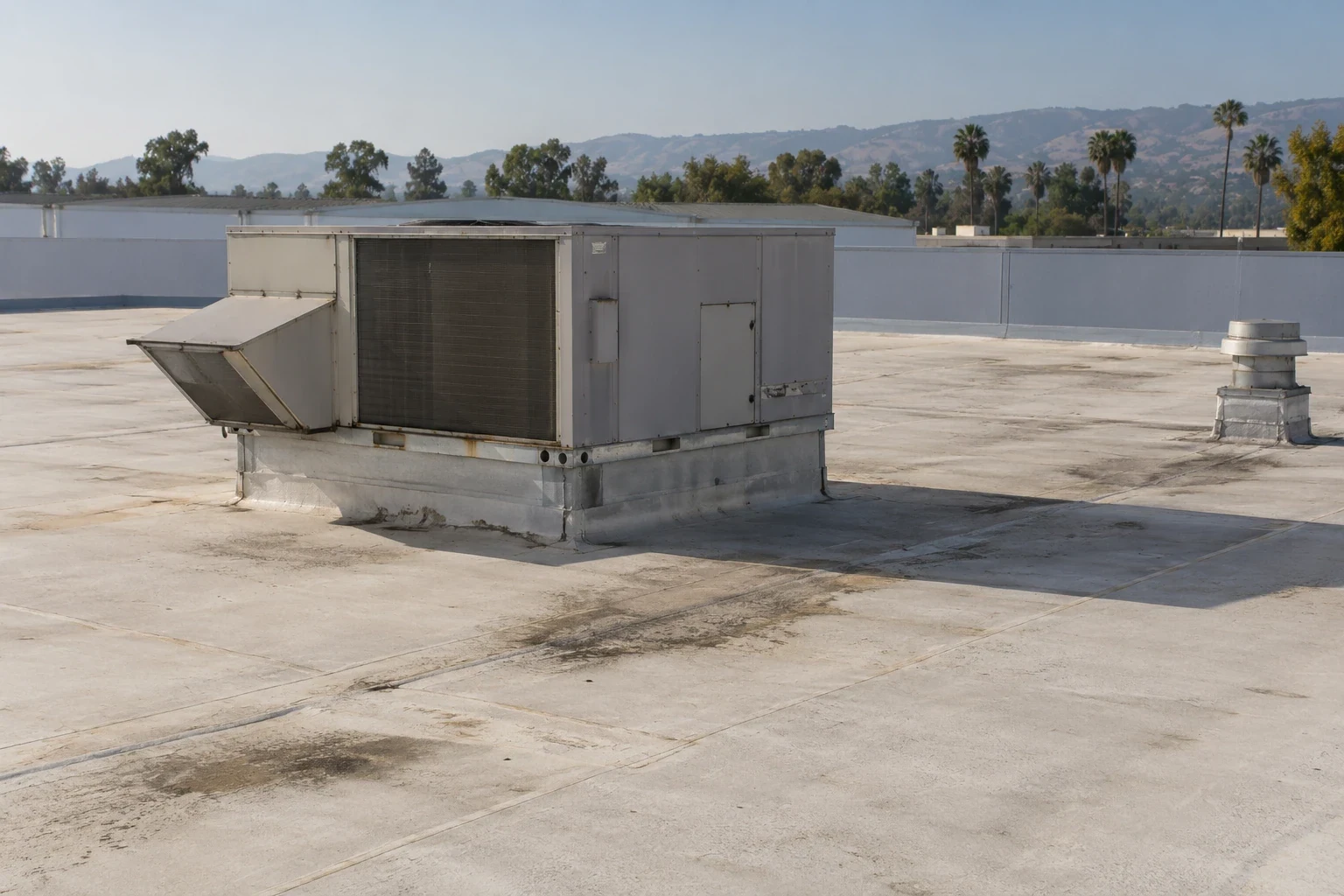
Hangar roofs may have vents, skylights, support details, lighting, and mechanical curbs set within a large membrane field. We check the flashing at each accessible penetration and examine nearby seams for movement, open laps, or old repair edges. We also follow the drain path and note low areas that may hold water. Roofing scope does not include aviation systems. If an operating restriction affects the roof walk, the owner identifies the approved window and any spotter or escort needed.
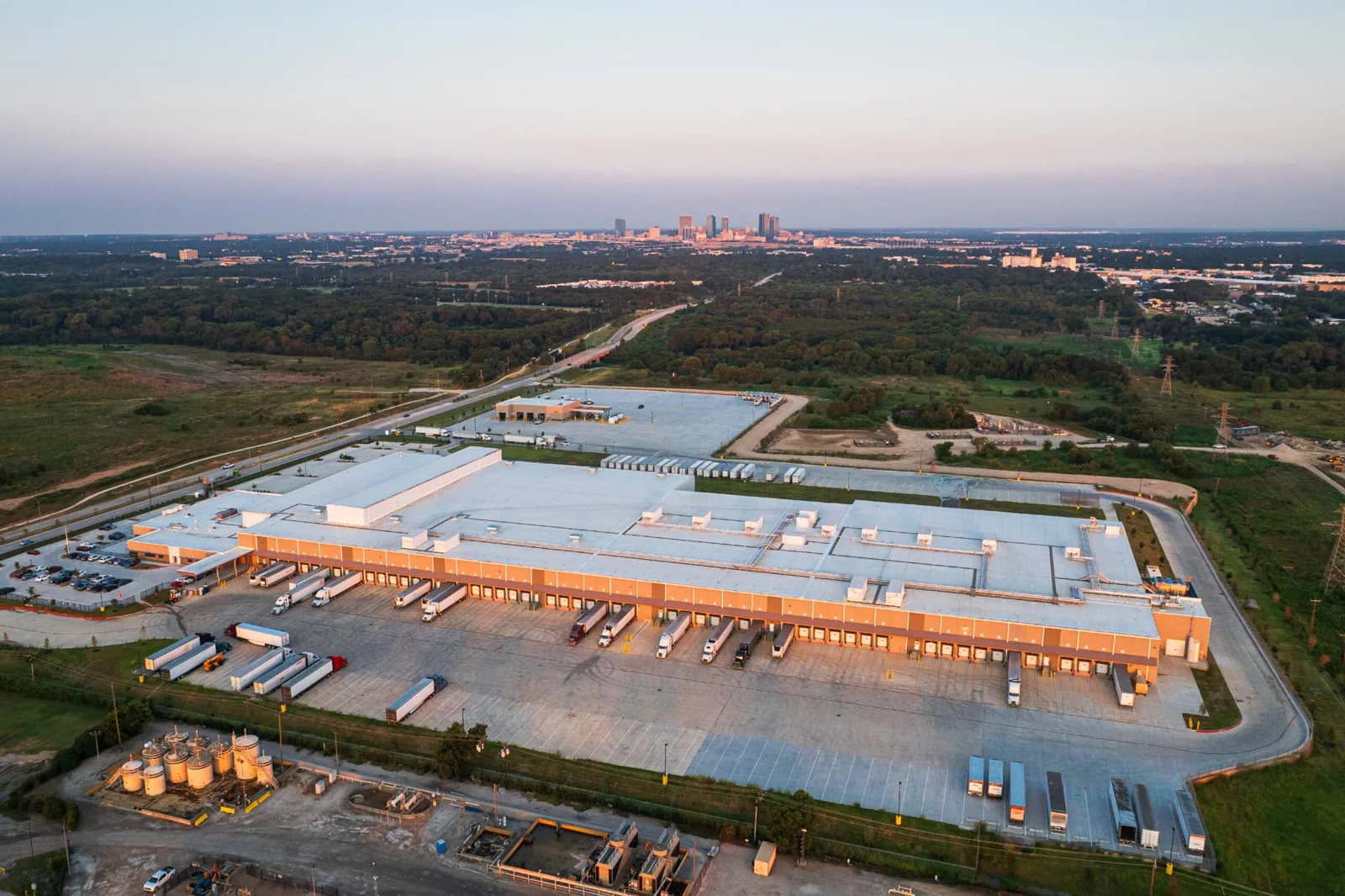
The Airport Industrial/Business Park forms part of a business area extending into Irvine and Tustin, according to the Costa Mesa General Plan. That regional relationship is not a claim about the tenants or facilities within any district. A warehouse roof plan and manufacturing roof review may share questions about large roof sections, but a hangar needs its own span, drain, and access map. We document details by bay and identify any area not reached.
Set Limits Before Opening the Assembly
A localized split, puncture, or loose flashing can support a repair when sound membrane surrounds it. At the repair boundary, the crew removes loose material, prepares sound membrane, then checks that the new detail lies flat and sheds water away from the hangar bay. The proposal names the bay and roof detail included, plus the access and protection required below. A cut test can expose wet board or a weak deck; we protect the opening and hold at the approved boundary until the owner decides whether to expand the work. Added work is documented for owner review before proceeding.
When defects repeat across several bays, a repair program can be compared with a replacement assessment. The decision considers membrane condition, attachment, moisture, drainage, and deck. Recover is only an option when the existing assembly qualifies and can be tied into safely. We explain what has been confirmed and where testing is still required. A clear boundary helps the owner protect the operation and compare a local fix with phased work across the larger roof.
Coordinate Escorts, Staging, and Closeout
Before mobilization, we confirm authorization, escort needs, roof-hatch access, lift location, staging, delivery route, noise restrictions, and any operating window. A repair may require a controlled area below the work even if the roof surface is accessible. We identify the boundary, maintain the agreed clearance, and plan temporary weather protection. Each shift ends with a roof closeout and a handoff to the designated property contact.
A district boundary does not supply an individual facility's operating rules. The owner or operator confirms current access and movement restrictions. An occupied-building work sequence can list the approved zone, notice, and handoff for each phase. For another property in Santa Ana, security and roof entry require separate confirmation. The record notes what work is complete, what stays protected, and whether a follow-up inspection is required before the next operating period.
Materials, Drainage, and Permit Scope
On a broad hangar span, drainage and perimeter restraint need to be reviewed together. We mark each bay, identify attached and mechanically fastened areas where visible, and examine the edge, curbs, and drains. A repair stays local only when sound membrane surrounds it. A recover requires verified layers and attachment; an opening or tear-off needs a weather-tight shift plan.
Ordinance 2025-08 made Costa Mesa's 2025 California Building Standards Code, selected local amendments, and specified appendices effective January 1, 2026. That is a municipal permit reference; the authority and contract determine whether it governs an airfield project. A drainage review can trace a low point before a hangar bay is opened.
Maintain a Bay-by-Bay Roof Record
A useful record links photographs to a bay, seam, drain, and action taken. We note repaired flashing, open work limits, test locations, and sections that could not be reached. That lets a facilities team compare a future report with the same roof area. It also prevents one bay's condition from being treated as evidence about an uninspected section.
Follow-up walks can revisit repaired edges, drainage paths, and previous moisture tests before a budget review or operating change. If assets are managed across Newport Beach and Tustin, keep each address and access approval separate. Send a roof plan, recent leak notes, prior repairs, and current operating controls. For a hangar, the closeout should identify the inspected bay, the aircraft-clearance boundary, and any roof detail that needs a second visit before maintenance planning.
Common Questions
Often, if the owner can authorize access and define a controlled area, escort, and work window. We confirm operating restrictions before entry and do not assume the roof is accessible from adjacent property. The report identifies visited sections and any areas deferred for another approved window.
Not necessarily. Water can travel across a broad roof before it appears at an edge or interior joint. We inspect the reported area, seams, drainage, and nearby transitions. If the route remains uncertain, we note a test or additional access needed to establish the repair boundary.
No. The roofing walk checks membrane and flashing at accessible equipment curbs and penetrations. Aviation systems, HVAC, and electrical equipment remain with their responsible service providers. We coordinate access and note any roof detail that should be addressed alongside their work.
Yes, when the assembly and tie-ins allow each section to be protected and closed at the end of a shift. We map each phase, state temporary conditions, and identify the inspection needed before adjacent work begins. The plan does not treat untouched bays as inspected or cleared.
A roof plan, leak location, prior repair notes, access authorization, escort procedure, and operating window help us prepare. The operator can identify staging restrictions and areas that cannot be entered. We confirm the approved scope and record any limits before the walk.
Related Roofing Work
Schedule a Hangar Roof Assessment
Share the roof plan, affected bay, prior repair history, access approval, and operating window. We can coordinate a roof walk and document a defined repair boundary.