
Military Warehouse and Depot Roof Repair in Costa Mesa, CA
A water report beside a loading bay can affect stored material, but it does not show the full roof path. We match the report to an approved roof zone, inspect seams, drains, curbs, and prior repairs, and record the details that can be reached. If an opening or restricted section is outside the work authorization, the report says so. A repair boundary follows observed conditions and owner approval, not the size of the warehouse.
Costa Mesa's Airport Industrial/Business Park is part of a broader business district that extends toward Irvine and Tustin. The Airport Industrial/Business Park includes large parcels and wide landscaped setbacks, so the work plan should start with the approved building identifier and loading controls. Before a walk, we confirm the work package, escort, safety rules, loading schedule, staging route, and facilities contact. A separate property in Irvine or Tustin requires a new access release and its own condition record.
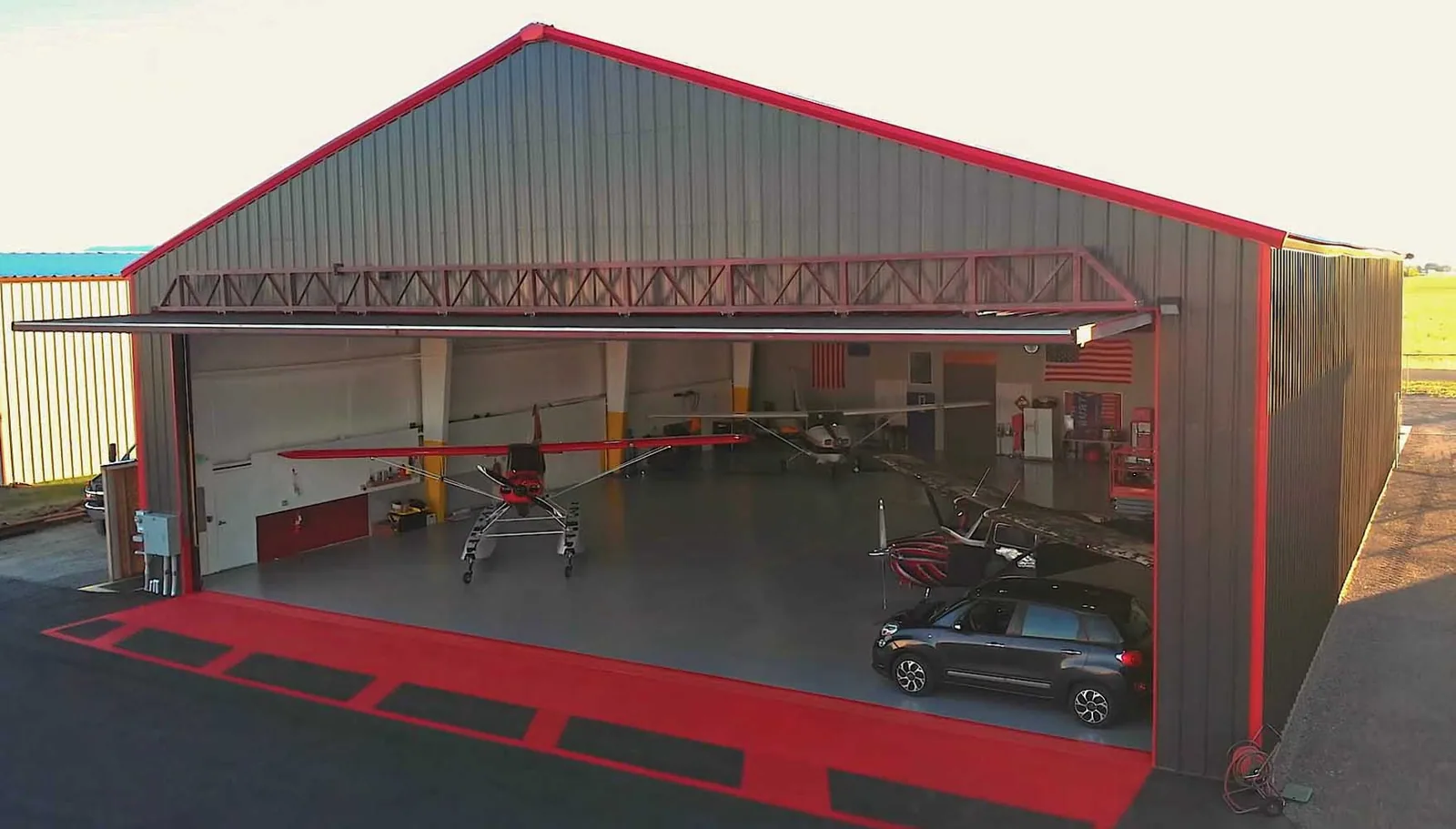
Map the Leak Across the Approved Bay
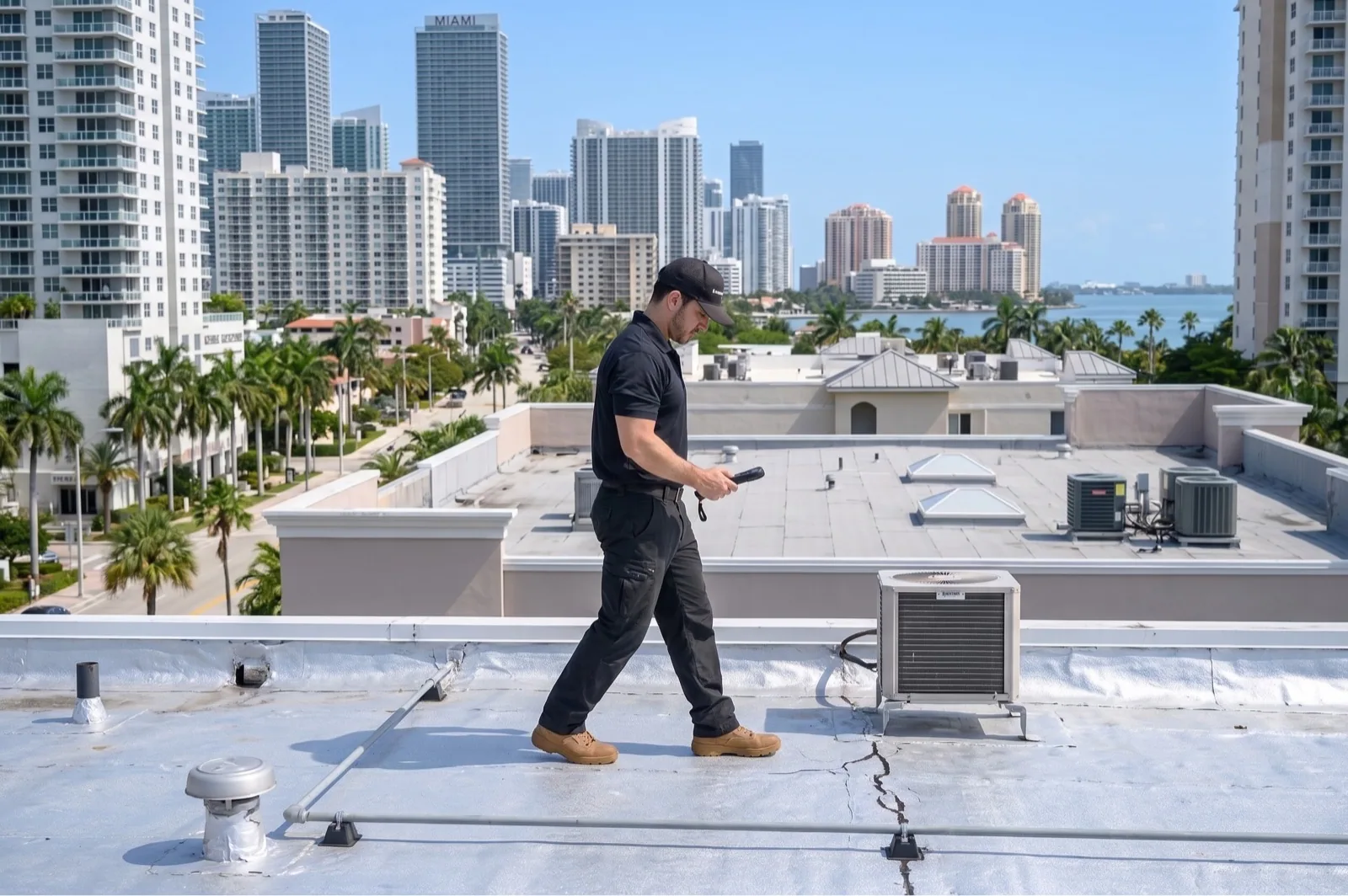
We review the roof drawing and service history, then locate the affected bay, office, or loading zone. The inspection checks seams, roof edges, penetrations, skylights, drains, and wall transitions near the report. Water can move along the deck or insulation before appearing inside. We label the area inspected and note which roof section was inaccessible. That prevents a localized observation from being written as a building-wide conclusion.
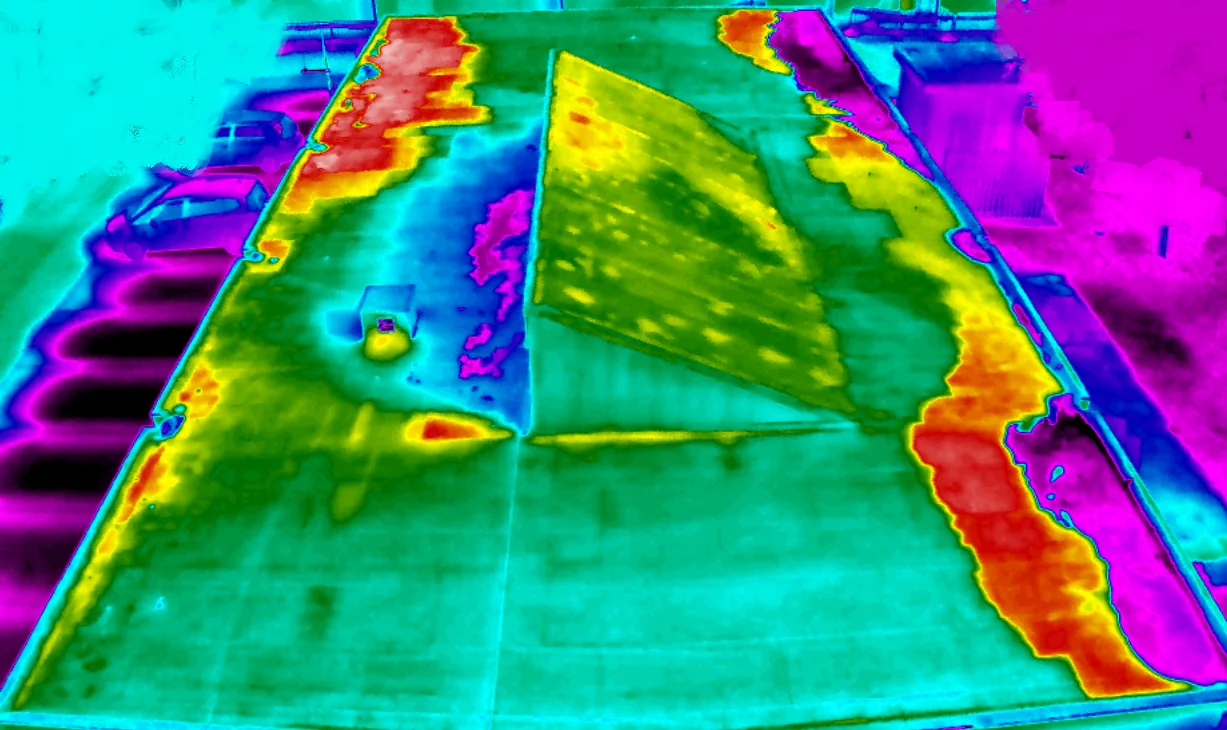
A commercial roof inspection captures visible conditions, photographs, and limitations. An infrared moisture survey can help select areas for confirmation if moisture extent remains uncertain. Imaging alone does not establish wet insulation. We compare the pattern with roof construction and physical observations, then recommend a test opening only when it would change the work scope. The owner can review the location and purpose of a test before access is expanded.
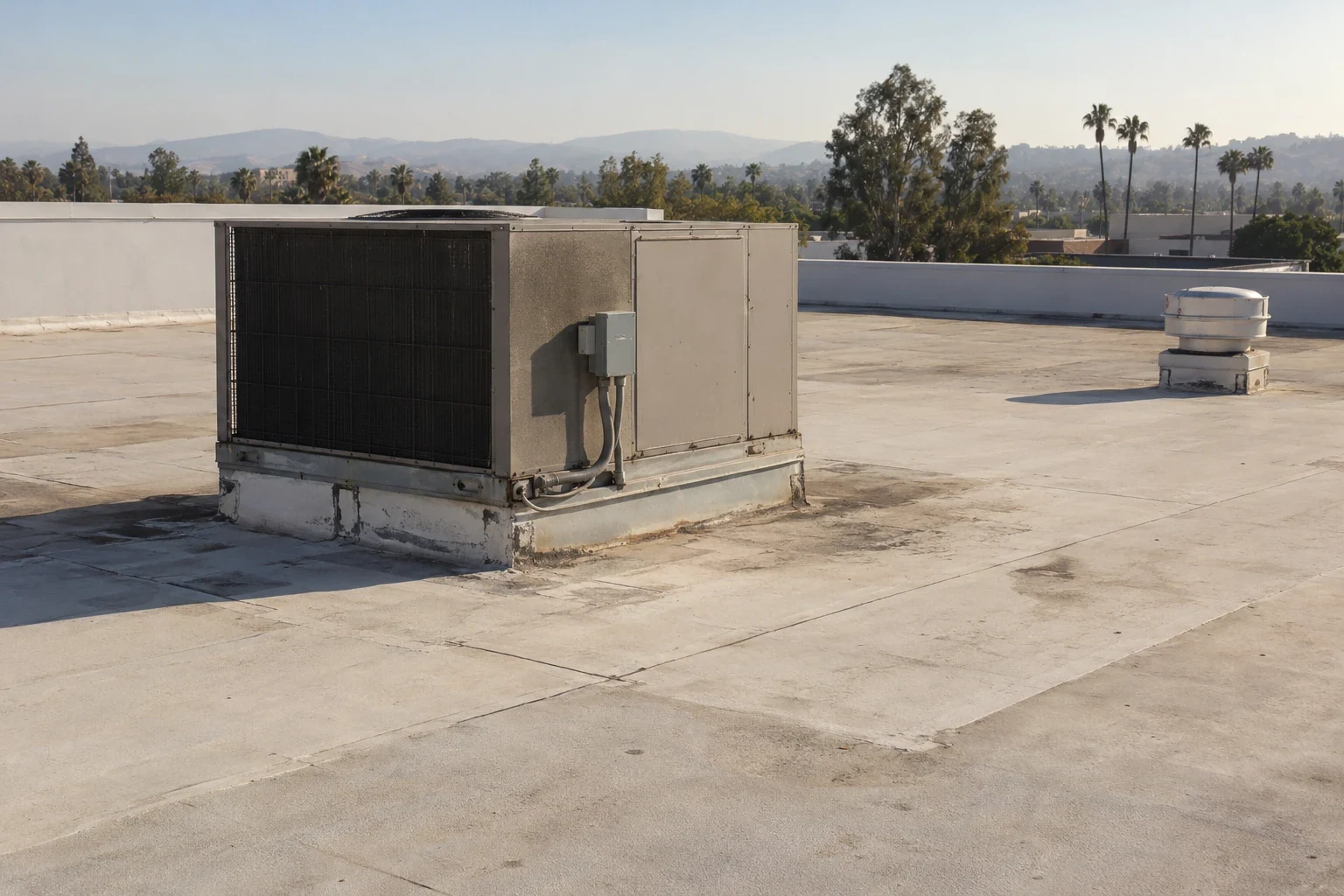
Loading Bays, Roof Drains, and Penetrations
A warehouse roof divides into field panels, drain basins, expansion lines, and dock-edge transitions. We group photos by bay, mark low points and overflow paths, and note whether a leak aligns with a seam, curb, or roof-to-wall turn. If a drain restriction needs plumbing work, the repair proposal separates it from membrane work so the dock schedule and roof boundary remain clear.
When deliveries continue, stage materials away from live dock lanes and identify the overhead work zone to the facilities contact. A flex-industrial roof may combine service bays and storage, while a distribution-center roof can need a defined dock-side protection zone. The owner identifies which door must stay open before a crew brings material onto the roof.
Define Repair, Recovery, or Replacement
A puncture, open lap, or displaced flashing can support a local repair when surrounding material is sound. We prepare the surface, install a compatible detail, and inspect the tie-in. The proposal states the approved roof zone and protection below it. If removal exposes wet insulation or a damaged deck, the crew secures the area, documents the condition, and pauses at the work limit. Added scope proceeds only after owner direction.
A repair program addresses confirmed defects. Repeated failure across bays may warrant a replacement assessment. Recover requires a suitable substrate, attachment, and drainage plan. We identify which findings support each option and where testing is still needed. The owner can compare a focused repair with a phased project without including uninspected sections or assuming every storage area has the same exposure.
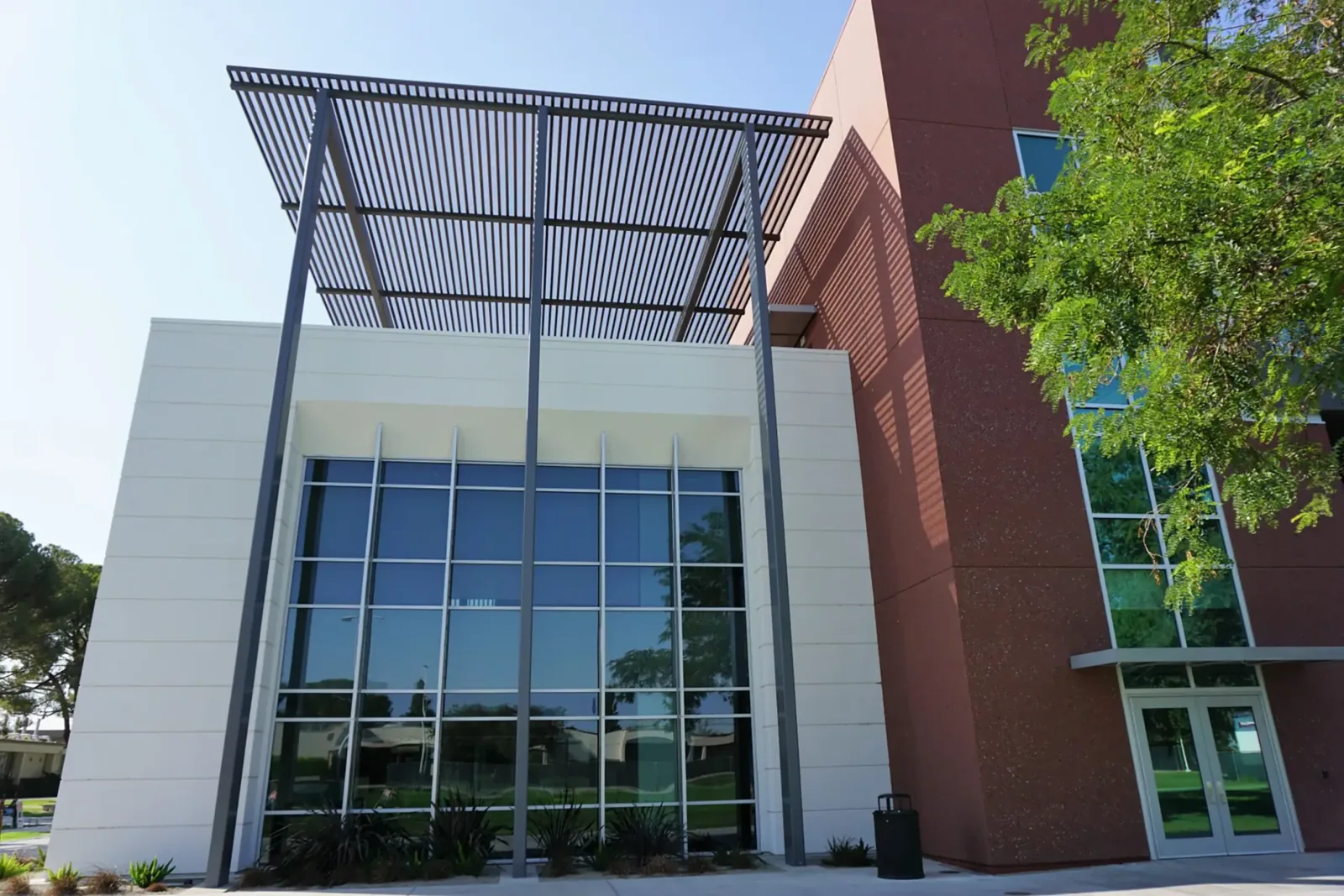
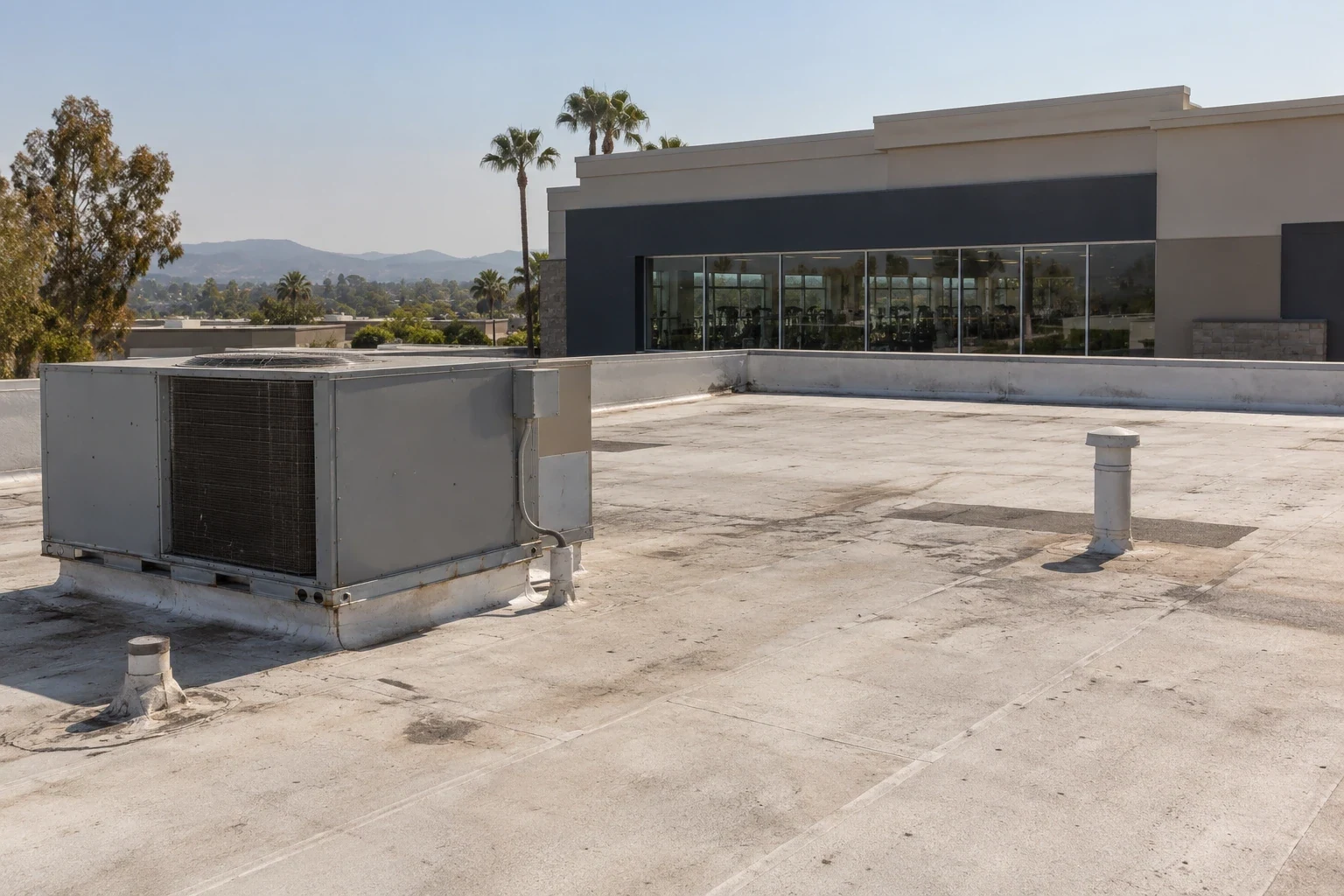
Protect Loading and Material Routes
Before mobilization, we confirm loading hours, escort arrangements, roof access, deliveries, lift placement, staging, noise limits, and the temporary route for materials. A lift or barrier can affect a dock even when the repair is on a separate roof bay. The facility decides which route remains open and who approves any temporary change. If the roof is opened during a shift, temporary weather protection and a documented closeout come before demobilization.
An occupied-building sequence can identify work zones and handoffs, while the owner supplies current facility controls. A separate Tustin property needs its own loading and access review. The daily note lists completed work, areas secured, and return requirements. That makes the next shift's status clear without recording operational detail outside the approved roofing file.
Material Fit and Contract Requirements
Storage bays and loading aprons make roof-zone identification part of the scope. We note inventory protection, rack or dock access, shared drains, and the safest path for materials before discussing an opening. Field records separate a local membrane issue from attachment or deck questions that affect more than one bay.
Costa Mesa's local 2025 code package became effective on January 1, 2026 with selected amendments and appendices. A depot job may follow a different contracting authority; the bid documents identify which review path applies. A maintenance visit can isolate a drain concern from a membrane allowance when several storage bays share runoff.
Build a Repair History by Building
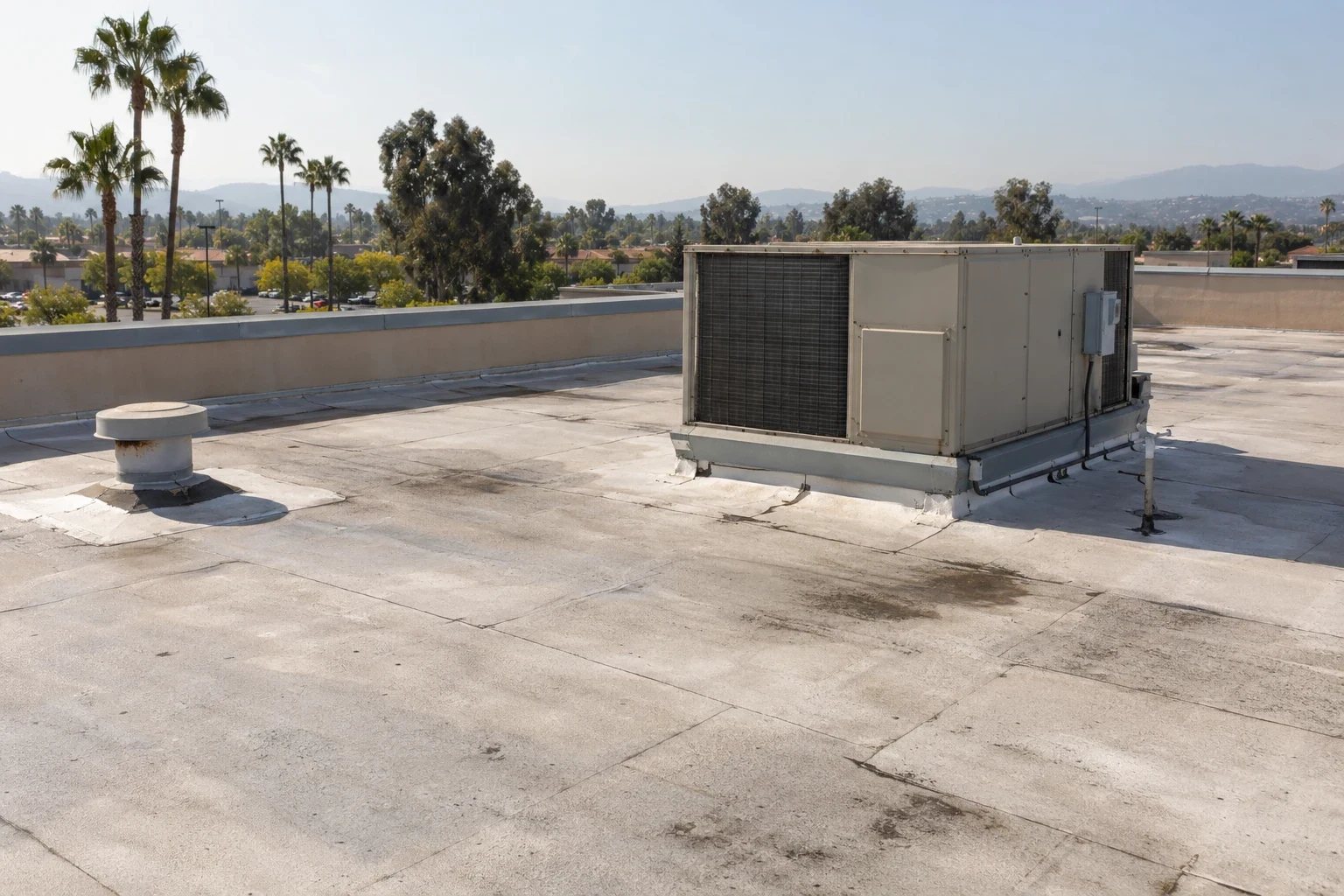
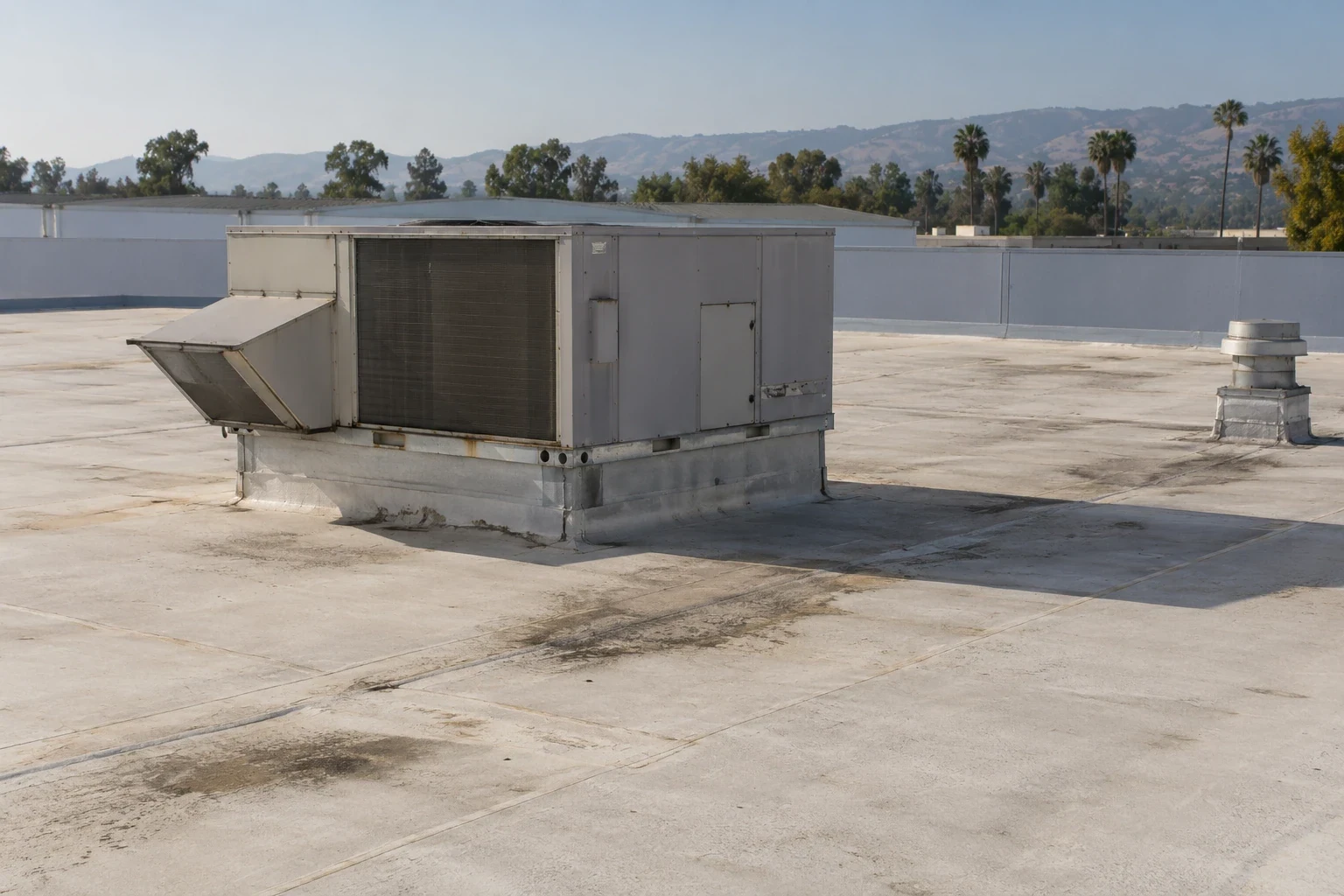
A roof record helps the next team locate a seam, drain, or patch by building and bay. We label photos, note the repair material and boundary, and list sections that were not inspected. A future leak call can be compared against that record. It does not need to include details about storage or mission beyond what the facility authorizes as a roof location.
Follow-up visits can revisit repairs, drain paths, and suspect moisture before a budget review. When an owner coordinates properties across jurisdictions, keep plans, work orders, and access rules separate. Share the approved roof plan, past repairs, current leak locations, and delivery calendar. Depot closeout should separate roof areas accepted for repair from bays deferred for testing, with each work order tied to its approved building identifier.
At turnover, the owner should be able to distinguish a completed repair from a bay held for later testing. We can list the roof identifier, protection status, material used, and the unresolved item that controls any follow-up. A separate work order should govern a new area or a changed access window. Keeping those entries distinct helps a facilities reviewer compare roof condition over time without transferring assumptions from another warehouse or depot.
Common Questions
Often, if staging, lift placement, and temporary routes can be coordinated with the facility. The owner identifies delivery periods and routes that must stay open. We set the work boundary and closeout before the shift begins. If an opening or barrier conflicts with operations, another approved window may be needed.
The work plan identifies the roof zone, opening size, interior exposure, and temporary weather protection. The facility contact identifies sensitive areas under the work. If concealed damage requires a larger opening, the crew secures the roof and pauses for approval before the protection area expands.
No. We inspect the reported bay and surrounding details, then compare the result with repair history and assembly condition. A localized issue may support a repair. Broad deterioration or moisture across several sections may justify testing and replacement planning. The report states which areas were examined.
It helps locate patterns that may need confirmation; it does not prove every layer is wet. We compare the results with the roof assembly and visible conditions. A test opening can verify material at a specific point when that result affects scope. Unconfirmed areas remain listed as suspect.
Include the approved roof map, leak zone, prior repairs, access and escort rules, delivery schedule, staging restrictions, closeout contact, and approval path for concealed conditions. Those details help define where the crew may work and how the facility receives the handoff.
Related Roofing Work
Coordinate a Depot Roof Inspection
Send the approved roof map, leak location by bay, access requirements, repair history, and delivery calendar. We can document findings within the authorized work area.