
Commercial Roofing in Yorba Linda, CA
Rooftop equipment can make a Yorba Linda repair more than a membrane question. The City’s code requires applicable mechanical equipment, including HVAC units, to be screened from surrounding properties. That design requirement does not tell us what screen, curb or roof material exists at a particular building. We inspect the actual transition and compare the finding with a bounded repair scope.
The zoning code distinguishes commercial office, neighborhood commercial, general commercial and light-manufacturing classifications. It also notes that the commercial zones have different purposes and use tables, so the specific parcel needs to be checked. Those rules are planning context, not proof of a current tenant or roof assembly. We start with the property address, owner-authorized contact and available roof records.

Inspect screens and curbs as separate details
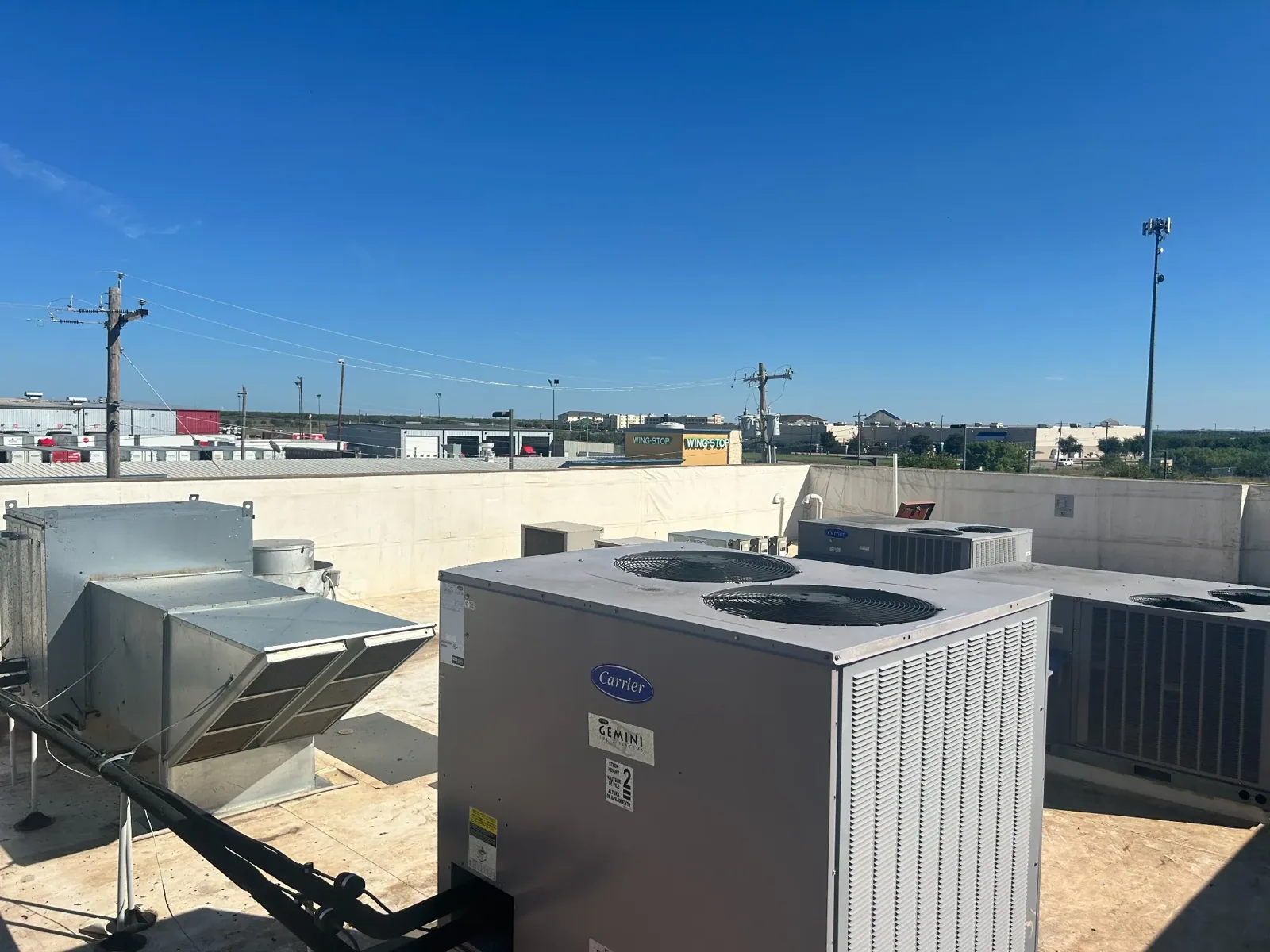
A rooftop screen can hide a curb edge, flashing termination or fastener line. We look for loose metal, open joints, corrosion, movement and sealant that has separated, then compare those conditions with the membrane around the equipment. HVAC service may also introduce foot traffic or tool impacts. The work record should show which component failed rather than label every wet area a membrane leak.
Mechanical screening must follow applicable site requirements, but roofing work cannot assume the screen can be removed or altered without permission. The owner identifies the equipment contractor, shutdown restrictions and any design review needed before an access panel is disturbed. If a curb transition is the observed defect, curb and support flashing work can be scoped to the verified interface.

Coordinate equipment service and roof entry
The facility manager approves roof access and identifies who controls mechanical equipment. We ask whether units can remain online, who may disconnect service and what notice is required before a curb or screen is opened. Tools, protective covers and temporary dry-in need a defined place and removal plan. The scope states which trade is responsible for equipment work so a roofing crew does not interfere with a controlled system.
A safe route includes more than a hatch key. The manager can identify fixed fall-protection points, restricted areas, alarm contacts, ladder points and time windows. Where tenants operate below the work zone, an occupied-building sequence should address overhead protection and daily cleanup. If a screen or curb is unavailable for inspection, the report says so and describes the remaining uncertainty.
Screening can complicate a visual inspection because it hides the mechanical unit base and parts of a curb. We photograph the accessible faces and record whether the attachment, lower flashing and membrane termination could be viewed. If the owner authorizes temporary screen removal, responsibilities for restoration and alignment are set before work. We do not alter a screen solely to reach a roof detail without that approval.
Map each zone before choosing treatment
Yorba Linda’s commercial categories help explain why a property’s operating use should be confirmed, but they do not identify the roof assembly. We separate field observations by elevation, slope, equipment cluster and drain path. Seam condition, membrane shrinkage, open flashing and ponding are recorded independently. Photos include enough surrounding detail to show where an observation sits relative to the unit or roof edge.
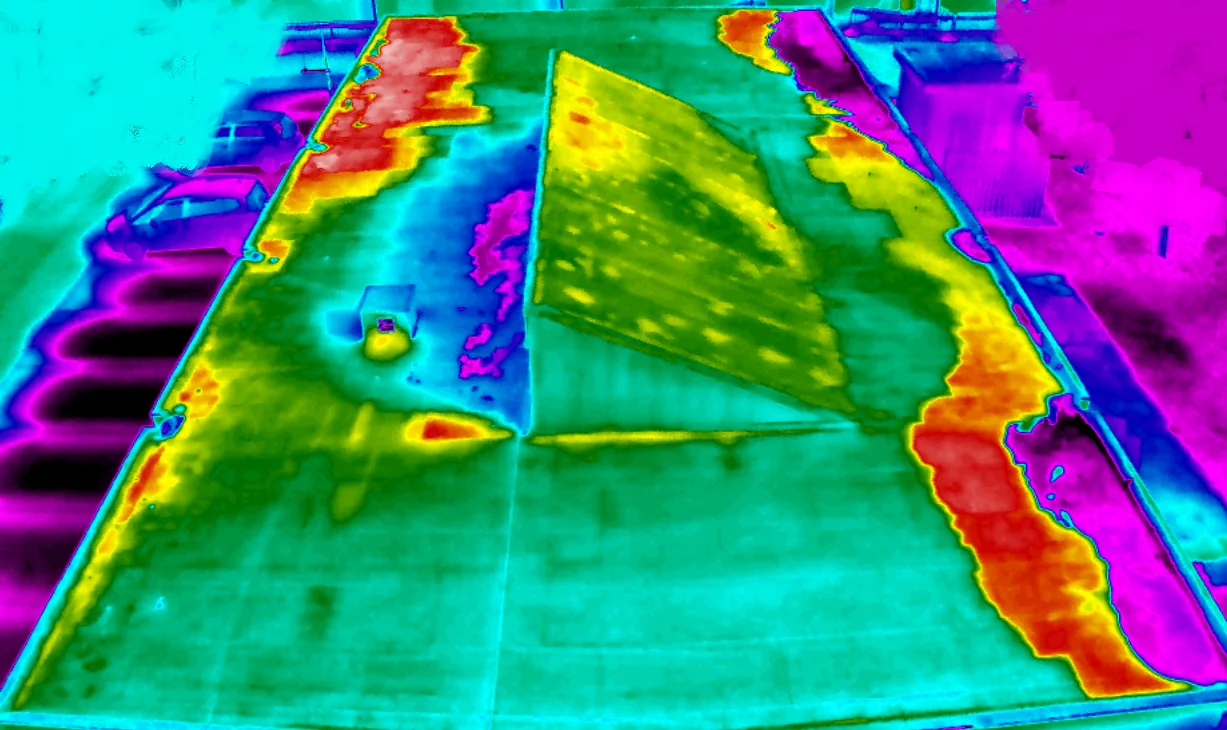
Water may enter at a curb, travel beneath the membrane and appear in a distant room. We compare the report with nearby details and consider moisture testing if the extent will affect the repair. A moisture survey is a screening method, not proof by itself; readings need interpretation and confirmation as appropriate. Any test opening requires explicit owner approval and closeout instructions.
Thermal movement, vibration and service traffic can stress details around mechanical equipment. A small break in sealant should not automatically be treated as the whole cause. We inspect the flashing layers, membrane bond, curb condition and nearby fasteners, then compare those findings with the interior symptom. If the equipment contractor made a recent change, that record may help explain where to focus the investigation.
A unit replacement can change curb dimensions or service clearances. The roofing contact and mechanical contractor should agree which party owns the curb, who protects the opening and how the equipment returns to service. We record the interface before work and after closeout. If the equipment remains in place, the report states which flashing surfaces were visible and which could not be evaluated.
We also ask the owner to retain records after a mechanical unit is replaced. A new curb, altered attachment or service route can change the nearby flashing. Keeping the before-and-after photographs with HVAC work orders helps the next inspector identify which detail changed and whether a leak followed that work.

Keep the screen and roof responsibilities clear
When a roof detail intersects equipment, the scope should distinguish membrane work from screen, unit or electrical work. We note the party responsible for shutdown, removal, reinstallation and testing. If a screen must remain in place, the inspector records what could be viewed and whether a limited test is possible from another side. The owner can then compare a partial repair with a coordinated access plan.
Material compatibility also matters. Sealant, coating, flashing resin and membrane may not share the same preparation or application method. We identify the existing materials where verifiable and avoid prescribing a product where the substrate is unknown. A a roof visit in Laguna Woods and a coating detail require different surface preparation and tie-ins, so a label or old invoice should be checked against field observations.
A planned visit should leave the equipment operating as the owner intended. The closeout identifies any shutdown, protection or temporary condition and confirms who accepted the restored area. If access or visibility limited the inspection, the next recommended step describes the equipment coordination needed to finish it.
Document the equipment interface
At closeout, photograph the curb, adjacent membrane, screen attachment and any component that was not opened. Record the units left in service, the repaired perimeter and the condition the next visit should compare. That record helps an equipment contractor understand the roofing boundary and gives the property manager a reference when future service changes the curb or screen.
Yorba Linda’s rooftop-screening rule is a code context; it does not establish that an existing installation meets the applicable standard. A site-specific review belongs with the owner and design or code professionals as needed. For roofing, we document the visible interface and can schedule a follow-up roof inspection to check seams, drainage and completed tie-ins against the closeout photos.
A separate municipal visit in Fullerton begins with its own address and site contact. City names help an owner identify broad coverage, while inspection findings stay tied to the actual roof assembly and work authorization for each property.

Common Questions
Screening is a code context, not an inspection result. We check the actual attachment, curb flashing and adjacent membrane.
The owner names the mechanical contact and approves shutdown, removal and reinstallation responsibilities before work starts.
Survey readings provide screening information. We interpret them and recommend confirmation where it can change removal limits.
When a screen cannot move, we note accessible views and discuss whether approved testing or another access plan is worthwhile.
For compliance questions, the owner consults the appropriate design or code professional. We document visible roofing conditions.
Related Roofing Work

Review the property-specific roof scope
Share the site address, available roof records, the affected area and the person authorized to arrange access. We will document the inspected zone, limits and a practical next step for your review.