
Big-Box Retail Roof Repair in Costa Mesa, CA
Long sales floors can hide a roof opening far from the visible ceiling stain. We begin at the reported bay, mark the roof zone, and trace the drain path, wall transitions, equipment penetrations, and earlier repairs. We photograph visible conditions and distinguish them from assumptions about concealed insulation or deck.
South Coast, Harbor Boulevard, and East 17th Street are among Costa Mesa's commercial corridors. Retail uses vary across the city, and a corridor description does not establish a particular building's roof, hours, or delivery route. We confirm the store's loading schedule, roof entry, lift position, customer access, and the manager who can approve a work zone. Newport Beach and Santa Ana may be part of a regional portfolio, but each address needs its own roof record.
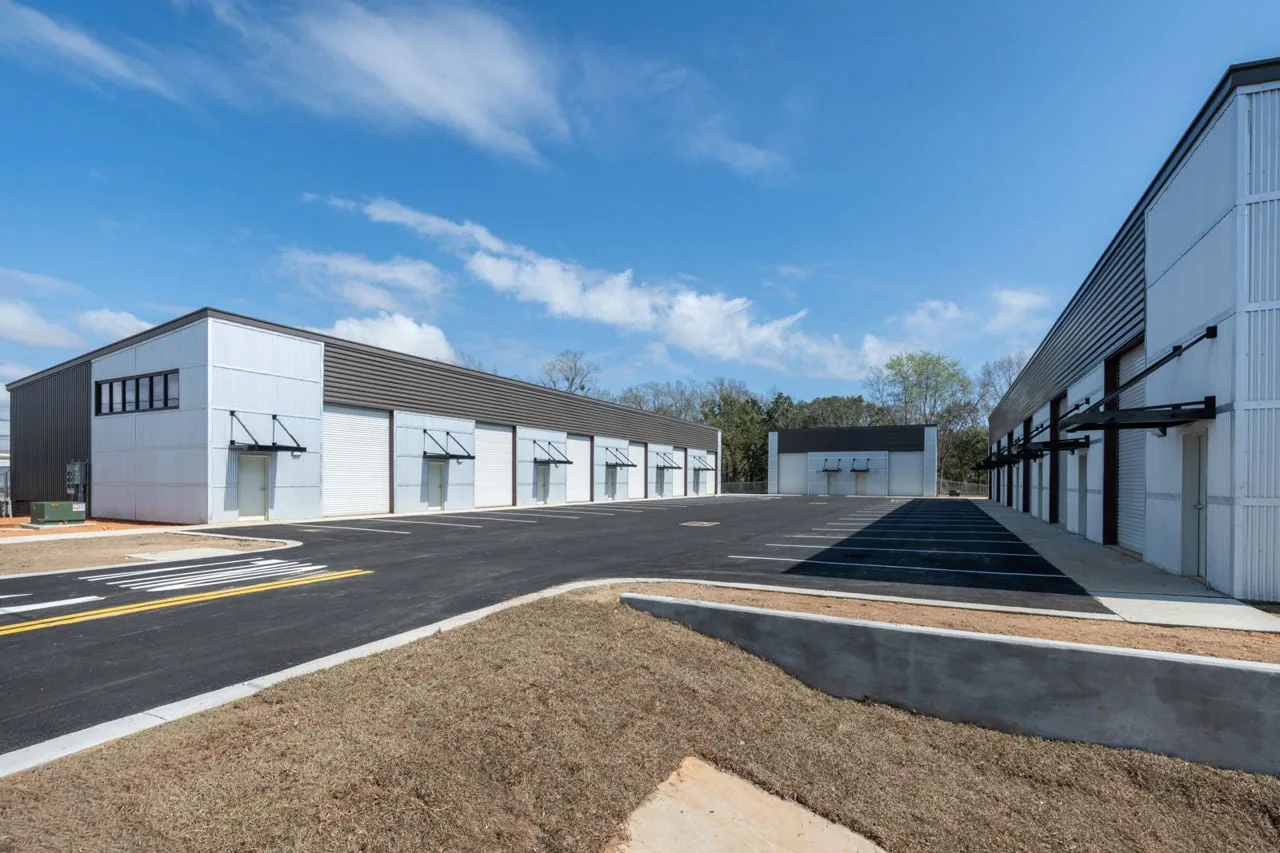
Map the Full Roof Zone
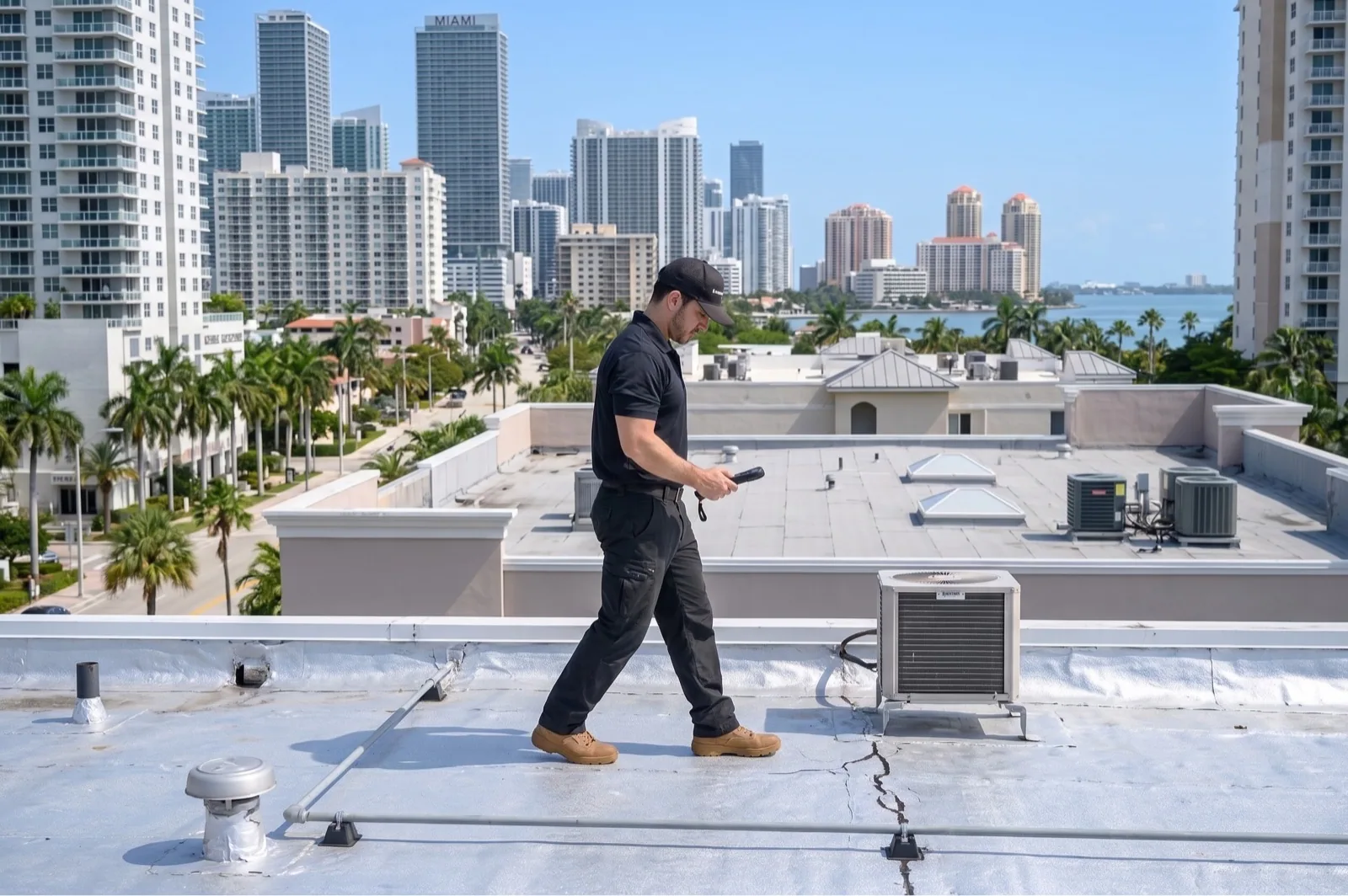
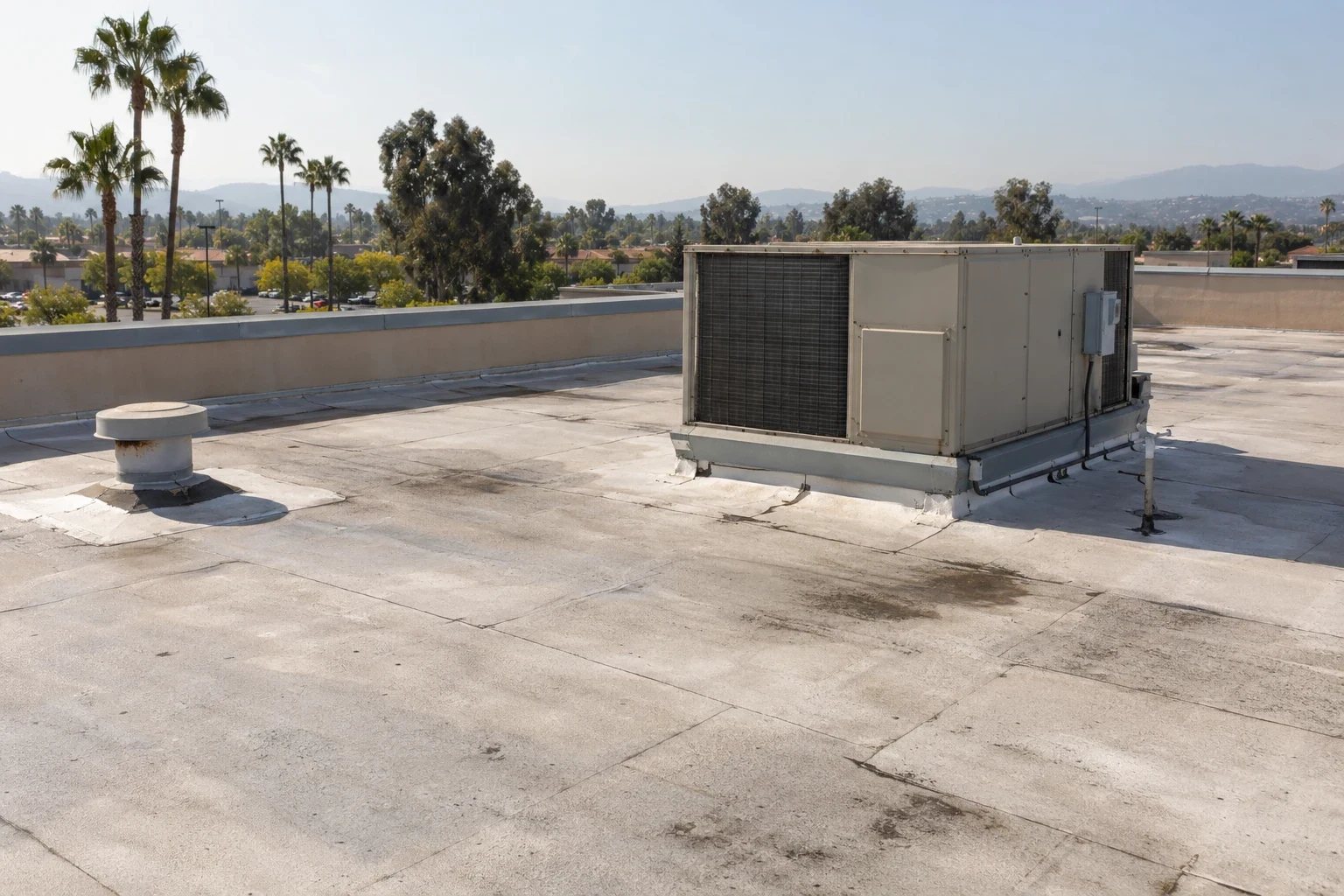
Large retail roofs can contain separate membrane areas, additions, canopies, and equipment fields. We mark each section and inspect seams, penetrations, drains, perimeter metal, and tie-ins to adjacent construction. A stain inside the building directs the first check; water may travel beneath the membrane before it appears below. The report identifies what was reached, what was visible, and where a test opening would change the diagnosis.
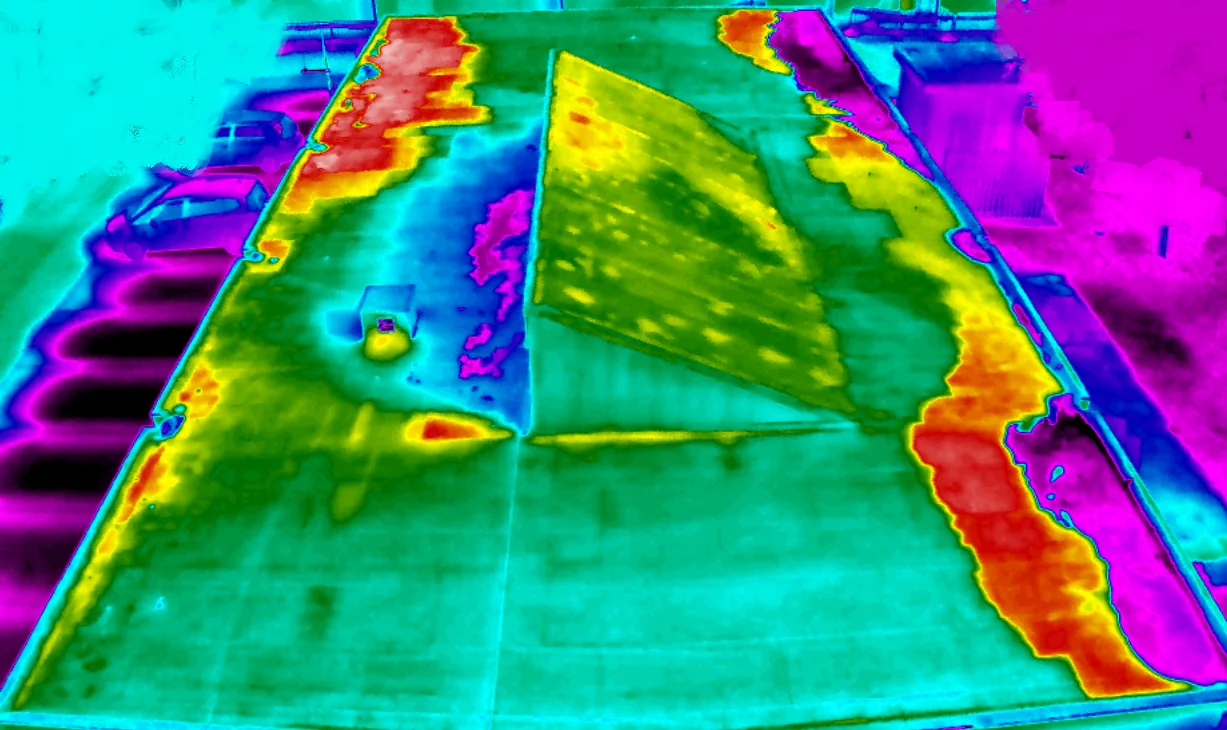
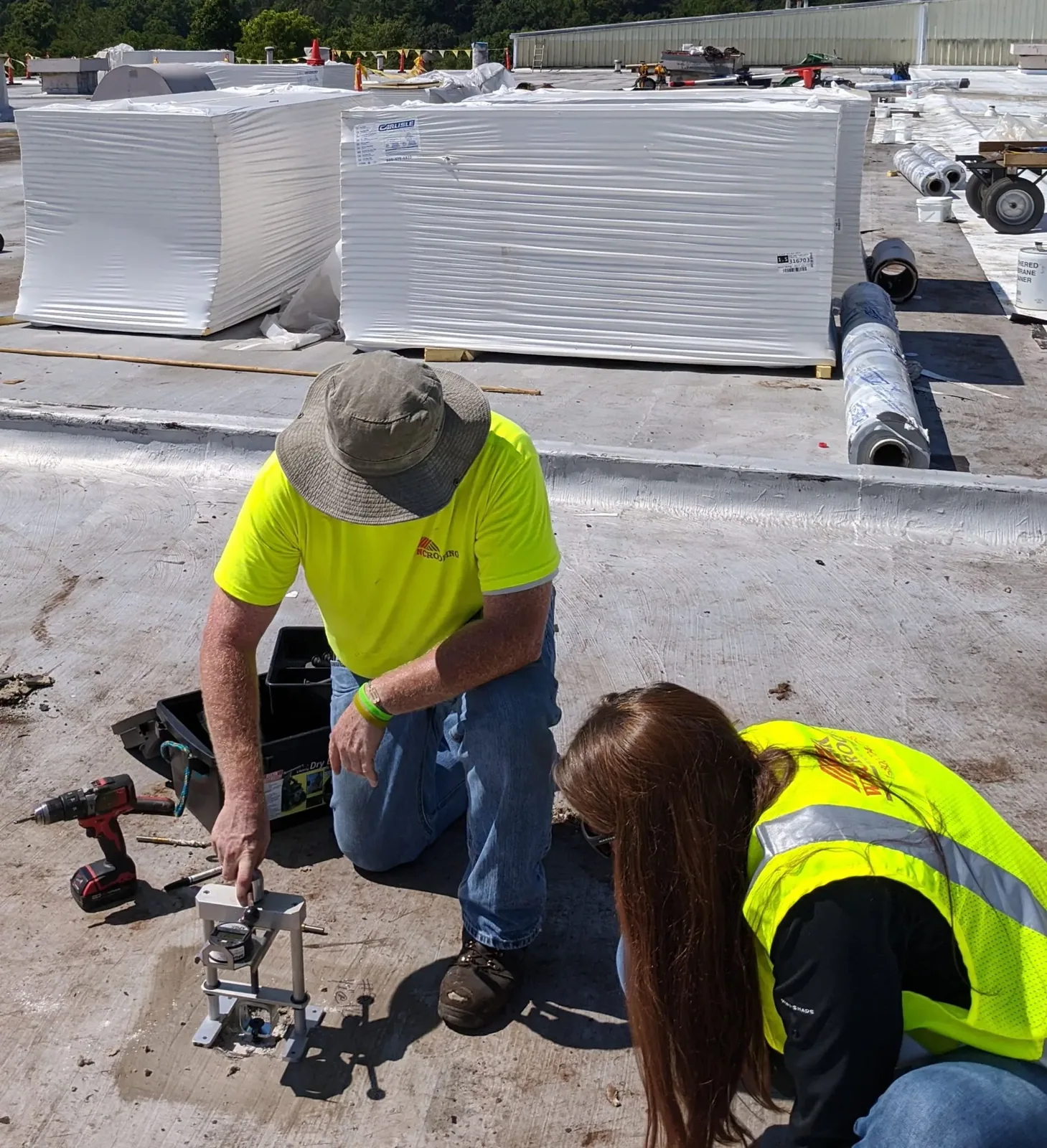
A commercial roof inspection can establish that record without presuming the whole roof failed. An infrared moisture survey can help locate suspect areas when the surface pattern is not conclusive. Thermal contrast alone does not confirm wet insulation. We connect survey findings with roof assembly, recent weather, and selected confirmation points, then set a boundary that keeps confirmed work separate from areas still needing investigation.

Edges, Curbs, and Drainage
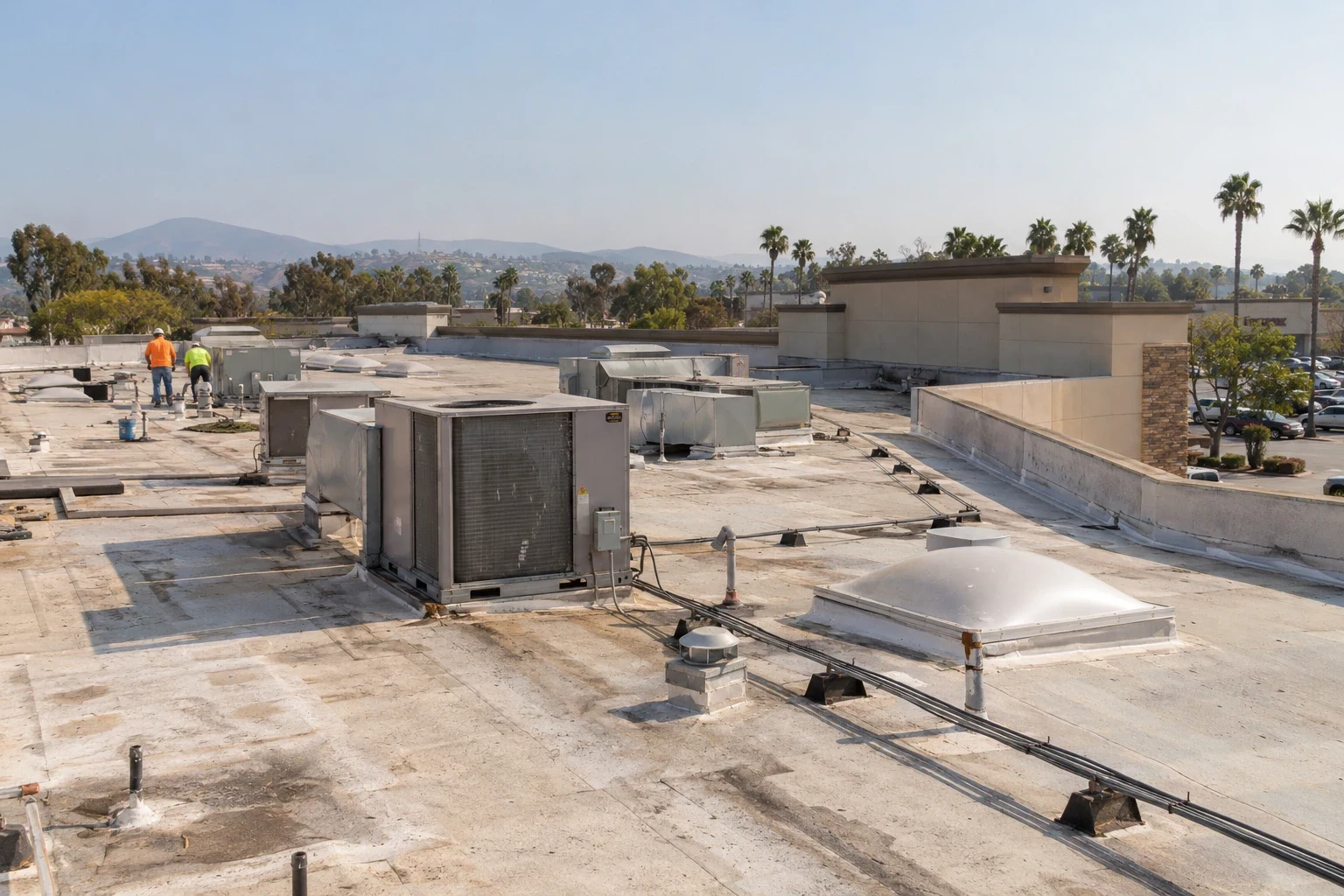
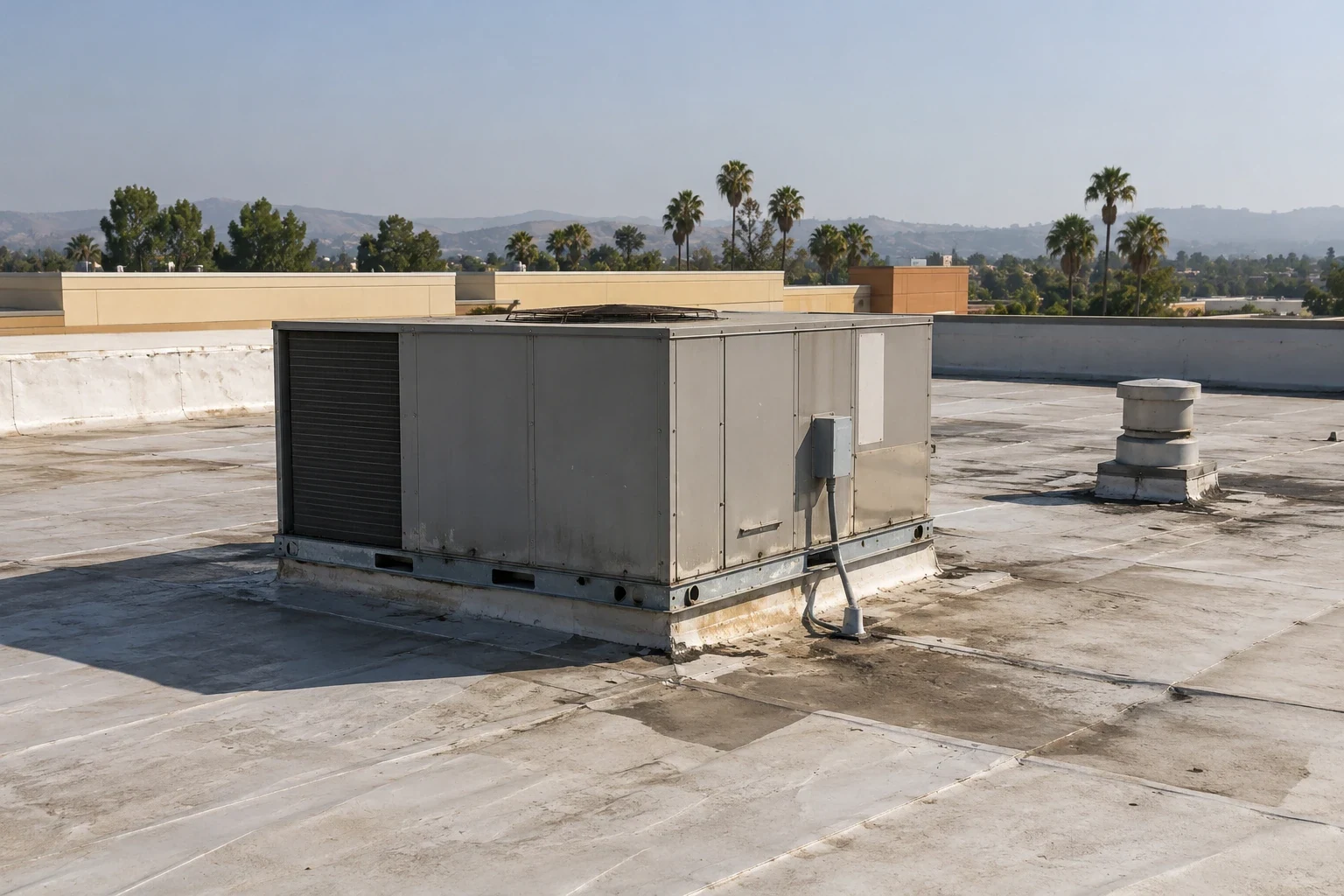
Long roof edges, sign supports, rooftop units, and skylight curbs create details that move differently from the open membrane. We inspect flashing for gaps, loose metal, open laps, or sealant that has separated. Drain bowls, strainers, and nearby low points are checked together because debris can slow the path even when the opening looks clear. Where a drain line or equipment problem falls outside roofing, we note the handoff rather than claim a diagnosis.
South Coast and East 17th Street are recognized commercial corridors, but they do not define the details of any store roof. Owners comparing shopping-center roof planning or grocery roof work should keep those scopes tied to each property's operations. We map the actual roof sections, identify which curb or drain serves the affected bay, and photograph transitions that may need a separate repair. The building's roof plan is more useful than assumptions based on its retail category.
Repair, Recover, or Replace
A puncture, open lap, or separated flashing edge may support a local repair when sound material surrounds the defect. We prepare the area, make a compatible tie-in, and check its perimeter. The written scope states the roof zone and detail included. If a test opening exposes wet board or unsound deck, we cover the cut, record the affected zone, and wait for authorization before pricing added removal. The owner reviews added work before it proceeds.
Repeated failures across widely separated roof sections can justify comparing larger options. A targeted repair program can address documented conditions. A replacement assessment considers the assembly as a whole. Recover depends on substrate, moisture, attachment, drainage, and permit requirements; it should not cover an unverified problem. We explain the evidence behind each option and identify areas that need testing. This lets the owner compare cost and interruption by work zone instead of treating every leak report as a reason to replace the entire roof.
Protect Deliveries and Store Access
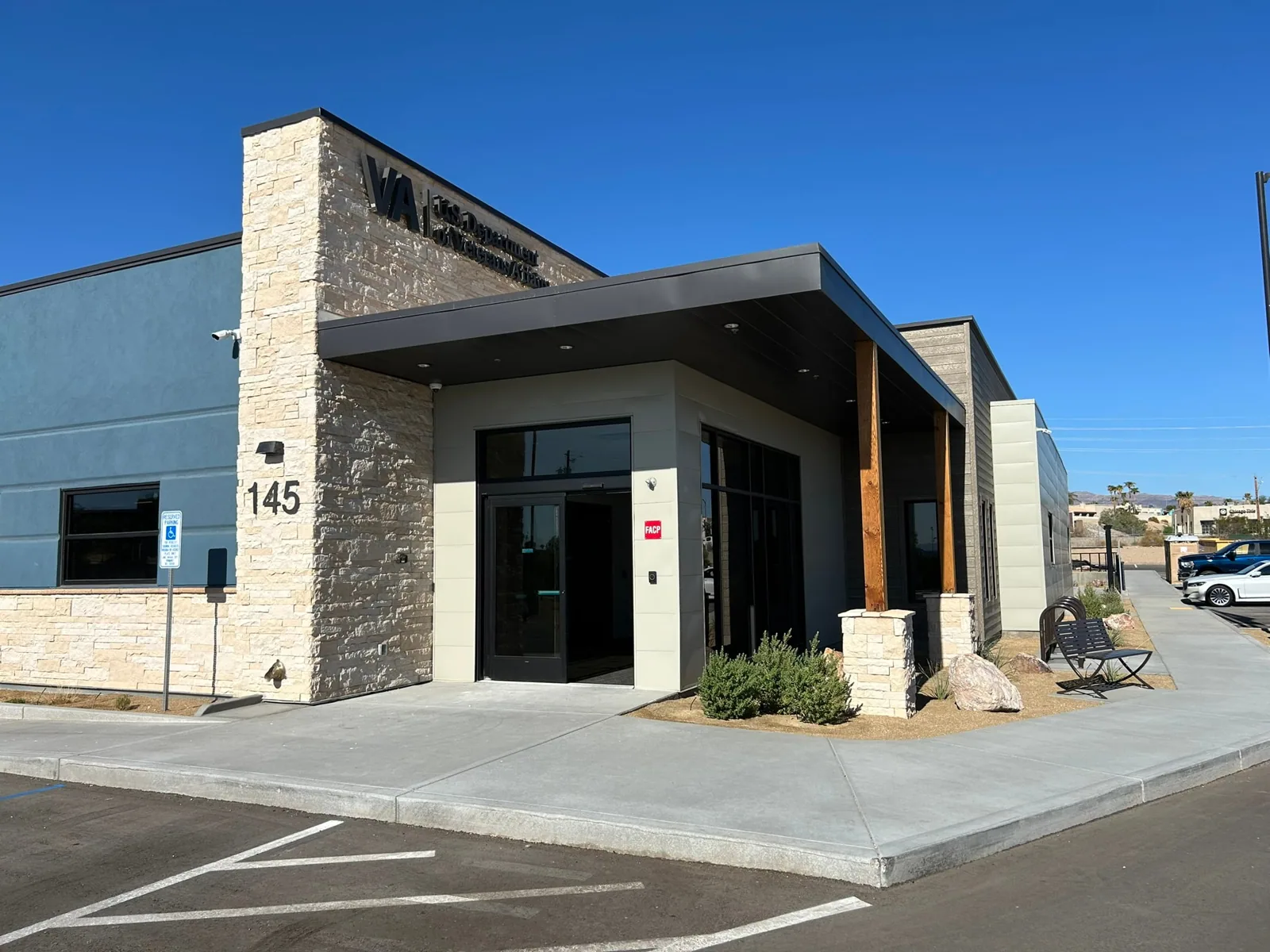
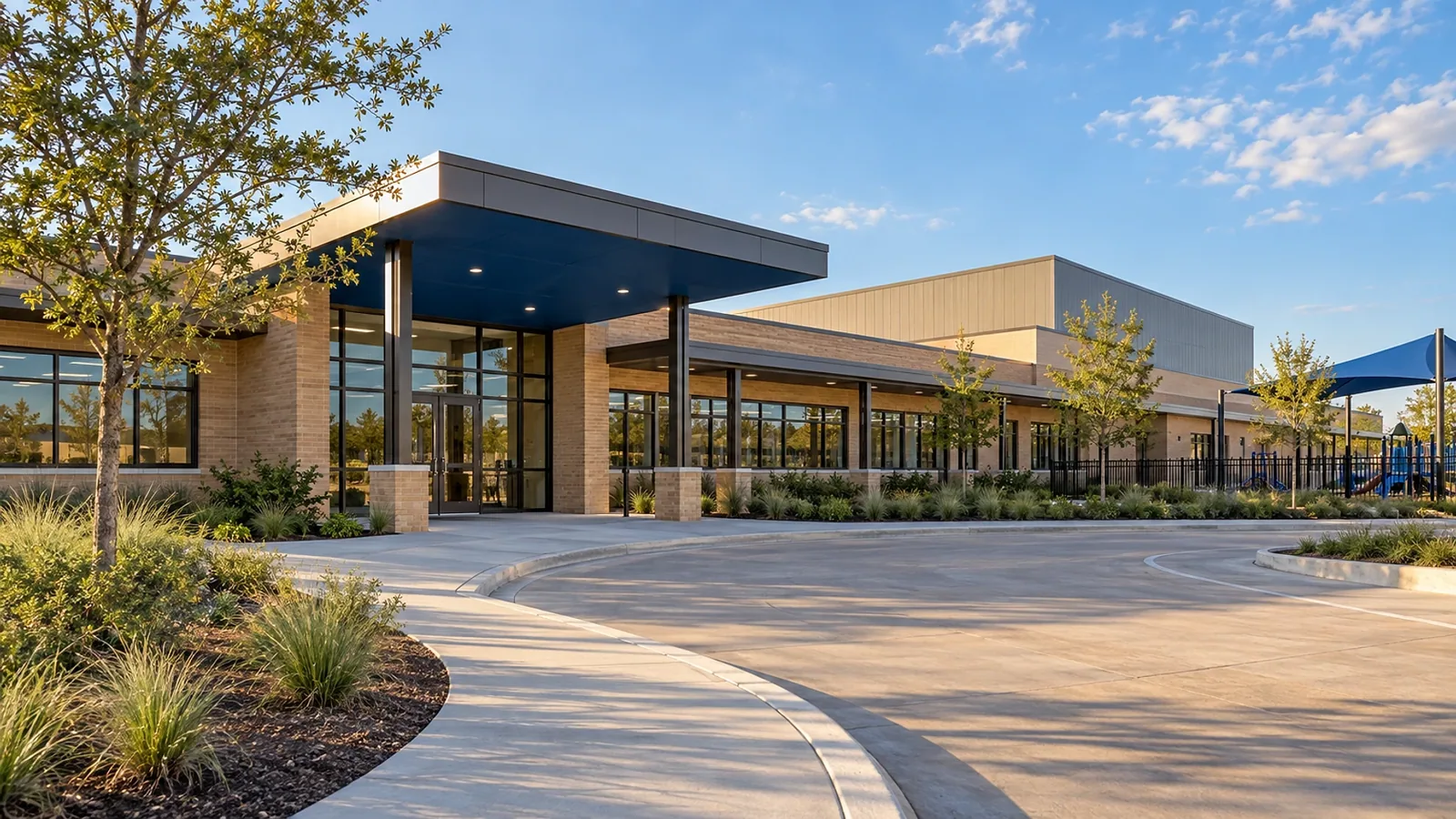
Before mobilization, we confirm receiving hours, delivery routes, customer entrances, roof access, lift placement, staging space, and noise limits. A repair over a loading area may fit between truck movements or require a different window. We locate barriers and material paths so they do not cross an active entrance without approval. If a roof opening remains during the shift, temporary weather protection and an end-of-day inspection are part of the sequence.
South Coast and Harbor Boulevard describe commercial activity at a planning scale, while current store schedules come from the property team. We coordinate with the manager and any other trade before a curb or equipment detail is opened. A sequence for occupied-building roof work can divide the task into manageable areas. If a service team works across the county, a Santa Ana visit still requires separate access confirmation and a new condition map. No other site's work hours or roof condition carry over.
Material and Permit Review
A retail roof can cross older additions, long membrane runs, canopy edges, and equipment clusters. We map each roof plane before comparing repair and recovery. Test openings are limited to locations that could change the assembly choice. The work plan links each phase to its delivery route, customer entry, and protection area below.
The City's 2025 California building standards, selected appendices, and local amendments became effective in Costa Mesa on January 1, 2026. The permit scope determines which provisions govern the retail project. A low spot should be scoped separately from a membrane split because drainage correction and field replacement can require different work limits.
Records for the Next Store Visit
A useful roof record links photographs to the roof map, repair action, and remaining questions. We note the drain path, edge, equipment curb, patch limits, and sections not reached. The manager can compare those notes with a future leak call and avoid sending a crew to the wrong zone. The record also gives a capital planner a clear view of known repairs and areas that need monitoring or testing.
Routine visits can focus on drains, seams, flashing, and earlier repairs before a weather period or planned store work. A maintenance visit should return to details the last inspection identified. If a portfolio includes Newport Beach or Santa Ana sites, keep the map, photographs, and repair boundary specific to each address. Send the current plan, leak reports by bay, prior work notes, and store calendar. We can schedule a roof walk and document what the next decision requires.
Common Questions
It can when roof access, noise, deliveries, and public routes fit a safe work plan. We confirm the affected entrance or loading zone with the manager and set a work boundary. Tasks that create noise or expose the roof may need a quieter period. The sequence includes temporary protection and a documented closeout.
The first visit should map the reported area and nearby roof details. If the roof has separate sections or widespread signs of deterioration, the owner may choose to extend the inspection. We state which zones were examined and avoid describing unvisited areas as sound. Additional testing is added only when it would change the repair decision.
A ceiling mark or thermal pattern is not enough by itself. We compare surface observations with roof assembly information and select confirmation points where needed. A test opening can show material condition at that location. The report distinguishes confirmed moisture from areas that remain suspect so the repair boundary stays clear.
A roof plan, photographs, leak locations by bay, prior repair notes, operating hours, and access rules help define the work. We inspect the affected details and identify material or testing needs. The proposal names the included area, protection, and closeout steps. The estimate can list a unit-price allowance for concealed removal while keeping unverified areas outside the base quantity.
Widespread deterioration, repeated failures in separate zones, wet insulation, or deck concerns can support a broader review. The owner should compare those findings with repair history, drainage, and assembly condition. Localized damage may still suit a repair. We document the evidence and any test needed before pricing a larger project.
Related Roofing Work
Schedule a Retail Roof Walk
Send a roof plan, leak locations by bay, prior repair notes, access rules, and the store calendar. We can map the affected roof zones and document a practical next scope.