
Commercial Roofing in Aliso Viejo, CA
An Aliso Viejo commercial roof request needs a confirmed address and contact before dispatch. we first confirm the building address and representative who can arrange access. The city's code places business-park and commercial uses in districts serving residents, visitors and the local workforce; BP1 permits light-industrial and employment-oriented activity. That framework does not establish the current use or roofing condition of a property. We inspect the membrane, transitions and water path before writing a commercial roof inspection.
Before dispatch, the contact confirms who should receive a notice and how the roof hatch is secured after inspection. The manager can share the affected room, event timeline, prior repair notes and roof documents before we arrive. We compare those records with accessible seams, penetrations, drains and curbs. If a surface treatment hides the substrate or moisture may extend beyond the visible defect, we identify a test before pricing extra removal. The proposal separates immediate protection, the confirmed repair and any broader option so the owner can authorize a clear limit and understand what remains untested.
Confirm access with the person who manages the site
We check in through the building contact and confirm any escort, roof hatch, loading arrangement, work hours and area restrictions. The manager identifies equipment that stays online, tenant routes that should remain open and where materials may be staged. If the crew needs a lift, barrier or debris bin, those arrangements are approved ahead of arrival. The work record names who can answer a scope question during the visit.
Business-park land use does not tell us who holds a key or operates a roof hatch. For another municipal context, a Santa Ana service-area visit is separately validated. At the Aliso Viejo property, we document the approved path and any area unavailable to the crew. An access limitation is reported rather than bypassed to reach a roof section the owner has not released.
Trace a symptom across roof zones
We record the interior location, when water appeared and whether rain, equipment service or earlier roofing work may have a connection. On the roof, seams, curb wraps, parapets, pipe penetrations and outlets are checked in the likely area. Water may move within a deck or insulation before it becomes visible indoors, so the stain alone does not define the repair boundary. Photographs and a marked zone reference preserve what the crew observed.
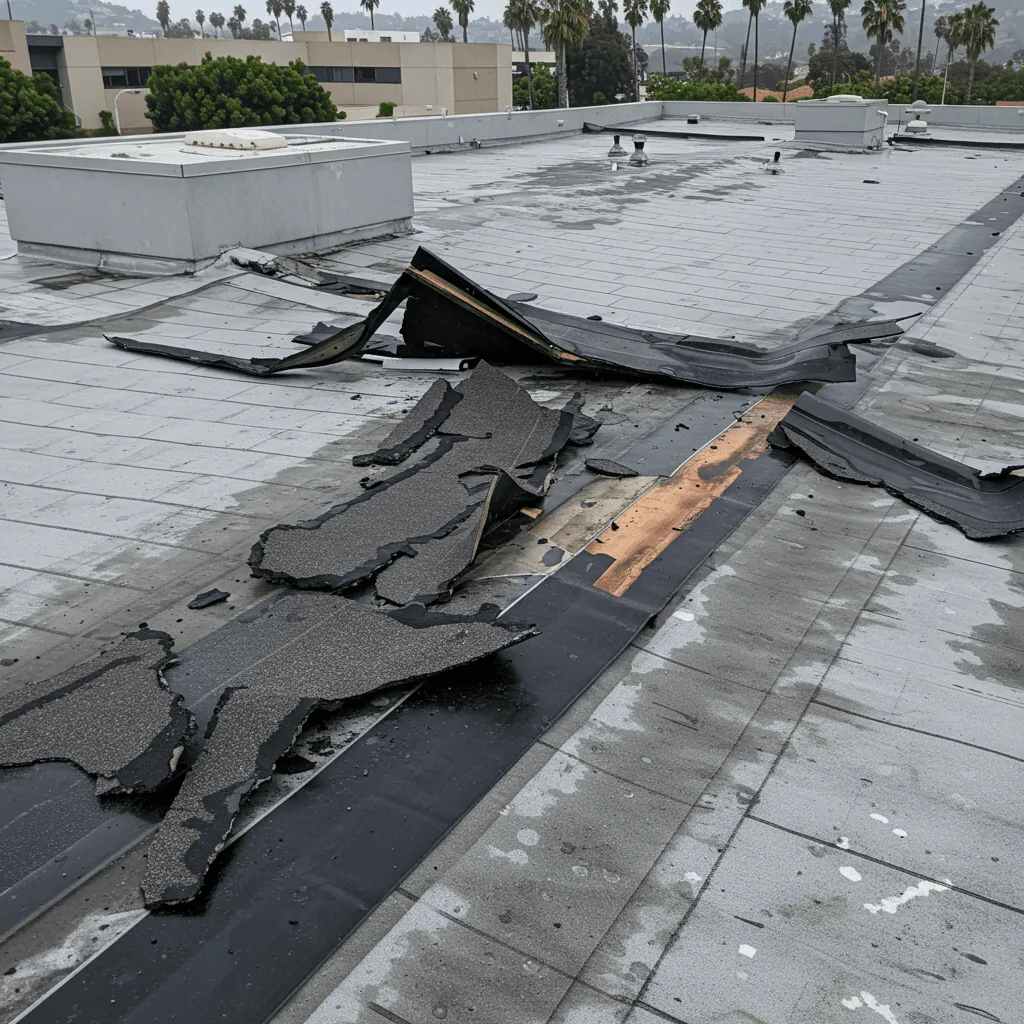
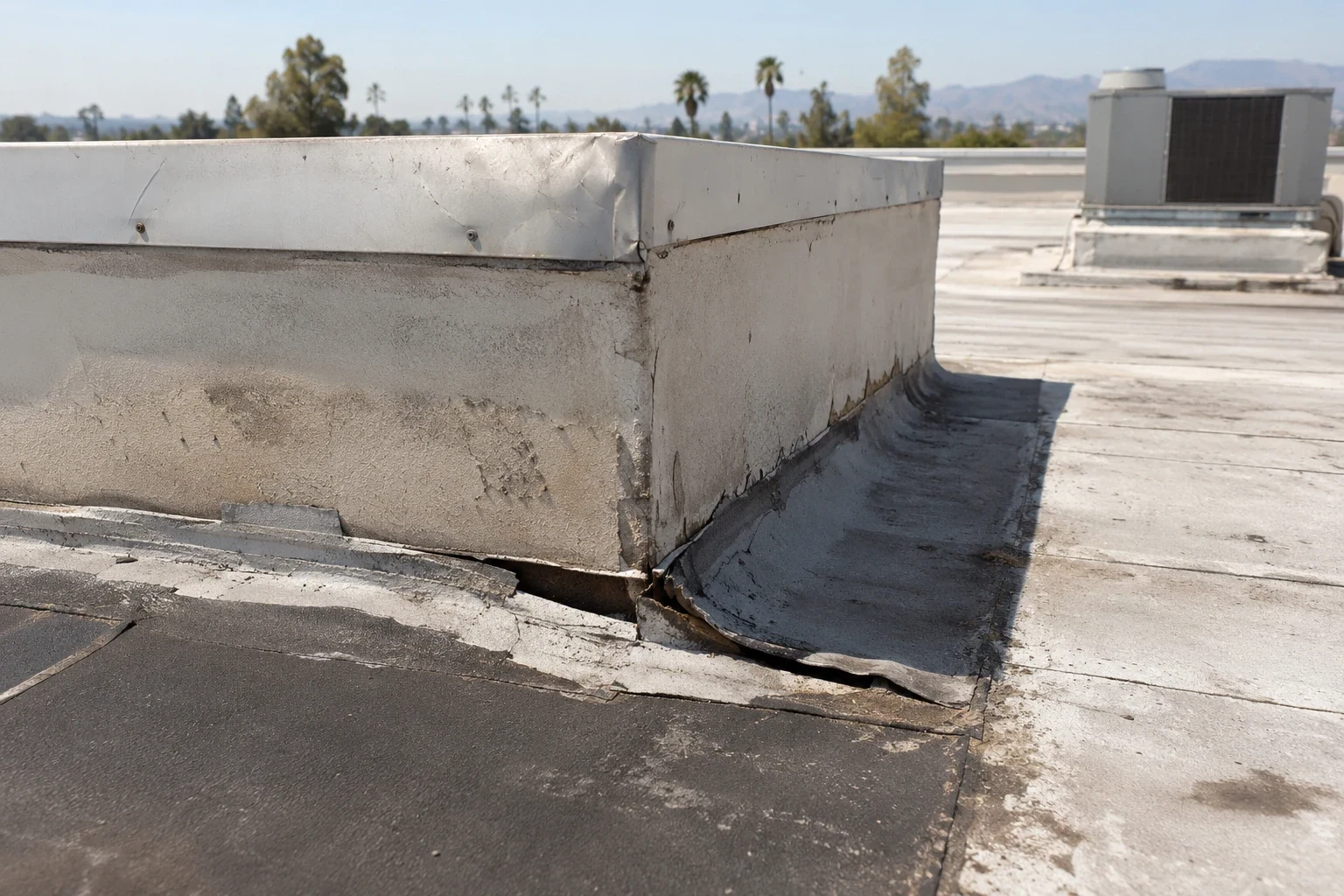
If the membrane has split at a lap, a seam failure review may define preparation and tie-in. A flashing repair assessment follows a curb or wall condition. If wet insulation or multiple candidate paths remain, a bounded moisture survey or opening may be needed. We state what the test would resolve and wait for the owner to approve it before expanding removal.
Base material selection on verified records and details
The repair method follows the existing roof, not the nearby property's system. We check labels, supplied product documents and accessible edges to identify TPO, PVC, EPDM, coatings, metal or a multi-ply assembly. An older patch may use a different material and a coating can conceal the base membrane. If the surface remains uncertain, the estimate names the document or test needed before selecting a compatible repair.
A TPO assembly review or PVC system check can organize questions once the material is confirmed. We define cleaning, primer, patch width, termination and inspection point in the authorized work. If moisture, deck capacity or attachment remains unresolved, a recover or replacement option is held for a separate assessment rather than assumed to be suitable. The owner sees what each alternative covers and where testing may still be required.

Review outlet details as a separate path
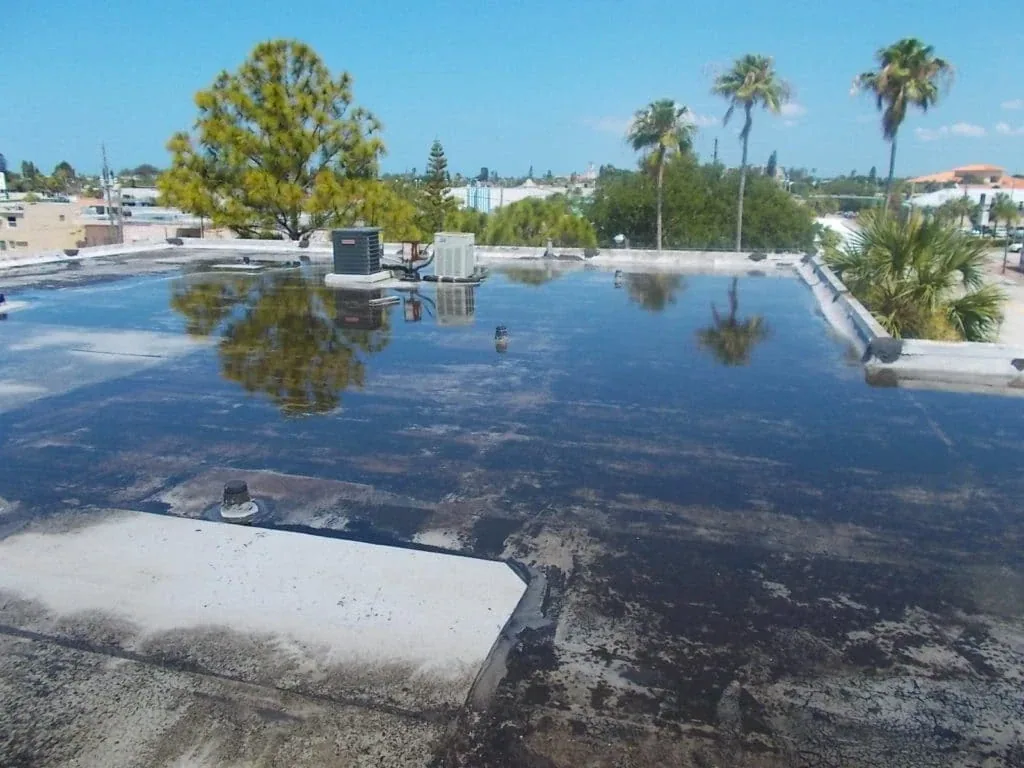
Drains, scuppers and overflows can leak at their connection even when the roof field is sound. We inspect the strainer, bowl, clamp ring, membrane turn and downstream outlet if accessible. Debris is recorded separately from a failed flashing or damaged metal. When water stands in a low area, we note its extent and timing without diagnosing slope or structure from one visit.
Before an outlet is isolated, the contact confirms how to protect any space below and whether water must continue flowing during work. A drain and scupper correction can include nearby membrane where inspection supports it. We photograph the condition after the approved scope and identify any outlet that could not be checked. The owner can then decide whether a follow-up test is needed.
Agree on a safe opening and closure plan
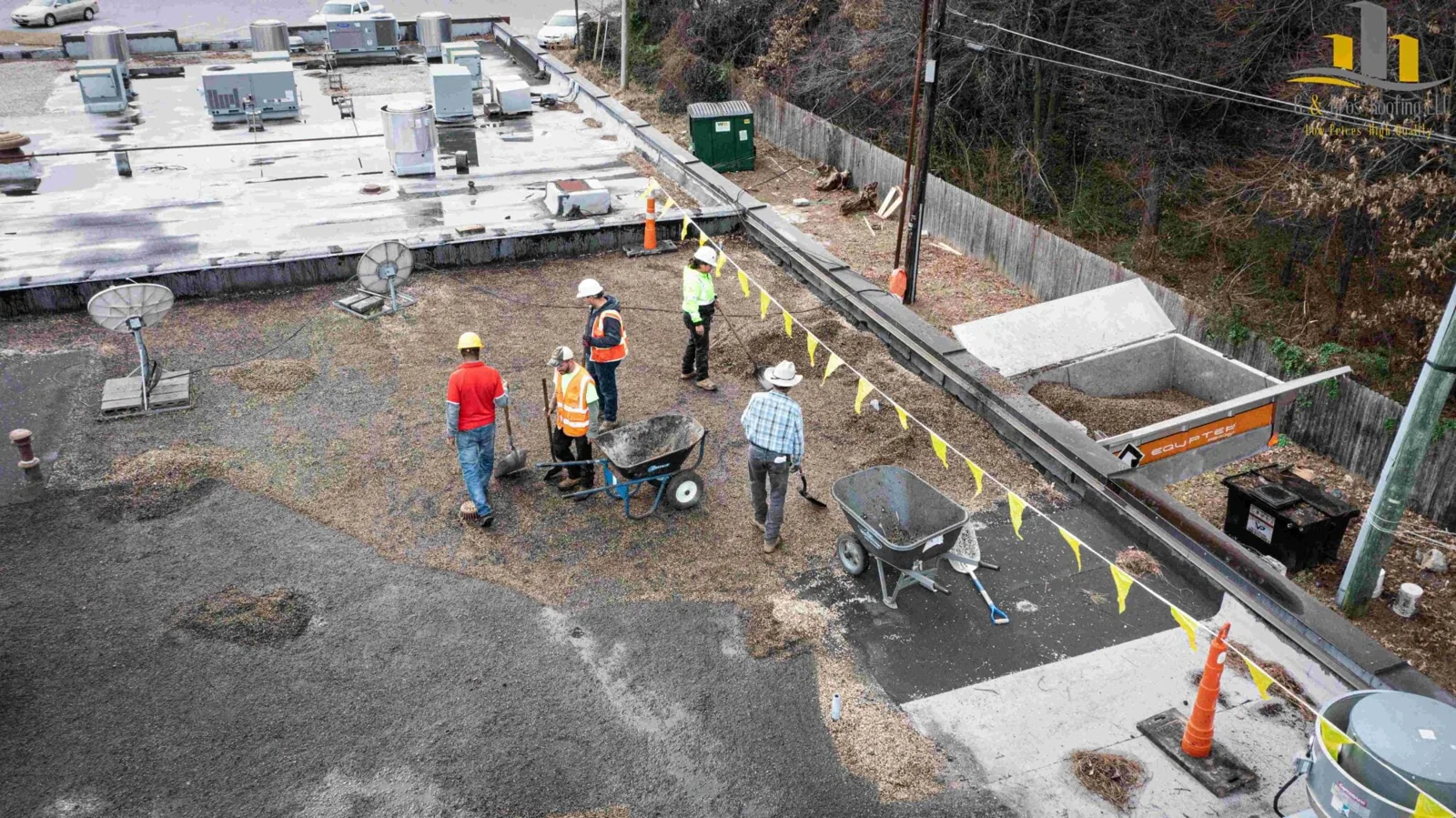
The work sequence identifies a roof zone, opening size, material path, work hours and daily closure condition. The property manager coordinates notice, equipment access and protection below. If a hidden layer, deck issue or weather change interrupts the plan, the crew secures the area and contacts the authorized decision-maker before adding removal. This keeps a discovered condition separate from the approved repair.
For broader work above an occupied site, phased reroofing can define work zones, occupant notifications and inspection points. We explain known effects and update the sequence if conditions change. There is no default assurance that all operations will continue unaffected; the owner and site manager set the appropriate plan for their building.
Keep code references separate from roof findings
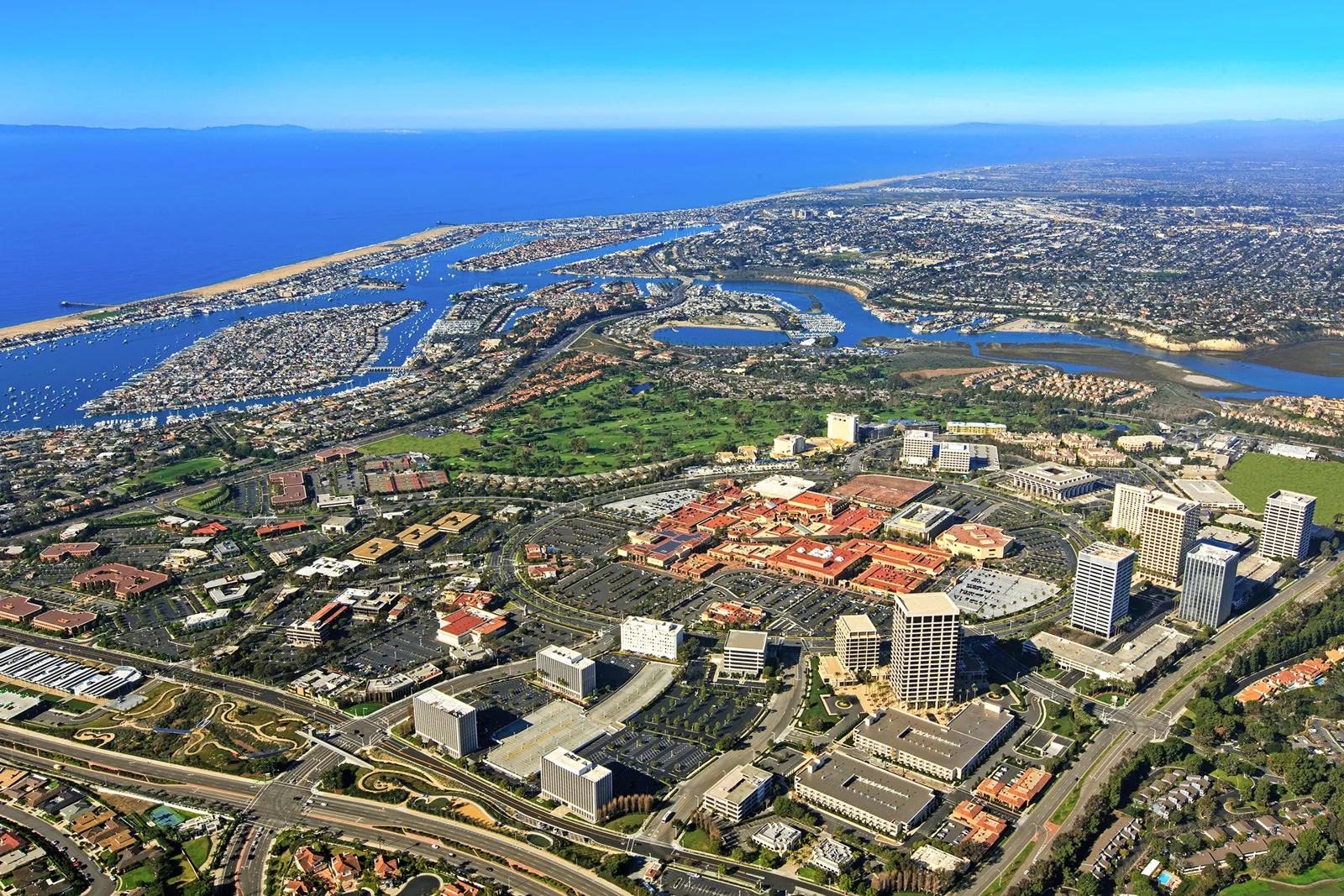
Aliso Viejo's code describes business-park districts that serve local residents and employment activity and identifies industrial or research-and-development uses in its BP designations. Those facts explain the city's zoning structure, not the current use, ownership, access or roof assembly at a given parcel. We confirm each of those matters with the property contact and available records before recommending work.
A nearby Newport Beach location request is checked on its own terms. If a roof replacement raises permit, structural or energy-code questions, the owner confirms requirements for the work proposed at the address. We record observations and identify design questions without presenting a zoning category as approval. Visitor copy stays broad while the scope remains specific to the inspected building.
Document what was corrected and what remains
We provide the property manager a zone reference, before-and-after photos, confirmed material, repair dimensions, products used and test results. The closeout lists excluded areas and any uncertainty that could not be settled because access or records were unavailable. If another issue was visible but not included, it appears as a separate recommendation and requires its own approval.
A roof condition report can keep current observations together with future maintenance items. For Aliso Viejo, we identify who received the file, the condition that should prompt another inspection and any information still requested. A record like this helps a facilities lead compare a later visit without mistaking one repair for a full roof evaluation.
Common Questions
We verify the address, access contact and service scope before scheduling. Zoning designations do not establish eligibility or authorize entry to a building.
Give the affected room, date, weather or recent service activity, previous repair notes and any roof plan. We use those details to focus field inspection.
Not reliably. We check product records, labels and accessible edges, and document a test or document request if a coating or previous patch hides the substrate.
The property manager confirms roof access, operating equipment, notice, protected areas and daily closure. We follow the approved route and report a changed condition before expanding the scope.
No. It is a land-use classification. The current property use, roof assembly and service need are verified separately through records and inspection.
Related Roofing Work
Schedule an Aliso Viejo roof review
Send the address, reported concern and access contact. We will confirm service fit and identify what the inspection can verify.