
Commercial Roofing in Fountain Valley, CA
Before scheduling a Fountain Valley roof visit, we confirm the property's address and an authorized contact for access. The zoning code describes office, neighborhood and regional commercial categories, plus Commercial Manufacturing and industrial districts for specified uses. Those classifications help frame coordination questions, but they do not identify a building's current tenant or assembly. At the property we inspect seams, penetrations, edges, drains and prior repairs, then prepare a commercial roof inspection record tied to the actual roof.
The first conversation covers the affected interior area, event timing and any work that preceded the report. Roof plans, invoices and product records may help identify the system. We compare them with field evidence and mark what could not be verified. If a hidden layer or moisture could change the estimate, we propose a test at a defined location before removal is added. The owner can review that diagnostic step alongside a temporary protective action, confirmed repair or larger replacement option. Each scope lists its own boundary and decision point.

Arrange the route for an occupied property
The manager confirms the entry gate, check-in, roof hatch and a safe path for materials. We ask whether an escort, lift, parking reservation or tenant notice is required and where a debris container could be placed. If deliveries share a driveway with customers or staff, the schedule needs an approved time window. A crew should also know who can open a restricted equipment room and whether photographs are permitted.
Fountain Valley zoning places some activities in commercial or manufacturing districts, but that does not tell us how a specific building operates. We verify hours, sensitive equipment, rooms below the roof and emergency routes with the site contact. A separate Anaheim roof visit has its own authorized contact; work in Fountain Valley follows the building's own rules. The service note lists the confirmed access path and any area unavailable for inspection.
Connect the leak timeline to roof-side details
We document the room, time and conditions around a water report, then examine roof features that could create a path. Laps, curb corners, parapets, penetrations, drains and old repairs are checked individually. A ceiling mark may be offset from a roof defect if water travels within a deck or insulation layer. We explain the distinction between an opening we observed and a point that needs more testing.
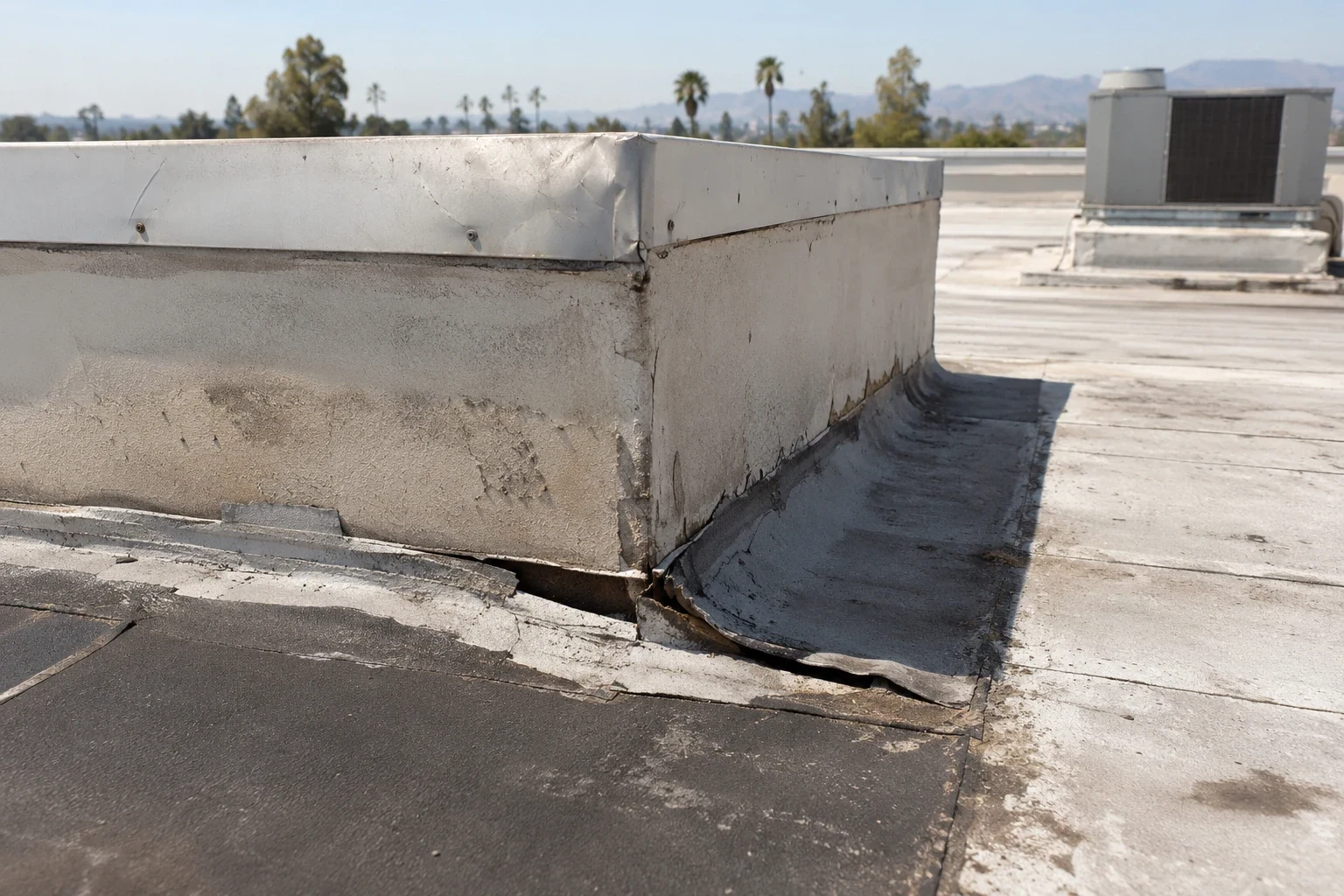
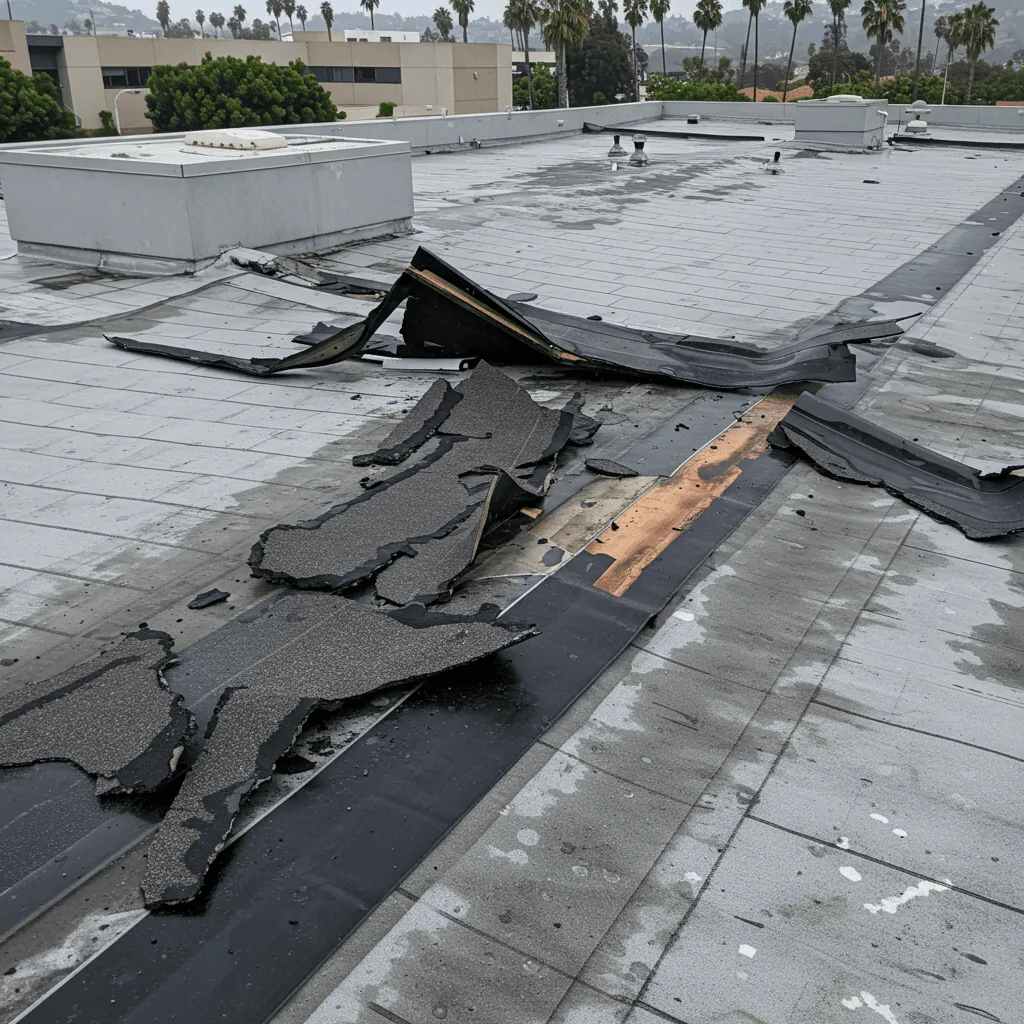
A flashing failure review can scope a transition that has separated. If a field seam is involved, a seam repair assessment follows the joint and adjacent material. Where hidden moisture affects quantities, a survey or test opening may be recommended; the owner authorizes its limit before the crew proceeds. Photographs and zone labels make the evidence easier to review with a property or facilities team.
Identify compatible materials before making a tie-in
We verify the surface from records, labels and accessible details. TPO, PVC, EPDM, modified bitumen, coatings and metal cannot be repaired with one universal patch method. A coating can obscure an older membrane, and a past repair may not match the underlying material. If the assembly remains unknown, our scope requests the needed sample, product record or inspection rather than treating a visual guess as confirmation.
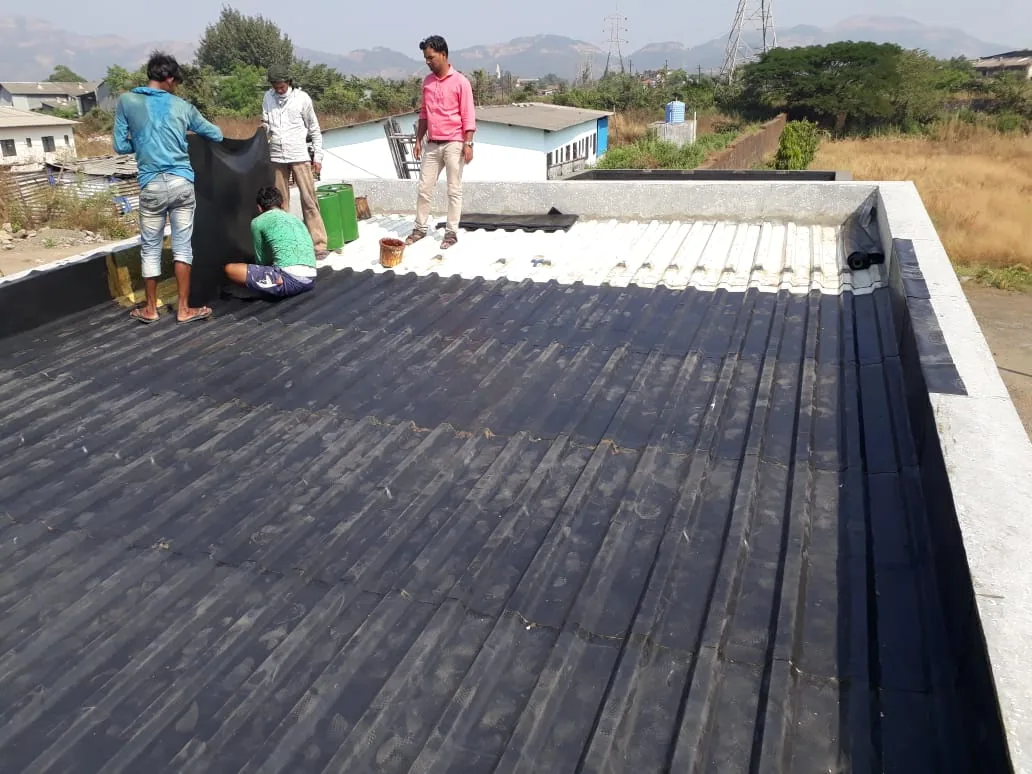
For a confirmed membrane, a EPDM review or TPO assembly assessment can organize the system-specific question. We define cleaning, primer or adhesive, attachment, patch dimensions and tie-in inspection based on approved documents. Repeated failures or broad wet insulation might support an evaluation of the larger roof, but a replacement discussion remains separate from a localized repair. The owner can see what evidence would make each option appropriate.

Check drain components and water discharge
At accessible outlets we review the strainer, bowl, clamp ring, membrane interface, scupper and overflow path. We distinguish debris from a damaged connection and note where retained water appears. A single visit may not establish why a low area formed, so slope or structural questions require appropriate measurement or review. Our report identifies which outlet was seen and what was blocked or unavailable.
Before a drain is opened or isolated, the property lead approves the method and confirms any interior protection. The work plan identifies how the outlet returns to service and what test will confirm the correction. A drain and scupper repair can include surrounding membrane when the field condition supports both. The crew documents the final detail and any follow-up instead of treating a cleared basket as a complete drainage assessment.
Set work windows and daily weather protection
Before a section is opened, we agree on its size, work order and closure condition. The manager confirms delivery windows, occupant notice, equipment that must stay online and any area that needs temporary protection. Materials are placed where the approved plan allows, and the crew knows who can authorize a change. If conditions differ after removal begins, the opening is secured while the owner reviews the finding.
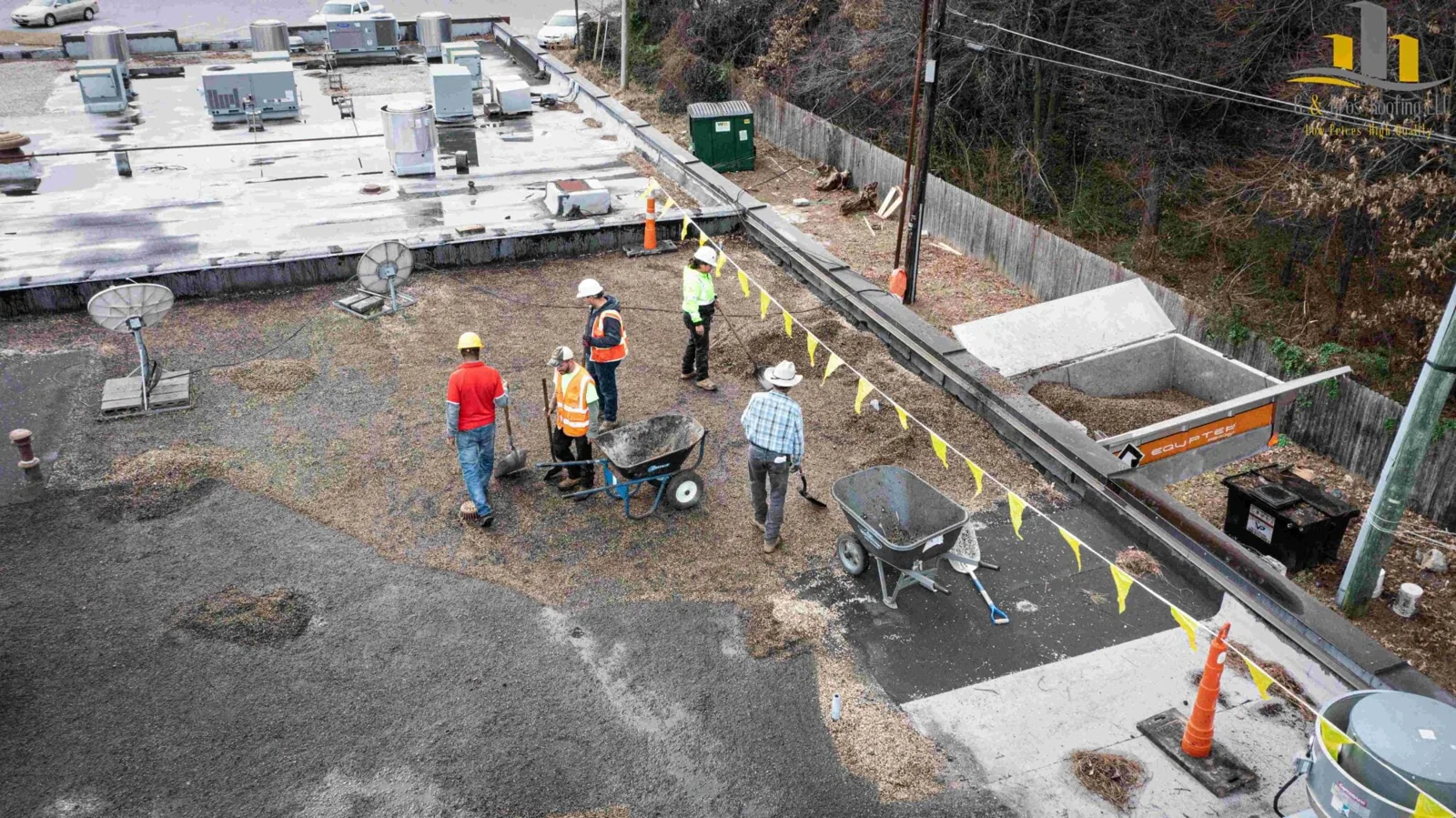
For a building that stays occupied, phased reroofing can organize work zones, inspections and daily closures. The sequence does not promise zero disruption; it makes known effects and contact steps explicit. When a newly exposed deck or insulation layer changes the plan, we provide photos, quantity implications and a clear request before continuing beyond the boundary.


Apply Fountain Valley zoning facts with care
The zoning code uses CP for professional offices, C1 for neighborhood retail and personal services, C2 for regional retail and service businesses, and CM and M1 for specified manufacturing activity. These definitions explain the municipality's land-use framework. They are not an inventory of roofs, operating hours, or authorized contacts. The building owner or representative confirms the actual site requirements that govern a service visit.
Another nearby location such as Santa Ana has its own planning record and access contact. For a Fountain Valley property, the owner checks whether a permit or structural review applies to the proposed scope. We do not treat zoning text as a permit approval. Our field report remains about observed roof details, test results, work limits and the decisions needed for a safe repair.
Deliver a record the facilities team can reuse
The closeout identifies the roof zone, defect observed, repair boundary, materials installed and images taken before and after work. We attach approved changes, test results and product details where relevant. An excluded area or unresolved layer remains visible in the record, so the owner can request follow-up with a clear starting point. If equipment, access or roof documents change later, the location file can be updated.
A roof condition report can organize inspections by area and flag next steps for budgeting. A separate Irvine service request requires its own address and authorization. For the Fountain Valley building, we identify who received the closeout and what condition would warrant another visit. That delivers a useful job history without making a claim about uninspected roof sections.
Common Questions
We confirm the address, requested work and authorized access contact before scheduling. Municipal zoning categories do not establish eligibility or the condition of a particular roof.
The affected room, date or weather, recent work, prior repair history and roof plans help direct the review. Field observations determine whether a suspected path is confirmed.
Records, labels and exposed edges can often help, but coatings or earlier patches may conceal the assembly. We document uncertainty and request confirmation before selecting a product-specific method.
The site representative confirms restricted areas, deliveries, equipment and work hours. We place staging and daily closure points around those approved operating requirements.
Yes, if inspection supports both the outlet work and adjoining membrane scope, and the owner authorizes it. The proposal lists each task and any remaining test or access need.
Related Roofing Work

Schedule a Fountain Valley roof review
Share the address, the area affected and the person who can approve entry. We will confirm service fit and identify the first field check.