
Commercial Roofing in Lake Forest, CA
A Lake Forest commercial roof visit begins with the property contact, address and condition the owner wants assessed. The city's nonresidential zoning includes local and general business, community and neighborhood commercial, light industrial and professional or administrative districts. The code also requires rooftop equipment in nonresidential districts, including HVAC units, to be screened from public rights-of-way. That design rule is not a diagnosis of a roof or a permit decision for new work. We inspect the actual membrane and equipment transitions before proposing commercial roof inspection.
We ask where water appeared, when it began and whether recent equipment service, roof repairs or ceiling work occurred. Plans, invoices and product records can help. Our field review checks seams, edges, penetrations, curbs, drains and visible supports, then compares those details with the report. If the roof layer or moisture boundary is uncertain, the estimate identifies a test and the owner approval needed before removal. Protection, repair and wider replacement remain distinct options with clear limits.

Confirm the roof route and equipment contacts
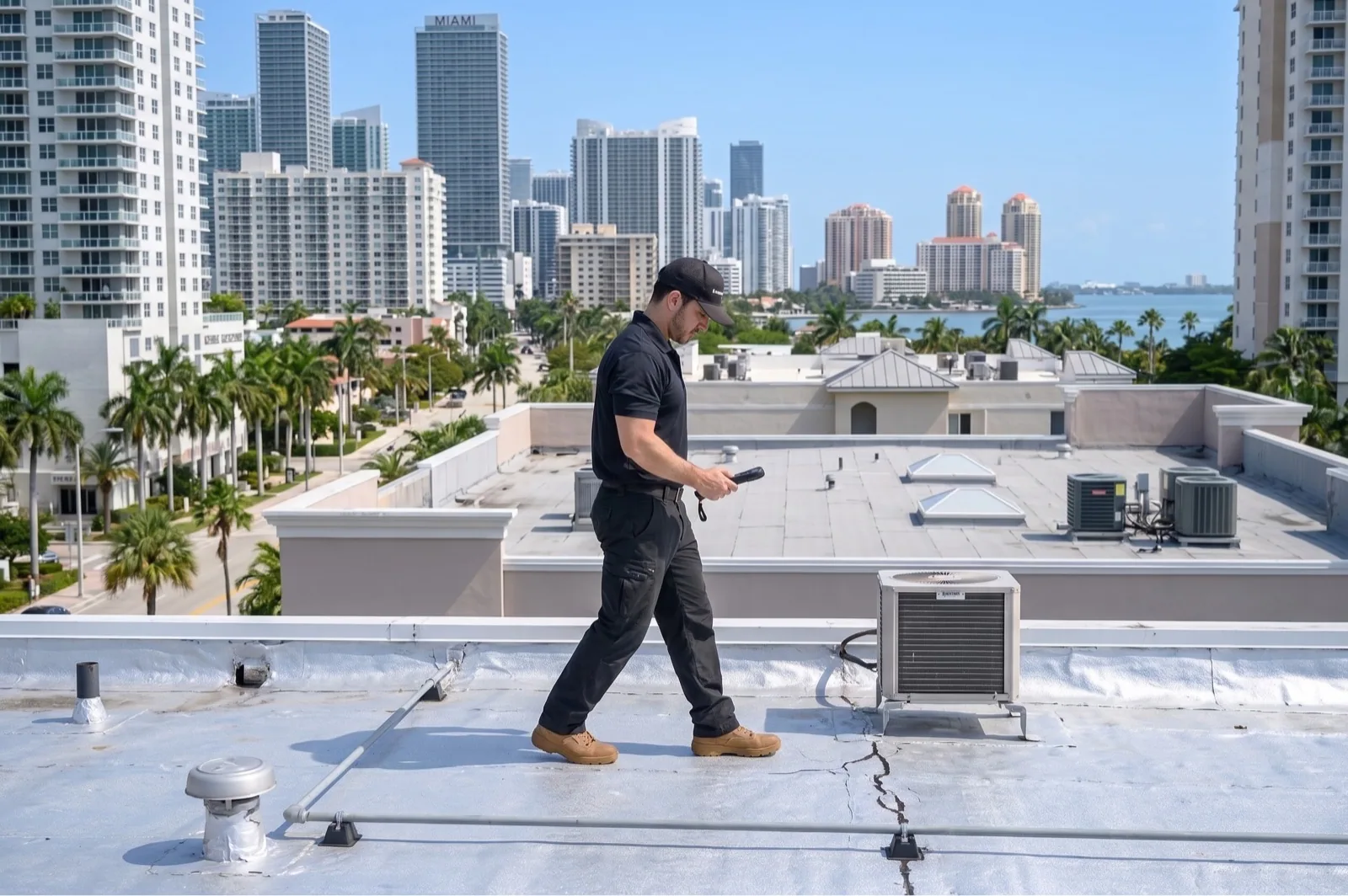
Before arrival, the manager confirms check-in, escort requirements, roof hatch or ladder, staging point and the route for tools. We ask whether equipment can be shut down, whether another trade is scheduled and which areas must remain available to staff. For a roof with several mechanical units, the owner may need a facilities technician present to identify restricted equipment and controls. We record the observed condition but do not operate building systems without authorization.
The zoning code's screening requirement does not grant permission to move a unit or change its screen. We document what is visible and direct design or permit questions to the owner and appropriate reviewer. A roof visit at a Santa Ana property needs its own access contact and condition record. Each Lake Forest job includes the approved access instructions and any roof zone that could not be inspected safely.
Trace a leak around mechanical transitions
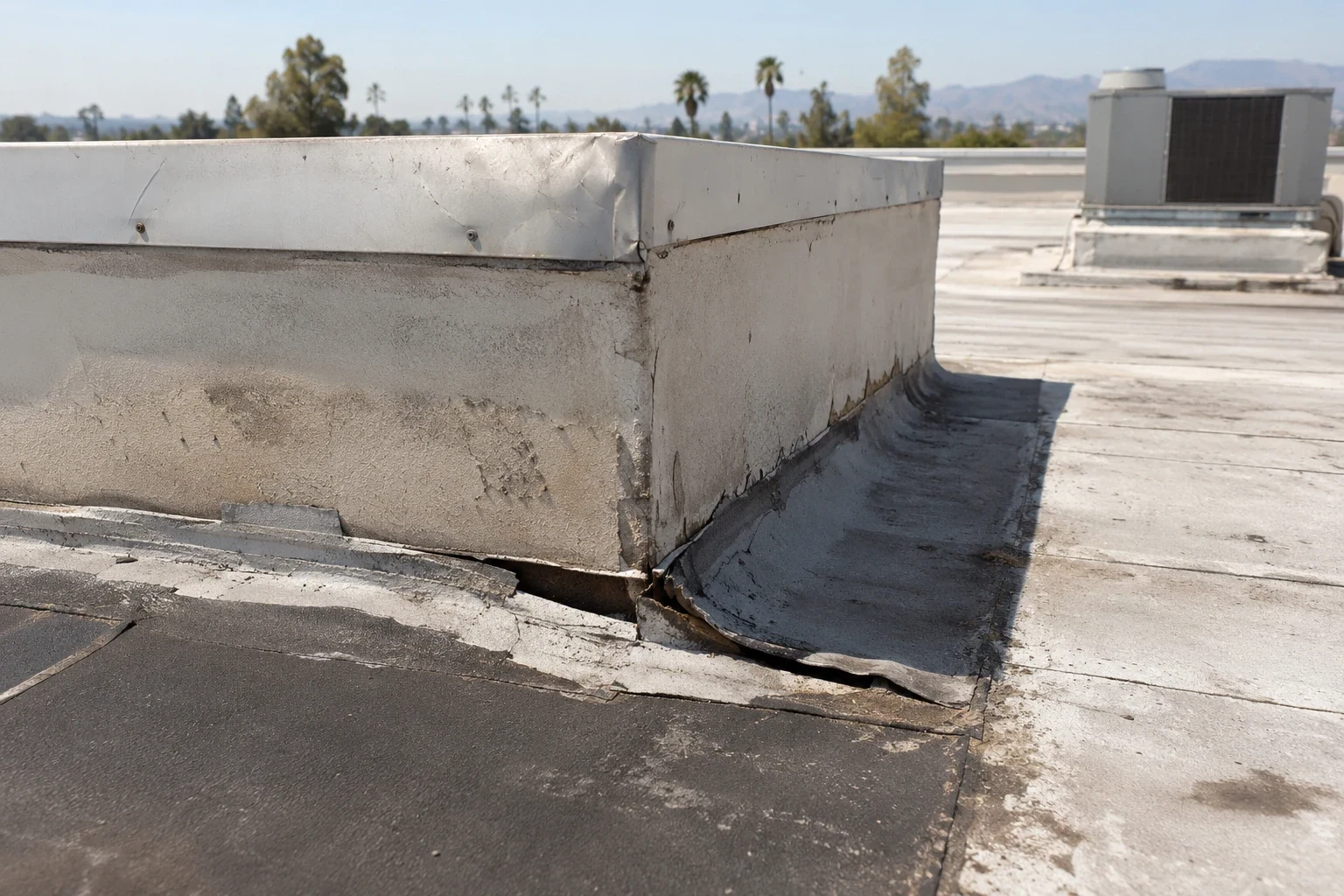
Roof leaks near equipment can involve a curb, pipe, conduit, counterflashing or membrane seam. We compare the reported room and timing with the roof details around the unit, along with the nearest drain and edge. Water may travel beneath the membrane before showing inside, so a stain alone does not locate the roof entry point. We photograph the equipment base and adjacent roof field with a zone reference and note prior patches or service work.
If a curb edge has separated, a flashing repair assessment can set a specific correction. An isolated split or puncture has a different boundary and material tie-in. If we cannot distinguish among several possible paths, a survey or opening is described before the owner authorizes it. We avoid assuming an HVAC unit caused a leak solely because the stain is nearby.
Identify the assembly before applying repair materials
We check records, labels and exposed details to identify membrane and visible layers. TPO, PVC, EPDM, coatings, modified bitumen and metal have different preparation and seam methods. A patch or coating can hide the original substrate. When material identification is incomplete, the proposal says what evidence is needed before choosing a product-specific repair. This helps avoid a surface treatment that does not bond to the roof beneath it.
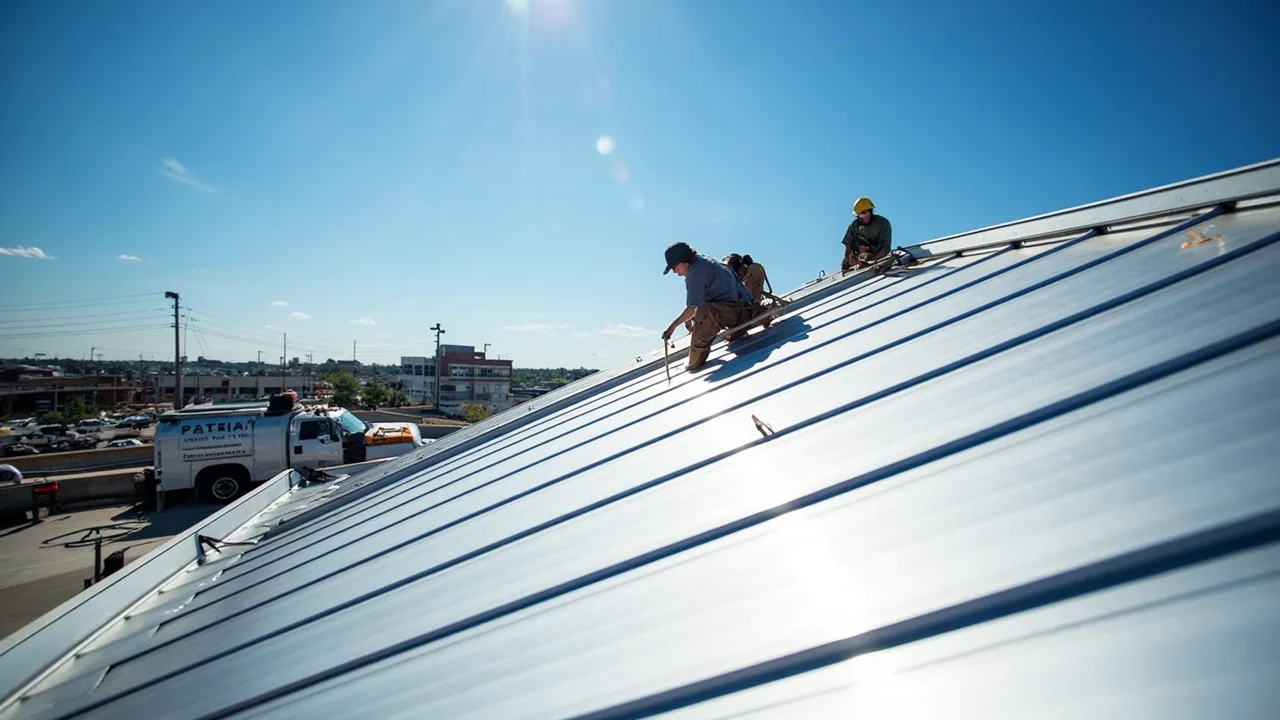
A TPO system review or metal retrofit assessment follows the confirmed assembly. At an equipment curb, we inspect the membrane upturn, corners, fasteners and sealant without separating a manufacturer detail from project requirements. If the roof has widespread moisture, an authorized test can define its extent before the owner compares recover or replacement. The scope identifies the materials included and areas left outside the work.


Check nearby runoff and roof outlets
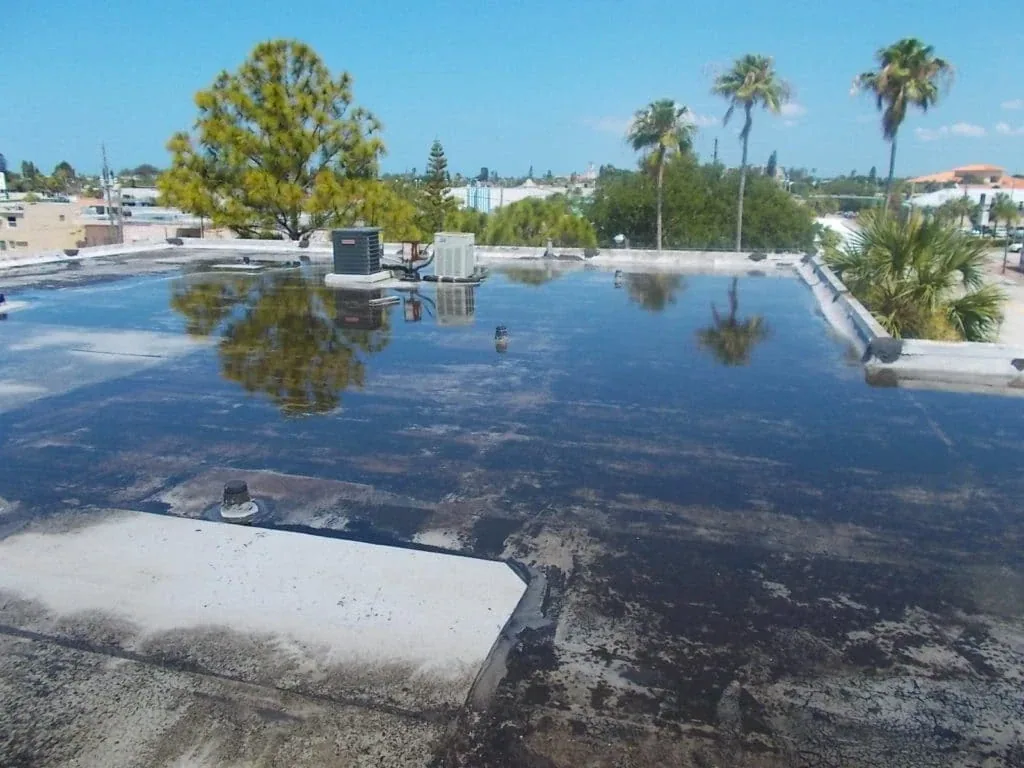
We inspect accessible drains, scuppers, strainers, clamping rings and overflow routes near the reported area. A blocked strainer and an open membrane turn are separate observations. If water stands in a low area, we document location and extent, then note whether measurements or a design review are needed. The inspection does not infer framing or roof-slope problems from a photograph alone.
The manager confirms whether an outlet may be isolated during the repair and who protects the area below. A drain and scupper review may include the surrounding membrane where the transition is damaged. We record the parts inspected and any route that remained inaccessible. Before leaving, the crew notes temporary protection and what must be checked during a later visit if water flow could not be observed.
Coordinate roof work with occupants and trades
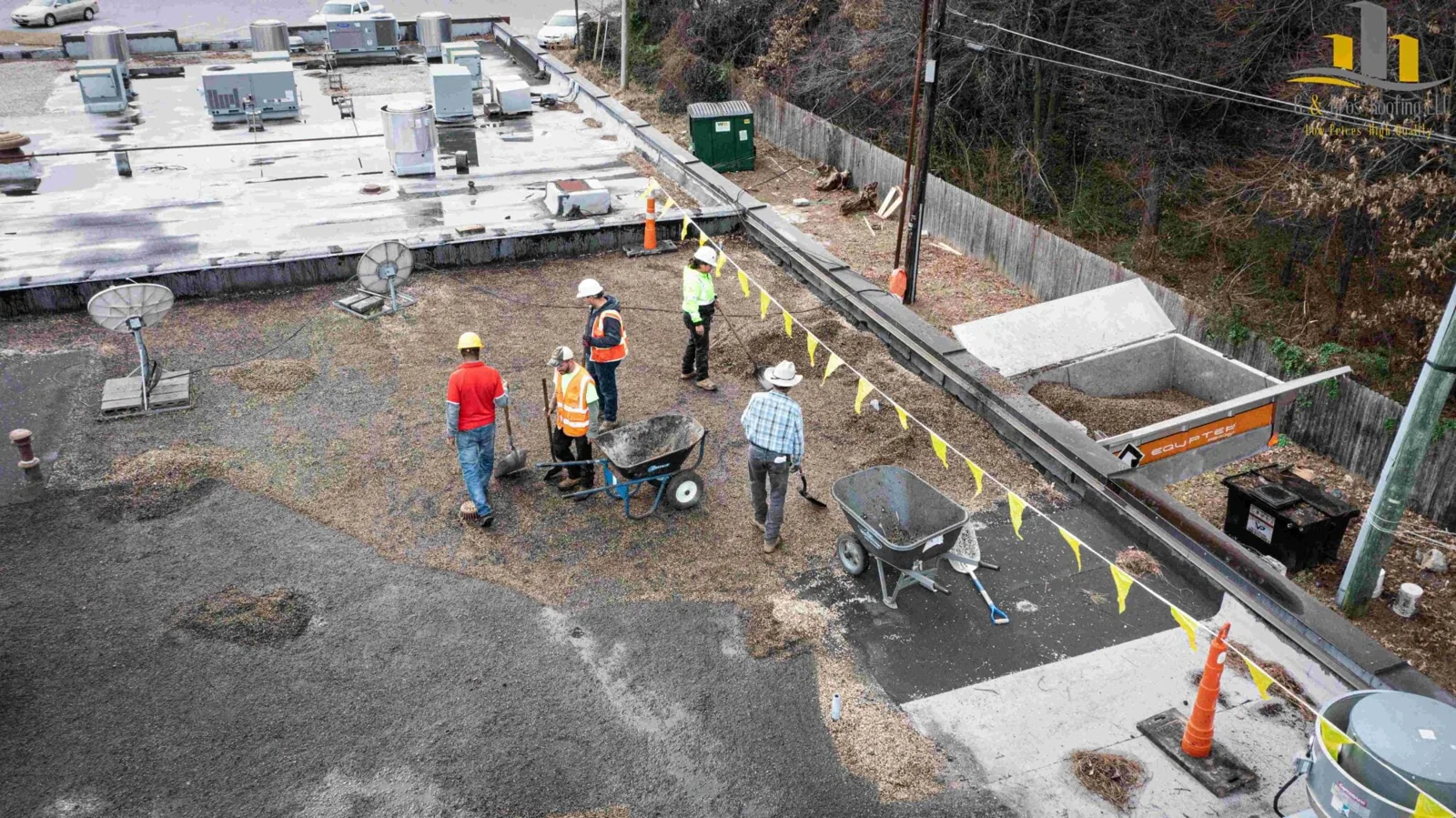
We set a work zone, opening size, material location and end-of-day closure before the crew starts. The property contact identifies deliveries, occupants and equipment work that could overlap with the roofing sequence. If another contractor needs access to the same area, the schedule names who confirms a handoff and the condition required before covering a transition. When concealed damage changes the quantity, the crew secures the roof and waits for the owner's approval.
A larger project can use occupied-building phasing to document access windows, daily closure and notice. We report known noise or staging impacts so the owner can coordinate with staff. The plan is updated when field conditions differ, not left as a general promise that operations will proceed without change.

Separate screening rules from roof repair findings
Lake Forest's code requires HVAC and other rooftop equipment in nonresidential districts to be screened from public rights-of-way. During a roofing visit, we can document visible screen, curb and flashing conditions, but a maintenance scope does not determine whether the installation meets every current code or permit requirement. The owner confirms whether equipment or screen changes are planned and whether a qualified design review is required.
A Newport Beach property needs its own access approval and roof condition record. A Lake Forest inspection remains tied to its address and roof zones. We record the equipment observed, any roof detail disturbed by service work and the documents the manager may need before a repair or replacement begins.
Keep the repair and equipment history aligned
After authorized work, the owner receives photos, roof-zone labels, material details, repair limits and any test results. We note equipment or roof areas not included and list conditions that remain uncertain. If a technician has moved or serviced a unit, the record should reflect the date and the person who coordinated access so later water reports can be compared with that work.
A roof condition report can organize these observations for future maintenance or budgeting. For a roof assignment in another city, confirm its address, access contact, and condition history independently. For the Lake Forest address, the closeout names the person who received the file, any open code or design question and the condition that should trigger another inspection.
Common Questions
We confirm the address, requested work and authorized contact before scheduling. A zoning rule does not establish eligibility or roof condition at a specific property.
Yes, when that area is included in the approved inspection. We document the membrane, curb and visible transition and identify any additional access or equipment coordination needed.
No. We can record what is visible, but the owner confirms applicable design, permit and code questions with the proper reviewer for the project.
Provide the room, timing, previous repairs, equipment service history and any roof plan. We use those details to direct the inspection and verify the likely path on site.
The property contact and equipment representative confirm restrictions before work. We document access, avoid operating controls without approval and set a sequence around active units.
Related Roofing Work

Request a Lake Forest roof visit
Provide the address, reported issue and contact for roof and equipment access. We will confirm service fit and define the inspection needed to set scope.