
Commercial Roof Due Diligence Surveys in Costa Mesa, CA
A transaction clock can make roof questions arrive before the full record does. In Costa Mesa, CA, we inspect accessible roof areas, identify the system where confirmed, and document visible conditions that may affect repair planning. The survey separates observations from owner-provided information and assumptions that need follow-up. It gives the property team a roof-focused record for due diligence, not a structural opinion, code review, or promise about future performance.
We begin with the scope requested, access window, roof plans, prior repairs, and any known interior reports. If the available time permits only selected zones, the report names them and lists what was not reached. The buyer or owner can then decide whether to authorize additional testing or specialist review before relying on the roof observations for a larger transaction decision.
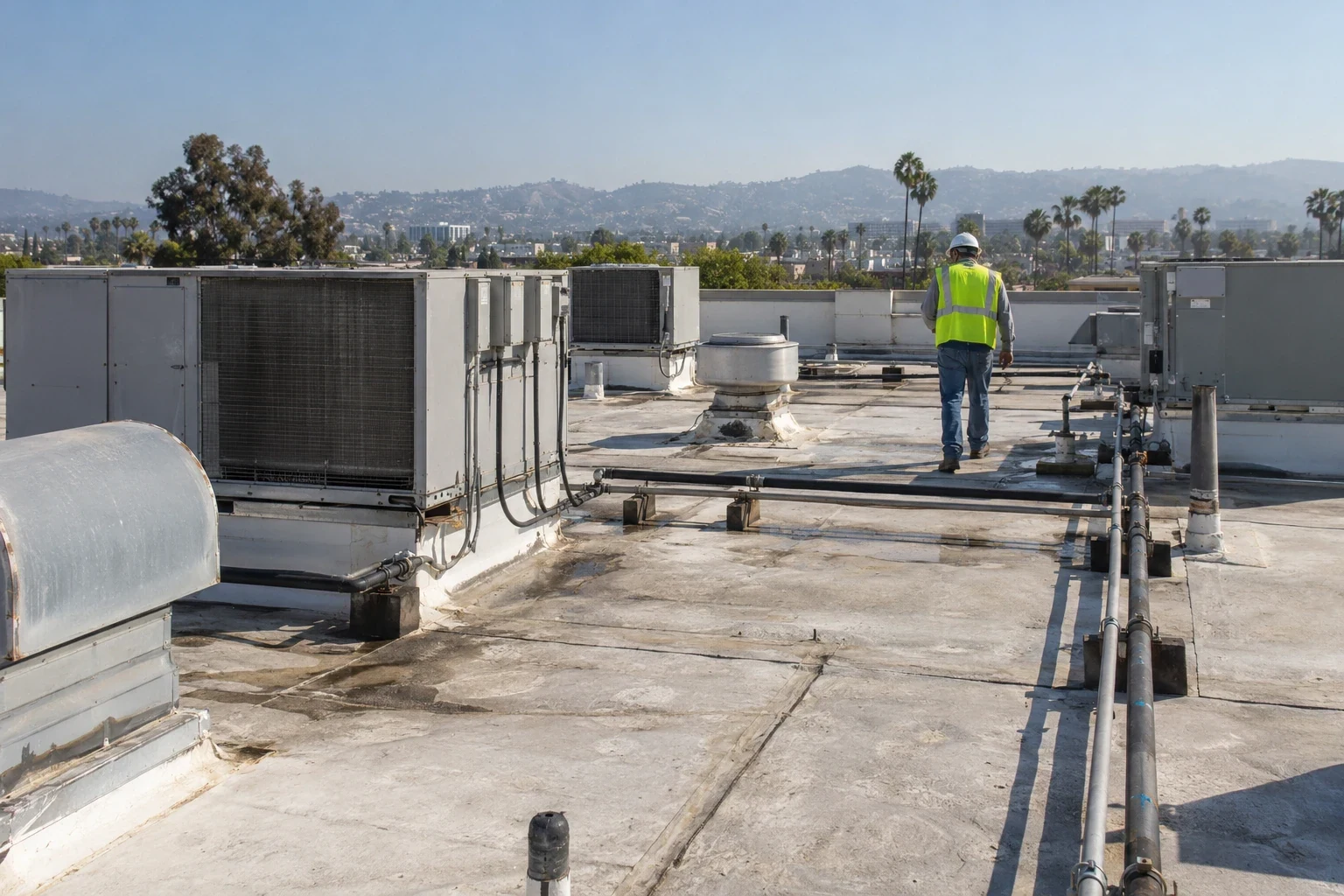
Confirm the Roof Areas Available
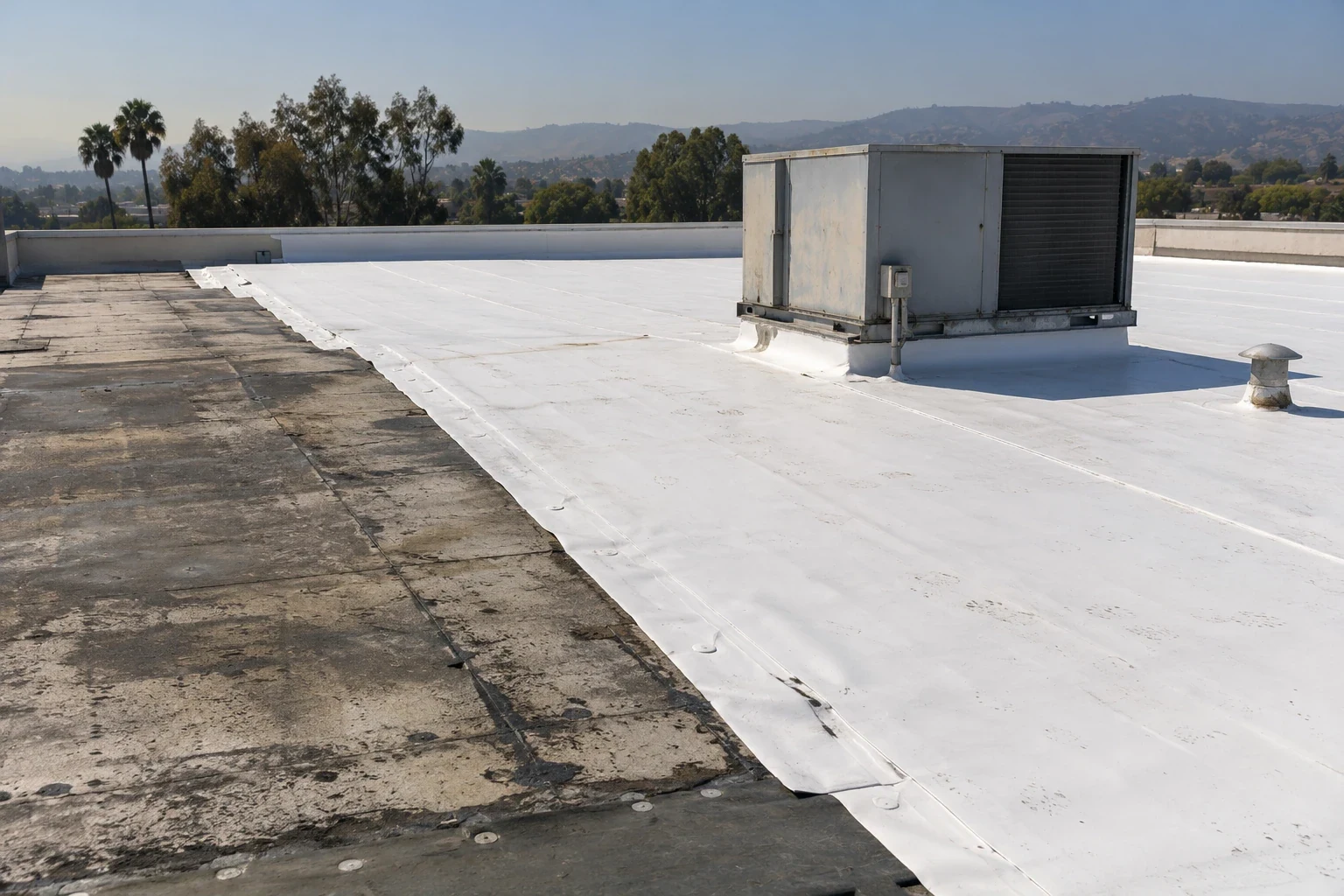
We check roof access, visible membrane and metal conditions, seams, penetrations, edges, drains, and prior patches. System identification is marked confirmed only when the roof assembly can be recognized from the field or supplied records. Photographs label the roof zone and material observed. Where debris, equipment, locked areas, or another trade limits access, the report records that limit instead of inferring the condition below it.
A commercial roof inspection can establish a field baseline, with a condition report organizing findings and photographs. If a broad roof surface is difficult to map, a drone imagery may provide context, while seams and penetrations still need close review. We identify which method supports each observation so image coverage does not imply hands-on inspection of every detail.
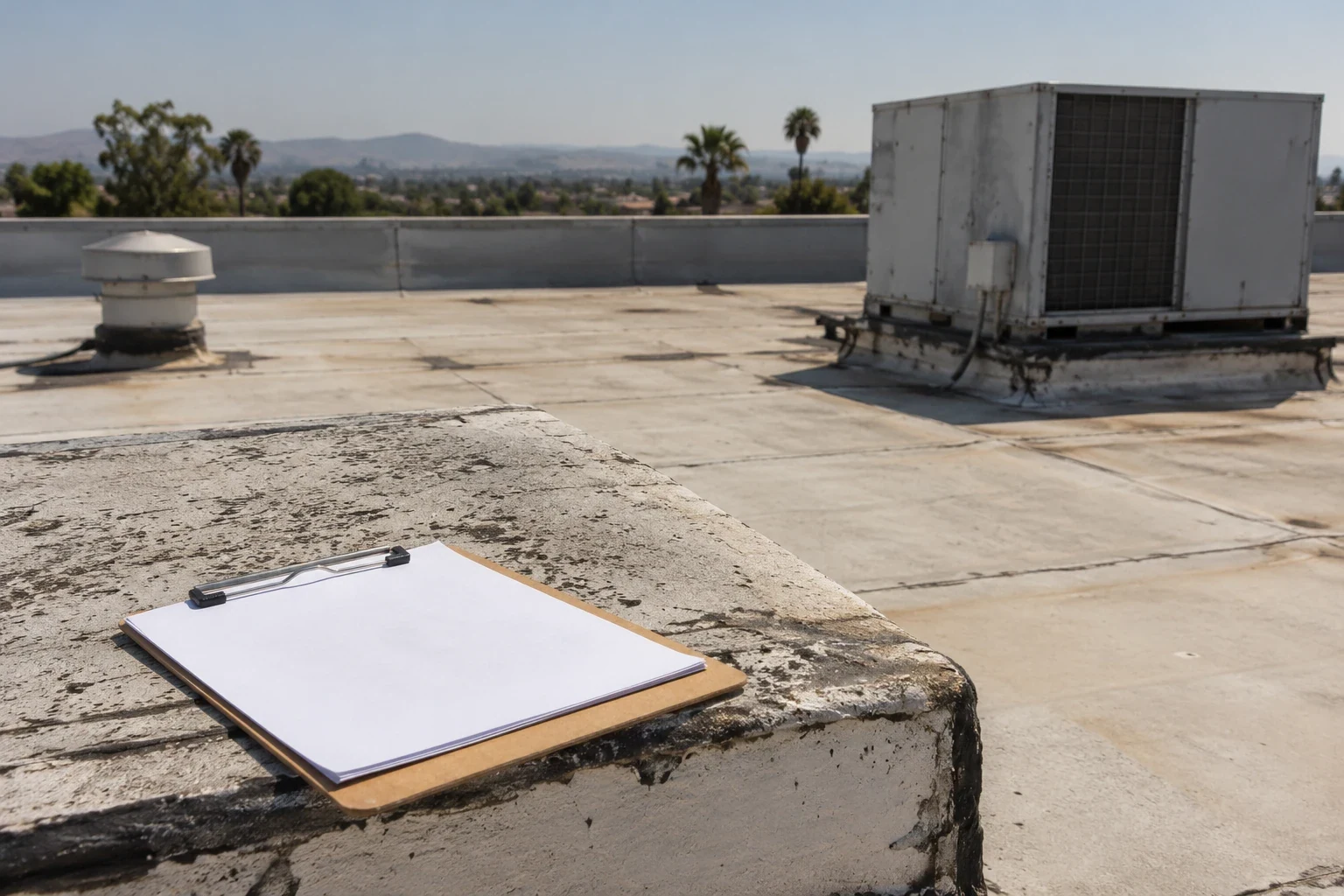
Separate Current Defects from Future Budgets
A visible opening, a worn surface, and a roof that needs a planned capital scope are different findings. We describe the condition and boundary, then identify whether a repair estimate, test, or longer review is needed. The survey can flag probable cost drivers such as access, tear-off, substrate repair, tie-ins, and occupied-site phasing without inventing a bid number before the work is defined.
A repair assessment can price a known boundary. If the roof may support a recover, a recover feasibility visit reviews existing layers, attachment, drainage, and project requirements. For broader planning, a capital plan can keep immediate repairs separate from future options. We do not treat a due diligence survey as a design, moisture diagnosis, or replacement specification.
Use Costa Mesa Records Without Extending Them
Costa Mesa's zoning categories distinguish general industrial and industrial park categories from general business, shopping-center, and town-center categories. That record helps a buyer frame land use, but it does not identify the membrane, insulation, or repair history on the roof under review. We compare the documents supplied for the transaction with conditions visible during the authorized roof walk. When the file names an assembly that cannot be confirmed at accessible edges or penetrations, the survey labels that gap and identifies what evidence would resolve it.
East 17th Street spans a 92-acre commercial corridor of retail, service, and office uses for nearby residents and businesses. A diligence file for a property there still needs its own comparison between seller documents and roof-side observations. We record the roof zones reached, access granted, visible terminations, and any area left outside the walk. That transaction record keeps a corridor's mix from standing in for a building's assembly, repair history, or condition at transfer.
List Conditions That Need Confirmation
Some questions cannot be answered through a visual walk. Concealed moisture, deck condition, attachment, and prior roof layers may need a test opening or other investigation approved by the owner. We identify the suspected location and what confirmation would answer the question. The report separates that proposed test from conditions confirmed on the surface, so a transaction file does not treat an unknown as a finding. We record the area, test purpose, access conditions, and decision the result would support. The owner can then decide whether testing belongs before closing, after transfer, or within a separate investigation led by another professional. This keeps the roof survey within its stated scope while giving the transaction team a clear next action.
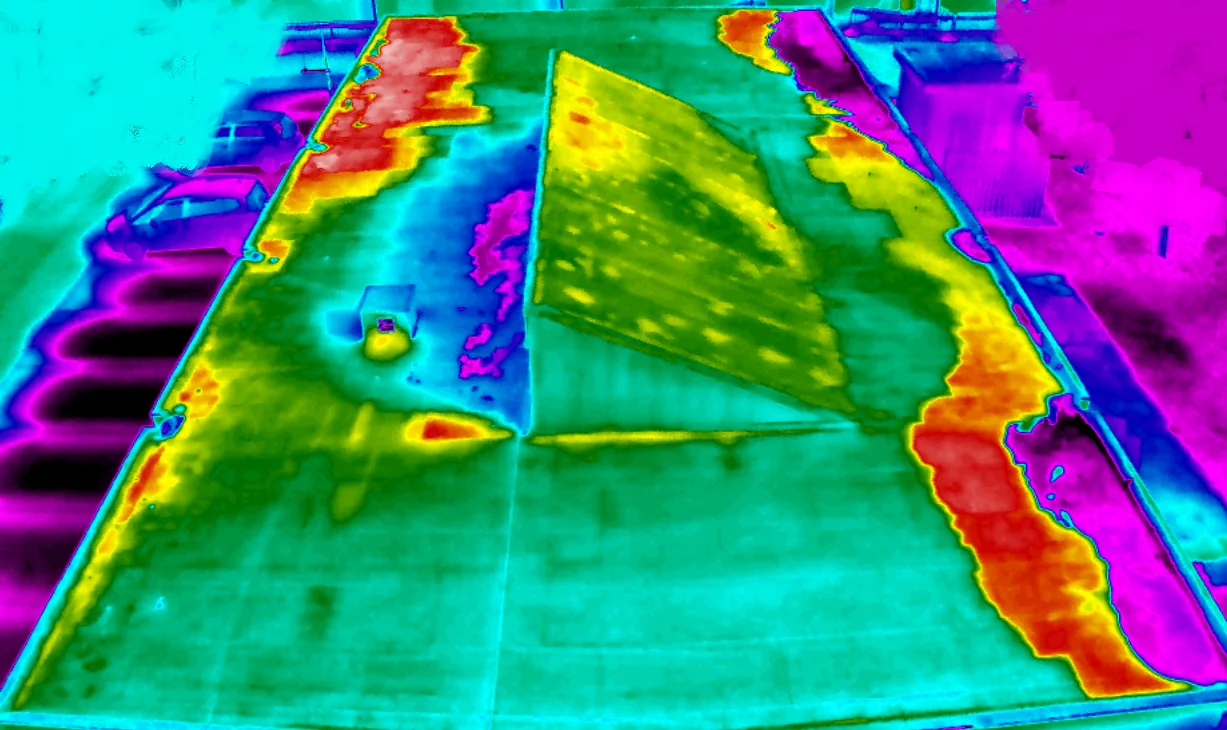
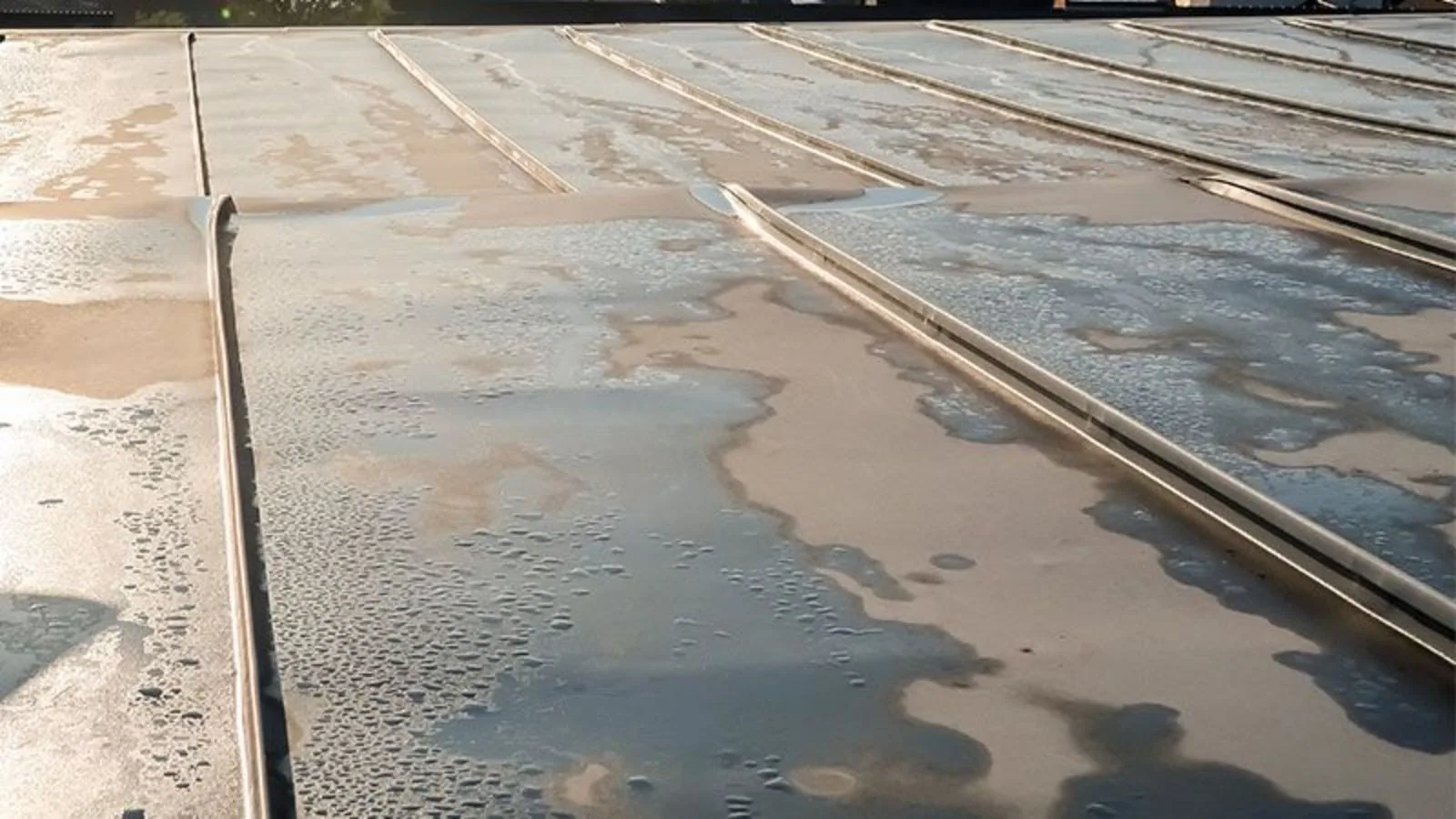
Where water is reported, we compare the interior location with roof openings and drainage. A moisture survey may suggest areas for testing, but its pattern needs field confirmation. If drainage is the concern, a ponding-water review records the observed low area and outlets. The report names access limits and test assumptions, then leaves acceptance of those risks to the buyer and seller. We can add a return inspection after keys or roof access change hands, keeping the new observation distinct from the pre-transaction visit. That follow-up helps the facility team check open items and confirm whether any repair has since been completed.
Coordinate Access and Follow-Up
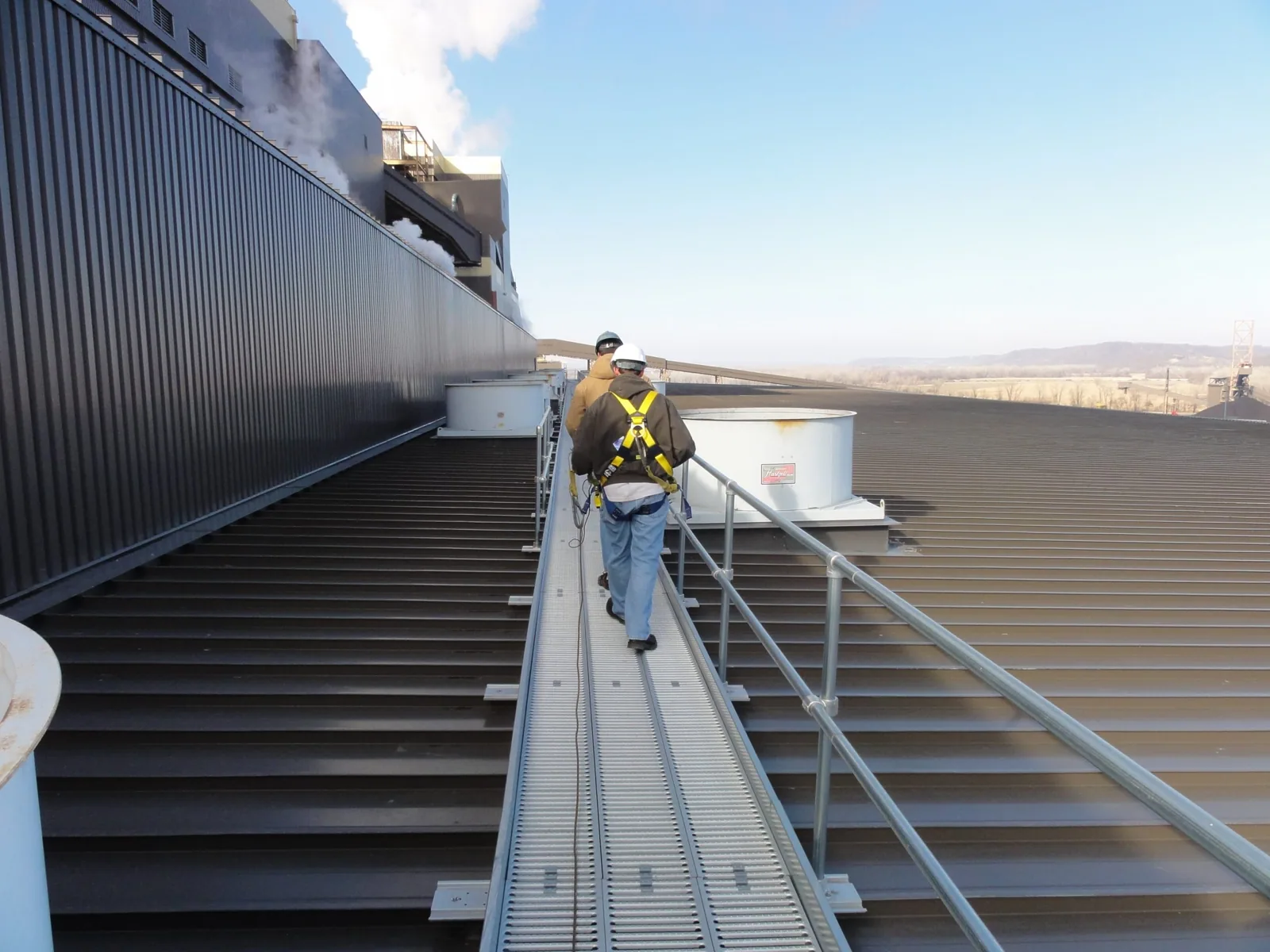
Commercial roofs often share access with tenants, maintenance staff, or equipment vendors. We ask the owner to identify escorts, shutdown needs, roof keys, and restricted spaces before the visit. If the transaction window is short, the survey can focus on priority areas, with a list of excluded zones and a return visit recommendation. Work can be scheduled without interrupting a building when access windows and staging are established in advance.
The General Plan describes smaller operations in multi-tenant Westside structures, so a contact may need to arrange entry through property management rather than a single occupant. We confirm that arrangement for the inspection instead of assuming access from a district name. A phased work discussion can help if a repair or replacement must follow the transaction, with tenant schedules carried into a separate scope.
Deliver a File That Can Be Revisited
The final report contains a dated roof map or zone reference, labeled images, confirmed observations, open questions, and next actions. We include available maintenance and repair records with the owner's permission and note any material that remains unidentified. The buyer, seller, and facility contact can review the same boundary without treating an informal walkthrough as a full technical evaluation.
For a later property visit in the Harbor Gateway district, the file helps identify which roof areas were previously seen. A roof asset record can retain the survey with repair and maintenance history after the transaction. If testing or a larger project is authorized, the next report should refer to the same locations and clearly supersede any earlier assumption.
Common Questions
No. It documents accessible roof conditions and the limits of the survey. It is not a structural, code, or full building certification. Questions that need testing or a specialist remain listed for the owner to address.
It can identify scope drivers and recommend a defined repair or replacement review. A price requires assembly, area, access, tear-off, substrate, and project requirements to be established. We do not create a bid number from a limited visual walk.
We record the documents received and mark system or repair history that remains unknown. The survey can establish current visible conditions, and a test may be needed for concealed layers. Missing history does not become an assumed installation date.
Yes, if the requested scope and exclusions are agreed before access. We list the zones inspected, areas not reached, and questions that need another visit. The report should make its coverage clear to anyone relying on it.
An infrared pattern can help select test locations, but it is not a direct confirmation of each concealed layer. We compare it with roof observations and recommend verification where the result could change a repair or capital decision.
Related Roofing Work
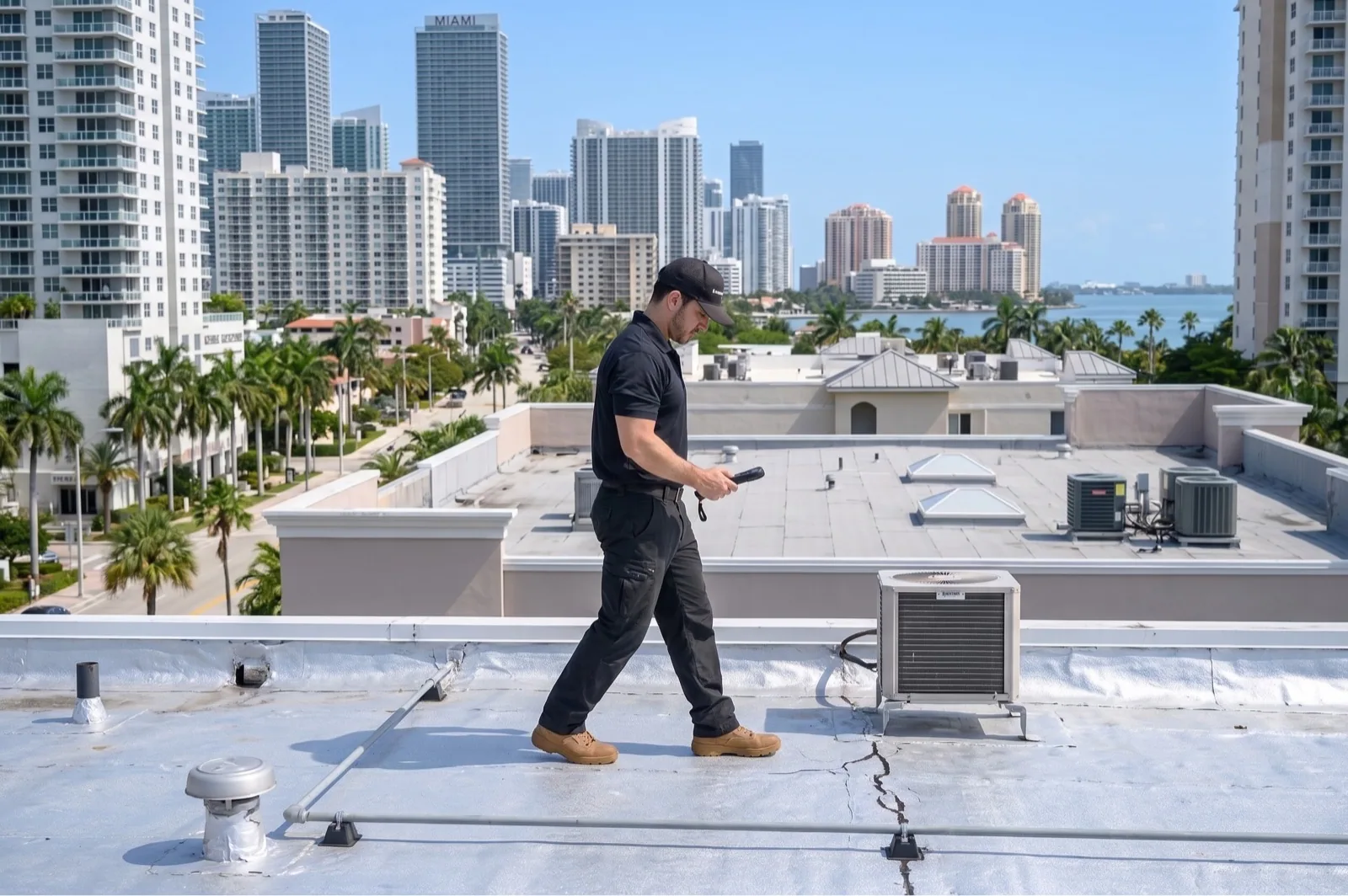
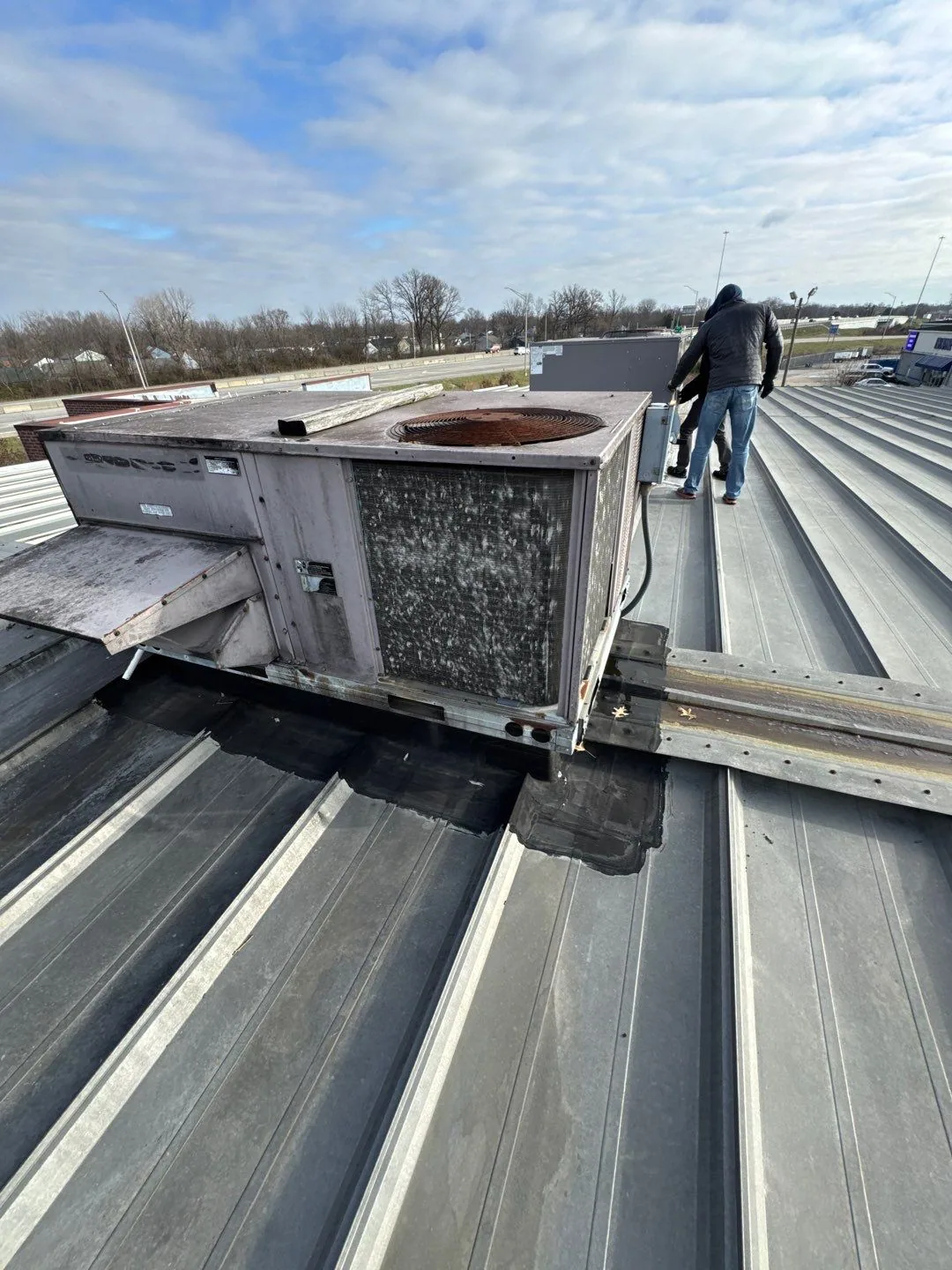
Schedule a Roof Due Diligence Survey
Provide the transaction timing, roof plans, prior reports, access contacts, and areas of concern. We can document accessible conditions and identify open questions for follow-up.